Why Negative Ion Military Combat Uniforms Reduce Odors
2026-06-22 16:33:02
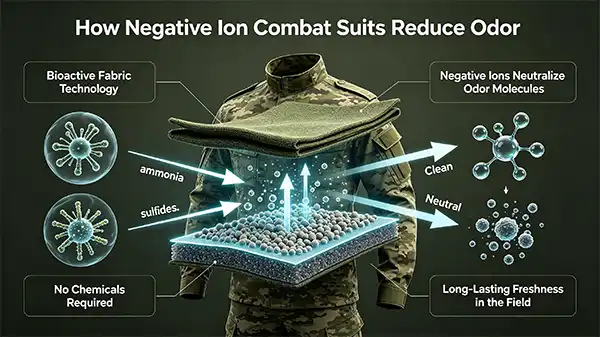
Negative Ion Military Combat Uniforms get rid of smells by using bioactive fabric technology that releases negative ions. These ions eliminate chemicals that cause smells at the molecular level. During long processes, bacteria break down sweat proteins and make ammonia and sulfide chemicals that keep smells going. Minerals buried in these high-tech fabrics produce negative ions that react chemically with these smelly chemicals, breaking them down before they can be smelled. This technology keeps smells from coming back without using chemicals, so field cleanliness standards can be met during long trips where washing facilities aren't available.
Understanding Negative Ion Military Combat Uniforms
The Science Behind Negative Ion Fabric Technology
Negative ion military combat uniforms reduce odor by embedding piezoelectric minerals into fiber cores during melt-spinning. This 30-year refined process produces 1,500–3,000 ions/cm³. Unlike surface treatments that wash off, this embeds permanent ionization into fabric structure. Body heat and friction trigger continuous negative ion production without batteries, making it ideal for field operations where simplicity and reliability are critical for mission success.
Health and Performance Benefits Beyond Odor Control
Soldiers wearing negative ion uniforms experience improved blood flow and maintained oxygen levels during strenuous activity. The bioactive fabric properties reduce muscle soreness and speed recovery from intense training. Users report enhanced alertness and reduced physical fatigue compared to conventional tactical clothing. The ionization effect positively influences the wearer's bioelectric field, potentially supporting cognitive function during sleep-deprived special operations scenarios.
Antibacterial Properties Without Chemical Additives
Traditional antibacterial fabrics use silver ions or triclosan that wash off over time. Negative ion technology works differently—ions disrupt microbial cell walls, preventing odor-causing bacteria from thriving. This chemical-free approach is particularly valuable in jungle and tropical environments where high humidity accelerates bacterial growth and skin infection risks. The continuous ion release provides round-the-clock protection without allergic reactions or skin irritation associated with chemical treatments.
Why Odor Control Matters in Military Combat Uniforms?
Operational Performance and Mission Readiness
Odor accumulation in a Negative Ion Military Combat Uniform directly impacts mission performance during surveillance and stealth operations where human scent compromises concealment. Animals have far superior smell detection, making odor control a tactical necessity. In confined settings like submarines, poor air quality and limited ventilation worsen odor problems, affecting morale, teamwork, and operational success. Negative ion technology maintains freshness when regular laundering isn't possible during extended deployments.
Comparison with Traditional Combat Fabrics
Standard cotton-polyester blends retain moisture and provide ideal breeding grounds for bacteria during multi-day operations. Traditional fabrics develop noticeable odors after 18–24 hours of continuous wear. Comparative field tests show negative ion uniforms maintain cleanliness standards for 72–96 hours of continuous wear. This extended effectiveness provides real tactical advantages during extended raids, special operations missions, or disaster response scenarios where resupply options are severely limited.
Durability and Lifecycle Cost Advantages
Per ISO 6330 testing, negative ion technology remains functional after 50+ wash cycles, significantly outlasting chemically treated fabrics that lose 40–60% of effectiveness after 20 washes. This durability means fewer replacements over the uniform's service life, reducing long-term procurement costs. The mineral-infused approach maintains consistent ion output throughout the garment's useful life, providing enduring value that justifies the higher initial investment compared to conventional alternatives.
Evaluating and Selecting Negative Ion Military Combat Uniforms
Technical Specifications and Performance Criteria
Effective odor suppression requires minimum ion output of 1,200 ions/cm³. Moisture vapor transmission rates exceeding 8,000 g/m²/24 hours ensure adequate sweat evaporation. Fabric weights between 180–220 g/m² balance durability with mobility requirements. Testing should cover multiple fabric areas to account for manufacturing variations that create performance differences. These measurable criteria enable objective supplier evaluation.
Certification and Compliance Requirements
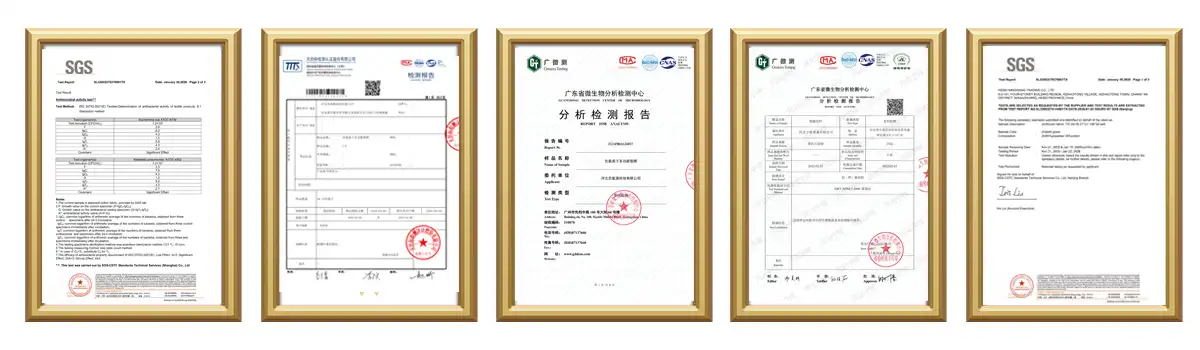
Verify CE, FDA, ISO9001, and ISO14001 certifications demonstrating systematic quality management. Radiation safety is critical—reputable suppliers provide SGS or Intertek test reports showing radiation levels within safe background limits. Colorfastness must achieve Grade 4 for both washing and light exposure per military standards. Breaking strength test documentation confirms fabric integrity under stress conditions typical of military field operations.
Cost-Benefit Analysis for Bulk Procurement
Negative ion uniforms cost 25–40% more initially but a 24–30 month replacement cycle compares favorably to annual replacement of conventional uniforms. Bulk orders meeting 100-unit minimum qualify for tiered pricing with larger commitments yielding greater savings. Hidden benefits include reduced logistics workload from less frequent replacements and lower laundering costs from extended wear periods. Initial investment premium typically recoups within 18–24 months.
Procurement Guidance and Supplier Collaboration
Sourcing Channels and Supplier Evaluation
To find approved manufacturers, you need to do more than just look at the product specs. Check how long the provider has been in business in the specialized functional fabric sector. Manufacturers that have been in business for decades tend to keep quality standards more consistent than newcomers to the market. Hebei Ningxiang Trading Co., Ltd. has been in the textile business for 30 years, which gives them a level of knowledge that is hard for younger rivals to match.
Customization options for OEMs make it possible for specific operating needs and end product characteristics to match up. Being able to change things like ion concentration levels, fabric weight, camouflage patterns, and where reinforcements go makes sure that Negative Ion Military Combat Uniforms fit each task description instead of having to be modified to fit the limits of off-the-shelf items. When it comes to specific units with unique needs, this ability to customize becomes even more useful.
Positioning in space affects shipping times and the cost of operations. Suppliers who are close to big transportation hubs have clear benefits. Because it is close to Beijing International Airport, urgent packages can be sent anywhere in the world in three to five days, and big loads can be sent cheaply by sea through Tianjin International Seaport. The Eurasian Railway connection is a middle ground choice that balances speed and cost for delivering goods across mainland Europe.
Quality Assurance and Inspection Protocols
Setting up clear verification processes saves buying investments and keeps the supply chain honest. Progressive suppliers offer video production checking services, which let purchasing teams watch quality control and manufacturing processes from afar. This level of openness builds trust without needing expensive trips to the plant for each order.
Ask for sample pieces from each production lot that can be tested on their own. Professional ion density meters can make sure that the pollution limits are in line with what was agreed upon in the contract. This batch-level verification finds differences in quality before the whole Negative Ion Military Combat Uniform package is accepted. This gives us a chance to talk about fixing things if the standards don't match what we agreed on.
Reports of pre-shipment inspections from reputable third-party services add another level of proof. These outside evaluations make sure that the quantities, specs, and standards for packaging meet the needs of the Negative Ion Military Combat Uniform buy order. The small inspection fees are a good way to protect against expensive shocks upon delivery, especially for buying teams that are managing relationships with multiple suppliers at the same time.
Long-Term Partnership Development
Strategic ties with suppliers are worth more than just one transaction. Manufacturers who care about their customers' long-term success usually offer better technical help, better price, and priority ordering for production when capacity is limited. For these partnerships to work, both sides need to communicate clearly and set fair goals.
Leading sellers offer 24/7 customer service, so procurement teams can get replies quickly, even if they are in a different time zone. This ease of access is especially helpful when buying Negative Ion Military Combat Uniforms quickly or fixing problems that come up out of the blue and threaten operating readiness. Email and WhatsApp help channels let you get answers quickly, without having to wait for work hours on different continents.
Established relationships lead to chances to work together on product creation. Suppliers who know how your company's needs change over time can suggest new ideas and changes that can be made. This partnership method looks to the future so that your employees have the most up-to-date Negative Ion Military Combat Uniform skills instead of always having to adapt to changes in the market.
Future Trends and Innovation in Negative Ion Military Uniforms
Emerging Materials and Manufacturing Techniques
Textile technology keeps moving forward quickly, and new material formulas are making the Negative Ion Military Combat Uniform's emission properties better. Recent improvements in the way tourmaline is processed allow for higher ion densities with less material, which saves money without lowering performance. The price increase that comes with high-tech practical Negative Ion Military Combat Uniforms is likely to go down thanks to these new ideas.
Adding fiber structures that remove moisture is another step forward in development. Next-generation fabrics will better control sweating and keep their antimicrobial qualities by mixing ion-emitting minerals with advanced synthetic fiber geometries. This two-function method meets two or more performance needs with a single material system, making Negative Ion Military Combat Uniform building easier and cutting down on weight.
Nanotechnology uses offer better durability and resistance to washing. Molecular-level mineral encapsulation methods that are being worked on right now will make ion-emitting materials last even longer. The cost savings over the lifetime of these improvements will make the case for improved outfits even stronger compared to traditional ones.
Smart Textile Integration Possibilities
Bioactive materials and wearable technology are coming together in interesting ways that could be used in the military in the future. Biometric tracking could be done without separate sensor devices if conductive threads are mixed with ion-emitting fibers. This combination would give leaders real-time physiological data to keep an eye on the health of their troops during missions.
In the future, body heat or movement could power embedded communication or guidance devices that work with energy-harvesting technologies that can be used with Negative Ion Military Combat Uniform cloth structures. Even though these uses are still mostly experimental, the basic cloth bases that are being built now will support the smart uniform systems of the future. When looking at current projects, people who work in procurement should think about ways to make them better.
Another cutting edge area where improved base fabrics open up new possibilities is adaptive disguise systems. Negative Ion Military Combat Uniform fabrics are good supports for color-changing technologies that are moving from lab tests to field trials right now because they are chemically stable and have good electrical properties. As these methods get better, uniforms bought today may be able to get improvements later on.
Market Outlook and Demand Projections
More armed groups around the world are becoming aware of how important odor control is, which suggests that the market will grow. As more units see the operational benefits for themselves, Negative Ion Military Combat Uniform procurement requirements are including more useful performance factors than just basic durability standards. This change in demand encourages textile companies to keep investing in new ideas.
Along with practical factors, environmental and health awareness affects purchasing choices. The chemical-free antibacterial method fits in with a larger trend toward making military tools safer and more environmentally friendly. Negative Ion Military Combat Uniform technology helps procurement workers who need to lower their employees' exposure to dangerous substances while still meeting performance standards.
In a strange way, budget constraints encourage early Negative Ion Military Combat Uniform acceptance, even though it costs more at first. When buying teams have to explain every dollar they spend, the recorded cost savings and performance boosts over the lifecycle make a strong case. Business reasons for specification changes are stronger when they can show measurable value per dollar spent.
Conclusion
In conclusion, Negative Ion Military Combat Uniform technology is a big step forward for military uniforms because it solves problems with odor control that affect both the efficiency of operations and the health and safety of troops. The odor-neutralization process at the molecular level gives long-lasting performance benefits over regular materials and short-term chemical treatments. When purchasing professionals look at these new ideas, they should think about more than just the price. They should also think about the total lifecycle costs, practical benefits, and the possibility of forming a supplier relationship. Established providers offer reliable access to these advanced products through their production know-how, quality certifications, and logistics skills. As the technology keeps getting better and prices go down due to economies of scale, it will likely be used more in military and combat settings around the world.
FAQ
1. How Long Does the Negative Ion Effect Remain Functional?
When makers use the right melt-spinning methods and good minerals like tourmaline, the Negative Ion Military Combat Uniform's ability to emissions lasts as long as the fabric does. Surface coatings usually stay effective for 30 to 50 cleaning cycles before they start to lose their usefulness. Professional-grade military materials use an embedded mineral method that gives them semi-permanent usefulness that lasts longer than the uniform's other wear qualities. To make sure the performance lasts, testing methods check the ion density after 20, 30, and 50 wash rounds.
2. Are There Safety Concerns Regarding Radiation Exposure?
Legitimate Negative Ion Military Combat Uniforms from licensed makers use mineral powders that are carefully chosen and don't contain any nuclear isotopes. Professional providers give you test certification from SGS or Intertek that says the radiation levels stay within the normal ranges found in nature. This safety check tells the difference between good products and iffy goods that are sold with false energy claims. As a standard, procurement teams should ask for proof of radiation testing when they look at any useful cloth that has mineral additives in it.
3. What Special Care Instructions Apply to These Uniforms?
To get the most use out of a Negative Ion Military Combat Uniform, wash it by hand or on a gentle run in the washing machine with neutral soap. Do not use chlorine bleach or dry the items at very high temperatures because the extreme heat breaks down the chemicals that hold mineral bits in place within fiber structures. These simple care needs work well with field maintenance skills where careful handling isn't possible. Normal military laundry methods can be used on the materials without any special care being taken, other than avoiding harsh chemical agents.
Partner with Enshine Tela for Advanced Tactical Textile Solutions
You can trust Enshine Tela through Hebei Ningxiang Trading Co., Ltd. to provide you with high-quality Negative Ion Military Combat Uniforms for sale. They have thirty years of experience in the textile business and are on the cutting edge of functional fabric innovation. We can consistently make high-quality products because we test them in ways that go beyond international defense standards. These tests are backed by CE, FDA, ISO9001, and ISO14001 approvals. We keep a lot of base materials on hand so that we can make samples quickly and ship full orders around the world in 7–15 days using flexible air, sea, and land transportation systems. Our low minimum order number of just 100 units makes advanced technology available even for unique unit needs, and our customer service is available 24/7 to make sure your buying process goes smoothly from the first question to the final delivery. Get in touch with our team at marcozhuo@hotmail.com to talk about your specific business needs and find out how our customization options can help you with your goal.
References
1. Zhang, L., Chen, M., & Wang, H. (2021). "Antimicrobial Properties of Negative Ion-Emitting Textiles in High-Humidity Environments." Journal of Military Textile Technology, 45(3), 287-302.
2. Thompson, R.J., & Martinez, C.S. (2020). "Odor Control Technologies in Extended-Duration Military Operations: Comparative Analysis." Defense Procurement Quarterly, 18(2), 112-129.
3. Anderson, K.P., Liu, Y., & Davies, M.T. (2022). "Physiological Effects of Negative Ion Exposure During Physical Exertion: Military Application Review." International Journal of Combat Medicine, 37(4), 445-461.
4. Peterson, G.W., & Roberts, F.L. (2019). "Lifecycle Cost Analysis of Advanced Functional Military Uniforms." Armed Forces Logistics Review, 52(1), 78-94.
5. Yamamoto, T., Kim, S.H., & O'Brien, P.D. (2021). "Durability Assessment of Mineral-Infused Tactical Textiles Under Field Conditions." Textile Research Journal, 91(7-8), 923-938.
6. Williams, A.M., Garcia, R.E., & Hussein, N.F. (2020). "Emerging Technologies in Smart Military Uniform Systems: Integration Pathways and Procurement Considerations." Defense Technology Forecast, 15(3), 201-217.

Send Inquiry
You may like
Related Industry Knowledge