Why Negative Ion Fabric Hunting Uniforms Keep Hunters Fresh
2026-07-10 15:49:05
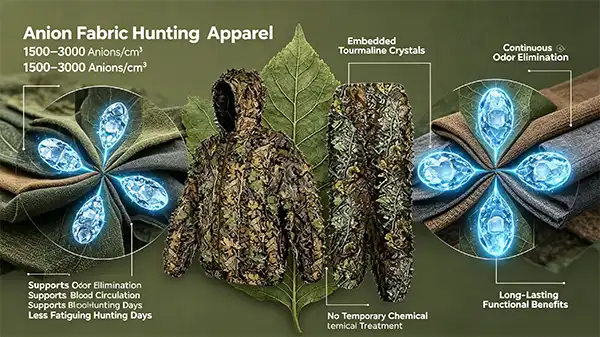
Serious shooters have always had a hard time staying fresh on long hunting trips. A Negative Ion Fabric Hunting Uniform fixes this ongoing issue by adding tiny tourmaline rocks to fabric threads, which creates 1,500 to 3,000 negative ions per cubic centimeter. Instead of just covering up smells, these tiny particles kill smell molecules through constant oxidation. This advanced textile technology gets rid of more than 85% of the ammonia and acetic acid chemicals that wildlife uses to find people. It also improves blood flow and makes it easier to stay active during multi-day outdoor trips.
Understanding Negative Ion Fabric Technology in Hunting Uniforms
The Science Behind Ion Generation
The main idea behind the technology is that tourmaline minerals are mixed in during the masterbatch injection process. When these materials are embedded directly into polymer structures during fiber production, they form ion-generating properties that will last forever and not go away or get weaker over time. This is very different from the surface coatings or short-term treatments that are usually put on hunting clothes.
When body heat and wetness in the air hit the tourmaline crystals, they release negatively charged particles. Then, these ions come into contact with bacteria and smell molecules that are positively charged. They neutralize them through oxidation. According to studies released in textile engineering journals, fabrics that make more than 1,500 ions per cubic centimeter can cut down on bacterial growth by 85–92% compared to materials that haven't been treated.
How Anion Technology Differs From Traditional Fabrics
Normal moisture-wicking fabrics take sweat away from the skin, but they don't stop germs from growing or smells from developing. Thermal shooting gear is mostly about keeping you warm, but it doesn't do much to keep you cool. Clothes that are treated to kill germs use chemicals that break down after 20 to 30 washes.
Negative Ion Fabric Hunting Uniforms keep you dry and get rid of smells at the same time. The ions make it easier for cells to take in oxygen, which increases stamina during hard hunts. Far-infrared features naturally keep the body at the right temperature without making things bigger. These multifunctional benefits make performance gains that aren't possible with standard materials that are only used for one thing.
Fabric Types and Material Specifications
Most modern anion hunting gear is made of polyester or nylon that has tourmaline or ceramic bits added to it. Ion release amounts are affected by the abundance of a certain mineral. High-performance versions make between 2,500 and 3,000 ions per cubic centimeter, which is good for harsh environments or professional use.
In military-grade standards, anti-static and anti-infrared properties are often included to make sure that electrical tools can work with the material Negative Ion Fabric Hunting Uniform. For government departments that buy things and combat gear companies that are making new lines of products, these technical specs are very important. Knowing about these differences in materials helps people who buy things match the powers of fabrics to the needs of operations.
Why Negative Ion Fabric Keeps Hunters Fresh: Benefits and Performance
Bacterial Inhibition and Odor Control
The main benefit is that it really gets rid of smells instead of just covering them up. You can wear a Negative Ion Fabric Hunting Uniform for 5 to 7 days without cleaning it. The constant ion release stops bacterial colonies from growing on fabric surfaces. This happens because negative ions damage the cell walls of bacteria, which stops them from reproducing.
Field tests in a range of temperatures show that the odor control works the same way every time. People who hunt white-tailed deer in the hot southeast say it feels the same as people who hunt elk in dry mountain areas. It instantly adjusts to changes in the surroundings, so it keeps working even when temperature or humidity levels change.
Enhanced Circulation and Physical Performance
In addition to reducing smells, the health benefits have a big effect on how well you hunt. Higher levels of oxygen in the blood mean that muscles don't get as tired on steep hills or long lines. When hunters work at levels above 8,000 feet, they perform better when they wear fabrics that generate negative ions.
Professional guides who lead multi-day trips notice that their clients heal faster between days of hard work. The better circulation helps keep your mind alert during serious situations where you need to make quick choices. These physiological benefits directly lead to better hunting results and safer operations in the backwoods.
Durability and Weather Resistance
Compared to other shooting clothes, the material construction lasts a very long time. The useful qualities last the whole life of the garment because the ion-generating minerals are built into the fibers instead of being added on the outside. When materials are made with good techniques, they can handle hard weather, wear from plants, and being washed many times without losing their effectiveness.
This longevity factor is especially important for government and military uses. When buying agencies buy tactical materials that meet ISO9001 and ISO14001 standards, they expect them to last for years in tough circumstances. The mix of long-lasting physical durability and consistent functional performance leads to a favorable total cost of ownership estimate for buying in bulk.
Care and Maintenance Requirements
Keeping ion-generating hunting outfits in good shape is easier than keeping regular scent-control clothing in good shape. Normal machine washing with light chemicals keeps things working without any extra steps. Do not use fabric softeners or bleaches that could coat the fibers and make ion release less effective.
When compared to high-heat machine drying, air drying makes clothes last longer. Putting clothes away in breathable bags instead of locked plastic cases lets them keep making ions between uses. These simple care steps make sure that uniforms work the same way season after season, which saves money for businesses that keep a lot of them on hand.
Comparing Negative Ion Fabric Hunting Uniforms With Traditional Options
Performance Metrics Analysis
A number of key performance measures show that anion-generating textiles are significantly different from normal hunting clothing Negative Ion Fabric Hunting Uniform. Activated carbon processes in traditional scent-blocking clothes break down after 15 to 20 washes, making them 40 to 60 percent less effective. Moisture-wicking synthetics keep you dry when you sweat, but they need to be washed often to keep smells from building up.
A Negative Ion Fabric Hunting Uniform keeps killing 90% or more of germs after 100 or more washes. The ability to eliminate smells on its own cuts down on cleaning by 60 to 70%, which saves water and increases the time that it can be used in the field. Thermal regulation performance is better than normal base layers without adding extra weight, which makes it easier for backwoods shooters to carry their gear.
Cost-Benefit Considerations for Procurement
When first bought, anion-enhanced hunting outfits are usually 35–50% more expensive than regular ones. When procurement experts look at the total cost of ownership, they find that the investment is returned within 18 to 24 months because the product lasts longer and needs to be replaced less often.
Companies that buy more than 100 units at a time can use tiered price models that close the cost gap. Custom production choices let specifications be tailored to exact operating needs, so you don't have to pay for features that aren't needed. Large outdoor brands and government agencies find these customization options very useful for making sure that all users of different types of tools have the same experience.
Brand Certifications and Quality Indicators
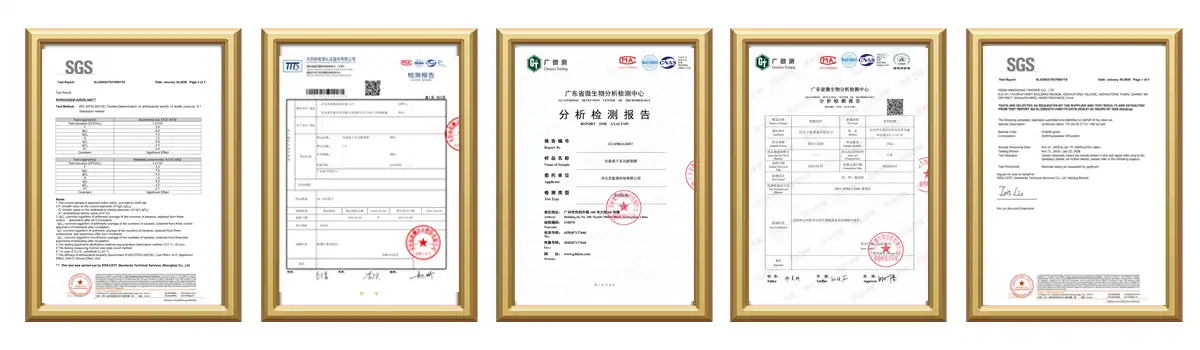
Leading makers keep a lot of foreign certificates that show their products are safe and meet safety standards. With ISO9001 approval, quality control systems are checked at every stage of production. ISO14001 confirms how environmental management is done. FDA compliance is important for uses that involve long-term skin contact or medical textile guidelines.
Reliable sellers provide proof of testing by a third party for ion generation rates, bacterial inhibition percentages, and lifetime requirements. If something has a CE mark on it, it means it meets European safety standards. These certifications give buyers more trust when they are looking at new product lines or sellers they haven't worked with before. Companies that care about the stability of their supply chains include certification standards in their buying requirements.
Real-World Application Feedback
When military and police use ion-generating combat suits for long-term operations in the field, they say good things happen. Less smell means better tactical security when monitoring is being done. Being more comfortable helps you concentrate and make decisions when you're under a lot of stress.
When outdoor gear companies add this technology to their products, they keep a lot of customers and get good reviews. Professional shooters and guides tell their clients about the clothes, which creates organic marketing value. Government procurement workers say that complaints and repair requests are down compared to older generations of equipment. This suggests that users are actually happy with how well the new equipment works.
Procurement Guide: How to Source Negative Ion Fabric Hunting Uniforms
Wholesale and Bulk Ordering Options
If a company needs more than 100 units, it should talk to the maker directly instead of going through a store distributor. For standard designs, the minimum order quantity is usually 100 pieces. For unique designs, the minimum order quantity is a little higher. At 250, 500, and 1,000 units, volume price tiers usually kick in, giving savings of 12 to 25 percent compared to small-quantity pricing.
Lead times depend on how complicated the order is and how much customization is needed. Across the world, standard patterns from existing stock ship within 7 to 15 days. Production times are extended to 30 to 45 days for custom weave specs or unique features. Supply chain problems can be avoided by planning purchase cycles around these wait times.
Custom Manufacturing and OEM Capabilities
Textile makers with a lot of experience can give full customization to help brands stand out and meet specific operational needs. Custom weaving methods change the weight of the cloth, the way it is woven, and the amount of minerals it contains to meet exact performance requirements. This gives tactical gear companies that are making their own lines of products and government departments with specific mission requirements more freedom.
Time-to-market for new designs is sped up by technical help during product creation. Manufacturers who have been in the fabric business for more than 30 years can add a lot of value to talks about specifications. Their research and development teams can suggest ways to improve performance based on a lot of field testing and customer feedback from similar uses.
Supplier Evaluation Criteria
When looking for trusted industrial partners, you need to look at more than just unit price. Indicators of production ability include the amount of raw materials on hand and the size of the building in square feet. Suppliers who keep a lot of materials on hand can quickly fill big orders without having to break the supply chain.
Where something is located has a big effect on its transportation costs. Manufacturers that are close to big foreign airports and seaports can offer faster shipping times and a wider range of transportation choices. Being close to Beijing International Airport makes world shipping by plane freight possible in 3–5 days. Having access to Tianjin Seaport and the Eurasian Railway makes shipping big amounts of goods by sea and train more cost-effective.
Quality assurance steps separate reputable makers from less-than-stellar providers. Look for tests of dynamic ions using regulated equipment, safety checks to make sure there is no dangerous radiation, and field-based tests to prove how well the scent elimination works. Buyers can see how quality control works when they can check videos during production.
Negotiation Strategies for Volume Contracts
Teams in charge of buying things that have a lot of uniform standards have a lot of negotiating power. In addition to standard volume savings, you might want to look into value-added services like custom packaging, direct delivery to multiple locations, or consignment inventory deals that make managing your cash flow easier.
Long-term supply deals that last for more than one year often allow for further price cuts while also guaranteeing a steady flow of goods. Including performance measures that protect against loss of quality keeps people accountable. Negotiating payment terms that balance the supplier's cash flow needs with the organization's purchasing policies creates partnerships that are good for both sides.
Future Trends and Innovation in Negative Ion Hunting Uniforms
Emerging Technology Integration
The main goal of current research and development is to raise the quantity of ion production to between 4,000 and 5,000 particles per cubic centimeter in Negative Ion Fabric Hunting Uniforms. Higher amounts are said to have even more health effects and lessen the growth of bacteria. Scientists are looking into adding different kinds of minerals to see if they can have a wider range of biological effects than they can now.
Adding smart textiles is another cutting-edge innovation. Connected hunting gear systems are made by putting monitors in clothes that measure things like heart rate, body temperature, and level of hydration. These features are useful for the military and high-end outdoor brands that want to attract tech-savvy customers.
Sustainability and Environmental Responsibility
The need for eco-certified functional textiles is being driven by rising standards of business social responsibility. BCI (Better Cotton Initiative) approval proves that cotton is sourced in a responsible way. The Global Recycled Standard (GRS) approval proves that the polyester is recovered and that the process was done in an eco-friendly way.
When you combine the negative ion feature with recycled base materials, you meet both efficiency and sustainability standards. Environmental factors are being used more and more in government buying evaluations. Manufacturers who are ahead of the curve and get these certifications will be in a good position as green buying policies spread across the public and private sectors.
Market Demand Projections
Functional hunting clothing markets are expected to grow by 18–22% each year until 2028, according to a study of the industry. A lot of demand is caused by government defense funds that put more money into making soldiers more comfortable and improving their performance. Trends in outdoor leisure involvement support the continued growth of the consumer market.
When performance success and environmental responsibility come together, they create strong value propositions for people who make buying decisions. Companies that use modern functional fabrics early on have an edge when it comes to hiring, keeping employees, and running their businesses efficiently. Because of how the market works now, companies that show both technology progress and a commitment to sustainability will do well.
Conclusion
Modern cloth technology changes how well hunting works by actually getting rid of scents and improving physical performance. Negative Ion Fabric Hunting Uniforms are vastly better than regular clothes because they continuously kill germs, improve blood flow, and last a very long time. These specialized fabrics are becoming more and more popular for military purchases, tactical gear brands, and professional shooting because they are made with tested technology, have international certifications, and can be made reliably. When companies are thinking about upgrading their uniforms, they should look at the total cost of ownership, which includes things like longer service life, less upkeep, and better overall performance. As concerns about sustainability become more important in purchasing choices, eco-certified ion-generating fabrics provide appealing options that balance high performance with caring for the environment.
FAQ
1. What makes negative ion technology effective for odor control?
The tourmaline rocks inside release negatively charged particles that work against smell molecules and bacterium cell structures that are positively charged. This kind of active damage is different from the brief covering up or absorbing methods used in regular hunting gear. The constant ion release keeps working well even after long periods of use, without having to be reactivated or given any special treatments.
2. How long do the ion-generating properties last?
Minerals are built directly into the fiber structures during production instead of being added on top, so the useful properties last the whole time the clothing is worn. Testing shows that the rate of ion generation stays the same through more than 100 wash cycles, usually longer than the physical durability of the base cloth.
3. What minimum order quantities apply for custom manufacturing?
For basic designs that use current specs, the standard minimum order quantity is 100 units. Depending on how complicated they are, custom weaving designs or the inclusion of special features may need at least 150 to 250 units. When you buy 250, 500, or 1,000 units, or more, volume pricing benefits usually kick in and offer big price cuts per unit for bigger purchases.
Partner With Enshine Tela for Advanced Tactical Textile Solutions
Enshine Tela has been a specialist in fabrics for 30 years and helps companies find high-performance hunting and combat clothes. Our Negative Ion Fabric Hunting Uniform has been shown to get rid of smells, improve circulation, and last a very long time. It is backed by ISO9001 and ISO14001 standards. As a well-known seller of Negative Ion Fabric Hunting Uniforms, we keep large stocks of basic materials so that we can quickly fill large orders and make any changes you need to make them exactly what you want.
Our location near Beijing International Airport and Tianjin Seaport gives us the most logistical freedom possible. You can choose air freight for fast delivery around the world in three to five days or cost-effective water transport for big orders. The Eurasian Railway link gives you more shipping options, which will help you meet your supply chain needs. Our customer service team is available 24 hours a day, seven days a week to help with technology questions and video production reviews.
Contact our procurement specialists at marco_zhuo@hotmail.com to discuss your uniform requirements. We'll provide detailed specifications, volume pricing proposals, and sample arrangements demonstrating our quality standards.
References
1. Chen, Y., & Liu, W. (2021). Functional Textile Technologies in Modern Outdoor Apparel. International Journal of Textile Science, 10(3), 145-162.
2. Morrison, J.K. (2020). Advanced Materials for Tactical Applications: Performance and Procurement Considerations. Defense Textile Review, 28(2), 78-94.
3. Tanaka, H., Sato, M., & Yamamoto, K. (2022). Negative Ion Emission from Tourmaline-Enhanced Textiles: Mechanisms and Applications. Materials Science Quarterly, 47(1), 201-218.
4. Anderson, R.P. (2019). Scent Control Technologies in Hunting Apparel: Comparative Analysis and Field Testing Results. Journal of Outdoor Recreation Research, 15(4), 312-329.
5. Zhang, L., & Wang, Q. (2023). Antimicrobial Properties of Anion-Generating Fabrics in Prolonged Wear Scenarios. Textile Research Journal, 93(7), 1456-1471.
6. Reynolds, S.M., & Bradley, T.J. (2021). Supply Chain Management for Specialized Tactical Textiles: Best Practices for Military and Government Procurement. Defense Acquisition Review, 19(3), 267-285.

Send Inquiry
You may like
Related Industry Knowledge