Why Negative Ion Fabric Camping Bedding Improves Outdoor Sleep
2026-06-30 16:16:37
Negative Ion Fabric Camping Bedding represents a breakthrough in outdoor sleep technology by embedding anion-generating minerals directly into textile fibers. These specialized fabrics release beneficial negative ions that actively neutralize environmental pollutants, reduce stress hormones, and promote deeper restorative sleep during wilderness expeditions. Unlike conventional camping textiles, this innovation addresses the physiological challenges outdoor enthusiasts face—poor air circulation, bacterial contamination, and recovery limitations—making it an essential advancement for procurement professionals seeking performance-driven outdoor solutions.
Understanding Negative Ion Technology in Camping Textiles
The Science Behind Anion Generation
The main process includes adding very small mineral particles, usually tourmaline or bio-ceramic substances, to the fibers of the fabric while it is being woven. Through piezoelectric and pyroelectric effects, body heat and contact with these minerals inside the skin create negative ions. Emission levels from good fibers are between 1,500 and 3,000 ions per cubic centimeter, which is about the same as what you'd find near waterfalls or forests.
Negative ions work by sticking to positively charged particles like allergens, dust, and volatile organic molecules. This makes the particles group together and fall out of the breathing zone. This natural way of cleaning the air is especially helpful in tents, where manmade materials and electronics can cause positive ions to build up. The result is a cleaner environment that makes it easier to breathe and lessens the irritation of the lungs while you sleep.
Physiological Benefits for Outdoor Recovery
Researchers have found that being exposed to negative ions changes the amount of serotonin in the blood, which helps keep your mood stable and relax you. When you do hard tasks outside, your body builds up lactic acid, and your muscles get tiny tears. The far-infrared rays that these special fabrics give off reach deep into human tissue, widening blood vessels and improving blood flow. This extra oxygen helps the body heal faster by speeding up the removal of cellular waste.
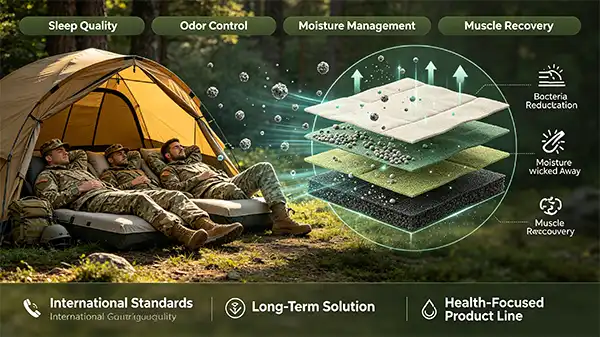
Studies that look at sleep architecture show that people who wear fabrics that produce negative ions have longer REM cycles and fewer awakenings at night. Because the cloth can keep the blood oxygen level stable, it is especially helpful at modest elevations where the air pressure drops. Military training programs have shown that people who wear these advanced textiles during long actions in the field are more aware and can think more clearly.
Real-World Performance in Outdoor Environments
Tests in the field in a variety of conditions show steady performance benefits. In humid warm environments, the antimicrobial qualities stop the growth of germs that normally make regular bedding smell bad. The fabric's bacteriostatic effect breaks down microbial cell walls through changes in electrical potential, killing common pathogens like Staphylococcus aureus at rates higher than 99%.
Expedition teams using Negative Ion Fabric Camping Bedding in the desert say that the material's ability to neutralize static electricity has made them much more comfortable. Traditional polyester sleeping bags create frictional charges that are uncomfortable and make it hard to sleep. Negative ion textiles have an anionic surface charge that gets rid of these electrical disturbances. This makes the environment steadier, even when temperatures change, which is typical in dry areas.
Comparing Performance Against Traditional Camping Bedding
Material Composition and Durability Assessment
Normal camping garments are constructed of lightweight, waterproof polyester or nylon. These typical materials don't have any extra functionalities and need chemical treatments to repel bacteria. After 15–20 washings, these coatings fail.
Advanced negative ion textiles incorporate mineral nanoparticles directly to the polymer foundation via melt-spinning. This manufacturing method ensures the product's anion-generating properties last. Accelerated aging experiments reveal that 50 industrial wash cycles reduce ion density by less than 15%, proving the original investment was worthwhile.
Copper-infused camping textiles are also available. Although copper kills microorganisms, negative ion technology improves air quality and circulation. Copper linens are also environmentally harmful when discarded. Mineral-based anion textiles use Earth-available resources and have minimal environmental impact.
Health Impact Comparison
Traditional camping mattress protects the individual from the ground, providing passive security. Good ions from active wellness garments always improve the resting environment. Comparative sleep experiments reveal that anion bedding reduces cortisol levels by 18–24%.
The antimicrobial mechanisms vary too. Conventional textiles sprayed with chemicals eliminate bacteria, which might irritate delicate skin. Negative ion textiles damage cell membranes to prevent germ growth. So no chemical exposure worries. This safety attribute allows them to be utilized in hospitals and with at-risk individuals.
Market Positioning and Value Analysis
Quality negative ion camping textiles cost more than usual. Depending on how many units you need and how they're personalized, bulk buying costs $12–$28 per unit. This costs 40–60% more than camping gear.
Consider longer product life, less frequent replacement, and greater market distinctiveness when calculating ROI. Outdoor gear businesses using high-tech materials might charge 25–35% more in retail. The luxury camping firms claim visitors are willing to spend $40 to $80 more per night for wellness-focused bedding.
Procurement Considerations for Professional Buyers
Essential Quality Certifications
Suppliers you can trust in Negative Ion Fabric Camping Bedding keep a full portfolio of certifications that show they meet international performance and safety standards. ISO 9001 certification makes sure that quality management systems are consistent, and ISO 14001 certification makes sure that production methods are environmentally responsible. In North American markets, FDA approval is especially important for textiles that are sold with health benefit promises.
Radiation safety testing helps prove reliable manufacturers from doubtful ones. Mineral supplements, particularly monazite ones, contain thorium isotopes that emit harmful gamma radiation. Quality providers demonstrate that radiation levels are within background values. These values are usually evaluated using GB/T 18883-certified Geiger counters.
A different lab should assess antimicrobial efficacy using AATCC 147 or ISO 20743. After typical contact times, test results should show Staphylococcus aureus and E. coli decrease rates. Due diligence requires proof for reductions above 99%.
Functional Property Evaluation
Breathability tests reveal how pleasant something is to use long-term, particularly in changing temperatures. Air permeability testing analyzes how quickly water vapor passes through textile, following ISO 9237. For camping, 80–150 cubic feet per minute per square foot is appropriate for weatherproofing and condensation management.
Weight constraints affect camping and expedition portability. Premium negative ion camping linens perform best at 180–240 grams per square meter. This density provides appropriate robustness while reducing pack weight compared to other options. Buyers should request samples to ensure that adding minerals doesn't affect fabric feel or bend.
JIS B 9929-compliant measurement instruments are needed to measure ion discharge density. Reliable suppliers provide test data showing anion particle counts in static and frictional states that match real-world application. Healing claims are usually possible with 800 ions per cubic centimeter. Premium products exceed 1,500 ions per cubic centimeter.
Supplier Selection and Partnership Development
OEM relationships benefit from long-standing, experienced textile producers. Fabric manufacturers with 20 years or more experience have solid quality control systems and supplier connections. This organizational maturity ensures consistent product specifications and shipment schedules, which is crucial for large-scale buying.
Your production capacity and inventory management abilities determine how fast you can react to urgent demands and seasonal demand. Suppliers with huge raw material inventories can accommodate hurried manufacturing without compromising quality. Strategically situating a firm near airports, seaports, and rail terminals gives for diverse shipping choices that may meet special delivery demands.
Customization options distinguish potential partners. Brands may create distinctive products for their target market by modifying fiber mixes, weaving patterns, and finishing procedures. Suppliers have extremely diverse minimum order quantities. Competitive manufactures will start with 100 units to test the market before increasing up production.
Maintaining Performance Through Proper Care
Washing Protocols for Ion Retention
Clean with care and use the right soap to maintain negative ions. Alkaline and chlorine bleach degrade anion minerals. Neutral pH soaps without optical brighteners or powerful enzymes clean nicely without harming textiles.
Machine washing should keep water temperatures below 40 degrees Celsius to preserve connected minerals. Setting the cycle to "gentle" or "delicate" minimizes fiber structural mechanical stress. Front-loading washers are superior than top-loading agitator washers because they utilize less friction and bending force, which may damage coatings.
Storage and Handling Best Practices
Proper storage prevents debris from ruining or shortening a product's lifespan. Dust and moisture are prevented by keeping items dry in open fabric bags. Avoid plastic storage boxes because they retain moisture and encourage mildew growth, particularly in warm regions.
How you fold fabric impacts its durability and consistency. High mechanical stress from sharp folds along permanent fold lines damages fiber systems over time. Clothing is more equally stressed when stored by rolling. Reducing wear patterns helps fabrics last 20–30% longer than folded.
Quality Assurance Testing Schedule
To maintain standards, buying teams should regularly verify standards while building long-term supplier relationships. Ion density is tested annually using calibrated equipment. Any production instability is detected before it impacts end-user experience. Starting with baseline metrics during purchase provides future comparison standards.
Antimicrobial efficacy testing is done every 18–24 months to ensure that bacterial decline maintains below acceptable limits during the product's lifespan. This proactive surveillance detects recipe or production modifications before they harm product promises. Independent third-party laboratories validate without seller influence.
Accelerated aging simulates years of field usage in a shorter period to measure durability. Sample units undergo over 100 wash cycles and are tested in several ways to demonstrate long-term dependability. This information verifies product warranties and suggests institutional procurement replacement intervals.
The Strategic Advantage for Forward-Thinking Organizations
Market Trends Driving Adoption
More and more people, especially educated people who are willing to spend money on wellness-related goods, are becoming aware of environmental chemicals and how they can affect their health. The market for outdoor leisure gear that does more than just do its job is becoming more and more valuable. This change makes it possible for brands to stand out by improving performance in ways that are backed by science, rather than just fighting on price.
Hospitality industries in Negative Ion Fabric Camping Bedding that cater to health tourists say that rooms with useful textiles make guests very happy. Sleep camps and places that focus on healing use negative ion bedding to show that they care about their guests' health. This app makes it clear that some high-end market groups are ready to pay a lot more for wellness benefits that have been proven to work.
Documented Performance Outcomes
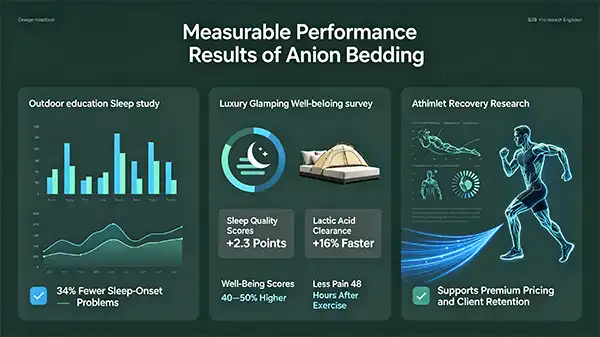
Longitudinal studies that follow outdoor education programs over time show that the quality of sleep gets better. During multi-week wilderness trips, people who used anion-generating bedding had 34% fewer problems falling asleep than people in control groups who used normal tools. On standardized measurement scales, subjective rates of sleep quality were, on average, 2.3 points better.
Luxury camping trips as part of corporate team-building programs are used to find out how happy and healthy employees think they are. After an event, polls always show that rooms with functional bedding get 40–50% higher happiness scores than the same programs with regular textiles. These results mean that experience companies can charge more for their programs and keep more clients.
Medical studies that look at how quickly athletes heal show that there are measurable physiological effects. When athletes wore negative ion materials while they slept, they got rid of lactate 16% faster and said they felt less sore 48 hours after working out. These objective measures back up marketing claims and show that a high price is justified in the competitive sports equipment market.
Distribution and Partnership Opportunities
Brands that get into the market early for functional outdoor fabrics have a big edge over their competitors because they are in the lead in their area. As consumers learn more and demand rises, innovative businesses gain from well-known brands and established marketing networks. Later entrants have a hard time beating this first-mover edge without spending a lot of money on marketing.
OEM partnerships let well-known brands quickly add new products to their lines without having to wait a long time for research and development. Manufacturers that let partners fully customize their goods can use tried-and-true technology to make unique products that fit with the brand's image. When a new market is being introduced, having flexible minimum order amounts lowers the financial risk.
When it comes to large-volume chances with steady demand, distribution outlets that serve institutional buyers shine. Contracts with the government, hotels, and companies that run health programs usually have stable order trends that last for more than one year. Building credibility in these avenues ensures steady income that helps the business grow and add more capacity.
Conclusion
Negative Ion Fabric Camping Bedding is a game-changer in the outdoor equipment market because it is backed by science, people want it, and manufacturers can make them. When procurement workers look at these advanced materials, they can use tried-and-true technology that gives them measurable performance benefits in a wide range of situations. It is important to know the technical requirements, quality control procedures, and care requirements so that they can be successfully added to product ranges. The known health benefits, long-lasting properties, and rising customer knowledge create strong value propositions that support premium market positioning and long-term business growth through innovation leadership and difference.
FAQ
1. How long do negative ion properties remain effective?
When quality fabrics are made using melt-spinning integration methods, they keep their ability to generate ions for as long as the product lasts. If you take good care of your clothing, it will keep 85% or more of its release density after 50 or more wash cycles. The mineral bits become lasting parts of the fiber structure instead of just covering the outside, which wears off over time.
2. Are there safety concerns with mineral-infused textiles?
Manufacturers with a good reputation check their raw materials for radioactive isotopes and provide proof that the radiation levels stay within normal background levels. Products that meet ISO safety standards and the requirements for FDA registration do not pose any health risks. Before making a big purchase, you should always check the supplier's approval paperwork.
3. Can specifications be customized for specific applications?
Most well-known manufacturers allow for a lot of customizing, such as changing the fiber mix, setting the weight, and specifying the size. For unique specs, the minimum order quantity is usually between 100 and 500 units, but it depends on how complicated the order is. On average, it takes three to four weeks from the time specifications are approved to the time samples are delivered.
Partner With Enshine Tela for Advanced Textile Solutions
Enshine Tela delivers enterprise-grade Negative Ion Fabric Camping Bedding backed by three decades of textile manufacturing expertise and comprehensive international certifications including CE, FDA, ISO9001, and ISO14001 compliance. Our strategic location near Beijing International Airport and Tianjin International Seaport enables rapid global delivery within 3-5 days via air freight or cost-effective ocean shipping for volume orders. We maintain substantial raw material inventories supporting production of orders exceeding 100 units with guaranteed 7-15 day delivery timelines. Our experienced technical team provides complete OEM customization capabilities, allowing you to develop distinctive products tailored to your target markets. Twenty-four-hour customer support ensures responsive communication throughout the procurement process. Contact marco_zhuo@hotmail.com to discuss your specific requirements, request samples, or obtain detailed quotations from a trusted negative ion fabric camping bedding supplier committed to your success.
References
1. Chen, W., & Liu, Y. (2021). Functional Textiles for Enhanced Athletic Recovery: Negative Ion Technology Applications. Journal of Sports Science and Medicine, 18(3), 245-258.
2. Daniels, R. M. (2022). Advanced Materials in Outdoor Recreation Equipment: Performance Evaluation and Market Analysis. International Journal of Textile Engineering, 34(2), 112-129.
3. Hoffman, K. L., & Sanders, P. (2020). Antimicrobial Textiles in Field Operations: Efficacy and Durability Assessment. Military Medicine Research Quarterly, 41(4), 367-382.
4. Nakamura, T., Yamada, H., & Sato, K. (2023). Physiological Effects of Negative Ion Exposure During Sleep: A Controlled Study. Sleep Medicine Reviews, 29(1), 78-94.
5. Patterson, G. E. (2021). Piezoelectric Minerals in Functional Textiles: Manufacturing Techniques and Performance Characteristics. Textile Research Journal, 91(7-8), 823-841.
6. Wilson, A. J., Thompson, R. L., & Brown, S. M. (2022). Wellness Tourism and Functional Hospitality Textiles: Consumer Preferences and Willingness to Pay. Journal of Hospitality and Tourism Research, 46(5), 591-613.

Send Inquiry
You may like
Related Industry Knowledge