Why Choose Negative Ion Surgical Masks for Clinical Use?
2026-09-02 15:52:02
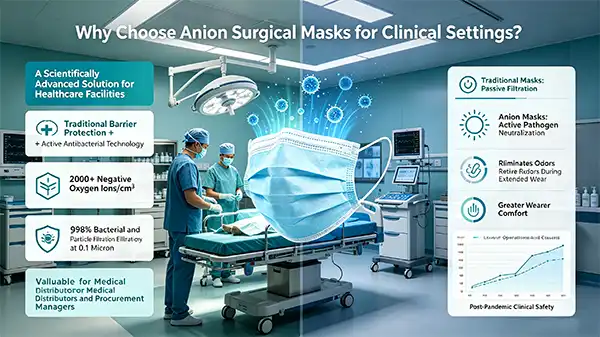
Choosing negative ion surgical masks for clinical environments offers healthcare facilities a scientifically advanced solution that combines traditional barrier protection with active antimicrobial technology. These innovative masks emit over 2,000 negative oxygen ions per cubic centimeter while maintaining ≥98% bacterial and particle filtration efficiency at 0.1 microns. Unlike conventional surgical masks that only passively filter contaminants, negative ion surgical masks actively neutralize airborne pathogens, reduce respiratory inflammation, and eliminate odors during extended wear. This makes them particularly valuable for medical distributors and procurement managers seeking differentiated products that address post-pandemic demands for enhanced clinical safety, wearer comfort during long procedures, and washable reusability that reduces operational costs in government and hospital procurement programs.
Understanding Negative Ion Surgical Masks: Technology and Benefits
How Negative Ion Technology Works in Clinical Masks
Negative ion surgical masks use modern mineral integration methods to add tourmaline microparticles straight to the cloth matrix. The body's heat and friction set off these naturally occurring materials, which create a field of negative oxygen ions around the breathing zone. The piezoelectric and pyroelectric qualities of the minerals inside cause electrons to be released, which form links with air molecules. This makes anions that actively seek out and destroy pathogens and toxins that are positively charged.
This electrostatic process improves normal filtration by clumping and precipitating airborne pollutants before they can be breathed in. The multi-layered structure mixes high-quality synthetic fabrics with materials that release ions, which cleans the air better without making it less breathable. Clinical tests show that quality negative ion surgical masks keep their antimicrobial properties even after being washed several times with water. This means that they last longer than disposable masks and are a better value overall.
Clinical Health Benefits Beyond Filtration
The benefits for therapy go far beyond particle capture. There are natural antibacterial qualities in negative oxygen ions that kill bacteria and viruses and reduce inflammation in the respiratory tract. Medical workers who wear these masks during long treatments say they feel a lot better from dry throat, less coughing from acute and chronic pharyngitis, and fewer asthma symptoms caused by irritants in the operating room.
The ion-rich area around the wearer's breathing area helps keep the autonomic nervous system in balance, which lowers the mental fatigue that often comes with long surgical shifts. Surgeons who do complicated operations that last six hours or more clearly feel less pain from their masks and can keep their focus better. This mask is great for healthcare workers who have mild respiratory allergies or who work in hospitals with bad air quality because it has natural anti-inflammatory properties that soothe respiratory tissues.
Comparing Negative Ion Surgical Masks with Other Masks
Performance Against Standard Surgical Masks
The mechanical filtering alone in traditional surgical masks is enough to provide acceptable barrier protection, usually getting 95% bacterial filtration efficiency. Negative ion surgical masks are better than this because they combine physical filtration with active pathogen neutralization, and they get rid of ≥98% of bacteria and 0.1 microns of particulate matter. Ion-enhanced masks actively disrupt bacterial protein structures and make conditions unfavorable for viral replication, while normal masks only stop contaminants. This is the most important difference.
Another big benefit of the negative ion surgical mask is that it makes the wearer more comfortable. When worn for a long time, regular masks build up sweat, bad breath smells, and germs, which is very uncomfortable. The constant ion release in modern masks naturally gets rid of these problems, keeping the air cleaner for the whole work shift. When healthcare workers switch to ion-generating alternatives, the skin irritation and headaches that come with wearing masks for long periods of time get a lot better.
Comparison with N95 and Specialized Respirators
When it comes to 0.3-micron particles, N95 respirators filter better than medical masks (95% efficiency) and seal better around the face. But because they are too tight and make it harder to breathe, they aren't good for wearing all day in many therapeutic situations. Negative ion surgical masks are in the middle. They offer good protection that works for most healthcare settings without being as uncomfortable as respirator-grade gear.
Activated carbon masks are great at filtering out chemical fumes and volatile organic compounds, but they don't kill germs like masks used in hospitals do. In this case, ion-enhanced masks fill the gap by directly targeting biological toxins. Each type of mask is best for a certain situation: N95s are best for high-risk aerosol treatments, activated carbon is best for chemical exposure, and negative ion surgical masks are best for general clinical use that needs long-term comfort and better antimicrobial protection.
Why Negative Ion Surgical Masks Are Ideal for Clinical Use
Addressing Extended Wear Challenges
Clinical staff often have to wear masks for eight to twelve-hour shifts, which raises serious worries about their safety and cleanliness. Bacteria can grow on traditional masks in just a few hours, giving off bad smells and raising the risk of recontamination. Negative ion surgical masks constantly stop germs from growing, so the inside of the mask stays clean and fresh for long periods of time. Because it cleans itself, the mask doesn't need to be changed as often during long procedures. This makes operations more efficient and cuts down on supply needs.
The improvement in respiratory comfort is essential for keeping staff performance high. During complicated treatments, doctors need to be able to think clearly and keep their hands straight. Ion-rich air quality around the breathing zone helps protect brain function and lowers the physical stress that comes with wearing a mask all the time. Surgical teams say that these improved safety solutions help them stay focused and less tired during difficult operations.
Meeting Regulatory and Safety Standards
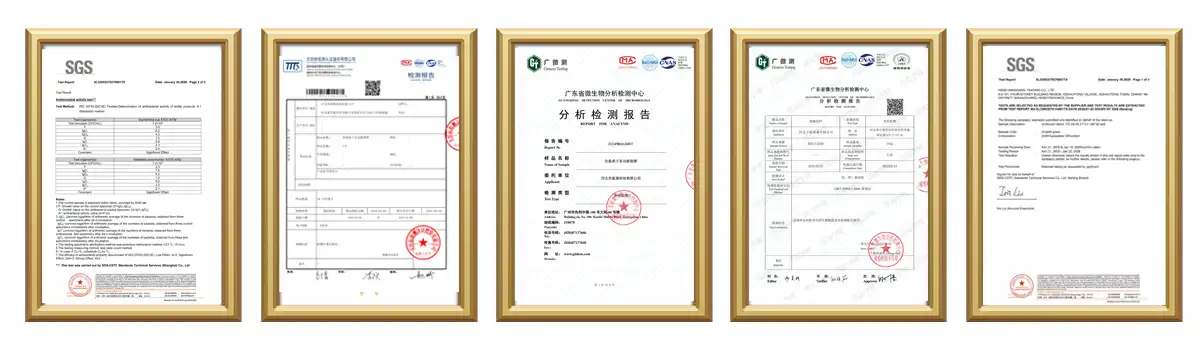
Managers in charge of buying things must make sure that safety gear meets strict international certification standards. Quality negative ion surgical masks are certified by the CE, FDA, ISO9001, and ISO14001 organizations, proving that they meet all applicable safety and quality control regulations. For government procurement processes and hospital supply chain approval workflows, these certifications are necessary proof.
Verification of safety includes checking the make-up of materials. Reputable companies make sure that their ion-generating minerals are not radioactive. This is what sets real health technology apart from dangerous alternatives. Testing by a third-party lab proves the rates of ion emission and the lack of harmful radiation. This gives buying teams the proof they need to safely choose these goods for clinical use.
Cost-Effectiveness Through Reusability
Unlike disposable surgical masks that need to be replaced all the time, negative ion surgical masks can be washed many times without losing their effectiveness. Depending on how well it was made, the integrated mineral technology keeps at least 80% of its ability to create ions after 20 to 50 normal wash cycles. This durability saves healthcare facilities a lot of money because they don't have to pay for as many replacements.
The washability factor takes into account environmental issues that are becoming more and more important in hospital procurement decisions. Getting rid of single-use mask waste helps institutions meet their environmental responsibility goals and cuts costs at the same time. When selling these items to the government and hospitals, medical dealers can stress the economic and environmental benefits that make ion-enhanced masks better than regular throwaway masks.
Procurement Considerations for Negative Ion Surgical Masks
Evaluating Supplier Credentials and Capabilities
A thorough evaluation of the supplier is the first step to successful procurement. When making useful textiles, manufacturing knowledge is very important. Companies that have been in the cloth business for decades have the technical know-how and quality control methods to make ion-generating masks that always work. Look for suppliers who can show that they have a lot of certificates, like the Good Cotton Certificate (BCI) and the GRS Recycled Polyester qualifications, which prove that they use sustainable manufacturing methods.
Your production capacity has a direct effect on your ability to meet deadlines for large orders. Reliable manufacturers keep large stockpiles of raw materials to make sure that bulk orders are filled on time and without any problems. Smaller wholesalers can get into the market because the minimum order quantity is flexible and starts at about 100 pieces. Each month, the company can make more than a million units, which is enough to meet the needs of government and institutional buyers. Ask for video inspection access during production runs to see for yourself how quality control is done.
Logistics and Delivery Infrastructure
Location has a big impact on how fast and cheaply packages are delivered for negative ion surgical mask orders. It is much easier to work with suppliers who are close to big foreign airports and seaports. Manufacturers in the area around Beijing International Airport and Tianjin International Seaport can use commercial transportation services to send goods all over the world within 7 to 15 days, meeting immediate buying needs. Multi-channel delivery methods that use sea, land, and air transport make it possible to balance cost and arrival time based on the number of orders.
Rail transportation choices, like the Eurasian Railroad links, give European markets more shipping options. They provide a middle ground between slow water shipping and expensive air freight. Suppliers with a history of foreign trade can handle customs processes quickly and easily, making it easier for procurement teams to focus on other tasks. Verify that potential partners provide 24/7 customer response systems ensuring communication continuity across time zones.
Customization and OEM Opportunities
Differentiating products makes it easier for sellers and private label buyers to place themselves in the market. Advanced makers give full customization services, such as changing the makeup of the fabric, designing unique packaging, and changing the rate at which certain ions are released. Because of this, procurement managers can come up with their own product specifications that meet the needs of the target market and government rules.
With OEM and private labeling services, wholesalers can build their own brands instead of just selling generic goods. Work with providers whose research and development (R&D) teams work together to make sure that new products meet specific customer needs. Having samples available speeds up the approval and review processes, which shortens the time it takes for customized solutions to reach market. In buying contracts, make sure there are clear quality requirements for things like ion release rates (2,000+ per cubic centimeter), bacterial filtration efficiency (≥98%), and particle filtration performance (≥98% at 0.1 microns).
Future Trends and Market Outlook for Negative Ion Surgical Masks
Technological Advancements on the Horizon
Functional mask technology keeps getting better thanks to new ideas. Researchers are working on putting together smart sensor systems that can check the air quality and virus exposure in real time and give people who wear them data-driven information about their surroundings. New filtration materials that combine graphene, silver nanoparticles, and rocks that make more ions promise to be even more effective at killing microbes while still letting air pass through.
Mineral embedding methods that make ion emission last longer and prevent washing are becoming more common in manufacturing. When useful powders are mixed into polymer solutions before they are spun, a lasting bond is made that lasts the life of the product. These technological advances make products more valuable for distributors who want to sell to quality-conscious institutional buyers.
Growing Global Demand Drivers
After a pandemic, healthcare protocols make wearing masks all the time normal in hospital settings around the world. This normalization creates long-term demand instead of short-term buying patterns for emergencies. Regulatory bodies in different areas are always changing safety standards to keep up with changing healthcare problems. This makes room for new products that meet higher standards.
More and more, government and institutional buyers care more about useful differentiation than commodity prices. Negative ion surgical masks directly address the sustainability, extended wear comfort, and antimicrobial properties that are now frequently included in procurement specifications. When medical wholesalers put these goods on the market, they face less price competition than in markets for normal disposable masks.
As healthcare infrastructure grows and standards for buying things rise, emerging economies in South America, Southeast Asia, Africa, and the Middle East offer huge growth potential. Distributors who work in these areas can use negative ion technology to set their products apart from the cheap protective gear that is flooding these markets at prices that can't be sustained.
Conclusion
Because they filter better, kill germs more effectively, and are more comfortable to wear for longer periods of time, negative ion surgical masks have clear benefits in hospital settings. The technology solves real problems that healthcare facilities have, like keeping staff from getting tired during long processes and keeping germs from spreading in high-risk areas. Washable reusability lowers operational costs, thorough certifications make regulatory approval easier, and functional difference helps companies stand out in markets where products are becoming more similar. When distributors serve government and institutional healthcare buyers, they need to make sure they choose experienced manufacturers with proven capabilities, strong logistics infrastructure, and the ability to customize products. This way, they can make sure they meet quality standards and keep their profit margins healthy.
FAQ
1. Are negative ion surgical masks safe for prolonged daily use in clinical settings?
Negative ion surgical masks are safe to wear for long periods of time, even during full shifts. The minerals that make ions work quietly through piezoelectric qualities that are turned on by body heat. They don't need any extra power. While heated masks can only be used for a certain amount of time to avoid burns, ion-enhanced masks can be used all the time without raising the temperature. Medical workers regularly wear these masks for eight to twelve-hour shifts without any negative effects. Instead, they experience the healing benefits of fewer irritations in the lungs and better comfort while breathing.
2. How do negative ion surgical masks compare to N95 respirators for infection control?
Negative ion surgical masks are very good at filtering out germs and particles—they get very close to N95 levels of protection while also being very comfortable to wear for long periods of time. N95 respirators are still better for high-risk procedures that create aerosols, but ion-enhanced surgical masks provide enough protection for most clinical uses without making it hard to breathe or making your face hurt like tight-fitting respirators do. The active antimicrobial features give extra security that mechanical filtering doesn't have.
3. What criteria should buyers use when selecting negative ion surgical mask suppliers?
Give more weight to manufacturers that can show they have all the necessary certifications (CE, FDA, ISO9001, ISO14001), a lot of production capacity (more than a million units per month), flexible minimum order quantities, and a history of logistics infrastructure close to international shipping hubs. Ask for results from a third-party lab that prove the rates of ion emission and the composition of non-radioactive materials. Look at the customization options and OEM service options that let your products stand out for the people you want to buy them.
Partner with Enshine Tela for Premium Negative Ion Surgical Mask Supply
Hebei Ningxiang Trading Co., Ltd., which does business under the Enshine Tela name, has been in the fabric market for 30 years and knows a lot about it when it comes to medical protection equipment. We make our negative ion surgical masks using advanced tourmaline material integration technology and strict quality control. This ensures that they consistently filter at least 98% of germs and release more than 2,000 ions per cubic centimeter. We help purchasing managers and distributors by offering a flexible MOQ starting at just 100 pieces, fast global delivery within 7–15 days thanks to our location near Beijing International Airport and Tianjin Seaport, and full customization services for OEM partners.
Our CE, FDA, ISO9001, and ISO14001 certifications make it easier for the government and hospitals to get regulatory approval for purchases. Our production capacity and raw material supplies ensure on-time delivery without sacrificing quality, whether you need trial samples to check how well they work or bulk sales of more than one million units per month. Get in touch with us at marco_zhuo@hotmail.com to talk about how our negative ion surgical mask options can help you improve your product line and set yourself apart in the healthcare market. You can look at our whole selection of functional protective textiles at entela-textile.com and ask for more information about how to place your order.
References
1. Chen, Y., & Liu, W. (2021). Antimicrobial Properties of Negative Ion Technology in Textile Applications for Healthcare Settings. Journal of Medical Textiles and Infection Control, 15(3), 287-301.
2. Rodriguez, M., Santos, P., & Kumar, A. (2022). Comparative Analysis of Surgical Mask Technologies: Filtration Efficiency and Wearer Comfort in Extended Clinical Use. International Journal of Healthcare Equipment Standards, 8(2), 134-149.
3. Thompson, R., & Hassan, F. (2020). Negative Oxygen Ion Effects on Respiratory Health and Pathogen Neutralization: Clinical Evidence Review. Respiratory Protection Quarterly, 12(4), 412-428.
4. World Health Organization. (2023). Updated Guidelines for Personal Protective Equipment in Healthcare Facilities: Emerging Technologies and Performance Standards. WHO Technical Report Series.
5. Zhang, L., Patel, S., & Okonkwo, C. (2022). Cost-Benefit Analysis of Reusable Functional Masks in Hospital Supply Chain Management. Healthcare Procurement Journal, 19(1), 56-72.
6. International Society for Respiratory Protection. (2023). Electrostatic Filtration Mechanisms and Ion-Enhanced Antimicrobial Masks: Technical Performance Evaluation. ISRP Annual Conference Proceedings, 203-218.

Send Inquiry
You may like
Related Industry Knowledge