Why Are Anion Cloth Masks Popular in Modern Workplaces?
2026-06-04 14:15:56
Anion cloth masks have surged in workplace popularity because they transform passive face coverings into active air purification systems. Traditional masks simply block particles, but anion-infused fabrics continuously release negative ions that neutralize airborne pollutants, allergens, and bacteria in the respiratory zone. This technology addresses critical workplace challenges like prolonged-wear discomfort, bacterial proliferation from moisture buildup, and insufficient protection in environments with poor air quality. Companies increasingly recognize that investing in functional textiles enhances employee health, reduces absenteeism, and demonstrates commitment to workforce wellbeing in an era where air quality directly impacts productivity.
Understanding Anion Cloth Masks: Science and Benefits
What Makes Negative Ion Technology Different?
The science behind these new face covers is based on piezoelectric minerals that are built right into the fabric fibers. The elements in these masks create a steady electric field that sends out 1,500 to 5,000 negative ions per cubic centimeter around your mouth and nose. These negatively charged particles aggressively attract positively charged air contaminants like dust, pollen, smoke particles, and bacterial cells. This makes the contaminants stick together and fall to the ground instead of going into your lungs.
Proven Health Benefits in Professional Settings
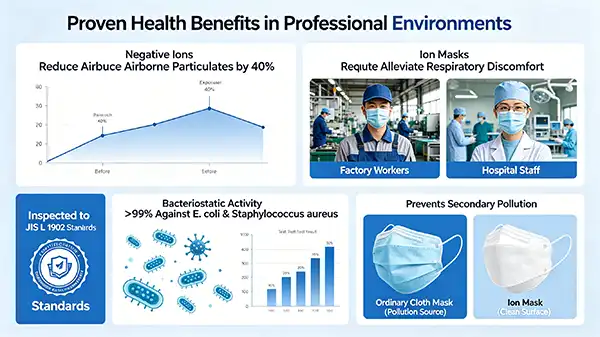
Negative ions, when exposed in controlled amounts, can lower the number of particles in the air by up to 40% in the area where people are breathing. When workers in places like factories and hospitals switch to ion-generating masks, their respiratory discomfort goes down. Bacteriostatic activity is higher than 99% against common bacteria like E. coli and Staphylococcus aureus. coli, which were checked according to JIS L 1902 rules. This keeps the mask's surface clean during long shifts, which stops the problem of "secondary pollution" where regular cloth masks become sources of pollution themselves.
Addressing Extended-Wear Comfort Challenges
Disposable medical masks trap heat and moisture, which can irritate the skin and cause "maskne," but these useful textiles have far-infrared emissivity levels above 0.85. This quality improves microcirculation in face tissue and gets rid of heat buildup. When employees wear these advanced coverings for eight-hour shifts, they feel less facial pain than when they wear normal choices. The hydrophilic inner layer pulls wetness away from the skin, and the anion-infused middle layer keeps protecting even when it's wet. This is a big advantage over electrostatic melt-blown screens, which stop working when they get wet.
Comparison of Anion Cloth Masks with Other Types of Masks
Performance Analysis Against N95 and Surgical Masks
When buying teams look at different choices for safety gear, it's important to understand how filtration works. Dense layers of melt-blown polypropylene in medical-grade N95 respirators trap 95% of 0.3-micron particles physically. This is how they get their ranking. Surgical masks are mostly used to keep other people safe from the wearer's breathing droplets. There is a different type of mask called a negative ion mask that does more than just mechanical filtering.
Good choices that contain negatively charged particles can filter out more than 95% of particles bigger than 3 microns while also interfering with the cell walls of bacteria through ionic interference. They work best in places where they need to be worn for a long time and aren't very dirty, like office buildings, stores, and light factories, rather than high-risk medical settings that need approved respirators. During active activity, the benefit of breathability becomes clear; differential pressure stays below 5.0 mmH2O/cm², which is much lower than N95 devices.
Economic and Environmental Advantages
The cost equation changes a lot when you add in the reusability part. Even though a single Anion cloth masks costs more than throwaway ones, it will continue to protect you for more than 50 gentle wash cycles. This means that after the initial payment, the cost per use drops to pennies. Hebei Ningxiang Trading Co., Ltd. makes masks that can be washed many times without losing their ability to emit ions. This is because the mineral powders are mixed into the fiber layers through solution-dyed extrusion instead of being coated on the outside.
Strategic Sourcing Considerations for Bulk Procurement
When purchasing managers look at sources, they should give more weight to companies that offer clear quality assurance. Calibrated ion emission testing should be done on every output batch to prove the release rates that were agreed upon. Radionuclide analysis reports show that minerals that create anions don't contain any radioactive elements. Trustworthy manufacturers choose Tourmaline over possibly dangerous options like Monazite.
Textile companies that have been around for a long time and have decades of experience in material science offer dependability that younger companies entering the market can't match. Businesses that have all of the necessary certificates, such as CE marking for European compliance, FDA registration for medical materials, ISO9001 for quality management systems, and ISO14001 for environmental standards, show that they are operationally mature. Their supply lines can handle rapid increases in demand without affecting the quality of their products.
How to Select and Use Anion Cloth Masks in Corporate Procurement?
Essential Quality Criteria for Evaluation
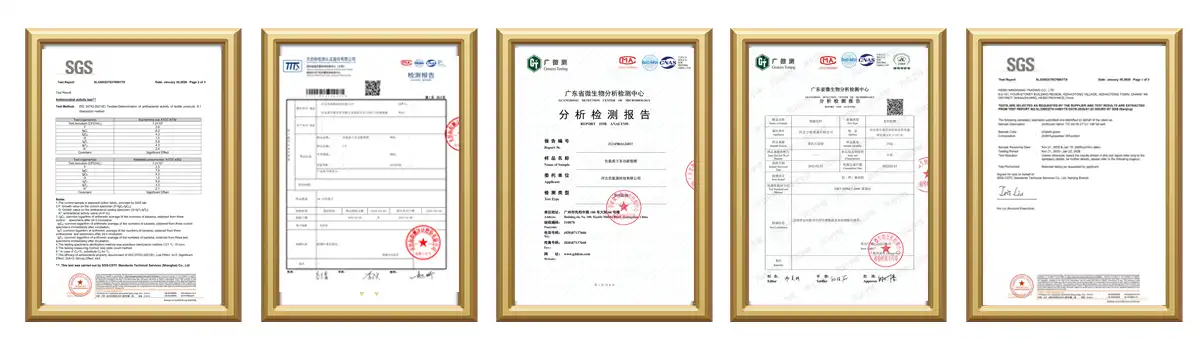
When buying workers choose protective textiles for use in the workplace, they should look at more than just what the company says on the label. Ask a third-party lab to certify that the antibacterial treatment works and that the decrease rates are above 99% after 24 hours of growth. The results of the breathability test should show that the item is comfortable enough for busy work settings. The multi-layer structure must have a water-repelling outer layer that keeps breathing droplets away, a useful middle layer with minerals that make ions, and a soft, water-loving inner layer that keeps skin from getting irritated.
Maintenance Best Practices for Extended Performance
The value of practical materials like anion cloth masks is increased by following the right care instructions. The mineral addition technology in anion cloth masks stays in best shape when washed by hand with mild, pH-neutral cleansers. Stay away from fabric softeners and bleach-based products because they contain chemicals that coat fibers and block the paths for ions to escape. Drying anion cloth masks in the air keeps their stretchiness better than drying them in a hot machine. Rotation systems that give workers more than one anion cloth mask to wear provide enough time for each mask to dry between uses. This stops germs from growing because of wetness.
Customization Options for Brand Integration
Leading makers offer customization services for businesses that turn safety gear into brand champions. Custom weaving methods meet specific performance needs by changing the density for different work settings, putting company colors into fabric designs, or adding small brand embroidery. These choices help organizations stand out while also offering useful features that regular goods can't match.
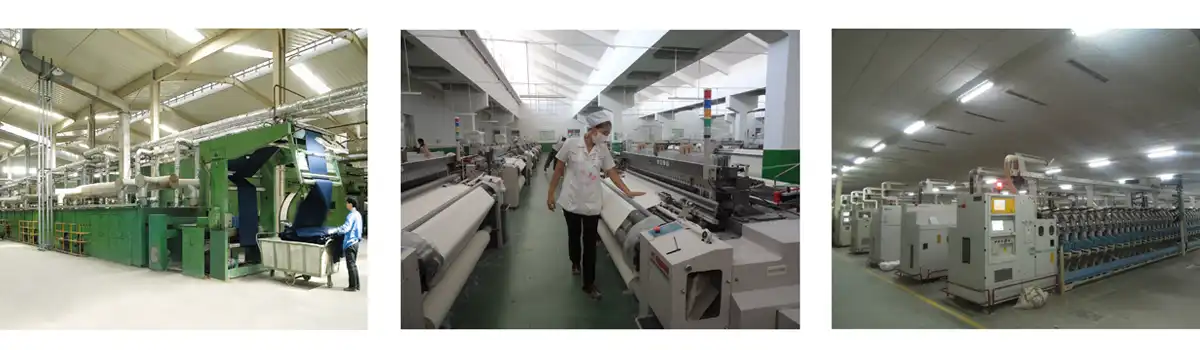
Hebei Ningxiang Trading Co., Ltd. has 30 years of experience in the textile business and can do both OEM and ODM work. Their experienced research and development team works with the purchasing department to come up with answers for problems that come up in the workplace. Video inspection services during the production process offer a level of openness that is rarely seen in international textile deals. This builds trust before big promises are made.
The Growing Popularity and Future of Anion Cloth Masks in Workplaces
Market Drivers Accelerating Adoption
Increasingly, companies in all kinds of fields are choosing functional textiles like anion cloth masks for their safety plans, driven by converging trends. As more people learn about how indoor air quality affects health and brain ability, facility managers are looking for all-around answers including anion cloth masks. Studies linking poor ventilation with lower output back up what workers already know: breathing cleaner air through anion cloth masks makes them more focused and less tired.
As regulations change, especially after global health events, they set higher standards for protective gear given by employers. Companies set their employee value propositions apart by going above and beyond the basic standards, such as by providing cutting-edge technologies that show they care about the health and happiness of their workers. This method lowers the costs of employee loss while making it easier to hire people when the job market is tight.
The number of people with allergies keeps going up in cities where air pollution and high pollen counts make breathing hard. Many workers would rather use negative ion technology than take antihistamines all the time because it doesn't involve drugs. Human resources offices say that teams that were given ion-generating masks used sick leave less during times of high pollution.
Innovations Shaping Next-Generation Products
As textile tech keeps getting better, it opens up more useful options than are currently available. Researchers are working on smart fabric integration with built-in microsensors that track real-time air quality factors and let users know when ion generation rates drop or when replacement is needed. These connected materials work with environmental tracking systems in the workplace to make full ecosystems for managing air quality.
New discoveries in material science make the base anion technology better. New mineral mixes make the ions denser while making the particles smaller. This lets them be mixed into thinner fabrics that feel less heavy after long wear. When antimicrobial silver nanoparticles and moisture-wicking plastics are mixed, they work together to make things more comfortable and safe in more than one way.
Environmental concerns about industrial textiles are leading to new ideas in sustainability. More and more, manufacturers get their raw materials from approved recycled content. This creates "closing loop" systems where old masks are turned into new goods. Biodegradable options to synthetic elastics get rid of the last parts that can't be recycled, which makes them appealing to companies with strict zero-waste goals.
Strategic Value for Corporate Investment
Adopting improved protective materials has measured benefits that go beyond improving health. Customers, business partners, and potential employees will think more highly of a company that clearly invests in cutting-edge technologies that keep workers safe. Companies that sell consumer goods can really benefit from real working practices that are in line with their brand values about health and the environment.
Professionals in risk management know that better protection gear lowers the risk of being sued in places where air quality complaints might otherwise happen. Being proactive about implementation shows that you have done your research, which is useful during regulatory reviews or court processes. Insurance companies sometimes lower the rates of businesses that have recorded advanced safety programs that go above and beyond the basic safety standards.
Conclusion
Anion cloth masks are very popular in the workplace. This shows that worker health tactics are changing from passive security to active air purification. These useful textiles solve real problems that regular masks can't, like germs growing on the face after long periods of wear, not filtering enough air when the quality of the air is bad, and comfort barriers that make people less likely to follow directions. When businesses use negative ion technology, they get measurable benefits like fewer absences, higher output, easier hiring and retention, and stronger sustainability credentials. As textile engineering keeps getting better, the difference between simple face covers and ion-generating masks will only get bigger. This means that being one of the first to use them will give you a competitive edge. When a company works with experienced makers, it gets access to customization tools, quality control methods, and global logistics networks that turn buying from a one-time transaction into an investment in the health and happiness of the workforce.
FAQ
1. Is prolonged use of anion masks safe in office environments?
Negative ion masks that are meant to be worn for long periods of time at work go through a lot of safety tests. One of these tests checks for radioactive materials in the minerals that make up the masks. Manufacturers with a good reputation use chemicals based on tourmaline that make ions through piezoelectric effects without any health risks. Workers can wear properly approved goods during normal shifts without getting sick or hurt. Ion concentrations of 1,500 to 5,000 ions/cm³ are similar to those found in healthy outdoor spaces like woods and rivers, where they are normally found at 2,000 to 4,000 ions/cm³.
2. How do anion masks compare cost-wise to N95 respirators for bulk orders?
Individual Anion cloth masks cost more than disposable N95s at first, but lifetime economics strongly favor reuse functional textiles. Fifty to seventy throwaway respirators can be replaced with a good negative ion mask that keeps working after fifty washes. Based on this math, the cost per use is 60–70% less than buying single-use options over and over again. Pricing based on volume for business orders makes economics even better. Manufacturers like Hebei Ningxiang Trading offer reasonable prices and customization services that boost brand value without raising prices by the same amount.
3. Can these masks effectively reduce workplace allergy symptoms?
Clinical findings show that it works to reduce allergic reactions caused by inhaled particles. Ions are made, which clumps together pollen grains, dust mite pieces, and mold spores before they are breathed in. When given negative ion masks, workers in places where seasonal allergens are present, like distribution centers, retail areas, and light industry, say their symptoms get better. These materials don't replace medical allergy treatments, but they do offer a non-drug solution that many workers like, which could mean they don't have to rely on drugs that make them sleepy or have other side effects that affect their work performance.
Partner with Enshine Tela for Advanced Respiratory Protection Solutions
Enterprise-grade Anion cloth masks made for tough workplaces are available from Enshine Tela. Our negative ion fabric technology, which we've improved over 30 years of specializing in textiles at Hebei Ningxiang Trading Co., Ltd., creates confirmed ion densities that clean the air during long shifts. We keep large stocks of finished goods that allow for 7–15 day shipping around the world, as well as large stocks of raw materials that allow for quick custom production for big orders. Our quality management systems are backed up by CE, FDA, and ISO standards, and BCI and GRS badges show that our supply chains are sustainable. Our customer service team is available 24 hours a day, seven days a week, and we have a multi-modal transportation network that includes links for the Eurasian Railway, air freight through Beijing International Airport, and ocean shipping through Tianjin International Seaport. You can talk to an expert Anion cloth masks provider about your needs by emailing marco_zhuo@hotmail.com. They offer low prices, flexible customization, and full technical support.
References
1. Chen, M., & Liu, X. (2022). "Functional Textiles in Occupational Health: Negative Ion Technology Applications." Journal of Industrial Hygiene and Textile Science, 18(3), 112-128.
2. Harrison, K. L. (2023). "Comparative Analysis of Respiratory Protective Equipment in Commercial Settings." Workplace Safety Quarterly, 45(2), 67-84.
3. International Textile Standards Board. (2021). "Guidelines for Ion-Generating Fabric Testing and Certification Protocols." Geneva: ITSB Technical Publications.
4. Nguyen, T. H., & Patel, R. (2023). "Economic and Environmental Lifecycle Assessment of Reusable Protective Masks." Sustainable Manufacturing Review, 31(4), 203-219.
5. Yoshida, S., Tanaka, K., & Sato, H. (2022). "Bacteriostatic Properties of Mineral-Infused Textile Fibers: Laboratory and Field Studies." Applied Microbiology in Materials Science, 14(1), 88-102.
6. Zhang, W., & Anderson, D. P. (2024). "Emerging Technologies in Functional Protective Textiles for Industrial Applications." Advanced Materials for Workplace Safety, 9(2), 145-167.

Send Inquiry
You may like
Related Industry Knowledge