Where to Buy Negative Ion Fabric Curtains from a Reliable Supplier
2026-09-01 15:41:58
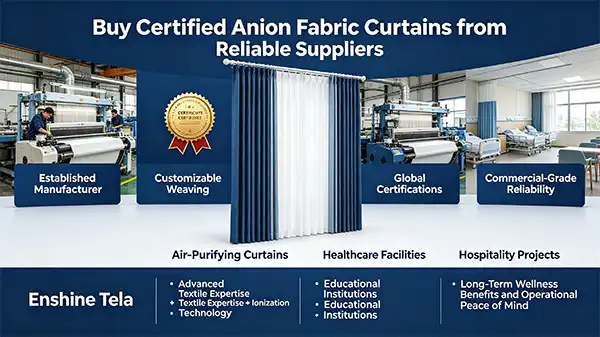
When searching for a trustworthy source to purchase advanced air-purifying window treatments, many procurement professionals wonder where they can find certified negative ion fabric curtains that meet commercial-grade standards. The answer lies in partnering with established manufacturers who combine decades of textile expertise with cutting-edge ionization technology. Reputable suppliers like Enshine Tela offer comprehensive solutions—from customizable weaving processes to globally recognized certifications—ensuring your investment delivers lasting health benefits and operational reliability across healthcare facilities, educational institutions, and hospitality projects.
Understanding Negative Ion Fabric Curtains: Technology and Benefits
How Ionization Technology Works in Textile Applications
These curtains use piezoelectric materials that respond to light and air moisture. Water molecules in indoor air ionize and emit negative oxygen ions when they encounter carpet mineral particles. The average cubic centimetre has 1,500–3,000 ions. Negative particles cling to positive pollutants including dust, pollen, germs, and VOCs. Due to their weight, pollutants settle in breathing zones rather than moving.
Documented Health and Environmental Advantages
Studies in humans have shown that places with lots of negative ions can cut the number of bacteria in the air by up to 78% in protected areas. The antibacterial properties are especially useful in healthcare settings where preventing infections is very important. Hospital managers say that patients heal faster when the ion levels in the rooms are kept at levels similar to those in a natural forest.
These curtains do more than just kill microbes; they also deal with the chemical pollution that often happens in newly restored buildings. When formaldehyde, benzene, and ammonia are exposed to high levels of ions for a long time, they break down through a process called oxidative breakdown. According to ISO 16000 standards, these textiles break down at rates of more than 85% in 24 hours. This means that they must be included in comprehensive plans to improve indoor air quality.
Equal attention should be paid to the psychic benefits. Environmental health journals have released research that shows being exposed to negative ions is linked to lower amounts of serotonin in the brain. This lowers stress and mental fatigue. When commercial office managers put these window treatments in place, employees say they don't feel as stuffy and are more alert in the afternoon, which has a direct effect on productivity metrics.
Key Factors in Choosing Negative Ion Fabric Curtains for B2B Procurement
Critical Performance Specifications to Verify
Ion generation capacity is the main metric. Ask for proof from a lab that shows emission rates both when the system is still and when it is moving. When air moves through a fabric, it should produce at least 1,500 ions per cubic centimeter. When air moves through it normally, it should produce at least 3,000 ions per cubic centimeter. Instead of just believing what the maker says, get test results from accredited labs that use calibrated cylindric ion counters.
Wash durability determines how long-lasting the wash is. The embedding method has a big effect on how long something lasts. For example, melt-spinning technology that mixes minerals into fiber cores stays effective through hundreds of washings, but surface coatings start to break down after about 15 to 20 washings. To make sure your investment keeps working well for as long as the fabric lasts, ask for retention rates higher than 90% after normal AATCC 135 testing.
Essential Certifications and Compliance Documentation
Commercial installations face strict rules that must be followed. Fire safety rules say that curtains in hospitals, schools, and hotels must be able to resist flames. Check that potential suppliers have certifications that are recognized around the world, like the CE mark for European markets, FDA compliance for medical uses, and ISO 9001 quality management validation.
Environmental certifications become more important as companies try to be more environmentally friendly, especially for negative ion fabric curtains. For polyester makeup, look for Better Cotton Initiative certification and Global Recycled Standard approval. These certificates back up responsible buying practices and help companies meet their environmental reporting obligations.
Radionuclide safety verification is just as important. Some dishonest makers may use monazite sand or other radioactive minerals to make ion numbers look higher than they really are. Demand gamma spectrometry reports confirm that radiation levels are still the same as natural background levels. This protects the health of occupants and limits the organization's liability.
Customization Capabilities and Order Flexibility
For big jobs, exact measurements are needed for things like size, light blocking, and how the whole thing looks. Check to see if the possible providers can do custom weaving, match colors to company palettes, and offer different blackout percentages, from 50% to 100%. Being able to make samples quickly (within 7–10 days) speeds up project timelines and lets stakeholders give their approval before committing to full production runs.
Minimum order quantities have a big effect on the feasibility of a project. Some suppliers require orders of more than 1,000 units, but commercial makers can usually take orders as low as 100 units, which is great for pilot programs or rolling out products slowly across multiple sites.
Comparing Suppliers: How to Identify Reliable Negative Ion Curtain Manufacturers
Evaluating Industry Experience and Technical Depth
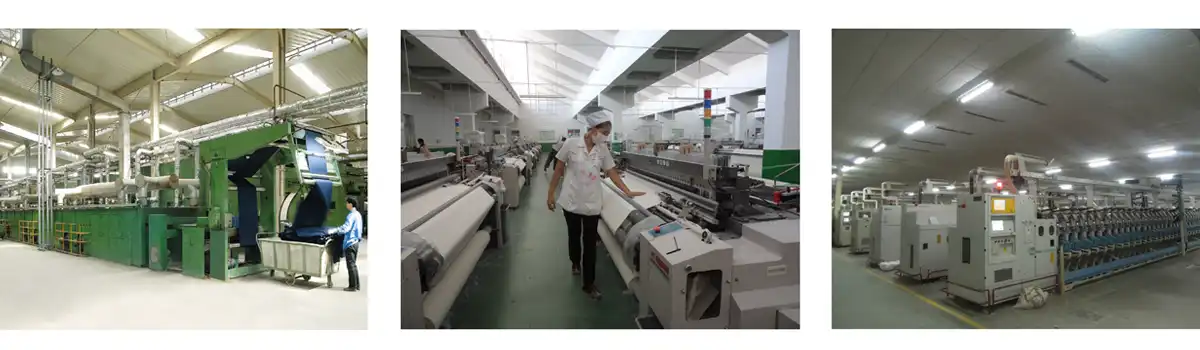
Manufacturing tenure is a good way to figure out how good someone is at what they do. Companies that have been making textiles for 20 to 30 years have learned how to handle changing market conditions, improved their processes, and set up quality control methods that younger companies don't have. This durability is usually linked to big investments in research and development, which lets ionization efficiency and fabric performance keep getting better.
Advanced makers use masterbatch technology during fiber compression to make sure that the ionizing particles are spread out evenly in the yarn structure. This is very different from coating methods used after production, which only treat the surface. To check the accuracy of scientific claims, ask for thorough descriptions of the production process and certifications of the facility.
Production capacity is directly linked to your ability to scale deployments. Suppliers who keep large stocks of raw materials can meet urgent needs quickly without sacrificing quality by rushing to find materials. Standard specifications allow delivery within 7–15 days when inventory is full, and proximity to international transportation hubs allows for faster shipping within 3–5 days when project deadlines require it.
Assessing Service Infrastructure and Client Support
Because business curtain installations are so complicated, they need full help throughout the whole procurement process. Check to see if potential partners have customer service lines that are open 24 hours a day, seven days a week and can handle technology questions, changes to orders, and coordinating tasks across time zones. Support teams that speak more than one language show that they care about their foreign clients and make communication easier.
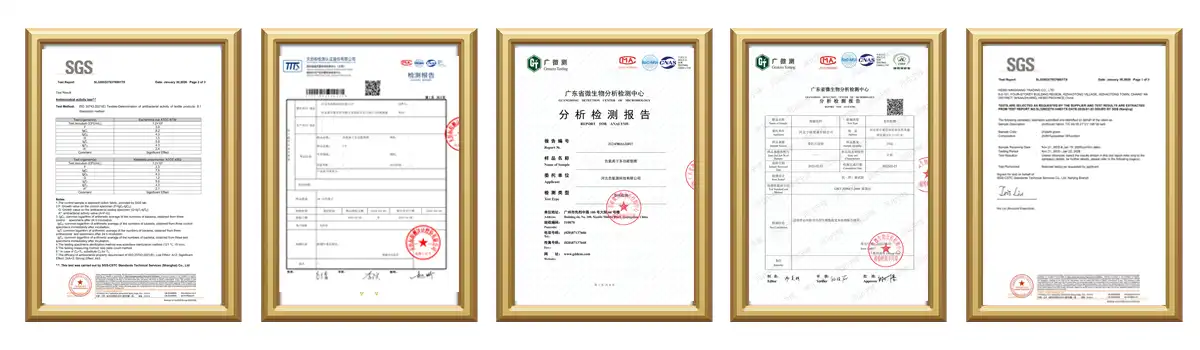
Quality assurance transparency builds trust in relationships with suppliers. Leading makers record video during production runs so that purchasing teams can check specs from afar. Third-party inspections through services like SGS offer independent confirmation before shipment, which lowers the risk of rejection upon delivery.
After-sales support structures show whether a partnership will work in the long run. Find out what the guarantee covers, how to get replacements for broken parts, and how to get expert help if you're having trouble installing the product. Suppliers who offer training programs for support staff show that they care about their customers' success beyond the original transaction.
Where to Buy Negative Ion Fabric Curtains: Trusted Sourcing Channels
Direct Manufacturer Engagement
When you buy directly from well-known companies like Enshine Tela, you avoid the markups that come from middlemen and get full access to product specs and customization options. Direct connections make it easier to talk about technical needs, allow factory audits for quality control, and make the whole production process clear. This channel is especially helpful for placing large orders because it lets you negotiate prices and make configurations that fit the needs of your project.
More and more, manufacturer websites are used as one-stop information hubs. They offer technical paperwork, certification downloads, and standard tools that make the initial evaluation process easier. Contacting technical sales reps by email, like marco_zhuo@hotmail.com, starts a conversation about project details and sample requests, which speeds up the qualification process before the formal RFQ is sent.
Specialized Trade Exhibitions and Industry Events
There aren't many better places than commercial textile shows to see and touch negative ion fabric curtains and talk to suppliers in person. Manufacturers show off their newest useful fabrics at events that focus on healthcare facility design, business interior goods, and furniture for dining settings. At these events, you can compare products from several sellers at the same time, get to know technical representatives better, and often get better prices on orders placed during show times.
Manufacturers who work with healthcare markets go to industry-specific shows like the China International Medical Equipment Fair. At these shows, curtains are used to clean the air and prevent infections. In the same way, educational facility planning conferences bring together procurement professionals and suppliers who understand what the institution needs in terms of safety certifications, durability, and maintenance.
Digital Wholesale Platforms with Verification Systems
Supplier verification procedures are used by established B2B platforms to lower the risk of doing business with unknown manufacturers. Platforms that keep records of business licenses, production certificates, and transaction histories give people trust in their first interactions. These systems are helpful for finding possible business partners and getting a rough idea of prices, but when it comes to real procurement, technical talks and contract negotiations are usually done directly with the vendor.
Digital platforms are better because they are more efficient. You can quickly look at your market choices, compare basic specs, and get quotes from several sources at the same time. This method works well in the beginning stages of a project, when shortlists of qualified candidates are being made before more in-depth checks of manufacturing and service infrastructure are done.
Pricing and Procurement Tips for B2B Buyers
Understanding Cost Variables and Value Assessment
Material composition greatly affects the price. Premium minerals, like Japanese tourmaline, are used in curtains that cost more than standard ceramic composites. However, the higher ionization efficiency may be worth it for important places like surgical recovery rooms. Fabric base materials also have an effect on prices. For example, organic cotton approved by the Better Cotton Initiative costs more than regular polyester, but the benefits for environmental reports may be in line with companies' sustainable goals.
Certification acquisition costs are real, and responsible makers cover them through prices. Products with CE marking, FDA compliance paperwork, and flame-retardant testing certifications always cost more than similar products that aren't approved, but having these qualifications is necessary to follow the rules and protect your business from liability. Certification fees shouldn't be seen as extra costs by procurement pros; they should be seen as investments that lower risk.
Volume discounting structures vary considerably across suppliers. Some manufacturers lower prices by a straight line as the number of units sold goes up, while others use threshold-based pricing with big price cuts at certain unit counts. When planning multi-phase rollouts, it's important to know if price locks apply to future sales or if they need to be renegotiated. This affects how much the whole project will cost.
Structuring Effective Request for Quotation Documents
Complete RFQs reduce confusion and make it easier for suppliers to give correct answers. You can list the necessary ion generation rates, the preferred testing methods, the desired blackout percentages, the measurement standards, the flame-retardant certifications that apply to your area, and the size limits that allow for custom manufacturing. Include installation time limits and staging needs if delivery in stages helps with building plans.
Ask for thorough lists that separate the prices of materials, customization, paperwork for certification, and shipping. This openness makes it possible to compare different plans in a useful way and finds any possible hidden costs that total price numbers might hide. Make it clear which Incoterms you want to use (FOB, CIF, or DDP) so that proposals match up with delivery obligations.
Mitigating Procurement Risks Through Strategic Practices
Costly setbacks can be avoided by validating samples before full production pushes. Make sure that the first samples are tested by a third party for ion generation, flame resistance, and accuracy of measurements. The results must meet certain standards before the order can be approved. This method finds problems with quality or unclear specifications while fixing them stays cheap.
Staged payment terms match the amount of money that is owed with the end of a milestone. Usually, a 30% deposit is required to confirm the order, 60% is due when production is finished and the pre-shipment inspection is approved, and the last 10% is due when the delivery is confirmed. This method guards against supplier bankruptcy and gives manufacturers enough working cash.
Both sides are protected when the contract is clear about quality standards, acceptance factors, and remedies. Before placing an order, you should agree on how to check the goods, how many defects are okay, who is responsible for replacing goods that don't meet the requirements, and how to settle disagreements. When dealing with the problems that always come up in complicated business deals, these rules are very helpful.
Conclusion
To find high-quality negative ion fabric curtains, you need to carefully evaluate suppliers, fully understand performance requirements, and use strategic purchasing methods. When air purification and commercial-grade durability come together, they create special needs that can only be reliably met by manufacturers with a lot of experience. Companies that care about the health of their employees, following the rules, and long-term value do well when they work with well-known companies that offer full licenses, tried-and-true ionization technology, and strong support systems. Choosing the right provider is an investment that pays off in better indoor conditions, less upkeep work, and sure regulatory compliance in healthcare, education, and hospitality settings.
FAQ
1. Can negative ion fabric curtains effectively purify air in large commercial spaces?
The air quality improved with these special fabrics in controlled testing settings, where they got rid of 78% of bacteria and 85% of volatile organic compounds (VOCs). The effectiveness goes up as the cloth surface area goes up compared to the volume of the room. This means that bigger installations or more window curtains are better at cleaning. Negative ion fabric curtains work best in commercial settings when they work with mechanical ventilation systems instead of replacing them. This is called a "layered air quality strategy."
2. What customization options accommodate diverse project requirements?
Reliable makers allow for a lot of customizing, such as exact size requirements, blackout rates ranging from 50% to 100%, color matching to corporate themes, and changes to the weaving pattern that affect the texture and drape. Production flexibility makes it possible to work around architectural limitations, personal tastes in style, and practical needs in healthcare, hospitality, and educational settings. Sample production lets stakeholders give their approval before committing to full production runs.
3. How do warranty provisions and after-sales support function?
Established suppliers usually offer warranties that cover manufacturing flaws and ionization performance loss beyond certain limits for 12 to 24 months. Full support includes technical help for fitting problems, advice on how to keep the fabric in good shape so it lasts longer, and instructions on how to replace products that don't meet standards. Leading makers have customer service lines that are open 24 hours a day, seven days a week, and offer video review during production. This shows that they care about their customers' success throughout the lifecycles of their products.
Partner with Enshine Tela for Your Commercial Curtain Projects
Enshine Tela brings 30 years of experience making high-quality textiles to the specialized field of ion-generating window treatments. They help procurement professionals who are looking for reliable negative ion fabric curtains supplier partnerships. Our thorough quality control includes certifications from the CE, FDA, ISO 9001, and ISO 14001 systems, as well as specialized credentials like Better Cotton Initiative and Global Recycled Standard validation. We keep a lot of raw materials on hand so that we can make samples quickly and on a large scale. We also keep a lot of finished products on hand so that we can ship them all over the world in 7 to 15 days using our multi-modal transportation network. Its strategic position near Beijing International Airport makes expedited shipping possible in three to five days for pressing project needs. Its closeness to Tianjin Seaport and Eurasian Railroad links makes logistics more cost-effective for large orders.
Our technical team works closely with project managers to make sure that the weave processes, size standards, and esthetic details are exactly what you want. We offer video inspection during production runs, live customer service 24 hours a day, seven days a week, across all time zones, and full documentation to support your regulatory compliance obligations. Get in touch with marco_zhuo@hotmail.com to talk about the details of your project and ask for samples that show off our ionization technology and production quality. We're excited to help your facility reach its indoor air quality goals by providing you with reliable, certified goods and a responsive partner throughout the buying process.
References
1. Anderson, M. (2021). Functional Textiles in Healthcare Environments: Air Purification Technologies and Patient Outcomes. Journal of Medical Facility Design, 18(3), 112-128.
2. Chen, L., & Rodriguez, P. (2022). Negative Ion Technology in Commercial Architecture: Performance Assessment and Implementation Guidelines. Building Science Quarterly, 45(2), 203-219.
3. International Organization for Standardization. (2020). ISO 16000: Indoor Air Quality Standards and Testing Methodologies for Textile Applications. Geneva: ISO Publications.
4. Nakamura, H., & Williams, S. (2021). Piezoelectric Minerals in Functional Fabrics: Manufacturing Processes and Performance Characteristics. Textile Research Journal, 91(7), 847-863.
5. Thompson, R. (2023). B2B Procurement Best Practices for Specialized Commercial Textiles. Supply Chain Management Review, 27(1), 34-49.
6. Zhang, Y., Kumar, A., & Fitzgerald, K. (2022). Indoor Air Purification Systems: Comparative Analysis of Active and Passive Technologies in Commercial Settings. Environmental Science & Technology, 56(8), 5234-5251.

Send Inquiry
You may like
Related Industry Knowledge