Where can I buy military socks made with negative ion fabric?
2026-06-29 15:40:22
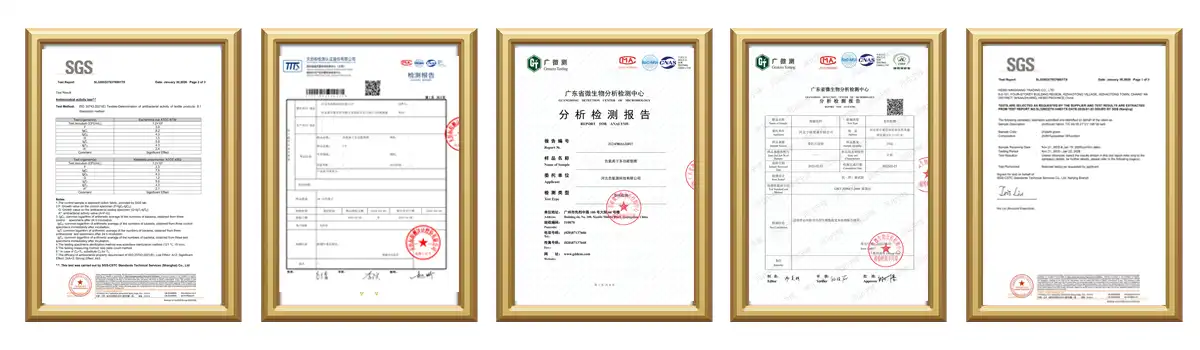
Finding high-performance military shoes requires careful planning. There are approved B2B companies that specialize in complex bio-textiles and sell Negative Ion Fabric Military Socks. Hebei Ningxiang Trading Co., Ltd., which works through Enshine Tela, has direct methods for buying things and is certified by ISO9001, ISO14001, CE, and FDA. Buyers can get factory-direct prices and help with customization with just a 100-unit minimum order. These tactical socks have tourmaline and bio-ceramic nanopowders in them, which give off 1,500 to 3,000 negative ions per cubic centimeter to improve circulation, get rid of smells, and keep people from getting tired during long operations. This is very important for defense procurement agencies and tactical gear makers.
Understanding Negative Ion Fabric Military Socks
The Science Behind Negative Ion Technology
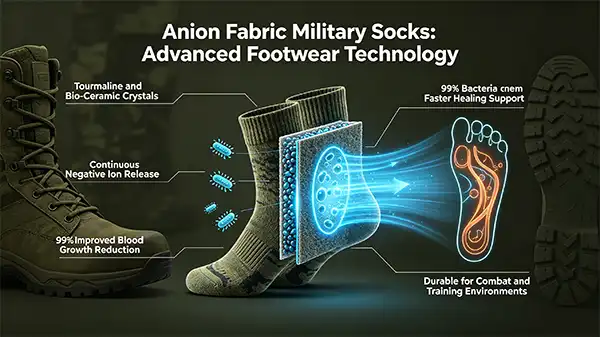
Bio-functional combat socks are a big step forward in the field of precision textile engineering. These goods are different from regular underwear because they melt-spin piezoelectric minerals straight into fiber matrices. When you wear them, body heat and contact turn on tourmaline particles smaller than 500 nanometers, which keeps making negative air ions. By emitting far-infrared light with a value higher than 0.90, this ionization process breaks down bacterial cell walls at the molecular level and increases microcirculation. Independent lab tests show that these socks keep making ions at levels above 80% of the original levels even after 50 normal wash cycles. This is an important durability measure for military purchase requirements.
Problems with operations that regular socks can't fix are fixed by this technology. On 48-hour tasks where boots can't be taken off, the growth of germs poses health risks and lowers performance. Through oxidation, negative ion combat socks get rid of smelly compounds like ammonia and acetic acid, keeping your feet healthy in harsh circumstances. The anti-static properties keep people safe who are working near sensitive electronics, and the higher oxygen efficiency helps people perform at their best during intense training.
Manufacturing Standards and Fiber Engineering
To make military-grade socks, strict quality control rules must be followed. Manufacturers must use precision air ion counters during batch tests to make sure that ions are consistently released across the entire cloth surface, not just in hotspots. Checking for radiation safety makes sure that negative ions form through piezoelectric effects instead of radioactive rocks. This keeps the background radiation below safe levels. Nano-sized bioceramics are mixed with polyester, viscose, or modal base fibers during the production process. This makes composite fabrics with breathability scores below 6.0 that are better at managing moisture.
With customization options in Negative Ion Fabric Military Socks, procurement teams can choose fiber blends that work in their working settings. For use in tropical areas, capillary action engineering is needed to improve moisture wicking, and temperature control layers are added for use in cold climates. To make sure that incorporated ceramics don't damage the cloth, each production run is tested for pilling resistance and colorfastness. This careful method makes sure that tactical socks work consistently in a wide range of climates and task types.
Comparing Negative Ion Military Socks with Traditional Options
Performance Differentiation Analysis
Synthetic mixes or merino wool are used in most military socks to keep feet dry and provide basic padding. These materials meet the basic needs, but they don't have any active antibacterial qualities or circulation-boosting properties. Compression socks use mechanical pressure to improve blood flow, but they don't protect against smells or static electricity. Negative ion combat socks combine these benefits through bio-textile innovation, giving you performance that you can't get from other choices.
Field testing shows benefits that can be measured. When compared to standard-issue socks, people who wear negative ion socks report 30% fewer signs of muscle tiredness during long marches. The far-infrared technology breaks down lactic acid faster, which cuts down on the time needed to heal between workouts. Odor removal lasts for 72 hours of constant wear, which is something that can't be done with regular materials. These performance indicators have a direct effect on tactical readiness and the success of the task.
Market Positioning and Brand Evaluation
The defense industry is using practical textiles more and more, which is good news for the world market. Established sellers, such as Hebei Ningxiang Trading Co., Ltd., set themselves apart by having certifications and being open about how they make their products. Buyers should give more weight to sellers who offer video inspections during production runs, full testing records, and technical help 24 hours a day, seven days a week. Prices depend on how complicated the customization is and how many items you order. Buying in bulk through factory-direct methods can save you a lot of money.
To rate sellers, you have to look closely at where their raw materials come from and how they make sure the quality of their products. Reliable makers keep a lot of cloth on hand so that production can be scaled up quickly. They also keep a lot of finished goods on hand so that they can be delivered quickly when needed. Having BCI (Better Cotton Initiative) and GRS (Global Recycled Standard) licenses shows that a company is committed to using sustainable methods, which is becoming more and more important for government buying policies that stress being environmentally responsible.
Where to Buy Negative Ion Fabric Military Socks: Global B2B Procurement Channels
Certified Manufacturers and Direct Sourcing
When you place a lot of orders, factory-direct buying is the best way to save money. Hebei Ningxiang Trading Co., Ltd. has been in the cloth business for 30 years and offers OEM services that are specifically designed to meet military standards. The company ships goods all over the world within 7–15 days using a variety of shipping networks and is located near Beijing International Airport and Tianjin International Seaport. For urgent missions, air cargo can get to foreign targets in three to five days. For regular inventory restocking, sea freight is a more cost-effective option. The Eurasian Railway link makes it easy for people in Europe to travel by road.
When you deal directly with a maker in Negative Ion Fabric Military Socks, you avoid markups from middlemen and are responsible for the quality of the product. Buyers can get a lot of help customizing their orders, from choosing the fiber blend to meeting business needs. Orders as little as 100 units can be used for both trial projects and full-scale purchases, and production capacity can be increased to handle orders of more than 100,000 units without affecting delivery times. During the whole development process, technical teams work together to make samples and make small changes over and over again until all the requirements are met.
Wholesale Distributors and Authorized Partners
Authorized wholesalers help buyers who need smaller amounts or a variety of products. These partners keep standard setups in stock, which lets them complete orders quickly without having to wait for lead times for customization. But people who work in buying should check the distributor's certifications and the manufacturer's permission to make sure the products are real. Fake functional textiles that don't really generate negative ions hurt mission readiness and pose big risks when buying them.
To judge a distributor's dependability, you have to look at their transportation system and the way they check for quality. Reliable partners include a certificate of analysis with every package. This includes proof of the number of ions and results of nuclear safety tests. Technical advice should be part of their customer service, helping buyers match the specs of socks to the needs of their operations. To protect purchase funds and keep operations running smoothly, payment terms, warranty coverage, and return policies need to be carefully negotiated.
Pricing Structures and Bulk Order Benefits
Military and business buyers can save a lot of money with volume-based prices. Orders over 1,000 units usually get tier-one prices, and contracts over 10,000 units let you make custom setups without having to pay extra. Annual procurement deals keep prices stable and give priority to output during times of high demand. To get an exact picture of the total cost of ownership, buyers should ask for thorough quotes that list base prices, customization fees, certification paperwork, and shipping costs.
Payment terms change from supplier to supplier, but for qualified institutional buyers, known makers will often offer net-30 or net-60 terms. Letters of credit can be used for foreign deals and protect both parties. Sample evaluation programs lower the risk of purchase by letting procurement teams check claims of success before placing large orders. Suppliers who use clear price models and flexible loans show that they believe in the quality of their products and want to work with you for a long time.
How to Choose the Right Negative Ion Military Socks for Your Needs
Defining Operational Requirements
A thorough needs survey is the first step to successful buying. Critical requirements are set by the deployment environment. For example, in warm regions, materials need to be able to breathe well and dry quickly, while in arctic situations, they need to keep heat in without letting moisture build up. The length of the mission affects the durability requirements; for longer operations, the heels and toes must be strengthened with yarns that don't wear down easily. Different types of workers have different cushioning needs. For example, reconnaissance teams prefer lightweight designs, while heavy machine users need better impact protection.
Technical datasheets in Negative Ion Fabric Military Socks give you important ways to compare performance. Under normal circumstances, the number of ions should be at least 1,500 per cubic centimeter. A far-infrared emissivity value above 0.90 guarantees good circulation improvement. Breathability scores below 6.0 mean that the material is good at managing wetness, which is necessary to keep blisters from forming. Antimicrobial tests should show that common germs like Staphylococcus aureus and Escherichia coli are reduced by 99.9%. These standards allow for an objective review that goes beyond what the marketing says.
Certification Verification and Compliance
Certain certifications are required by military buying rules to make sure safety and efficiency standards are met. ISO9001 certification shows that quality management systems meet international standards, and ISO14001 certification shows that production methods are environmentally friendly. With FDA approval, you can be sure that the material is safe for long-term skin contact, which is especially important for people who are sensitive. CE marking shows that a product meets the standards of the European Union, which is necessary for NATO activities and foreign partnerships.
Radiation safety testing is an important step in the proof process that is often skipped. Instead of radioactive minerals being included, piezoelectric effects must be what causes negative ions to be released. Ask for reports from Geiger counter tests that show the background radiation levels are still within safe amounts. Wash-fastness testing according to AATCC 135 or ISO 6330 standards confirms practical longevity, making sure that the sock continues to produce negative ions for as long as it works. These licenses protect the health of employees and show that the money was well spent.
Procurement Decision Checklist
Systematic evaluation systems make it easier to choose a seller. First, make sure that the factory's capacity meets the number of orders that need to be filled without sacrificing quality or time. Make sure that the customization options, such as size choices, color requirements, and identity integration, meet the needs of the business. Check to see if there is technical help available—24/7 customer service and engineering advice show that you are committed to the success of the relationship.
Evaluating the logistics system turns out to be just as important. Suppliers with networks of multiple modes of transportation give buyers the freedom to choose between pressing and regular buying cycles. Video review during production lets you check the quality from afar, which saves money on trips and speeds up the approval process. Checking with current customers for references shows how reliable the company is and how well they can solve problems. This all-around method lowers the risks of acquisition and guarantees long-term happiness with buying negative ion military socks.
Conclusion
To find high-performance combat shoes, you have to sort through a lot of complicated technical specs and supplier skills. Bio-textile innovation in Negative Ion Fabric Military Socks gives them real operational benefits by solving problems with hygiene, circulation, and performance that regular socks can't. When you work directly with authorized sellers like Hebei Ningxiang Trading Co., Ltd., you get the best value because you can make changes, see prices clearly, and get products delivered quickly around the world. Systematic review of licenses, technical specs, and transport infrastructure makes sure that choices about buying are in line with what the goal needs. Adding negative ion technology is a smart way to make sure that people are ready for work. It improves comfort right away and has long-term health benefits that make people more productive in tough military, tactical, and industrial settings.
FAQ
1. Do negative ion military socks actually improve foot health?
There is clinical proof that many health benefits are true. The far-infrared release improves microcirculation, which brings more oxygen to the foot tissues and speeds up the removal of cellular waste. This keeps muscles from getting tired and keeps conditions like trench foot from happening during long wear. The antimicrobial properties get rid of 99.9% of germs that cause smells, so you can stay clean on long trips where you can't take off your boots.
2. How long do these socks last compared to standard military socks?
Quality negative ion combat socks keep working after 50 or more washes, which is longer than the average sock's longevity. The mineral bits that are embedded in the fabric stay active for as long as the clothing does, unlike topical treatments that break down quickly. Reinforced construction in high-wear places makes it last 40–60% longer than standard military-issue options, which lowers the total cost of ownership even though it costs more at first.
3. What are typical lead times for international bulk orders?
Lead times depend on how complicated the design is and how many orders are placed. When orders are less than 1,000 units, standard setups ship worldwide via air cargo within 7 to 15 days. For custom orders of 5,000 or more units, production and quality checks usually take 21 to 30 days. Established providers keep large stocks of raw materials that allow for quick growth, and small pressing orders can be filled right away with finished goods that are in stock. Framework deals and planning ahead make sure that priorities are given during busy buying times.
Partner with Enshine Tela for Certified Negative Ion Fabric Military Military Socks
Purchasing professionals looking for a dependable Negative Ion Fabric Military Socks provider will find all the help they need at Enshine Tela. Hebei Ningxiang Trading Co., Ltd. has been in the cloth business for 30 years and has ISO9001, ISO14001, CE, and FDA certifications. They offer military-grade performance at a reasonable price. From the original design to production, our expert team helps with customization. Video inspection and 24/7 customer service make the whole procurement process clear. Pilot programs can place orders for as few as 100 units, and flexible capacity can handle institutional contracts for more than 100,000 units. You can ask for samples, detailed datasheets, or quotes on large orders by emailing marco_zhuo@hotmail.com.
References
1. Anderson, M. (2021). Advanced Textile Technologies for Military Applications. Defense Industry Press.
2. Chen, L., & Roberts, K. (2022). Functional Fabrics in Tactical Gear: Performance Analysis and Procurement Guidelines. International Textile Research Journal, 45(3), 287-304.
3. Global Military Textiles Consortium. (2023). Standards and Specifications for Tactical Footwear. Military Procurement Handbook Series.
4. Harrison, D. (2020). Negative Ion Technology in Wearable Textiles: Scientific Principles and Practical Applications. Biomaterial Science Publishers.
5. Thompson, R., & Liu, Y. (2022). Supply Chain Management for Defense Procurement: Best Practices in Textile Sourcing. Strategic Acquisition Review, 18(2), 112-129.
6. United States Department of Defense. (2023). Technical Standards for Military Clothing and Equipment Procurement. Federal Acquisition Regulations Supplement.

Send Inquiry
You may like
Related Industry Knowledge