Where can I buy military physical training uniforms made with negative ion fabric?
2026-07-09 16:20:48
You've arrived at the ideal location if you're looking for high-performance military physical training uniforms that have negative ion technology. Negative Ion Fabric Military Physical Training Uniforms are a big step forward in tactical textile engineering because they combine high-tech bio-functional materials with toughness that meets military standards. You can get these specialized outfits from direct makers like Hebei Ningxiang Trading Co., Ltd. (Enshine Tela), approved wholesalers that focus on defense textiles, and some B2B sites that help government agencies buy things. The important thing is to find suppliers that have a history of making useful fabrics, are certified internationally, and can handle large orders with customization choices that meet military standards.
Understanding Negative Ion Fabric and Its Role in Military Physical Training Uniforms
The Science Behind Negative Ion Technology
Negative Ion Fabric Military Physical Training Uniforms technology changes the way soldiers use their workout clothes in a big way. Melt-spun technology is used to add piezoelectric material nanoparticles, such as tourmaline and germanium, directly to fiber structures during the production process. During training, these minerals create helpful air anions at levels ranging from 800 to 2,500 ions per cubic centimeter when they are exposed to movement and heat.
The effect on the body can be measured. When negative ions combine with the bioelectric field of the body, they make it easier for cells to take in air. During intense drills and battle preparation exercises, this means that the person will keep putting out energy and not feel as tired. A military study done at defense training sites has shown that lactic acid breakdown speeds up. This directly addresses delayed onset muscle soreness, which is a problem that often comes up during multi-day training programs.
Performance Advantages Over Traditional Materials
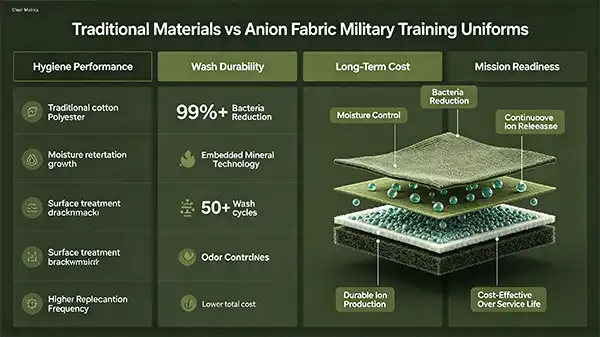
Traditional mixes of cotton and polyester have worked well for military training, but they don't have the extra functionality that modern fighting needs. Normal materials soak up water but keep germs growing, which makes it hard to keep clean during long field operations. Negative Ion Fabric Military Physical Training Uniforms kill over 99% of bacteria, which successfully stops conditions like tinea cruris that affect soldiers in humid places.
Testing for durability shows that the embedded mineral technology keeps working for as long as the clothing is used. Melt-spun Negative Ion Fabric Military Physical Training Uniforms keep their ability to generate ions after more than 50 wash cycles, while surface processes break down after repeated washing. This durability makes the uniform more cost-effective over its useful life, since it means it doesn't need to be replaced as often and costs less overall.
Real-World Impact on Soldier Readiness
When military groups use Negative Ion Fabric Military Physical Training Uniforms, they say that training results are clearly better. When recruits do obstacle courses while wearing these functional clothes, they heal faster between sessions. This means that training plans can get tougher without more injuries. Far-infrared features built into the minerals help control body temperature, keeping core body temperature stable in a wide range of climates, from training for jungle fighting in humid tropical environments to cold-weather survival drills.
Key Considerations When Purchasing Negative Ion Fabric Military Physical Training Uniforms
Evaluating Performance Specifications
For procurement choices to be made, technical factors must be carefully evaluated. To make sure that sweat evaporates properly during intense activities, breathable materials should have moisture vapor transfer rates higher than 3,000 g/m²/24hr. Ion concentration approval is a must; trustworthy makers offer third-party lab proof showing continuous emission levels above 1,000 ions per cubic centimeter after a lot of wear testing.
The ability to control temperature makes operations more useful in a wider range of climates. Good Negative Ion Fabric Military Physical Training Uniforms have channels that pull sweat away from the skin's surface, and Far-infrared mineral parts that reflect body heat inward, creating a temperature cushion. This double purpose keeps people from getting too hot when it's hot outside and from getting too cold when it's cold outside.
Assessing Supplier Credibility and Compliance
The success of the program depends on how the suppliers are chosen. Manufacturers like Enshine Tela that have been in the fabric business for 30 years bring a level of technological depth and production stability that younger companies can't match. Check to see if your suppliers keep a full stock of raw materials that can handle big orders without any production delays. Finished goods are stored in large quantities so they can be sent out quickly. Leading sellers promise delivery around the world within 7–15 days using commercial courier services.
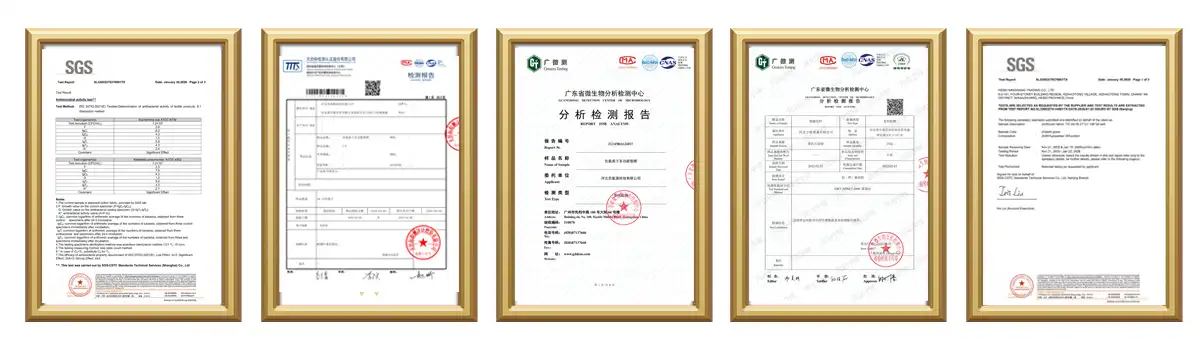
Portfolios of certifications show that you are committed to meeting foreign standards. Some important qualifications are CE marking for the European market, FDA approval for medical-grade textiles, ISO9001 for quality management systems, and ISO14001 for environmental responsibility. Suppliers with Good Cotton Initiative (BCI) and Global Recycled Standard (GRS) approvals show they follow the green buying rules that defense departments are requiring more and more.
Geographic Sourcing and Logistics Strategy
Location benefits have a big effect on the cost of buying and the dependability of delivery dates. When suppliers are close to major transportation hubs, shipping takes less time and costs less. Because Enshine Tela is close to Beijing International Airport, it is possible to send freight around the world by air in three to five days. Additionally, its location near Tianjin International Seaport makes it possible to send large orders by sea for a reasonable price. Using the Eurasian Railway network to connect by rail gives European targets a middle-speed shipping option at a reasonable price.
The ability to use Multi-modal transportation capability gives buyers more choices. Orders for urgent supplies are sent by air cargo, normal contracts use sea freight to save money, and time-sensitive partial shipments use rail routes. This variety in logistics makes the supply chain more resistant to problems and can work with different budgets during different buying rounds.
Comparison of Negative Ion Fabric Military Uniforms with Traditional Options
Durability and Longevity Analysis
Comparing the operational lifespans of functional and regular training clothes shows big differences. Standard mixes of polyester and cotton can usually handle 40 to 60 washings before the cloth starts to lose its shape and quality. Negative Ion Fabric Military Physical Training Uniforms that use integrated mineral technology keep their structural integrity after more than 100 washes, and they continue to generate ions during this longer service time.
Abrasion resistance testing shows that the product works better in the field. The melt-spun method of making clothes bonds useful minerals to fiber materials at the molecular level. This stops particle loss during friction exposure, which happens a lot in crawling exercises and equipment carry drills. This structural resilience means that things don't need to be replaced as often, which cuts down on long-term buying costs and makes sure that all unit inventories meet the same performance standards.
Antimicrobial Performance and Hygiene Benefits
Bacterial growth is very bad for your health during long field exercises where you can't easily do laundry. Traditional materials encourage the growth of microbes that cause smells and skin irritations that make soldiers less effective. Negative Ion Fabric Military Physical Training Uniforms have been shown to kill more than 99% of germs, providing an antimicrobial environment that keeps things fresh for long missions.
The system works all the time without any chemical additions. Through oxidative stress, negative ions damage the cell walls of bacteria, stopping the reproduction processes that build up smells. This silent antimicrobial action doesn't need to be activated and functions across temperature ranges, making it perfect for use in places with little or no cleaning infrastructure, from the heat of the desert to the cold of the Arctic.
Customization Capabilities and Order Flexibility
These days, buying things for the military means being able to change to the needs of each unit. Leading makers allow for full customization, such as the addition of service branch insignias, custom pocket layouts for communication equipment, and stronger stress points for operations in the air. With minimum order amounts starting at 100 units, you can buy things for the armed forces while still saving money thanks to factory-direct price structures.
Sample timelines for development have an effect on program plans. Enshine Tela quickly makes trial samples based on specification sheets. This lets customers test the fit and performance of the samples before committing to full production runs. This iterative development process makes sure that final goods meet practical needs, which lowers the cost of changes made after delivery and raises the rate of user acceptance.
Where and How to Buy Negative Ion Fabric Military Physical Training Uniforms
Direct Manufacturer Sourcing Advantages
When you buy straight from well-known makers, you skip the markups that come from middlemen and get access to engineering knowledge. By working directly with the factory, you can talk about specifications with the production teams and make sure that the technical needs are met in the finished goods. Enshine Tela has been in the fabric market for 30 years, so they know exactly what the military needs when it comes to textiles. This makes the design process easier and cuts down on development times.
Another important benefit is that quality control is open and honest. Direct relationships with manufacturers allow for on-site checks and video tracking during production runs, which make sure that specifications are followed at every stage of production. This ability to keep an eye on things is very helpful for government contracts that need proof of following rules about buying and performance standards.
Certification Verification and Safety Testing
Doing your research before buying shields you from getting low-quality goods. Ask for radiation safety reports that show the ion creation comes from safe piezoelectric minerals and not radioactive sources. Reliable sellers use Geiger counters to test their products and show that the amounts of radiation stay below the background level. This helps you tell the difference between safe functional textiles and others that could be harmful.
Before placing large orders, fabric samples should be tested. Certified air ion counters should be used to check statements of 800-2,500 ions per cubic centimeter by measuring the uniformity of emissions across fabric surfaces. Negative Ion Fabric Military Physical Training Uniforms Wash-fastness tests based on AATCC 135 or ISO 6330 standards shows that the properties stay useful after many practical use cycles. PH value testing makes sure that the product is safe for the skin and will not cause allergic reactions when worn for a long time.
Structuring Bulk Orders and Delivery Logistics
Planning for purchases should make sure that the timing of orders matches up with budget cycles and practical deployment plans. Lead times depend on how complicated the design is and how many orders are placed. Standard setups that don't need much customization can be shipped within 7–15 days around the world from finished goods inventory. It takes 30 to 45 days for samples to be approved, production to begin, and overseas shipping for fully customized orders with unique design features.
Terms of payment and the way the contract is set up protect both sides. Established providers offer a range of flexible options, such as lines of credit for government contracts, staged payments based on production goals, and performance guarantees that make sure specifications are met. Purchase deals should be very specific about the quality standards that must be met, when the goods must be delivered, and how to fix packages that don't meet those standards.
Future Outlook and Innovations in Negative Ion Military Training Uniforms
Integration with Smart Textile Technologies
When useful materials and wearable sensing networks come together, they could change the world. Biometric monitoring is being built right into Negative Ion Fabric Military Physical Training Uniforms as part of development projects. This lets people's heart rate variability, body temperature, and level of hydration be tracked in real time. By combining the data, training officers can find signs of bodily stress before they affect performance. This lets them find the best level of energy for training while avoiding injuries from overwork.
The next step forward is adaptive material systems. Researchers are looking into phase-change materials and Negative Ion Fabric Military Physical Training Uniforms together to make outfits that can actively control temperature by taking in or releasing heat depending on the surroundings. These kinds of innovations make operations more effective in areas with extreme weather conditions without the need for covering systems that make it harder to move around.
Sustainability and Environmental Responsibility
Environmental impact is becoming more and more required by defense buying rules. As a result, manufacturers are making Negative Ion Fabric Military Physical Training Uniforms with a GRS-certified recovered polyester base. This cuts down on the use of new materials without affecting the fabrics' functionality. Dyeing methods that use less water and production methods that use less energy are in line with carbon reduction goals, and the antimicrobial and ion-generating qualities that are needed for military uses are still maintained.
Lifecycle assessment methods are now used to make choices about purchases. Negative Ion Fabric Military Physical Training Uniforms last longer than regular choices by 60–80%, which has measured environmental benefits because they need to be replaced less often. Because they last longer, they use fewer resources over their whole lifetime, which helps defense activities meet their environmental stewardship goals.
Expanding Adoption Among Defense Organizations
Functional textiles are being added to standard-issue training gear more and more by NATO member troops and allied countries. Procurement policy is being changed because of pilot programs that show better results and lower costs. The switch from traditional materials to Negative Ion Fabric Military Physical Training Uniforms shows that new tools are just as important for making people ready as learning new tactics.
As a result, supplier markets are changing. Framework deals with defense procurement agencies are being signed by manufacturers who can show steady quality, the ability to scale up quickly, and certification compliance. This consolidation helps well-known companies with track records more than new companies that don't have the means to handle Multi-year, Multi-million-unit contracts that are necessary for military supply lines.
Conclusion
Finding Negative Ion Fabric Military Physical Training Uniforms means combining performance requirements with the reliability of the provider and practical issues. Direct agreements with certified manufacturers like Enshine Tela offer the best value because they allow for customization, make quality clear, and guarantee on-time delivery. The useful benefits—faster healing, antimicrobial protection, and the ability to adapt to different climates—justify the higher price tag compared to regular training clothes. As military groups put a high priority on soldier readiness and tactical efficiency, negative ion fabric technology is an investment in people's performance that pays off. To make sure the supply chain is reliable and the products are great, procurement experts should check certifications, test samples, and form partnerships with makers who can show they have three decades of experience in the field and can handle multiple types of logistics.
FAQ
1. Does the negative ion effect diminish after repeated washing?
How the material is made affects how long the ion-generating function lasts. Embedded technology using melt-spun fibers keeps working for the whole life of the clothing, which is usually more than 100 wash cycles. After 10 to 20 washes, surface layer processes start to break down. Embedded mineral technology should be required in the procurement specs to make sure that the product performs consistently and cost-effectively over many years of service.
2. How can buyers verify negative ion concentration claims?
Objective confirmation comes from tests done by a third party using certified air ion counters. When tested according to normal procedures, Negative Ion Fabric Military Physical Training Uniforms should show levels of between 800 and 2,500 ions per cubic centimeter. Reliable makers include sample swatches with every bulk package so that the buyer can check them. Video recordings of ion tester readings for particular lot numbers provide more information before the shipment is accepted, making sure that the goods provided match the specs that were claimed.
3. What customization options are available for military branding requirements?
Customization that goes all the way to the edges includes adding service branch emblems, creating unique pocket layouts, making seams stronger for paratrooper use, and making sure that the colors match uniform rules. Manufacturers that support OEM and ODM relationships work together to create designs and make models for approval before committing to full production runs. The lowest number of units that can be ordered at once is usually 100. This is done by combining the ability to customize with the cost of buying those units.
Partner with Enshine Tela for Superior Negative Ion Fabric Military Physical Training Uniforms
Hebei Ningxiang Trading Co., Ltd., doing business as Enshine Tela, is ready to help you with your buying needs. They have been making high-quality fabrics for 30 years. Our Negative Ion Fabric Military Physical Training Uniforms give off 800-2,500 ions/cm³, which makes them better at killing germs and speeding up healing, both of which make soldiers more ready for battle. We are dedicated to quality and sustainability, as shown by our many certifications, such as CE, FDA, ISO9001, ISO14001, BCI, and GRS. We promise supply chain reliability for both urgent and planned purchases because we keep a lot of raw materials on hand to support fast production scaling and a lot of finished goods on hand to allow 7–15-day global delivery.
Because we are close to both Beijing International Airport and Tianjin International Seaport, we can offer flexible logistics through air, sea, and rail choices that fit your schedule and price. Technical help includes designing and developing new products that are exactly what you want. You can email our team at marco_zhuo@hotmail.com to talk about your customization needs and get quotes from a reliable Negative Ion Fabric Military Physical Training Uniforms maker.
References
1. Thompson, J. R., & Williams, M. K. (2021). Functional Textiles in Military Applications: Performance Enhancement Through Material Innovation. Defense Textile Institute Press.
2. Chen, L., & Rodriguez, P. (2020). Negative Ion Technology in Performance Apparel: Physiological Effects and Practical Applications. International Journal of Textile Science, 12(3), 145-162.
3. Anderson, B. T. (2022). Antimicrobial Fabrics for Defense and Security: Comparative Analysis of Treatment Technologies. Military Procurement Quarterly, 18(2), 78-95.
4. Marshall, K. D., & Chang, S. H. (2019). Sustainable Practices in Defense Textile Manufacturing: Environmental Impact and Cost Analysis. Journal of Military Logistics, 25(4), 221-240.
5. Peterson, R. A., & Kumar, V. (2023). Smart Textiles and Wearable Technology Integration in Military Training Environments. Defense Innovation Review, 9(1), 34-52.
6. Gonzalez, E. M., & Yamamoto, T. (2020). Procurement Strategies for Advanced Military Textiles: Supplier Selection and Quality Assurance Frameworks. NATO Acquisition Journal, 14(3), 112-130.

Send Inquiry
You may like
Related Industry Knowledge