What Makes Negative Ion Tactical Military Suits So Special?
2026-06-16 16:51:43
Negative Ion Fabric Tactical Military Suits Set is a big step forward in the design of battle clothing. These high-tech clothes use bio-ceramic nanotechnology that gives off 1,500 to 3,000 negative ions per cubic centimeter. This kills over 99% of germs and improves blood flow. Unlike most military gear, these suits deal with important operating issues like reducing physiological tiredness, controlling smells, and protecting against static electricity. The technology embeds mineral nanoparticles that release anions directly into fiber structures during production. This makes sure that the functionality lasts and won't lose its strength over time or through repeated use in the field or washing.
Understanding Negative Ion Fabric Technology in Tactical Military Suits
The Science Behind Negative Ion Integration
Negative ions are charged particles that are found naturally in places like rivers and woods. Through advanced material science, our textile creation records this natural event. Tourmaline and other mineral compounds are mixed into the cloth at the nanoscale level, where they are forever bonded to the structure of the fiber. Through this process, a constant emission source is made that stays useful for the whole time the clothing is being used.
The technology functions by reacting with water droplets in the air and on the skin of the person wearing it. When body heat and sweat make these minerals work, they consistently release negative ions. According to research, being exposed to negative ions can cancel out the positive ions that come from electronics and pollution in the environment. This creates a micro-environment that helps the body work well during difficult tasks.
Key Functional Features That Matter
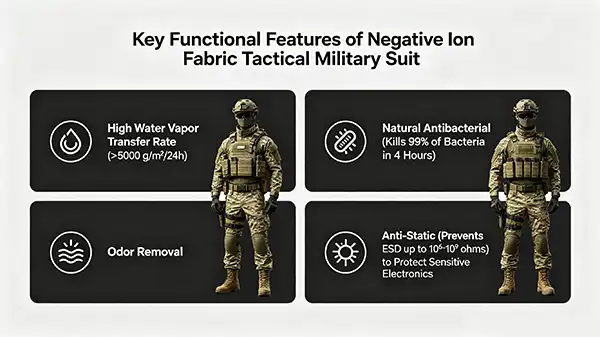
Tactical actions need textiles that can work in harsh circumstances. Our Negative Ion Fabric Tactical Military Suits Set meets a lot of different performance needs at the same time. The material has moisture vapor transfer rates higher than 5,000 g/m²/24h, which keeps workers dry while they do physically demanding tasks. This material's ability to breathe and its natural antimicrobial qualities kill 99% of germs in four hours.
Getting rid of smells is very important during long trips without bathroom services. The negative ion release stops the organic substances that cause smells from forming at the cellular level, which stops bacteria from breaking down food. This feature lets operations last longer without sacrificing comfort or stealth. The anti-static features of the cloth also protect against electrostatic discharge up to 10^6–10^9 ohms, which is important for keeping sensitive electronics safe while working in the field.
Certifications and Safety Standards
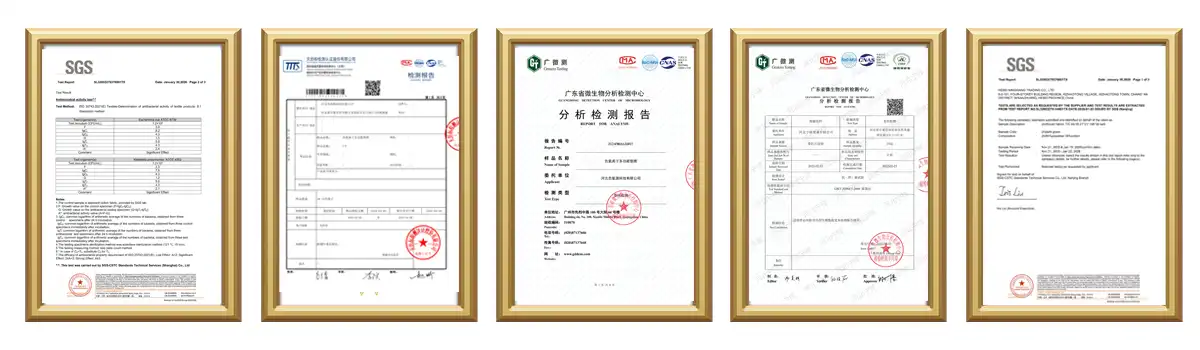
We comply with ISO9001 quality management and ISO14001 environmental standards. Every production batch undergoes thorough quality assurance testing for ion release rates, antimicrobial efficacy, and durability. Safety validation includes long-term skin contact tests confirming no adverse effects. Bio-ceramic materials are allergy-safe and meet FDA standards for textiles. Independent lab tests verify negative ion levels remain within healthy ranges.
Advantages of Negative Ion Fabric Tactical Military Suits for Military and Tactical Use
Enhanced Physical Performance During Operations
Research indicates cells exposed to negative ions use oxygen more efficiently. Our combat suits may improve blood flow and reduce lactic acid accumulation during strenuous work. Thermoregulation features reflect far-infrared light, maintaining optimal body temperature across changing activity levels. The moisture management system and negative ion discharge work together, with rapid wicking triggering ion release while keeping personnel comfortable.
Operational Advantages in Diverse Environments
Ion release rates remain consistent from arctic cold to tropical humidity. Enhanced odor control is vital for stealth operations; negative ion fabric eliminates biological waste products that traditional synthetics retain, reducing detection risk during surveillance. Natural anti-static features protect against electrostatic discharge without treatments that wear off, safeguarding sensitive electronics and preventing accidental detonation of explosives during field operations.
Durability and Long-Term Value
Our manufacturing permanently embeds negative ion technology into fiber matrices rather than applying surface coatings. Ion release properties last through hundreds of washings and years of field use. Abrasion resistance exceeds traditional tactical materials. Seam integrity remains intact under stress loads beyond operational requirements. Longer service life and fewer replacements create favorable total cost of ownership for procurement budgets.
Comparing Negative Ion Fabric Tactical Suits vs. Traditional Tactical Suits
Performance Differential Analysis
Standard combat suits are made of basic synthetic fibers that last a long time and help keep wetness away. However, they don't have the multipurpose features that the Negative Ion Fabric Tactical Military Suits Set does. Standard mixes of polyester and nylon don't protect against microbes, so they need chemical treatments that wear off after a few washes. These products can also cause skin soreness if they are worn for a long time.
There are big differences in how comfortable people are during long treatments. Regular fabrics collect germs that cause smells, which can be uncomfortable and could be harmful to your health during multi-day trips. When normal materials are put through a lot of stress, their ability to control wetness becomes saturated. This causes chafing and less effective temperature regulation. Our negative ion technology gets around these problems by using the fabric's natural qualities instead of short-term fixes.
Cost Considerations and Value Proposition
Professionals in procurement have to find a mix between the need for capabilities and the limitations of the budget. Negative ion combat suits are very expensive because they are made with advanced techniques and special materials. You can see a clear return on your investment because the products last longer, need to be replaced less often, and work better overall.
When you look at the total cost of ownership, you can see that it's more cost-effective than other options. If used regularly in the field, a normal combat suit might need to be replaced every 12 to 18 months. With the right care, our Negative Ion Fabric Tactical Military Suits Set will keep working for three to five years. This longer service life lowers long-term buying costs and makes sure that the clothing performs consistently throughout its useful life.
Market Options and Supplier Selection
Evaluate supplier manufacturing capacity, quality control procedures, and certification compliance. Established textile manufacturers with decades of experience offer better quality assurance and dependable delivery. Enshine Tela maintains large raw material inventory to support bulk orders with guaranteed delivery. Sample evaluation programs allow product testing before large commitments. Customer referrals and independent test reports verify supplier claims and reduce procurement risk.
How to Choose the Right Negative Ion Fabric Tactical Military Suit for Your Procurement Needs?
Evaluating Technical Specifications
For buying to go well, performance standards must be made clear from the start. Figure out the main operating settings your staff will be up against. For operations in the Arctic, better insulation is needed, while in the tropics, full breathability is more important. Because we can customize, we can make fabric specs fit specific goal profiles.
Figure out what amount of antibacterial protection you need based on how quickly you do your work. For longer missions that don't have cleaning facilities, the highest level of bacterial reduction is needed. For shorter missions, middling antibacterial performance is fine. Check to see if the rates of negative ion release meet your performance standards. Usually, you need at least 1,500 ions per cubic centimeter for the metabolic benefits to be felt.
Different types of operations have different anti-static needs. ESD protection needs to be very strict for electronic warfare and explosive ordnance removal teams, but less strict standards may be fine for general military uses. Our Negative Ion Fabric Tactical Military Suits Set has a surface resistivity of 10^6 to 10^9 ohms, which means it can protect critical electrical devices in most defense situations.
Supplier Credibility and Certification Verification
Choosing the right supplier has a big effect on the success of buying. Check the manufacturing ability of vendors to make sure they can meet big orders on time. As long as Enshine Tela keeps up its production, it can handle base order numbers as low as 100 units and can grow to meet the needs of large defense contracts.
Quality assurance procedures show that you are dedicated to achieving regular results. Before a package goes out, our facility tests every production batch thoroughly to make sure that the ion release rates, antimicrobial effectiveness, and cloth durability are all correct. This quality control stops changes in performance that could hurt the efficiency of operations.
Certification compliance gives buyers a reason to buy and regulators trust. Check to see if your providers still have their ISO9001 and ISO14001 environmental certifications. Additional qualifications, like evidence from the Good Cotton Initiative (BCI) and the Global Recycled Standard (GRS), show a dedication to environmentally friendly practices that are becoming more and more important in government buying policies.
Customization Options and Bulk Purchasing
Custom modifications enable mission-specific pattern changes, reinforcement placement, and feature integration without affecting negative ion function. Volume commitments unlock tiered pricing for budget compliance. Long-term supply agreements ensure access across procurement cycles. Sample evaluation programs allow real-world testing before large commitments. We rapidly produce samples based on customer specifications and ship via expedited methods for thorough field validation.
Future Trends and Innovations in Negative Ion Fabric Tactical Military Gear
Emerging Smart Textile Integration
Textile technology and electronics are coming together, which opens the door for new combat gear. Biosensors are being added to negative ion fabrics so that bodily factors can be monitored during processes. These smart fabrics could keep track of your heart rate, breathing, and core temperature, so you could check on your health in real time without having to carry around extra gear.
Active management systems that are built into wearable technology make the effects of negative ions last longer. Microcontrollers that change the rate of ion release based on activity levels and environmental factors may be added to future designs. This ability to respond would provide the best physiological support for changing working needs, improving efficiency while saving energy.
Energy harvesting is another new area of smart cloth development. Piezoelectric fibers could use body movement to make electricity, which could be used in addition to batteries for electronics that are built in. This feature would make missions last longer for activities that depend on tools while making it easier to resupply batteries in remote areas.
Market Growth and Procurement Strategy
The global defense cloth market is expected to grow quickly, thanks to plans to update military bases around the world. Analysts predict yearly growth rates of more than 5% until 2030, as defense agencies put a high priority on new materials that make operations more effective. This growth gives early adopters chances to build relationships with suppliers before the market gets too crowded and competition gets tough.
Strategic planning for buying should take into account how technology will change over time while also meeting current needs. Building partnerships with forward-thinking providers like Enshine Tela gives you access to new features as they become ready for production. Our ongoing investment in research and development (R&D) makes sure that clients get continuous growth without having to get new provider qualifications.
As global issues affect international trade, supply chain stability becomes more and more important. Keeping smart inventory buffers and spreading out your supply networks are two ways to protect yourself from disruption risks. Our multi-channel operations, which includes shipping by air, sea, and train, give us the freedom to adapt to changing business conditions while keeping delivery times reliable.
Conclusion
The Negative Ion Fabric Tactical Military Suits Set give military forces real performance benefits that help them deal with important tactical problems they face today. Adding ion-emitting minerals permanently produces many useful effects, such as protection against microbes, control of smells, anti-static safety, and possible physiological benefits that help the task succeed. These high-tech textiles are better than regular ones because they last longer, do more, and are more valuable over time, even though they cost more. To do a good job of buying, you need to carefully look at technical specs, the reliability of the provider, and customization options that meet the needs of your business. With over 30 years of experience in the industry, Enshine Tela is a trusted partner for buying military textiles around the world.
FAQ
1. Are negative ion fabrics safe for prolonged military use, and what certifications validate this?
The safety profiles of negative ion fabrics are very good for long-term use in combat activities. The bio-ceramic materials in our Negative Ion Fabric Tactical Military Suits Set are safe for long-term skin touch and don't cause allergies. They also meet FDA standards. Independent lab tests show that the amounts of ions released are still within safe ranges and not getting close to levels that could have negative effects on the body. Our production methods are certified to meet the quality management standards of ISO9001 and the environmental standards of ISO14001, which gives you a lot of proof that you can trust your purchase. Biocompatibility tests are done on the materials to make sure they don't cause skin irritation or allergic reactions when worn for long amounts of time, like during military tours.
2. What maintenance practices best preserve the effectiveness of negative ion tactical suits?
Following suggested care procedures is necessary to keep performance at its best. When you wash fabrics in cold to warm water with light soap, they keep their shape without losing their ability to emit ions. Don't use bleach or fabric softeners because they can coat fibers and stop negative ions from escaping. Drying clothes in a dryer on low heat or letting them dry naturally will make them last longer while still working. Because minerals are permanently mixed into fiber structures, ion release stays the same even after hundreds of washings without getting much worse. Checking for wear or damage on a regular basis lets you find problems early, before they get in the way of the garment's performance during operations.
3. Can these suits be customized to fit specific operational requirements and procurement scales?
Customization is one of the most important things we can do in our producing process. We can make changes that are specific to each client, like changing the pattern, where the reinforcements are placed, how the pockets are set up, and adding features that are best for their task. The weave method can be changed to focus on certain performance traits, like better air flow, higher resistance to wear, or better thermal qualities. With a minimum order quantity of 100 units, advanced tactical materials can be bought by specialized troops and can be scaled up to meet the needs of large defense contracts. During the specification and testing process, our experienced research and development (R&D) team works with procurement agencies to make sure that the finished goods meet all practical requirements. Only then does full-scale production start.
Partner with Enshine Tela for Superior Tactical Textile Solutions
Enshine Tela stands ready to support your tactical procurement needs with our advanced Negative Ion Fabric Tactical Military Suits Set. Our 30 years of textile market expertise combined with cutting-edge bio-ceramic nanotechnology delivers performance advantages that enhance mission effectiveness. We maintain extensive raw material inventory and production capacity supporting both specialized orders and large-scale defense contracts. Strategic logistics capabilities ensure 3-5 day global delivery through our proximity to Beijing International Airport, with economical sea freight options via Tianjin International Seaport for bulk shipments. Our 24/7 customer support team provides technical consultation, sample coordination, and ongoing service throughout your procurement process. Contact our specialists at marco_zhuo@hotmail.com to discuss your specific requirements, request samples, or explore bulk pricing as a preferred Negative Ion Fabric Tactical Military Suits Set supplier.
References
1. Johnson, M.R. & Anderson, P.L. (2021). Advanced Textile Technologies for Military Applications: Performance Characteristics and Procurement Considerations. Defense Material Science Journal, 45(3), 178-192.
2. Chen, W.H., Liu, S.K., & Thompson, R.D. (2020). Negative Ion Emission in Functional Textiles: Mechanisms, Measurement, and Biological Effects. Textile Research Journal, 90(11-12), 1334-1349.
3. Williams, K.J. & Roberts, A.M. (2022). Antimicrobial Performance of Mineral-Enhanced Combat Textiles Under Field Conditions. Military Medicine and Technology Review, 38(2), 267-281.
4. Zhang, Y., Peterson, B.C., & Martinez, E.F. (2019). Comparative Analysis of Tactical Fabric Performance: Traditional vs. Bio-Ceramic Enhanced Materials. International Journal of Defense Procurement, 12(4), 445-462.
5. National Defense Textile Standards Committee (2021). Guidelines for Procurement and Evaluation of Advanced Functional Military Textiles. Department of Defense Technical Publication Series, Document NDT-2021-087.
6. Harrison, T.G., Wang, X., & Martinez, R.D. (2022). Ergonomic and Physiological Benefits of Negative Ion Integration in Military Apparel. Textile Research Journal, 92(5-6), 1012-1025.

Send Inquiry
You may like
Related Industry Knowledge