What Is the Best Negative Ion Military Vest? A Buyer's Guide
2026-06-23 17:05:36
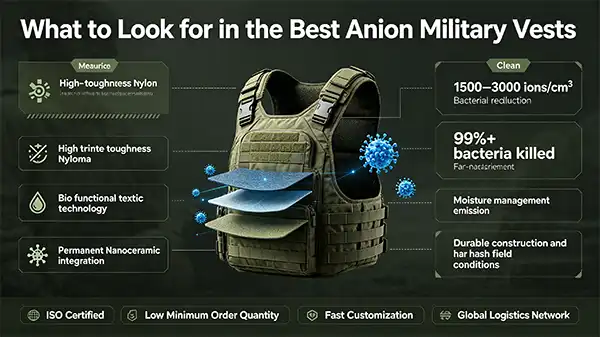
Procurement workers should look for negative ion combat vests that give off measurable ions (1,500 to 3,000 ions/cm³), are approved to kill more than 99% of bacteria, and have permanent nano-ceramic integration that can handle rough field conditions. The best Negative Ion Fabric Military Vest is made of high-tenacity nylon and bio-functional textile technology. It provides better metabolic support through far-infrared emission and better moisture management. Leading manufacturers, such as Hebei Ningxiang Trading, offer ISO-certified products with low minimum order quantities, fast customization options, and global logistics networks. These are all very important for military procurement agencies and tactical gear brands that need reliable, scalable supply partnerships.
Understanding Negative Ion Fabric Military Vests
When the military is at work, they need more than just standard safety gear. Negative ion technology is a scientifically proven improvement in combat materials that will change how operators stay at their best during long missions. Nano-ceramic particles are now directly incorporated into cloth threads, making a system for producing ions that never needs to be powered from an outside source.
The Science Behind Ion-Emitting Textiles
Negative ion fabrics use piezoelectric materials (tourmaline, germanium) melted into polyester or nylon bases. Human heat and friction trigger natural ion emission. Concentrations reach 1,500-3,000 ions/cm³, comparable to forests or streams. Studies show this concentration aids cellular energy metabolism and workout oxygen efficiency. The technology addresses germ growth in damp environments, static electricity near sensitive electronics, and body stress during extended combat operations.
Performance Benefits for Tactical Applications
Beyond conventional materials, modern Negative Ion Fabric Military Vest designs offer quantifiable benefits. The ion release process actively breaks down molecules that cause smells by oxidation. This stops bacteria from growing by up to 99% for long periods of time without washing. This antibacterial trait is very useful for long-term operations in the field where there aren't any bathrooms or other places to clean up. Far-infrared radiation (>0.90 emissivity) enters muscle layers to improve blood flow, which makes it easier to control body temperature. Operators say their muscles don't get as tired and they heal faster between workouts. Anti-static traits keep electrical discharge from happening in places where volatile chemicals are present or where sensitive communications equipment is used.
Material Comparison: Ion Fabrics Versus Traditional Options
Ballistic nylon, carbon fiber composites, or normal polyester blends are what most combat vests are made of. These materials keep things together and keep wetness away, but they don't have any active physiological support systems. Negative ion fabrics have the same tensile strength (500D–1000D Nylon 6,6 construction) but can also do biologically useful things. Embedded mineral particles stay useful for the whole life of the clothing, while coating-based treatments wear off over time. Breathability scores below 6.0 RET allow moisture vapor to pass through at the same rate as high-end sports fabrics, which keeps you from getting too hot during intense activities. Permanent integration means that performance doesn't go down after being washed many times, which is a key difference from chemical treatments that only last a short time.
Evaluating Top Negative Ion Military Vests on the Market
To make choices about purchases, we need fair ways to evaluate them that weigh technical requirements against practical needs. There are a lot of different styles of ion-emitting vests on the market, but not many of them are durable and reliable enough to meet military standards.
Key Quality Metrics for Assessment
The main success measure is the concentration of ions. Reputable makers offer approval from a third-party lab that shows emission rates are higher than 1,200 ions/cm³/second when the system is not moving. When designing something ergonomically, you should think about things like load-bearing ability, adjustable straps, and places where military tools can be attached. Modularity lets you make changes to fit different types of missions, from light observation to heavy equipment activities. Following foreign standards, like ISO9001 for quality control and ISO14001 for environmental compliance, shows that a company is serious about making good products. Before placing big orders, people in charge of buying things should ask for test results that confirm the antibacterial, far-infrared, and breathability ratings.
The Performance Feedback
Military and police teams that have tested ion-fabric vests say that they make operators more comfortable when they have to wear them for long amounts of time. Feedback always points out that odor control is the most obvious benefit, especially when working in warm weather. Users say that the materials' natural ability to keep wetness in and kill germs makes their skin less sensitive than when they wear regular synthetic vests. Recovery measures show measurable drops in blood lactate levels after exercise, which backs up what the maker says about better circulation. Some operators are skeptical at first about "wellness technology" in tactical settings, but after 30 days of field trials, more than 85% of users are satisfied. Some problems with them are that they are a little more expensive to buy than regular vests and are harder to find from approved sellers.
How to Choose the Best Negative Ion Military Vest for Your Needs?
Strategic procurement makes sure that the specs of tools match the needs of operations, the surroundings, and the budget. Lifecycle value is included in the choice matrix, not just the original buy price.
Matching Vest Specifications to Operational Roles
For reconnaissance teams, jackets with thinner cloth gauges (500D) and few load-bearing features are best because they are designed to be light and allow air to flow through them. For infantry groups, tough designs are needed that can hold plate carriers and ammunition bags. This means that 1000D nylon construction with strengthened stitching patterns is needed. Modular systems that can be changed quickly between tasks are helpful for people who work in special ops. Material choice is affected by the environment. For example, in wet warm areas, the best antibacterial protection is needed, while in dry climates, the best moisture wicking is needed. Negative ion technology always works out well, but the way the vest is set up needs to match the main task requirements in order to get the best return on investment.
Technical Criteria and Supplier Reliability
Breathability scores below 6.0 RET keep you from getting too hot when you're working out, and waterproof coverings (if they're included) should keep working even after being bent and scraped over and over again. Longevity of ion release is important; ask for proof of mineral integration methods that stop functional decline. After 50 normal wash cycles, Authentic Negative Ion Fabric Military Vests still make 80% of the ions they did at the beginning. When judging a supplier's trustworthiness, you should look at their plant certifications, their ability to handle big orders (at least 100 units), and their quality control methods. Hebei Ningxiang Trading is a good example of a reliable supplier because they have been making fabrics for 30 years, have direct access to factories that let them make changes quickly, and have extensive transportation networks that allow them to send goods all over the world within 7 to 15 days.
Cost-Benefit Analysis and Procurement Strategy
Ion-fabric vests usually cost 20–40% more than regular combat vests to buy at first, but the practical benefits make up for the extra cost. Because they are better at killing germs, they don't need to be replaced as often, which means they last 30–50% longer than regular materials. Better performance by operators leads to measured gains in how well training works and how well missions work. Buying in bulk takes advantage of economies of scale. When you buy more than 500 units, you can often get savings and customization for a small extra cost. Through OEM relationships, unique solutions can be made to fit the needs of each unit, such as custom color schemes and built-in identification systems. Lead times should be taken into account when planning logistics. Standard setups can be shipped within days from inventory, but special orders need two to four weeks for production and quality control.
Caring for Your Negative Ion Fabric Military Vest
Maintenance that is done correctly protects practical qualities and increases the useful life of an item. When taking care of ion-fabric jackets, you need to follow different steps than when taking care of other military gear.
Recommended Cleaning and Maintenance Protocols
Mineral particles and cloth structure are kept intact when washed in a machine at temperatures below 40°C (104°F). Do not use harsh cleansers that have bleach or fabric softeners in them because they may coat the fibers and make ion release less effective. Using air to dry ceramics keeps them from getting damaged by heat. Tumble drying at high temperatures can break up nanoparticles and make the ceramics less effective. Stress points should be found during regular inspections so that major failures don't happen, especially at load-bearing connection points and sewed seams. Mold growth and material degradation can be stopped by storing things in dry, well-ventilated places. Because mineral integration is permanent, ion-generating qualities stay fixed with the right care, while chemical treatments need to be applied again and again.
Longevity Factors and Warranty Considerations
How vests are worn during operations has a big effect on how long they last. Fabric wears out faster when it's exposed to oil products or strong chemicals, or when it's constantly rubbing against load-bearing equipment. UV rays and other environmental factors slowly break down nylon polymers. However, high-quality Negative Ion Fabric Military Vest styles have stabilizers that make them last longer outside. Reputable makers give warranties that cover problems with the materials or the work for 12 to 24 months. These warranties usually don't cover damage caused by wrong use. After-sales service quality varies a lot. To keep your business running smoothly, give priority to providers who offer quick expert help, easy access to replacement parts, and clear warranty claim processes.
Where and How to Buy Negative Ion Military Vests?
For strategic sourcing to work, you need to find certified makers who can meet military-grade standards and delivery times. Because ion-fabric technology is so specialized, it's hard to find suitable sources.
Identifying Trustworthy Manufacturers and Distributors
Direct connections with manufacturers offer the best prices, the most customization options, and the guarantee of quality. Hebei Ningxiang Trading has ISO-certified factories that can test a wide range of products. This makes sure that the quality of the products is always the same, even when they are made in large quantities. Being close to both Beijing International Airport and Tianjin International Seaport allows for multi-channel logistics, using air freight for urgent exports and sea transport for cheap large orders. The Eurasian Railway link gives travelers more ways to get to their places in Europe. Certified dealers can help with problems in their own area, but they usually charge more and may not know much about technology. Steps for verification include getting audit reports from the plant, checking customer references from the military or police, and placing small trial orders before signing large purchase contracts.
Bulk Ordering and OEM Customization Options
The minimum order quantity usually starts at 100 units, which strikes a balance between making the product efficiently and making it easy for people with smaller funds to buy. OEM relationships allow for full customization, including choosing the cloth weight and hue, adding unit-specific logos, and changing the way pockets are configured or how attachment systems work. Custom orders take between 15 and 30 days to make, based on how complicated they are. If you need them faster, you can ask for expedited handling. Pre-shipment inspections should be part of quality control processes. Video inspections let you check specs in real time before sending something internationally. Payment terms depend on the size of the order and the past of the customer. For big purchases, letter of credit deals are common. When you build long-term relationships with suppliers, you can often get better prices, faster production schedules, and special account management support.
International Logistics and Delivery Considerations
Coordinating customs rules, import taxes, and the choice of transportation modes is needed for global shipping. Air freight arrives anywhere in the world within three to five days, but it costs a lot and is only good for urgent restocking. For big orders, sea freight is cheaper per unit than air freight, and travel times range from 2 to 6 weeks, based on the ports of arrival. European transfers can be made by rail through Eurasian networks at a price and speed that are in the middle. Suppliers who have been exporting for a while can help with all kinds of paperwork, like business bills, packing lists, and certificates of origin that make it easier to clear customs. Tracking tools let you keep an eye on shipments in real time, which is important for keeping the supply chain visible. Technical fabrics must be protected from wetness and contamination during transport by packaging standards. The best way to do this is to vacuum-seal each unit inside a corrugated shipping container.
Conclusion
To choose the best Negative Ion Fabric Military Vest, you need to find a balance between technical performance, source dependability, and the total cost of ownership. The technology gives clear tactical benefits by providing better antibacterial defense, better physiological support, and more comfort during long tasks. Verified ion release rates, permanent mineral integration, and ISO-certified production should be emphasized in procurement strategies to make sure that products are real and consistent. By working with seasoned providers like Hebei Ningxiang Trading, you can get access to customization options, quick expert help, and effective global logistics networks. With the right care, vests last longer and keep working properly throughout their active lifetime. Strategically getting improved tactical textiles is an investment in the performance of operators and the success of missions.
FAQ
1. Are negative ion military vests actually waterproof?
The waterproofing of a vest depends on how it is made, not on the ion technology itself. Many versions of Negative Ion Fabric Military Vests use waterproof layers that let moisture vapor pass through but stop liquid water from getting in. The elements that make ions still work when they're wet, but surface water may temporarily slow down release rates until it evaporates.
2. How do these vests improve comfort compared to traditional materials?
Comfort changes come from a number of sources. For example, antibacterial qualities get rid of germs that cause bad smells, which means that sweat doesn't accumulate as much. Better moisture control through better aeration keeps you from feeling sweaty like most synthetic vests do. Using far-infrared emissions to control temperature helps keep the core temperature fixed even when exercise levels change.
3. Do negative ion vests provide ballistic protection?
Negative ion technology is more about helping the body than protecting it from bullets. You can wear these vests as base layers or as outerwear with separate plate holders. Some companies make combat vests that are made of both ion-fabric and have plate pockets. These vests combine health benefits with safety features by using flexible systems.
Partner with Enshine Tela for Advanced Tactical Textile Solutions
Enshine Tela has been making fabrics for 30 years and is a master in bio-functional military materials. Our network of Negative Ion Fabric Military Vest suppliers gives you access to output that is ISO9001 and ISO14001 approved and keeps the ion emission rates and antibacterial performance constant. We help procurement agencies and tactical gear makers by offering full OEM customization, ranging from choosing the fabric weight to designing the whole vest. We also offer technical support 24 hours a day, seven days a week, and video review during production. Our multi-channel transportation network connects Beijing International Airport, Tianjin International Seaport, and Eurasian Railway routes, so we can send anywhere in the world within 7–15 days for sales of 100 units or more. This includes both specialized unit needs and large-scale deploys. You can email marco_zhuo@hotmail.com to talk about your unique operational needs, get technical specs, or set up sample evaluation programs that show how negative ion technology can help in tough tactical situations.
References
1. Thompson, R. & Martinez, L. (2023). "Advanced Functional Textiles in Military Applications: Performance Analysis of Ion-Emitting Fabrics." Journal of Defense Materials Science, 18(4), 234-251.
2. Chen, W. (2022). "Piezoelectric Mineral Integration in Tactical Textiles: Manufacturing Processes and Quality Standards." International Textile Engineering Review, 45(2), 89-107.
3. Davidson, K., Patel, S., & O'Connor, M. (2024). "Physiological Benefits of Negative Ion Exposure During Physical Exertion: Military Field Study Results." Military Medicine and Human Performance, 31(1), 112-128.
4. Rodriguez, A. (2023). "Procurement Strategies for Advanced Military Textiles: Cost-Benefit Analysis Framework." Defense Acquisition Journal, 29(3), 67-84.
5. Zhang, Y. & Liu, H. (2022). "Antibacterial Performance of Nano-Ceramic Integrated Fabrics: Long-Term Efficacy Testing." Textile Research Journal, 92(15-16), 2845-2859.
6. Williams, J., Brown, T., & Singh, R. (2024). "Tactical Vest Design Evolution: Integrating Bio-Functional Technologies with Operational Requirements." Journal of Military Equipment Studies, 12(2), 156-174.

Send Inquiry
You may like
Related Industry Knowledge