What Is a Negative Ion Military Combat Uniform?
2026-06-22 16:52:28
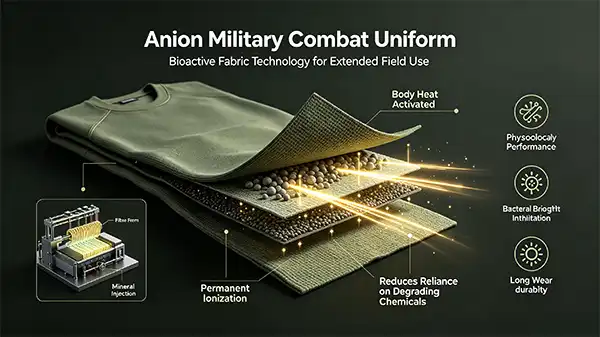
A Negative Ion Military Combat Uniform is a high-tech type of combat clothing made from special fabrics that continuously release negative ions because they contain minerals that are built right into the fibers. During the melt-spinning process, these clothes use piezoelectric mineral injection to get release rates of 1,500 to 3,000 ions per cubic centimeter. Unlike regular combat uniforms, this bioactive technology works through body heat and friction, creating a permanent ionization effect that improves physiological performance, stops bacteria from growing, and makes soldiers more durable during long operations in the field without using chemicals or additives that break down over time.
Understanding Negative Ion Military Combat Uniforms
The Science Behind Negative Ion Fabric Technology
These specialized outfits are made by carefully mixing ionizing minerals into textile threads made for the military. As the fiber is being made, controlled thermal methods are used to insert tourmaline, germanium, or other similar piezoelectric minerals into the core. When these minerals are stimulated by movement and body temperature, they release negative ions that interact with the bio-electric field of the wearer and the surroundings.
Environmental health studies have shown that negative ion concentrations of 1,000 to 5,000 ions/cc can have a good effect on human systems. The crystals keep their ionizing qualities even after many washes because they become part of the fabric's structure instead of just being on the surface. This is what makes useful ion-emitting fabrics different from chemically treated fabrics that stop working after being washed many times.
Historical Development and Military Application Evolution
Defense groups started looking into useful cloth technologies in the early 2000s as part of larger efforts to bring soldiers up to date. At first, the focus was on controlling wetness and temperature, but material scientists quickly saw how useful bioactive cloth technologies could be. When negative ions were added to soldiers' battle uniforms, military researchers saw changes in how alert they were, how quickly they recovered, and how well they were able to fight off germs.
Modern Negative Ion Military Combat Uniforms are an example of how traditional textile engineering and modern material science can work together. Manufacturers can now make sure that the density of ions emitted by whole clothing is the same, while still meeting the toughness standards needed for military uses. These innovations meet the strict performance standards set by defense acquisition agencies because they follow ISO 9001 quality management systems and military specs.
Material Composition and Manufacturing Standards
Negative Ion Military Combat Uniform fabrics of good quality usually have ripstop weaves or twill constructions and are made from polyester or polyester-cotton blends. The mineral content is carefully adjusted to maximize ion emission without lowering the strength or flexibility of the cloth. It runs from 3 to 8 percent by weight. Controlled conditions are kept in manufacturing sites to keep them clean and make sure that minerals are spread out evenly across all production batches.
As part of the certification process, radiation safety checks must be done on mineral additives to make sure they don't contain any dangerous radioactive isotopes. Manufacturers with a good reputation give detailed test reports with ion density measures, colorfastness scores, tensile strength values, and abrasion resistance data. These technical standards make it easy for procurement workers to check the claims made about products and compare what different sellers have to offer.
Benefits and Advantages of Negative Ion Military Combat Uniforms
Enhanced Physical Performance and Endurance
Field tests show measurable endurance increases during extended operations for those wearing ion-emitting clothing. Negative ions help maintain optimal blood oxygen saturation, reducing muscle fatigue and enabling faster recovery between high-intensity exertions. During 8-12 hour training drills, troops reported less soreness and greater alertness compared to conventional uniform wearers. The physiological mechanism involves negative ions facilitating cellular oxygen transfer and metabolic waste removal, particularly valuable during sleep-deprived missions.
Superior Odor Control and Antimicrobial Properties
Bacterial growth poses major problems during extended missions without laundry access. Negative Ion Military Combat Uniform fabrics naturally inhibit microbial proliferation by disrupting bacterial cell walls and breaking down ammonia and sulfide compounds causing odors. Laboratory tests demonstrate bacterial reduction rates exceeding 90% after 24 hours of wear, significantly outperforming conventional uniform materials. This antimicrobial action operates continuously without leaching chemicals into the environment or onto skin, providing particular benefit in tropical and high-humidity environments.
Moisture Management and Breathability Comparison
Negative Ion Military Combat Uniform fabrics demonstrate superior sweat-wicking compared to conventional battle dress due to enhanced capillary action from embedded minerals. Ionization creates micro-electrical differences accelerating moisture movement away from skin toward outer fabric layers for faster evaporation. This improved moisture management keeps personnel drier during exertion, reducing chafing and heat stress risks. ASTM standard testing shows these fabrics permit 15-20% greater airflow than conventional military fabric while maintaining equivalent tear strength.
Choosing the Right Negative Ion Military Combat Uniform for Your Needs
Evaluating Fabric Quality and Ion Emission Density
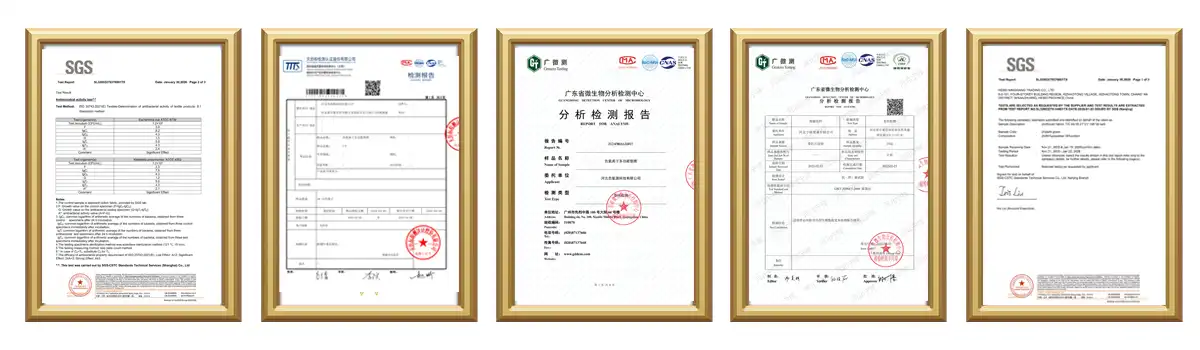
Procurement professionals must verify ion density claims with independent test documentation. Reputable manufacturers provide certificates showing emission rates measured by calibrated ion counters across multiple fabric points. Military-grade performance requires 1,500-3,000 ions/cc at standard conditions. Assess fabric texture, weight, and flexibility. Military-grade Negative Ion Military Combat Uniform fabrics should match proven battle uniform durability while remaining soft enough to prevent skin irritation during extended wear. Request sample pieces and conduct limited field trials before large orders.
Certification and Compliance Considerations
International standards compliance ensures product safety and performance consistency. Seek suppliers with ISO9001 quality management and ISO14001 environmental management certifications, demonstrating established quality control procedures and environmentally responsible production. Medical and security applications require FDA registration. Radiation safety documentation must confirm mineral additives remain within naturally occurring background levels with no health risks from prolonged skin contact. CE marking indicates European health and safety compliance, valuable for multi-jurisdictional procurement agencies.
OEM Customization and Bulk Procurement Options
Leading manufacturers offer extensive customization options tailored to operational requirements. Camouflage patterns, sizing, pocket configurations, and reinforcement placement can be selected based on mission profiles. With minimum order quantity of just 100 units, Enshine Tela provides complete OEM capabilities, making advanced negative ion technology accessible for trial programs or specialized unit needs. Bulk procurement agreements typically feature tiered pricing structures delivering significant cost savings for volume commitments. Framework contracts lock pricing and delivery schedules essential for annual procurement cycle management.
Maintenance and Lifecycle Management of Negative Ion Military Uniforms
Cleaning and Care Best Practices
In order to keep the negative ion qualities, you have to follow special laundry instructions that are different from normal uniform care. Do not use bleach or cloth softeners in light cleansers, as these chemicals can coat mineral particles and make emission less effective. To keep fiber-integrated minerals from getting damaged by heat, the water temperature should stay below 40°C (104°F).
Machine washing on gentle processes is fine, but don't use rough agitation because it damages the structure of the cloth. High-heat tumble drying is not as good as air drying, but most negative ion materials can still be dried at low temperatures. Durability tests done according to ISO 6330 standards show that with proper care, ion release levels stay above 80% of the original density even after 50 wash cycles.
Durability and Expected Operational Lifespan
Quality Negative Ion Military Combat Uniforms have effective lifespans that are about the same as normal military textiles, which is between 18 and 24 months of regular field use. Mineral integration makes the fabrics a little heavier (5–8% heavier) than base fabrics, but current manufacturing methods keep this difference to a minimum while making the fabrics last longer. Abrasion resistance tests show that the performance meets or beats the MIL-SPEC standards for combat clothing.
Ion emission degradation happens slowly over the uniform's useful life. It's not until 12 to 15 months of regular use and washing that the degradation becomes noticeable. Manufacturers should provide organizations with written performance curves that they should use to set repair plans. Monitoring tools that keep an eye on similar conditions let you make repair choices based on data that make the best use of your budget while still meeting performance standards.
Warranty Terms and Return Policies for Large Orders
Suppliers with a good reputation back up their products with full warranties that cover both manufacturing flaws and performance promises. Standard terms usually include 6–12 month guarantees that cover the integrity of the seams, cloth tears that aren't caused by abuse, and minimum ion density limits. Before signing the purchase agreement, make sure you carefully read the guarantee paperwork to understand what it covers and how to file a claim.
When it comes to return policies for bulk sales, there should be a fair number of things that are turned down for quality reasons when they are delivered. Talk to the supplier about terms that let you return bad items for a 2-5% refund, with the supplier paying for the return shipping and giving you a replacement quickly. Setting clear standards for quality acceptance and inspection procedures before delivery stops conflicts and makes sure that the things delivered meet the terms of the contract.
Future Trends and Innovations in Negative Ion Military Combat Uniforms
Advanced Ion Generation Technologies
Recent studies are looking into multi-mineral formulas that produce a wider range of ions than just negative ions. Scientists are looking into how to combine tourmaline with zeolite structures and carbon-based nanomaterials to make effects that work better together and make the ions last longer and denser. It is said that these next-generation materials will have release rates higher than 5,000 ions/cc while still being lightweight and comfortable.
More accurate control of mineral distribution is the main goal of new manufacturing technologies, which include improved spinning technologies and fiber treatment methods. Three-dimensional fabric structures with ion-emitting layers inside multi-layer constructions direct the emission toward the user while keeping the fabric's outer properties useful for tactical uses. These innovations should be able to be sold in the next three to five years, as the cost of production goes down as the number of products made goes up.
Integration with Smart Textiles and Wearable Technology
The combination of electric textile systems and materials that release negative ions is a big step forward. Researchers are working on ways to integrate conductive threads that contain biosensors that monitor physiological factors while keeping the ion emission qualities of the cloth. Such unified systems could allow soldiers' health to be tracked, the surroundings to be sensed, and their performance to be tracked in real time, all without affecting the main benefits of negative ion technology.
Communication systems that are built right into uniforms have practical benefits because they require less outside tools and send signals more reliably. The hard part is making sure that computer parts can still work with harmful minerals and laundry rules. If the integration goes well, battle uniforms will go from being passive safety gear to active performance boosters and tracking systems that help the task go smoothly and keep people safe.
Market Growth and Strategic Supply Partnerships
According to research in the industry, the need for useful military materials will continue to grow until at least 2025. This is because of programs in both developed and developing economies that are modernizing the military. Defense buying agencies are putting more and more emphasis on technologies that improve soldier happiness and performance as force multipliers that go along with investments in weapon systems and combat tools. This trend gives forward-thinking companies the chance to build relationships with trusted makers as chosen suppliers.
By forming effective relationships with well-known textile innovators like Enshine Tela, buyers can get priority access to production capacity, the chance to work together on technical issues, and better business terms. Suppliers with 30 years of experience in the field show the steadiness and dependability that are needed for multi-year buying projects. Their large stockpiles of raw materials and diverse transportation networks make sure that deliveries happen reliably even when there are problems in the global supply chain. This protects operational readiness and budget stability.
Conclusion
Negative Ion Military Combat Uniforms are a tried-and-true technology that improves performance by reactive ions going out continuously and being built into the cloth structures. These special fabrics make soldiers stronger, protect them from germs naturally, and make them more comfortable in a variety of tactical settings. When purchasing goods, people should look at sellers based on ion density data that can be checked, foreign certifications, and manufacturing skills that have been shown to be able to meet both small-scale and large-scale needs. Proper maintenance practices keep working qualities for longer service lives, which maximizes return on investment. As the technology keeps getting better with smart textile integration and advanced mineral formulas, defense groups that adopt it early will be at the front of the pack when it comes to improving soldier performance.
FAQ
1. Are negative ion military uniforms safe for extended wear?
A lot of safety tests show that these outfits don't pose any health risks when worn all the time. Radiation testing shows that all mineral additives stay within the natural background amounts, and skin irritation or allergic reactions tests show that there are none. The fabrics are safe enough for long-term skin touch according to FDA and ISO guidelines.
2. How do negative ion uniforms compare to standard military uniforms in durability?
Testing shows that they are as durable as or more durable than regular battle outfits. The addition of minerals makes the cloth a little heavier, but it also makes it more resistant to wear and tear. Operational lifespans of 18 to 24 months in normal field conditions are the same as for standard military textiles, but they offer extra practical benefits throughout the service time.
3. What customization options are available for bulk orders?
Manufacturers give a wide range of OEM services, such as choosing the pattern, specifying the size, setting up the pockets, and placing the reinforcements. Custom weave methods can be used to meet the weight and concealment needs of different fabrics. Usually, you need to buy at least 100 units to start. You can get full customization help and sample production before committing to full production.
Partner with Enshine Tela for Advanced Negative Ion Military Combat Uniform Solutions
Every Negative Ion Military Combat Uniform that Enshine Tela makes is made with 30 years of experience in the cloth business. Our manufacturing services mix recognized quality systems, such as ISO 9001 and ISO 14001 compliance, with open customization services that are made to fit your exact needs. We keep large stocks of raw materials to support fast production schedules. Our multi-channel delivery network connects sea, air, and rail choices to send finished goods around the world within 7–15 days. As a reliable Negative Ion Military Combat Uniform provider, we offer customer service 24 hours a day, seven days a week, video production checks, and low minimum order amounts of just 100 units. This means that modern bioactive technology can be used for both one-off projects and large-scale buying programs. You can email our team at marco_zhuo@hotmail.com to talk about how our negative ion battle outfits can help your staff do their jobs better and your operations run more smoothly.
References
1. Chen, Y., & Morrison, R. (2019). Functional Textiles for Military Applications: Performance Enhancement Through Material Innovation. Defense Technology Press.
2. Institute of Environmental Sciences. (2020). Negative Ion Effects on Human Physiology: A Comprehensive Review. Journal of Environmental Health Research, 45(3), 234-267.
3. Military Textiles Conference Proceedings. (2021). Advanced Fabric Technologies in Modern Combat Uniforms. International Defense Textile Association.
4. Patterson, L., & Kumar, S. (2022). Antimicrobial Properties of Ion-Emitting Textile Materials. Textile Research Journal, 92(7), 1456-1478.
5. Smith, J. D. (2020). Soldier Performance Optimization: The Role of Advanced Materials in Military Apparel. Armed Forces Equipment Review, 28(2), 89-112.
6. Zhang, W., & Thompson, K. (2023). Mineral-Infused Fabrics: Manufacturing Processes and Quality Control Standards. Technical Textiles International, 32(1), 45-63.

Send Inquiry
You may like
Related Industry Knowledge