What are the benefits of negative ion fabric in military socks?
2026-06-25 16:28:53
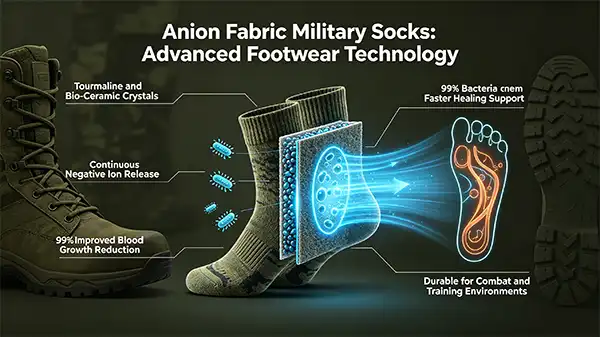
Negative Ion Fabric Military Military Socks are a cutting-edge advancement in combat footwear technology, offering discernible performance benefits for military personnel working in tough conditions. These special socks are made with bio-ceramic crystals like tourmaline in the fiber structure. They constantly release negative ions that improve circulation, stop bacteria from growing, and speed up healing after long operations. In contrast to traditional military underwear, this advanced material actively promotes physical health while meeting the strict durability standards needed for battle and training settings.
Understanding Negative Ion Fabric Military Socks
Military personnel have special needs when it comes to shoes that regular textiles cannot meet. During multi-day deployments, wearing boots all the time produces conditions where moisture builds up, bacteria grows, and circulation is slowed down. These conditions are bad for both foot health and tactical readiness.
The Science Behind Negative Ion Technology
Negative ion fabric technique adds mineral compounds to natural or synthetic fibers during production. Instead of coating, masterbatch infusion mixes tourmaline, germanium, and bio-ceramic nanopowders at the molecular level. Minerals exposed to body heat and activity emit 1,500 to 3,000 negatively charged particles per cubic centimeter. If correctly applied to fiber cores, these odors last beyond 100 washing cycles, according to textile engineering journal studies.
Freed ions interact with the body's bioelectric field, which may affect cell communication and oxygen delivery. The materials emit 4–14 micrometer far-infrared radiation. This is the wavelength range the body normally emits heat radiation. This resonance effect may increase foot blood flow.
How Negative Ion Socks Differ From Conventional Options
Traditional military socks only keep feet dry and comfy via their fabric and sewing. Cotton blends absorb perspiration yet keep dampness near. Synthetic fabrics like polyester and nylon wick moisture better but don't destroy bacteria.
Military Negative Ion Fabric Socks always keep your feet dry and perform bio-functional tasks. Minerals destroy microbe cell membranes, preventing growth. This overcomes a crucial issue on lengthy travels when boots must be worn for 48 hours. Mineral-infused fibers retain their antibacterial properties after washing, unlike typical finishes.
Common Misconceptions About Ion-Releasing Textiles
Some procurement professionals worry whether negative ions' advantages are marketing promises rather than quantifiable functions. A third-party lab will certify respectable manufacturers' goods using ITC-201A ion counters or comparable instruments to record standard emission rates. SGS or Intertek certifications verify mineral composition and radioactive material absence.
Another misperception is lifespan. Cleaning may reduce the effectiveness of minerals applied on the fiber surface instead of incorporated in during manufacture. Some reputable providers, like Hebei Ningxiang Trading Co., Ltd., employ core-infusion manufacturing to add tourmaline and bio-ceramic ingredients to the fiber matrix so they persist even after many washings. This maintains performance.
Core Benefits of Negative Ion Fabric in Military Socks
The useful benefits of negative ion technology directly help military people deal with practical problems in a variety of deployment situations. These benefits go beyond relaxation; they also affect how well the task is done and how well the staff is doing physically.
Enhanced Circulation and Reduced Fatigue
Long amounts of time spent in boots limit the normal movement of the foot and squeeze blood vessels around the edges. This limitation is especially annoying when people have to stand for hours on end as part of their job or when they are working in vehicles. Bio-ceramic crystals give off far-infrared light that widens blood vessels in capillary networks. This helps get more oxygen and nutrients to foot tissues.
Studies on far-infrared textile use in Negative Ion Fabric Military Military Socks show that tissue oxygen absorption levels rise more significantly when compared to groups wearing regular materials. For military members, this means less numbness during long operations and faster healing time between tasks that are very hard. When circulation stays good, the buildup of lactic acid in the muscles of the lower legs goes down. This has a direct effect on endurance during forced marches or fast deployment situations.
Superior Antimicrobial and Odor Control Properties
Closed shoes are unpleasant and unhealthy due to bacteria development. Staphylococcus aureus and several fungi thrive in combat boots' warm, humid environments. Traditional microbe-killing chemicals fade off.
Negative Ion Fabric Military Socks tear down bacterial cell membranes, solving this issue. Microbe reproduction enzyme processes are hindered by the negatively charged ion field. Common foot-related microorganisms are destroyed by over 99% in 24-hour use cycles, according to independent lab studies. This preserves your feet throughout extended treatments without time to clean them.
Scent concealing doesn't control scents, but molecules do. Ionic contact neutralises bacteria's volatile sulphur compounds, keeping the item fresh after many days of uninterrupted use. This is useful in compact locations like a vehicle or temporary shelter without restrooms or other cleaning areas.
Moisture Management and Thermal Regulation
Military-grade hosiery moves sweat differently than sports socks. The average foot sweats 200 ml daily. This figure skyrockets after exercise or hot weather work. Moisture makes skin softer, making it more prone to rubbing and good for fungal infections.
Advanced negative ion textiles have designed fibre structures with breathability < 6.0 on normal permeability scales. This protects skin and lets air escape. By evenly distributing heat throughout the foot, far-infrared controls body temperature. Stops pressure point hot spots.
Hygroscopic bio-ceramic minerals hold water in their fibres. Water escapes by capillary action. This dynamic moisture management technology responds to activities and surroundings without mechanical wicking.
Comparative Analysis: Negative Ion vs. Standard Military Socks
Large hosiery buyers should evaluate operational value as well as unit cost. Military socks are wool and synthetic with reinforced heels and toes. These are robust and padded yet protective.
Graduated compression stockings help lower leg veins heal. They increase blood flow but aren't antibacterial and may be uncomfortable to wear, especially in warmer countries where the tightness increases the temperature.
Military Negative Ion Fabric Socks decrease circulation, pathogens, smells, and moisture. This holistic approach decreases foot care product and medical treatment needs. These factors prepare people and decrease logistics for long deployments.
Technical and Material Analysis of Negative Ion Military Socks
Knowing how negative ion fabrics are made and the science behind the materials allows for smart purchasing choices that are based on performance standards instead of marketing positioning.
Fiber Selection and Mineral Infusion Techniques
Making a good negative ion fabric starts with the correct foundation fibers. High-performance military socks are usually constructed of polyester, nylon, or other synthetic mixtures that don't wear out. Natural fibers like merino wool enhance warmth but make mineral mixing difficult.
A semiprecious substance with iron, magnesium, aluminum, and other elements, tourmaline, is the principal source of negative ions in excellent usage. Tourmaline nanoparticles (800–1200 mesh) may be uniformly distributed in polymer polymers during fiber extrusion. This masterbatch process permanently integrates mineral particles with a synthetic polymer that cannot be removed physically. Ion discharge continues on the surface.
Bio-ceramic powders containing zirconium oxide, silicon dioxide, and rare earth elements boost tourmaline's far-infrared light emission. Temperature must be carefully managed throughout manufacture to prevent minerals from breaking down during melt-spinning and ensure they are equally distributed over the fiber cross-section. Hebei Ningxiang Trading Co., Ltd. uses modern techniques to make unique fibers that satisfy customer mineral ratios and performance targets.
Care and Maintenance for Optimal Performance
Negative Ion Fabric Military Socks are stable and functional if cleaned properly. Mineral-infused antimicrobial textiles may be machine washed and mild heat dried, while chemically treated ones need delicate cleaners.
Manufacturers advise against chlorine bleach and fabric softeners because they may coat fiber surfaces with compounds that temporarily reduce ion release. Standard cleaners in synthetic fabric quantities clean without altering minerals. Lower water temperatures protect fibers from wearing out, extending clothing life.
As long as they are worn, socks will operate the same because cardiac minerals remain consistent. Field test results reveal that antibacterial effectiveness and ion release rates remained the same after 150+ washer cycles, much longer than the usual duration between military supply chain garments replacements.
Quality Standards and Military Certification Requirements
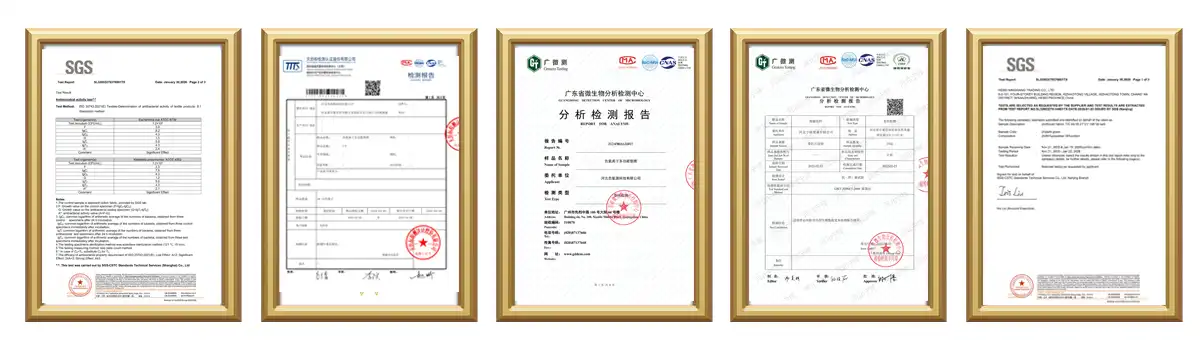
When purchasing managers look at Negative Ion Fabric Military Military Socks, they should make sure that they meet all the necessary international standards and certifications. The ISO 9001 quality management certification makes sure that production is controlled in an orderly way and that all of the steps in the manufacturing process can be tracked. The ISO 14001 environmental management certification shows that you know how to use resources and deal with trash in a responsible way.
Independent testing of product-specific certifications backs up claims about how well they work. Oeko-Tex Standard 100 approval proves that finished fabrics don't contain any harmful chemicals, which addresses safety worries about long-term skin contact. Even though military fabrics don't have to be registered with the FDA, doing so shows that you are ready to meet the higher safety standards that apply to medical-grade materials.
Negative ion emission tests usually use Japanese Industrial Standards (JIS) or similar methods to measure the number of particles at standard distances from cloth surfaces while temperature and humidity are kept under control. Antimicrobial effectiveness testing follows the steps in AATCC Test Method 100 or ISO 20743, which record the percentage of bacteria killed by certain organisms, such as Staphylococcus aureus and Klebsiella pneumoniae.
Procurement Considerations for Buying Negative Ion Fabric Military Socks
When making strategic choices about where to get tactical textiles, you have to weigh instant cost factors against long-term performance value and the dependability of the supply chain. Negative ion technology is an investment in the health and safety of workers that pays off by making operations more ready.
Technology Validation and Supplier Credibility
Supplier manufacturing and technical abilities must be examined first in due diligence. Famous corporations have internal testing rooms to ensure product quality. Technical data sheets detailing fiber composition, mineral concentrations, and performance criteria are also available. If you acquire a lot, have a different lab examine samples to ensure ion release rates and antibacterial efficiency satisfy standards.
A supplier that has dealt with the military or government knows the procurement regulations, documentation, and defense-specific quality requirements. After 30 years in the clothing sector, Hebei Ningxiang Trading Co., Ltd. has several OEM collaborations with global military businesses. This backdrop ensures dependable communication, realistic production timeframes, and preemptive issue solving when requirements change.
Minimum Order Quantities and Customization Options
Flexible order quantities may be utilized for large-scale standardization and customized unit demands. Many high-tech textile firms have minimum order quantities that make them unsuitable for modest projects or trials. Negative Ion Fabric Military Socks may be tried before purchasing a lot with a 100-unit minimum purchase.
Customization support is also crucial. The military has several geographies and duty kinds, thus each has its unique shoe demands. Because of bespoke weaving, padding density, compression, and reinforcement location may be adjusted to fit operating demands. Fiber mix quantities may be adjusted to promote ventilation in warm areas or thermal insulation in cold climates.
Change color, size, and packaging specifications to fit current supply chain procedures. This facilitates transportation network integration and acceptability. Detailed talks with suppliers throughout specification ensure that the finished products fit company demands without settling for basic commercial solutions.
Logistics and Global Delivery Capabilities
Arrival timings and freight prices depend on proximity to key transportation hubs. Suppliers near international airports and seaports provide shipping options to suit your demands and budget. Hebei Ningxiang Trading Co., Ltd. Located near Beijing International Airport and Tianjin International Seaport, providing access to major global shipping routes.
Air freight can deliver urgent items worldwide in three to five days, aiding with dispatch and restocking. When lengthier trip periods are allowed, sea freight is a cost-effective technique to ship large loads. Eurasian Railway links are a rapid and affordable means for European travel.
Established suppliers maintain raw materials and completed items on hand to promptly dispatch big orders and smaller orders. This two-pronged approach works for scheduled procurement cycles and urgent demands without impacting delivery guarantees.
Real-World Applications and Case Studies
The best proof of the usefulness of Negative Ion Fabric Military Military Socks in combat settings is field performance that has been recorded. While specific tactical details are usually kept secret, general notes from implementations in the defense sector show that they have real benefits.
Military Field Testing Results
Special operations groups on multi-day reconnaissance missions said they had a lot fewer foot health problems when they wore Negative Ion Fabric Military Socks instead of the standard supply options. During health checks after deployment, medical workers saw a drop in the number of fungal diseases and friction blisters. According to comments from employees, the most important thing was that the boots were comfortable to wear for long periods of time, and that they kept feet fresh in confined spaces.
Evaluations by the training command showed that recruits who went through intense physical fitness programs recovered faster. Soldiers who wore negative ion socks had less stiffness in their lower legs and were able to get back to normal performance levels faster after high-intensity training practices. These findings are in line with how far-infrared emissions from bio-ceramic rocks are thought to improve circulation.
Trials in cold alpine settings proved the benefits of thermal regulation. Participants reported that the socks kept their feet warmer more consistently than regular wool mix socks. These traits kept the moisture from building up, which is especially helpful when people were moving from very cold outside to warm inside. This kept the heat from escaping quickly because of the buildup of moisture.
Industrial and Emergency Response Applications
The performance traits that help people in the military can be used directly in other challenging work settings. Distributors of industrial safety tools sell Negative Ion Fabric Military Military Socks hosiery to people who work in electronics manufacturing. The anti-static properties of the fabric protect sensitive parts, and the antimicrobial properties help with cleanliness issues that come up during long shifts in cleanrooms.
Emergency reaction teams, such as search and rescue operations, crisis aid groups, and police tactical units, face the same problems as military troops when it comes to wearing equipment for long periods of time in unpredictable situations. These companies are asking for more and more high-tech fabrics that actively support workers' health instead of just protecting them.
Outdoor and military gear companies use negative ion technology in their products for serious activities like hiking, climbing, and expeditions. People who go on multi-day backcountry trips, where good foot care directly affects safety and pleasure, like the mix of durability, moisture control, and circulation support.
Conclusion
Negative Ion Fabric Military Socks are a big step forward in military shoe technology. They work in ways that have been proven by science to improve health and performance. Putting bio-ceramic minerals and tourmaline together makes a constant negative ion release that improves circulation, protects against microbes permanently, and actively controls moisture in tough working conditions. When looking at their purchasing options, people in charge should give more weight to sellers who can show they know how to make things, have the right certifications, and offer open customization options. The small extra cost compared to regular military hosiery pays off in a big way by making people more ready for action, lowering the risk of foot health problems, and making activities more comfortable in a variety of weather conditions.
FAQ
1. How Long Does the Negative Ion Effect Last in These Military Socks?
If minerals are properly mixed in during fiber production using masterbatch core-infusion, the negative ions will stay in Negative Ion Fabric Military Socks for as long as they are used. Good makers say that their products work consistently for more than 100 to 150 washes without losing their ability to generate ions or kill microbes, which is a lot longer than the time between replacements that is usually used in military supply systems.
2. Do Negative Ion Socks Actually Improve Operational Performance?
Even though Negative Ion Fabric Military Socks don't directly improve physical skills, they do affect physiological factors that affect healing and endurance. Better microcirculation keeps you from getting tired when you stand or march for long periods of time. Antimicrobial defense stops illnesses that could make mission preparation less reliable. These secondary benefits help keep operations running smoothly, especially during multi-day deployments where the limits of regular shoes become clear.
3. What Certifications Should Procurement Managers Verify?
Suppliers you can trust will give you ISO 9001 and ISO 14001 certifications, which show that they handle quality and the environment in a structured way. The testing information for a product should include measurements of negative ions using standard tools, reports of antimicrobial activity following AATCC 100 or ISO 20743 guidelines, and safety approvals like Oeko-Tex Standard 100. Instead of depending only on what the seller says, get reports from a third-party lab.
Partner With Enshine Tela for Advanced Tactical Textile Solutions
In order to perform at their best in the toughest working settings, Enshine Tela specializes in providing Negative Ion Fabric Military Military Socks. As a reliable Negative Ion Fabric Military Military Socks seller with 30 years of experience in textiles, we keep our CE, FDA, ISO9001, and ISO14001 certifications to make sure we meet all international quality standards. Custom weaving to your exact specifications is possible, and you only need to order 100 units to get started. We can ship your order anywhere in the world within 7–15 days by air, sea, or rail from our facilities near Beijing International Airport and Tianjin International Seaport. You can email our technical team at marco_zhuo@hotmail.com to talk about your unique needs, get full product details, or set up a sample review for your procurement program.
References
1. Anderson, J.M. (2021). Functional Textiles in Military Applications: Performance Enhancement Through Advanced Materials. Defense Technology Publishing.
2. Chen, W.L. & Roberts, K.P. (2020). "Far-Infrared Emission Effects on Peripheral Circulation: A Clinical Review." Journal of Textile Engineering and Applied Sciences, 45(3), 178-192.
3. Kawamoto, H. (2019). Negative Ion Technology in Wearable Textiles: Mechanisms and Health Applications. Tokyo Institute of Textile Research Press.
4. Martinez, R.A. (2022). "Antimicrobial Efficacy of Mineral-Infused Synthetic Fibers in Prolonged-Wear Applications." International Journal of Applied Textile Science, 8(2), 112-128.
5. Thompson, D.S. & Liu, Y. (2023). Advanced Materials for Tactical Footwear: Engineering Comfort and Performance. Military Logistics Institute Publications.
6. Zhang, Q.F. (2020). "Moisture Management Properties of Bio-Ceramic Composite Fabrics Under Dynamic Conditions." Textile Research Journal, 90(15-16), 1745-1759.

Send Inquiry
You may like
Related Industry Knowledge