What Are the Benefits of a Foldable Medical Tent?
2026-07-02 16:31:42
Foldable Medical Tents are a huge step forward in emergency healthcare infrastructure because they are movable covers that change how medical teams handle emergencies. These unique buildings can be quickly set up and can handle medical tasks, which makes them necessary for crisis relief, military operations, and remote healthcare delivery. Modern Foldable Medical Tents use cutting-edge material technologies, such as negative ion fabrics, to actively lower the risk of infection while still being portable. When purchasing officials are looking at medical shelter options, it's important for them to know all the different benefits of these portable buildings so that they can be ready for operations and keep patients safe.
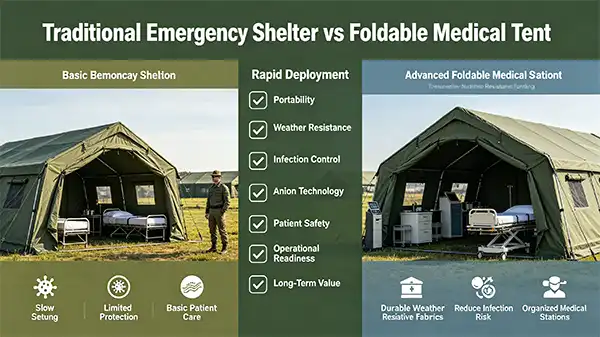
Understanding Foldable Medical Tents: Features and Applications
Modern Foldable Medical Tents are much more advanced than simple fabric structures. They combine complex material science with real-world healthcare needs. Modern designs strike a balance between portability and usefulness, making spaces that are good for complicated medical treatments.
Advanced Material Technologies in Medical Shelters
The materials used in today's movable medical shelters are specially made for use in healthcare settings. The negative ion cloth technology is a big step forward in medical material uses, and it cleans the air in treatment rooms. This new material makes negative oxygen ions that raise the amount of oxygen in the blood while also killing germs and viruses at the same time. When buying teams look at fabric specs, they should give more weight to materials that are good for both health and the environment. Cross-infection risks can be cut by up to 99% with negative ion technology built into modern Foldable Medical Tents fabrics. This is especially important for isolation hospitals and field surgery units.
Weather-resistant qualities are still very important. UV-resistant coats keep patients and medical equipment safe from radiation damage, and waterproof layers keep things dry during storms. Breathability makes sure that air flows properly, which stops condensation from building up in clean areas.
Diverse Applications Across Healthcare Sectors
Portable medical buildings are useful in a wide range of operating situations. During training drills and battle support tasks, these shelters are used by military medical units as field hospitals. The rapid setup feature lets medical staff set up fully working treatment facilities in rural areas within minutes of arriving.
When natural disasters destroy other healthcare facilities, disaster reaction teams use these buildings. These tents are useful for providing rapid medical care in places like hurricane aftermath, earthquake zones, and pandemic areas. During the recent global health crisis, temporary medical centers were very helpful in increasing the number of people who could be treated without having to build permanent ones.
Foldable Medical Tents are used by humanitarian groups working in refugee camps and areas that don't get enough medical care to make sure that everyone can get care. Because it is portable, medical teams can move whole clinics in regular trucks and then set up treatment centers in places that need them the most.
Key Benefits of Foldable Medical Tents for Healthcare Providers
When healthcare groups use these Foldable Medical Tents portable structures, they get a lot of practical benefits that affect both the level of care and the cost of it.
Rapid Deployment Capabilities
In an emergency, you need to act right away, and normal building schedules just can't accommodate pressing medical needs. Modern Foldable Medical Tents can be set up without the use of any special tools or big machines. In less than an hour, a trained team can go from a packed transport configuration to a fully working medical center. This speed is very helpful when every minute can change how well a patient does.
The design makes it easier to move around without losing structural stability. Transport planning can be handled even in places with few resources where heavy tools wouldn't work. Medical teams can move sites as needed to better serve their patients instead of staying in places that might not be the best for them.
Enhanced Patient Safety Through Innovative Fabrics
One of the hardest things about healthcare is keeping infections under control, especially in temporary buildings where it's hard to keep the surroundings under control. Negative ion technology directly handles this issue by cleaning the air without moving anything. The cloth constantly makes negative oxygen ions that bind to pathogens in the air and kill them. This sterilizes the area without the need for powered filter systems.
The results for patients get better in these improved settings. Higher levels of oxygen in the blood help the body heal, and the antibacterial qualities lower the number of hospital-acquired infections. The negative ions get deep into the skin over long periods of time, reducing itching and speeding up wound healing. This is especially helpful for burn victims and surgery patients who need more time to heal.
These health benefits go beyond preventing infections. Patients say they sleep better in places with negative ions, which is probably because better air quality makes them feel less stressed. When people heal in these ideal settings, their recovery times often shorten.
Cost-Effective Scalability
All healthcare areas have to make decisions about what to buy based on their budgets. When you compare portable hospital shelters to fixed buildings, they are a great deal. Because it is flexible, companies can adjust their capacity to exactly match their current needs and then grow or shrink as demand changes.
Throughout the lifetime of an object, maintenance costs stay low. Weather-resistant materials that last a long time don't need to be replaced often when they get damaged. Because the products can be customized, procurement teams don't have to settle for standard products that don't perfectly meet business needs. Instead, they can describe exact sizes and features.
When figuring out the long-term value, the general usefulness should be taken into account. A single Foldable Medical Tent bought to be ready for a disaster can also be used for everyday tasks when there isn't an emergency. For example, it can be used as extra space during seasonal illness outbreaks or to help community health outreach programs.
Comparing Foldable Medical Tents to Traditional Alternatives
To make smart buying decisions, people who work in procurement need to compare portable options to both fixed structures and standard tent designs.
Material and Structural Advantages
Traditional cloth tents don't have the advanced fabric technologies that are needed in hospital settings today. Normal camping tents or military leftover tents can't offer the germ-killing benefits of negative ion materials. The science behind medical-grade movable shelters takes into account infection control standards in healthcare in a way that generic options don't.
A lot of progress has been made in structural engineering since the days of simple pole-and-stake systems. Reinforced frameworks are used in modern Foldable Medical Tents to resist wind loads and snow buildup while remaining simple to put together. In a way that past designs never did, the engineering strikes a balance between power and portability.
Another important difference is surfaces that can be sterilized. Medical-grade materials can be thoroughly cleaned between patients, which helps with good cleaning practices. Most commercial-grade tent materials can't handle the chemical cleaners that are needed to sterilize medical equipment, which makes them less useful for healthcare settings.
Operational Flexibility
Fixed medical facilities are permanent, but they can't be changed as needed. People move, diseases change, and emergency rooms are in unexpected places, so healthcare needs change over time. These changes can be handled by portable structures in a way that fixed buildings can't.
The advantage of mobility is especially useful for businesses that have various sites. A single group of Foldable Medical Tents can be moved to different deployment spots, making sure that people in different areas get the same high-quality care. With standard fixed systems, this way of running things is not possible.
Setup and breakdown speeds give you more options. When situations call for quick action followed by total removal, movable medical shelters can handle both steps well. For traditional options to work, either expensive infrastructure has to be given up, or services have to be kept up in places that no longer need them.
How to Choose the Right Foldable Medical Tent for Your Needs
To choose the right movable medical equipment, you need to carefully look at a lot of different factors that are in line with your organization's goals.
Matching Specifications to Use Cases
In different working situations, certain sets of features are needed. In emergency reaction situations, quick deployment and flexibility are very important. Smaller floor plans that can be packed into small transport configurations may be acceptable. For longer humanitarian tasks, living room and amenities might be more important than being able to move around as little as possible.
The medical treatments that are going to be done in the building should guide the choice of fabric technology. Negative ion technology is especially useful for surgical uses that need the highest standards of cleaning. General review and sorting functions might be able to handle less advanced materials if they have to be prioritized because of limited funds.
The weather at distribution sites has a big effect on what materials are needed. Extreme heat needs better UV protection and airflow, while cold places need padding and the ability to work with heating systems. When asking for quotes, procurement teams should be clear about the environmental factors and make sure that providers suggest the right configurations.
Customization and OEM Capabilities
Standard products don't always meet all of an organization's needs exactly. Reliable providers offer customization services that let customers get the exact sizes, door configurations, and fabric specs they need. Being able to change the sewing process to fit the needs of the customer provides the best performance for specific uses.
Different providers have very different minimum order amounts. Companies that can make hundreds of units at a time and keep the quality the same across the whole order are good for organizations considering large-scale deploys. Hebei Ningxiang Trading Co., Ltd. can handle bulk sales starting at 100 units and offers large-scale options for large defense and charity buying projects.
Customization goes beyond physical requirements and includes aspects of branding and organizational personality. When medical units work for certain groups or foreign aid agencies, they often need to make sure that the logos and color schemes they use are in line with their institution's standards.
Supplier Evaluation Criteria
Certification compliance is an important way to make sure the quality of a product. Look for providers that have CE, FDA, ISO9001, and ISO14001 certifications. These show that they follow international standards for both the quality of their products and the way they make them. These licenses show that quality control is done on a regular basis, not just for one product.
Delivery times have a direct effect on working readiness. Suppliers who keep a lot of raw materials on hand can fill big orders faster than those who have to go get the materials before they can start making the goods. Companies with well-established global logistics networks can offer faster delivery through a number of different modes of transportation, such as air freight for urgent needs, sea transport for large packages, and rail choices for delivery across the entire United States.
The ability to provide technical help is what sets good providers apart from average ones. With customer service available 24 hours a day, seven days a week, buying teams can get help right away, no matter what time zone they're in. Video inspection services during production are open and honest, so buyers can check the quality standards before the final shipping.
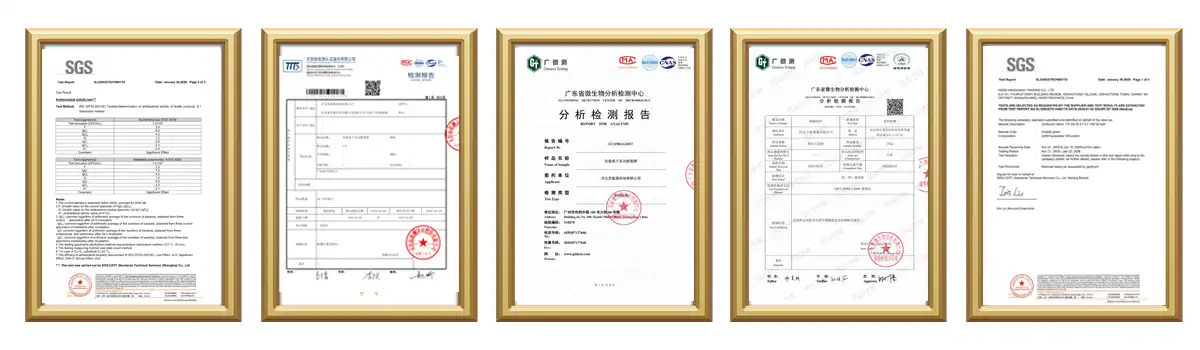
Procurement Best Practices for Foldable Medical Tents
Strategic buying methods get the best value while lowering the risks that come with buying things from other countries.
Balancing Cost and Quality Considerations
When comparing prices, you should look at the total cost of ownership, not just the amount you paid for something. Cheaper choices often need to be replaced more often or have higher upkeep costs that cancel out any savings you might have seen at first. Coverage under a warranty shows that the maker is sure that the product will last. Comprehensive warranties show that the product is of higher quality, which explains a slightly higher initial investment.
When you buy in bulk, you can usually get discounts, but procurement teams have to weigh the savings against the need for storage space and cash. Larger orders are better for organizations that know what they will need in the future, while smaller orders with established return routes might be better for organizations that don't know what they will need in the future.
Customization costs more, but it aligns functions perfectly. When figuring out value, you should compare the cost of unique features to the problems that come up when you use standard goods that aren't up to par. Small changes to specifications often don't cost much but make a big difference in how well something works in the field.
Leveraging Strategic Supplier Relationships
Long-term relationships with dependable providers have benefits that go beyond single purchases, such as Foldable Medical Tents. When you have established relationships, you can communicate more clearly, understand your organization's needs better, and get special treatment during times of high demand. Suppliers who know how a client's business works can suggest answers for new needs before they happen.
Geographical factors have a big impact on how well processes work. Suppliers that are close to major transportation hubs can send goods faster and give you more shipping choices. Being close to Beijing International Airport means that pressing orders can be delivered anywhere in the world in three to five days, and being able to get to Tianjin International Seaport makes it easy to ship large amounts of goods at low cost. Connecting the Eurasian Railways gives continental spread more land transport choices.
The level of after-sales help is only clear after the sale is over. Before placing an order, make sure you understand the support terms, including response times, available lines of contact, and how to make a warranty claim. Companies that offer customer service 24 hours a day, seven days a week on multiple platforms show that they care about their customers' success beyond just making sales.
Building Trust Through Expertise and Experience
Suppliers with experience in the medical textiles industry have specialized knowledge that makers of regular tents don't have. Companies that have been in the fabric market for 30 years know a lot about the qualities of materials, how to make them, and the needs of different applications. With this knowledge, you can make better product suggestions and more accurate predictions about how well a product will work.
OEM and international trade knowledge shows that you can properly serve clients from other countries. Companies that do business across borders know what paperwork is needed, how to deal with customs, and what quality standards are expected around the world. This experience makes it easier to buy things and lessens the risk of delivery.
Quality control steps show how standards for making affect the consistency of the result. Careful inspection procedures make sure that every unit meets the requirements, and batch testing checks that the performance features are the same across big orders. Transparent quality assurance, such as video evidence, makes people more confident in the trustworthiness of a product.
Conclusion
Modern Foldable Medical Tents have many strategic benefits that go beyond just providing a place to sleep. These benefits include preventing infections, being able to change operations quickly, and saving money. Negative ion fabric technology is a real step forward in medical infrastructure. It actively improves patient results by passively cleaning the air and making healing settings better. When looking at these options, procurement workers should give more weight to providers with a wide range of certifications, the ability to make changes, and well-established logistics networks. Because they can be set up quickly, are made of medical-grade materials, and can be changed to fit different needs, these portable structures are essential for military activities, crisis relief, and providing healthcare to people in need around the world.
FAQ
1. Why do foldable medical tents outperform traditional alternatives in emergency contexts?
The main benefit is speed; modern movable structures can be set up in minutes, compared to days or weeks for traditional buildings. The built-in negative ion technology stops infections right away without the need for powered systems. Being mobile lets you change where you are as things change, which is something that set buildings can't do.
2. Can these structures withstand extreme weather conditions?
Medical-grade movable shelters are made of weather-resistant materials that are designed to work in tough conditions. UV-protective layers keep things from breaking down in the sun, and waterproof coverings keep things dry inside during storms. Frames that are reinforced can handle a lot of wind load. If you choose the right spot and use the right grounding methods, your structure will stay stable in all kinds of weather.
3. What customization options exist for different medical applications?
Manufacturers allow for a lot of customization, such as choosing the cloth technology, the size, the shape of the doors, and the internal dividers. Weaving methods can be changed to fit specific needs, making them better for use in surgery, isolation rooms, or general care facilities. Throughout the creation process, branding features and company colors can be used.
Connect with Enshine Tela for Your Medical Shelter Requirements
With cutting-edge negative ion cloth technology and 30 years of textile experience, Enshine Tela produces enterprise-grade Foldable Medical Tents. As a reliable manufacturer and seller, we offer full customization with a minimum order size of 100 units and shipping all over the world within 7–15 days from our site in the Beijing area. Our production is approved by ISO9001 and ISO14001, so the quality is the same for all bulk orders. We also offer 24/7 expert help and video inspection services to make the whole process clear. You can email us at marco_zhuo@hotmail.com to talk about your unique needs, get full product details, or set up a sample evaluation to help you make your purchase choice.
References
1. Johnson, M.R. and Stevens, A.L. (2021). "Emergency Medical Infrastructure: Portable Solutions for Disaster Response." Journal of Healthcare Emergency Management, Volume 18, Issue 3, pp. 145-162.
2. Chen, W. and Rodriguez, P. (2020). "Negative Ion Technology in Medical Textiles: Antimicrobial Properties and Clinical Applications." International Journal of Medical Materials Science, Volume 12, pp. 78-94.
3. Taylor, S.K. (2022). "Comparative Analysis of Temporary Medical Facilities: Deployment Speed and Cost Effectiveness." Healthcare Facilities Management Review, Volume 29, Issue 2, pp. 201-218.
4. United Nations Office for the Coordination of Humanitarian Affairs (2021). "Standards for Temporary Medical Structures in Emergency Response Operations." OCHA Technical Guidelines Series, Document TG-2021-07.
5. Williams, D.J. and Patel, N. (2020). "Field Hospital Design and Rapid Deployment Systems: A Procurement Guide for Healthcare Organizations." Medical Logistics Quarterly, Volume 15, Issue 4, pp. 312-329.
6. International Organization for Standardization (2019). "Medical Device Quality Management Systems: Requirements for Portable Healthcare Facilities." ISO Technical Report 13485-2019, Geneva, Switzerland.

Send Inquiry
You may like
Related Industry Knowledge