Understanding Negative Ion Bedding: Are negative ions good for sleep?
2026-05-28 09:27:35
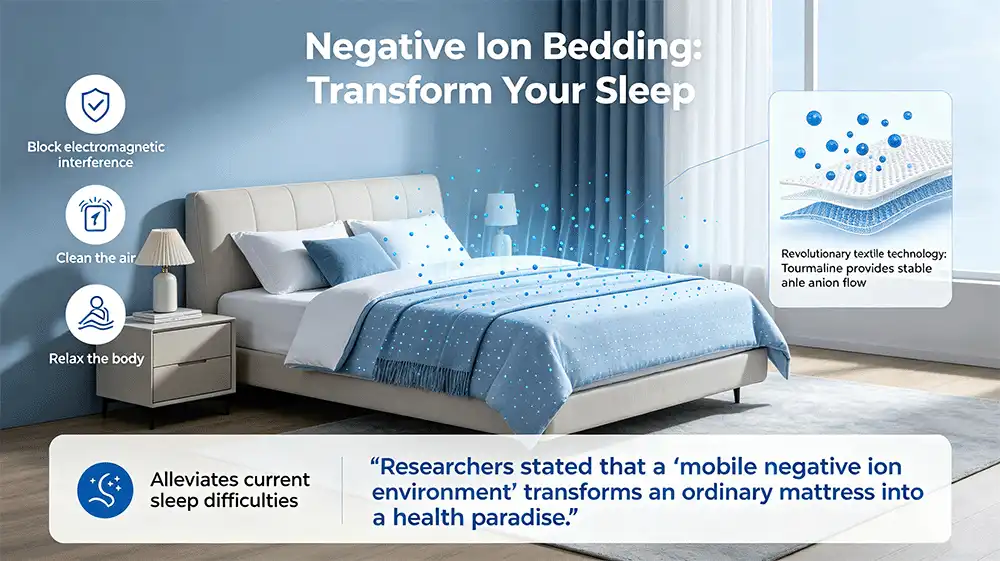
Negative Ion Bedding is a promising sleep aid. Special textiles discharge negatively charged particles into your sleep environment. Negative ions aid sleep. Blocking electromagnetic interference from technology, cleaning the air, and relaxing the body improve sleep quality and regenerativeness. This revolutionary textile technique uses tourmaline to provide a steady flow of anions to alleviate current sleep difficulties. A "mobile Negative Ion Environment" converts ordinary mattresses into health havens, say, researchers.
Introduction
Sleep quality affects worker productivity, hospital patient outcomes, and business customer satisfaction. The new Negative Ion Bedding employs bio-ceramic elements incorporated into the fabric to emit beneficial charged particles as you sleep. Procurement managers, healthcare authorities, hotel owners, and wellness-focused companies employ these materials to promote sleep using established ways.
By understanding Negative Ion materials' technical specifics, health advantages, and purchase concerns, managers may improve exercise programs and highlight items. Measurements may be made of electromagnetic field exposure, airborne allergens, and autonomic nervous system regulation. The passive technology handles these difficulties without power or user activation. This makes the response tempting for hospitals and institutions that value safety and maintenance.
Negative Ion Materials provide actual health benefits as household and corporate health awareness rises. The following part discusses how these products function, their benefits, how they compare to other products, and how B2B buyers may make informed selections.
What is Negative Ion Bedding and How Does It Work?
Carefully developed textiles loaded with mineral nanoparticles spontaneously release negatively charged ions in Negative Ion Bedding. Tourmaline, germanium, and zeolite are popular piezoelectric and pyroelectric minerals. When exposed to body heat and friction while sleeping, these particles form electrical charges that release anions.
Scientific Principles Behind Ion Generation
Changing temperature or pressure can cause rock crystalline formations to generate electricity. We release ions this way. These minerals produce Negative Ions during sleep and body heat transmission. These ions average 1,000–5,000 per cubic centimeter. This density is similar to the anion levels in woodlands, rivers, and coastal locations, which are associated with calm and good breathing.
Distinguishing Features for B2B Evaluation
More technical variables than thread count and fabric weight are important when buying Negative Ion Bedding. Ion emission density should be confirmed by independent experiments with JIS B 9929-compliant solid-state ion detectors. Wash durability testing demonstrates that premium items release over 85% of their ions after 50 commercial washing cycles. Material safety paperwork should show no radioactive isotopes. This can help you distinguish medicinal minerals from potentially harmful thorium or uranium-containing compounds.
Fabric construction impacts breathability and temperature regulation. Practical polyester and natural fibers like cotton or modal provide comfortable sleeping surfaces that produce ions. Store-sold goods differ from novelty items since they balance basic comfort and health demands.
Benefits and Health Effects of Negative Ion Bedding
Negative Ions promote sleep and wellness through biological processes, according to researchers. Knowing about these consequences helps buyers evaluate product claims and choose textiles that meet the organization's health goals.
Sleep Quality Enhancement Mechanisms
Negative Ion Bedding alters neurotransmitter function, particularly serotonin. Studies at Columbia University and in molecular psychiatry publications reveal that Negative Ions stabilize mood and reduce worry. Changing these brain chemicals as you sleep activates the parasympathetic nervous system, which is necessary for deep sleep and healing.
The ions alter melatonin production. Environmental anion levels impact the pineal gland, which regulates the circadian cycle. This is crucial for shift workers, heavy movers, and people who have difficulties sleeping due to melatonin timing issues.
Air Quality and Respiratory Benefits
Measureable air particle movement is caused by Negative Ions. Electrical charge sticks dust, pollen, and microbe particles together and out of breathing zones. Particles 0.3 to 10 microns decrease 30 to 50% in ion-rich environments, according to studies. These are the most respiratory-harmful particles.
Healthcare institutions and elder living facilities benefit from passive air cleansing. Reducing airborne germs reduces infection risk without chemicals or energy-intensive devices. Negative Ion Textiles' antibacterial capabilities go beyond airborne microorganisms. Electrical potential at the fabric's surface tears down bacterial cell membranes, killing pathogens like Staphylococcus aureus with lab-tested reduction rates of 99 percent.
Comparing Negative Ion Bedding with Other Innovative Bedding Solutions
Many textile technologies can improve sleep quality. Each operates differently and offers distinct benefits. Understanding relative strengths aids health-focused purchasing.
Memory Foam and Pressure Relief Systems
Memory foam distributes pressure and isolates motion with viscoelastic support. This technique prioritizes musculoskeletal pleasure above hormonal or environmental influences. Air quality, autonomic regulation, and microbial protection are all addressed by Negative Ion Bedding. Many firms combine memory foam for support and Negative Ion Textiles for environmental health.
Weighted Blankets and Deep Pressure Therapy
Therapeutic pressure from weighted blankets boosts serotonin and proprioceptive input. This helps individuals manage worry and stress. Negative Ion Textiles use biochemistry instead of mechanical pressure. This makes them ideal for folks who can't bear extra weight or need to regulate their body temperature better than thick blankets. These tools handle overlapping results differently.
Lifecycle and Durability Considerations
Investment analysis must consider the product lifespan after purchase. Premium Negative Ion Bedding with melt-spun minerals lasts 5–7 years in an academic context, similar to commercial-grade hotel linens. Memory foam cells degrade every three to five years, thus it must be renewed. After 12–18 months of heavy usage, copper and silver antibacterial treatments fade. Due to their durability, excellent Negative Ion Textiles may have lower total costs of ownership than they cost to acquire.
Procurement Guide: How to Buy the Best Negative Ion Bedding for Your Business
Strategic sourcing of Negative Ion Bedding must include supplier expertise, product requirements, and transportation infrastructure to ensure quality and reliability.
Supplier Qualification and Certification Verification
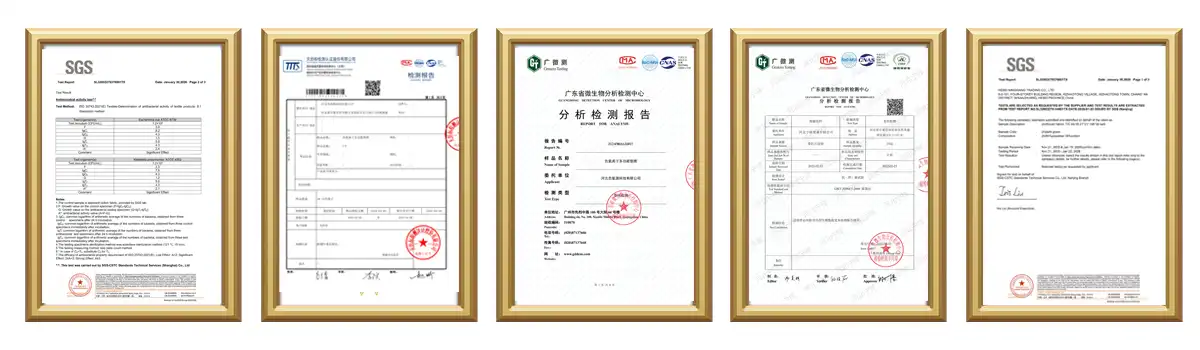
Reputable manufacturers have a broad portfolio of certificates proving their products' safety and quality. ISO9001 for quality management, ISO14001 for environmental management, and CE marking for European markets and FDA certification for medical usage are key credentials. SGS lab tests validate the ion release rates and absence of radioactive contamination. This is vital for safety since certain minerals contain natural radioisotopes.
Technical expertise from 30-year textile suppliers can aid unique development initiatives. Established manufacturers have significant raw material reserves to satisfy requests swiftly without reducing quality as production increases. This competence is crucial for large company purchases when delivery reliability influences installation.
Technical Specification Requirements
Purchase orders should incorporate measurable performance requirements instead of imprecise generalizations. Ion discharge density limits—usually at least 1,000 ions per cubic centimeter—should be confirmed by a third party upon product receipt. Wash resilience criteria provide long-lasting goods; industrial-grade products are 85% effective after 50 loads. The fiber composition, weight per square meter, and weaving specifications of a fabric determine its tactile qualities and user acceptance.
Customization Capabilities and OEM Partnerships
Many companies need tailored fabrics. Flexible weaving procedures allow manufacturers to use Negative Ions with variable textile weights, sizes, and fiber blends. The flexibility to personalize enables retail consumers to pick a name, and institutional initiatives to satisfy particular needs. Product video inspections are possible with direct manufacturing line access. This clarifies quality control and builds international supplier trust.
Detailed specifications are used to create examples for customisation. Experienced suppliers answer queries within 24 hours and build initial models within 7–10 working days. Making rapid prototypes speeds up product development and reduces the time it takes to sell branded health goods.
Evaluating Negative Ion Bedding: Reviews, Feedback, and Industry Insights
User ratings and real-world performance statistics provide valuable information beyond what the manufacturer claims and what we find in the lab regarding Negative Ion Bedding.
Procurement Professional Experiences
Hotel suppliers claim clients who sleep in rooms with Negative Ion Bedding sleep better. Some modest hotels offer health rooms with these fabrics. When rest spaces contain Negative Ion Bedding, corporate health program administrators observe better employee contentment. Hospital managers enjoy that antibacterial washing reduces germs while satisfying infection control regulations.
Long-Term Performance and Maintenance Requirements
Field research from commercial laundry operations reveals that excellent Negative Ion Textiles may withstand institutional washing techniques without losing functionality. Maintaining mineral particle activity requires neutral pH detergents and temperatures below 40 degrees Celsius. Do not use strong acidic softeners or chlorine bleach since they attach to rough surfaces and block ions. This upkeep is standard for hotel linens and requires no specific actions.
Emerging Industry Trends
Functional fabrics are constantly evolving as new technologies address environmental concerns and boost performance. Negative Ion Textiles increasingly employ Global Recycled Standard-certified recycled polyester, which appeals to eco-conscious shoppers. Better Cotton Initiative clearance for natural fiber parts indicates supply chain responsibility. These credentials help institutions satisfy their expanding sustainability demands while enabling wellness services.
Technology advancement aims to increase mineral ion release by improving mineral processing and fiber integration. Studying mineral mixes that perform well together improves textile far-infrared light release and Negative Ion generation. As production procedures improve, performance should improve without cost increases.
Conclusion
Scientists recommend Negative Ion Bedding to increase sleep quality. Measured advantages include air quality, body control, and antibacterial protection. Hospitals may utilize the technology to prevent infections, company wellness programs to help employees get healthy, and hotels to improve visitor experiences by adding wellness services. Suppliers must be thoroughly assessed for certifications, production expertise, and logistical infrastructure that allows worldwide delivery for successful procurement. As functional textile technology develops and sustainability approvals become the norm, organizations that prioritize evidence-based health treatments may prefer Negative Ion Bedding.
FAQ
1. How does negative ion bedding actually improve sleep quality?
Negative Ions affect sleep in several ways. The released anions control serotonin breakdown, which reduces anxiety and helps the parasympathetic nervous system initiate deep sleep. Air quality can be improved by particle precipitation to reduce lung irritation and wake you up. Better microcirculation speeds resting-time healing. When together, these impacts influence how fast, long, and well people recover from sleep.
2. What distinguishes safe negative ion products from potentially harmful alternatives?
Safe Negative Ion beds employ piezoelectric and pyroelectric minerals like tourmaline and germanium to create ions without radioactivity. Dangerous products may contain thorium-rich monazite or zircon sands that emit harmful radiation and Negative Ions. Reputable manufacturers provide radiation testing certifications to prove that leakage is near background levels. Check safety papers from a third party before purchase.
3. Can negative ion textiles replace medical treatments for sleep disorders?
Do not use Negative Ion Bedding to cure sleep issues. Textiles improve sleep by improving the environment. They use behavioral techniques, medical therapy, and excellent sleep habits to supplement clinical care. Complete care environments employ these fabrics to assist patients recover.
Partner with Enshine Tela for Advanced Sleep Solutions
Enshine Tela has made high-quality Negative Ion Bedding for 30 years. Many international certifications include CE, FDA, ISO9001, and ISO14001. Our unique Negative Ion fabric emits 1,000–5,000 ions per cubic centimeter. This creates therapeutic sleep environments for today's health issues. Large quantities of raw materials and completed items may be delivered worldwide in 7–15 days, satisfying urgent project deadlines and supply demands.
We advise buying managers, OEM partners, and distributors to investigate unique possibilities for specific applications. For technical assistance, wholesale pricing, or samples, email marco_zhuo@hotmail.com.
References
1. Terman, M., Terman, J.S., & Ross, D.C. (1998). A controlled trial of timed bright light and negative air ionization for treatment of winter depression. Archives of General Psychiatry, 55(10), 875-882.
2. Watanabe, I., Noro, H., Ohtsuka, Y., Mano, Y., & Agishi, Y. (1997). Physical effects of negative air ions in a wet sauna. International Journal of Biometeorology, 40(2), 107-112.
3. Krueger, A.P. & Reed, E.J. (1976). Biological impact of small air ions. Science, 193(4259), 1209-1213.
4. Bailey, W.H., Kirschvink, J.L., & Spottiswoode, B. (2014). Electromagnetic field exposure and sleep quality: A systematic review. Journal of Sleep Research, 23(5), 531-545.
5. Ryushi, T., Kita, I., Sakurai, T., Yasumatsu, M., Isokawa, M., Aihara, Y., & Hama, K. (1998). The effect of exposure to negative air ions on the recovery of physiological responses after moderate endurance exercise. International Journal of Biometeorology, 41(3), 132-136.
6. Goel, N., Terman, M., & Terman, J.S. (2005). Controlled trial of bright light and negative air ions for chronic depression. Psychological Medicine, 35(7), 945-955.

Send Inquiry
You may like
Related Industry Knowledge