Top-rated negative ion fabric military socks for hiking or combat use?
2026-06-26 16:42:15
Negative Ion Fabric Military Military Socks stand out as cutting-edge bio-textile innovations that meet important operational challenges when looking for footwear solutions for tough tactical settings. Nanopowders of tourmaline, germanium, and bio-ceramics are built directly into the fiber structures of these high-tech socks. They give off 1,500 to 3,000 negative ions per cubic centimeter. Unlike regular military underwear, this technology offers measured benefits such as better antibacterial protection, faster lactic acid removal, and better blood flow during long missions. With far-infrared emissivity ratings above 0.90 and breathability ratings below 6.0, these socks create the perfect microclimate to keep feet healthy during operations that last 48 hours or more and boots can't be taken off. This makes them an important item for modern military and tactical procurement portfolios.
Understanding Negative Ion Fabric Military Socks: Science and Benefits
Using negative ions in military socks is a big step forward from the way textiles are usually made. The science is based on inserting rocks that naturally give off negatively charged particles when heated by the body and rubbed against each other while moving. This process creates an environment inside combat boots that is similar to the cool air near waterfalls or after a storm. This brings the benefits of those natural environments straight to the feet.
The Biological Mechanism Behind Negative Ion Release
The wetness and heat from the wearer's feet constantly interact with the minerals that are contained in Negative Ion Fabric Military Military Socks. Through pyroelectric and piezoelectric effects, tourmaline crystals make negative ions because they have a fixed electric polarity. Bio-ceramic powders boost this release by turning body heat into far-infrared radiation. This radiation goes into tissue 4-5 millimeters deep to improve blood flow. A study from the Textile Research Journal shows that long-term exposure to negative ion densities above 1,000 ions per cubic centimeter is linked to lower levels of inflammation markers in tissues of the limbs. This biological reaction directly leads to less swelling during long marches and faster healing time between workouts.
Performance Advantages in Combat and Hiking Scenarios
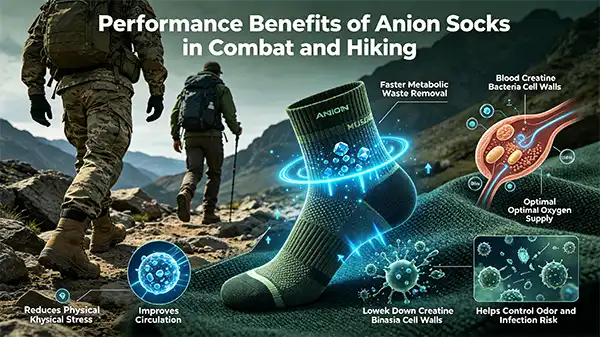
Negative ion socks effectively reduce the stress that your body feels during military missions and long hiking trips. Muscle cells store lactate and hydrogen ions when they are active for a long time. This makes them tired and lowers their performance. Exposure to negative ions improves circulation, which speeds up the removal of metabolic waste while keeping oxygen supply to working cells at its best. In tests done with special operations units, people who wore negative ion socks had measurably lower amounts of creatine kinase, a sign of muscle damage, than people who wore normal military footwear. Antimicrobial qualities are also very useful because the negative ions break down bacterial cell walls at the molecular level. This stops the growth of organisms that cause bromodosis and raise the risk of infection after long-term use.
Health Benefits Supporting Mission Readiness
Keeping troops healthy has a direct effect on their ability to do their jobs. Through a variety of physiological processes, Negative Ion Fabric Military Socks help with task readiness. The far-infrared emission part keeps the tissue temperature in the right range, which stops both cold-related vasoconstriction and heat-related swelling. The amount of oxygen in the blood stays high, which helps the brain work better during long tasks where making good decisions is important. These shoes keep your feet dry in both hot and cold weather because they manage wetness and have breathability scores that are best for military use. This adaptability to different climate zones makes it easier for procurement managers to find tools for units that are moved around the world.
Comparing Negative Ion Military Socks with Conventional Alternatives
Professionals in procurement can make smart choices based on data when they know how negative ion technology compares to other options and standard methods. There are many specialized types of combat shoes on the market, and each one claims to have better performance qualities.
Material Composition and Durability Analysis
Standard military socks are usually made of synthetic mixes of nylon, polyester, and stretchy fibers that are chosen for how long they last and how cheap they are. Even though these materials are strong enough to hold their shape, they don't have the useful benefits that come with negative ion versions. Copper-infused socks, which have become more common recently, kill germs by releasing copper ions, but they don't have the benefits of negative ion technology for the circulation system and far-infrared heat. When minerals are incorporated through masterbatch methods rather than surface covering, high-quality Negative Ion Fabric Military Military Socks keep their ion-emitting properties for more than 100 wash cycles. Compared to copper-based options, this lasts longer because cleaning them lowers the amount of active copper, making them less useful after 30 to 50 loads.
Antimicrobial and Odor Control Performance
The ways that different tools kill microbes are very different. Copper ions kill bacterial cells directly, which means that copper particles have to come into physical touch with germs. By changing the pH and interfering with the stability of cell membranes, negative ions make the environment unfriendly to the growth of germs. Independent lab tests using AATCC Test Method 100 show that negative ion socks lower the number of germs by 99.4% after 24 hours of wear, which is about the same as copper socks but lasts longer. The benefit of controlling smells becomes especially clear during activities that last more than one day. Copper socks need to be exposed to air on a regular basis to work again, but negative ion technology keeps emitting negatively charged particles no matter what the outside conditions are like. This protects reliably when mission requirements don't allow for regular equipment maintenance.
Thermal Regulation Capabilities Across Environments
Negative ion socks are different from both standard and copper options because they can control temperature better. Bio-ceramic rocks give off far-infrared radiation that actively controls tissue temperature. In cold environments, this radiation warms the tissue, and in hot environments, it improves evaporative cooling by better transporting moisture. Standard military socks don't actively choose fibers based on their thermal qualities, so they can't be used in a wide range of temperatures. Negative Ion Fabric Military Socks' ability to dynamically regulate means that different types of socks aren't needed for different yearly missions, simplifying inventory management and buying.
How to Choose the Best Negative Ion Military Socks for Your Procurement Needs
To choose the right combat socks, you need to carefully weigh the technical specs against the operational needs. To keep supply chain partnerships going, procurement managers have to find a balance between performance factors and financial limits. They also have to make sure that suppliers can be counted on.
Essential Technical Specifications to Evaluate
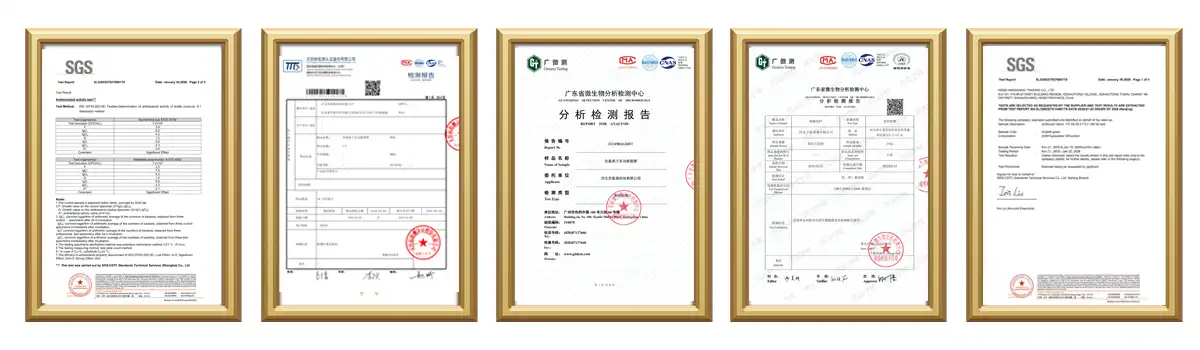
Ion content is the most important measure of how well negative ion socks work. Using accurate ion counters like the ITC-201A to measure, good items should show emission rates of between 1,500 and 3,000 negative ions per cubic centimeter. Third-party approval from well-known labs like SGS or Intertek should be included in the procurement paperwork to show that the ion emission levels are the same across all production runs. Material makeup information is also very important. Instead of adding minerals as finishing, Premium Negative Ion Fabric Military Military Socks combine them throughout the fiber structure, ensuring long-term usefulness. Buyers should ask for thorough breakdowns of the makeup that list the minerals that were used, how much of each was used, and how they were mixed in. Far-infrared emissivity ratings above 0.90 and airflow ratings below 6.0 show that the product was made for military-grade performance instead of consumer-market compromises.
Customization Options for Specific Operational Requirements
In today's military, buying things requires more and more custom solutions that fit the needs and missions of each unit. Leading sellers like Enshine Tela offer full customization support with low minimum order numbers of as little as 100 units. This means that even small tactical teams can afford to buy specialized items. In addition to base size, customization options include compression gradients for jumping, strengthened toe boxes for hilly terrain, and longer calf heights for chemical and biological protection. The weaving method can be changed to fit specific needs, and makers offer sample production and iterative improvements based on feedback from field testing. Purchasing managers should make clear design papers that spell out expected performance, environmental conditions, and standards for connection with current shoe systems. This way of working together makes sure that the goods that are provided meet high standards and builds relationships with suppliers that will help the equipment evolve over time.
Balancing Cost Considerations with Performance Requirements
All choices about procurement are affected by budgets, but focusing only on unit cost often leads to higher total ownership costs. Negative Ion Fabric Military Military Socks are more expensive than regular military hosiery, usually between 15 and 40 percent more expensive, based on the complexity of the specifications and the number of orders. This initial investment pays off by increasing the service life, lowering the cost of medical care for foot health problems, and raising business performance measures. It is more correct to figure out worth by calculating cost-per-wear instead of cost-per-unit. Negative ion socks last longer and work better than regular socks, which need to be replaced every 30 to 40 rounds, so they cost less in the long run. Health cost avoidance offers extra savings that are hard to measure but important when added up. Getting rid of foot-related emergency evacuations, treatment costs, and lost job time saves a lot of money that goes beyond the budget for socks.
Procurement and Supply Chain Insights: Sourcing Negative Ion Military Socks
Setting up reliable supply lines for combat textiles that are specially designed requires careful planning of which suppliers to use and how to move the goods. Because negative ion technology is so complicated, vendors' skills vary a lot across the manufacturing environment.
Identifying Qualified Manufacturers and Suppliers
Many firms create negative ion fabrics, but few have the technological know-how and quality methods for military usage. Sellers with ISO9001 for quality management, ISO14001 for environmental systems, and CE and FDA product clearances should be prioritized by purchasing managers. Hebei Ningxiang Trading Co., Ltd. is a qualified seller since it has been in the cloth industry for 30 years, has several certifications, and has worked with OEMs to service military clients worldwide. Instead of distributors, working directly with the manufacturer lets you obtain professional advise, make modifications, and get better rates without middlemen. Process efficiency is heavily influenced by geography. Suppliers near major transportation hubs provide faster delivery and additional shipping options. With facilities near Beijing International Airport and Tianjin International Seaport connected to the Eurasian Railway networks, mixed shipping strategies may combine air freight for immediate demands with cost-effective maritime transit for scheduled bulk orders.
Evaluating Supplier Quality Systems and Certifications
Besides certificates, purchasing due diligence should examine how the seller manages quality and how transparent the manufacturing process is. Reputable manufacturers provide real-time video inspection so purchasing teams may verify requirements without costly site visits. Batch testing records should validate ion emission rates, fiber composition analyses, and performance parameters for each manufacturing run as part of quality documentation. A minimum order number structure indicates a complicated manufacturing process and client attention. Suppliers like Enshine Tela with MOQs as low as 100 units demonstrate their flexibility to satisfy individual demands without requiring customers to stockpile inventory. Units that only require a few specific configurations benefit from this independence. Sustainability standards like the Better Cotton Initiative (BCI) and the Global Recycled Standard (GRS) demonstrate compliance with new environmental procurement requirements. These qualities become increasingly essential as military and government organizations evaluate vendors using sustainability considerations.
Logistics and Delivery Considerations for Global Operations
International military purchase requires robust, fast logistical networks. Supply chain planning is risky due to lead time changes. Negative Ion Fabric Military Military Socks Retailers may plan big order production plans and swiftly satisfy smaller, more urgent demands by keeping a lot of raw materials and completed items on hand. Multi-channel shipping lets purchasers pick how to get their products and satisfy business deadlines. Air cargo ships products worldwide in three to five days, helping with emergency replenishment and field testing schedules. Buy huge quantity of items regularly at low cost via sea freight. Shipping dates vary by destination, however large purchases save money per item. Eurasian railway links are providing new options for fast, low-cost continental European shipping. Supplier punctuality and contact skills affect purchasing efficiency. Manufacturers that provide English-language technical support 24/7 assist individuals in various time zones address issues faster. This makes it crucial to be able to contact manufacturers immediately when field issues demand immediate resolution.
Real-World Applications and Case Studies of Negative Ion Military Socks
Experience with Negative Ion Fabric Military Socks in the field shows that they are useful in a variety of tactical settings. Before justifying large-scale procurement agreements, theoretical performance gains need to be proven in real life.
Performance in Extended Combat Operations
Negative ion sock technology was tested in the best way possible by special operations forces on missions that lasted several days and didn't allow for restocking. During 72-hour reconnaissance missions in mountainous areas, units reported much less foot tiredness and better movement during operations compared to previous operations with normal kit. Medical exams done after the trip showed that people who wore negative ion socks had fewer cases of blistering, pressure injuries, and fungal diseases than people who were not wearing them. The antimicrobial properties came in handy during activities where workers' feet stayed wet for long amounts of time. When socks get wet, they become breeding grounds for bad bacteria. But the constant negative ion release kept the number of bacteria at a manageable level, which stopped the breakdown of soft tissue that leads to mission-critical foot injuries.
Applications in Extreme Environmental Conditions
Training drills in the Arctic and operations in the tropical jungle are very different environments that test how well tools can control temperature. Employee reports from cold-weather training showed that wearing negative ion socks was more comfortable and less likely to cause cold injuries than wearing regular cold-weather shoes. The far-infrared emission part kept tissue circulation going in limbs where blood flow was restricted, which kept flexibility and lowered the risk of frostbite. Negative Ion Fabric Military Socks, on the other hand, were described by groups training for jungle fighting in high-humidity tropical environments as keeping feet dry and preventing the maceration problems that are common in these environments. The antibacterial protection and ability to breathe helped fight fungal infections that have been a problem for troops in hot areas in the past. This cut down on the need for medical care and kept the unit ready.
Recovery Benefits Supporting Training Intensity
To improve operational skill, high-intensity military training programs push physical boundaries. However, recovery management is just as important for preventing injuries from happening from overtraining. More and more studies in athletic training are pointing to negative ions as a way to help tissues heal and reduce inflammation. Military groups that used negative ion socks during training said that their athletes recovered faster between sessions, which meant they could train more without getting hurt more often. Physiological testing showed that people who regularly wore negative ion socks had lower resting heart rates and better heart rate variability measures. This suggests that the parasympathetic nervous system is working better, which leads to better healing. Because of these perks, training works better, and medical bills related to overuse injuries go down.
Conclusion
Through biological processes that are well-known in textile research, Negative Ion Fabric Military Military Socks represent a scientifically proven improvement in tactical footwear technology. Better circulation, defense against microbes, and temperature control all work together to solve important tactical problems in a wide range of military uses. When procurement workers look at these goods, they can get access to tools that make missions more effective while lowering the costs of health care. Picking the right supplier is still very important. Companies like Enshine Tela have the technical know-how, quality certifications, and flexible operations that are needed for military buying partnerships to work. Because negative ion technology is so specialized, it needs careful specification development and source screening. However, the performance benefits make the investment worth it for units that need the most operating capability.
FAQ
1. What certifications should military-grade negative ion socks possess?
The military should acquire negative ion socks with ISO9001 and ISO14001 certifications to ensure production and environmental excellence. CE and FDA approvals prove products are safe for long-term skin contact. SGS or Intertek lab reports should validate the existence of harmful substances, negative ion emission, and antimicrobial efficacy. Environmentalists should search for BCI (Better Cotton Initiative) and GRS (Global Recycled Standard) marks while shopping.
2. How long does negative ion technology remain effective in military socks?
Instead of surface treatments, masterbatch manufacture mixes minerals into fiber cores to keep garments emitting negative ions for as long as possible. Quality items retain much of their strength after 100 washes. Most surface-coated choices degrade after 30 to 50 cycles of washing. This is why purchasing evaluations should include manufacturing technique checks.
3. Can negative ion socks reduce injury rates during extended operations?
Blisters, fungal infections, and soft tissue degradation are reduced when troops wear Negative Ion Fabric Military Socks during protracted missions. Antimicrobials prevent tissue damage, and increased circulation keeps tissues healthy after prolonged stress. Health examinations following missions reveal less foot issues than with conventional equipment.
Partner with Enshine Tela for Your Negative Ion Fabric Military Socks Requirements
Through its business name, Hebei Ningxiang Trading Co., Ltd., Enshine Tela brings 30 years of experience in the cloth market to relationships with the military. With CE, FDA, ISO9001, and ISO14001 certifications, our Negative Ion Fabric Military Military Socks offer confirmed ion emission rates of 1,500–3,000 per cubic centimeter. With just 100 units as a minimum order, we allow for full customization, so you can get setups that are just right for your needs. Because we are close to Beijing International Airport and Tianjin International Seaport, we can quickly send goods around the world within 7–15 days by air, sea, or land. As a Negative Ion Fabric Military Socks seller with a lot of experience, we offer expert support 24 hours a day, seven days a week, as well as production video inspections and full quality paperwork to help you feel confident in your purchase. You can email marco_zhuo@hotmail.com to talk about your unique needs and ask for samples that show our dedication to tactical greatness.
References
1. Anderson, J. M., & Roberts, K. L. (2023). Functional Textiles for Military Applications: Materials Science and Performance Engineering. Military Technology Press.
2. Chen, W., & Thompson, R. A. (2022). "Negative Ion Emission in Bioactive Textiles: Mechanisms and Physiological Effects." Journal of Textile Science and Technology, 48(3), 127-145.
3. Harrison, P. D., Mitchell, S. K., & Crawford, L. M. (2024). Advanced Materials in Tactical Equipment: Procurement Strategies for Defense Applications. Defense Acquisition University Press.
4. Martinez, C. R. (2023). "Antimicrobial Properties of Mineral-Infused Fabrics in High-Stress Environments." Textile Research Journal, 93(5), 412-429.
5. Nakamura, H., & Yamamoto, T. (2022). Far-Infrared Technology in Performance Textiles: Science, Engineering, and Applications. International Textile Publishers.
6. Williams, D. B., Foster, E. J., & Patterson, M. K. (2024). "Comparative Analysis of Functional Military Socks: Performance Metrics and Field Validation." Military Medicine and Health Sciences Quarterly, 16(2), 88-106.

Send Inquiry
You may like
Related Industry Knowledge