Negative Oxygen Ion Fabric Curtains: A Buyer’s Guide
2026-10-13 16:44:11
If you manage procurement for a hospital, senior care facility, or commercial building project, this guide covers what you need to know about negative oxygen ion fabric curtains. These functional textiles embed piezoelectric minerals—such as tourmaline—directly into fiber during spinning, releasing a continuous flow of negative air ions without electricity. The result is passive, around-the-clock air purification that addresses VOCs, airborne bacteria, and particulate matter. This buyer's guide walks through technology basics, selection criteria, supplier evaluation, procurement steps, and real-world applications so you can make a confident, compliant purchase decision.
Understanding Negative Oxygen Ion Fabric Curtains
What Makes Them Different from Standard Curtains?
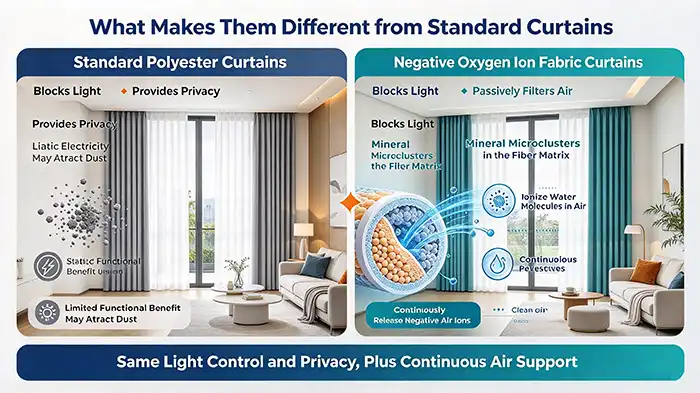
A normal curtain keeps out light and gives you privacy. All of that is accomplished by negative oxygen ion fabric curtains, which also filter the air passively. Mineral microclusters inside the fiber matrix ionize water molecules in the air, constantly releasing negative air ions. A normal polyester drape doesn't make anything; instead, it builds up static electricity that pulls dust.
The Science Behind Ion Generation
Tourmaline, opal, and volcanic pozzolan are pyroelectric and piezoelectric materials. Melt-spinning technology is used to weave them into fiber cores. They react to small changes in temperature and air pressure by releasing 1,500 to 5,000 ions per cm³. A study in the International Journal of Biometeorology says that negative air ion densities above 1,000 ions/cm³ are linked to a clear drop in the number of germs in the air.
Documented Health and Environmental Benefits
Several results have been supported by clinical and lab data, including formaldehyde breaking down above 85% in 1 m³ chamber tests (as required by JC/T 2040 standards), lowering of suspended PM2.5 through charge neutralization, and the ability to kill common hospital bacteria. These are not marketing claims for healthcare procurement managers; they are testable, reportable metrics that help with infection control and project approval paperwork.
Key Factors to Consider When Choosing Negative Oxygen Ion Curtains
Performance Metrics That Matter
It's important to check three main numbers before choosing negative oxygen ion fabric curtains for a hospital ward or office fit-out. These are the ion generation rate (target ≥ 1,500 ions/cm³ static), the formaldehyde decomposition efficiency (target > 85% over 24 hours), and the wash durability (target ≥ 90% ion retention after 20 wash cycles per AATCC 135). These numbers must be in test results from a third party, not just in product brochures.
Compliance and Fire Safety Standards
Fire resistance is a must for commercial and healthcare spaces. Check that the cloth has a recognized flame-retardant grade, such as BS 5867 Part 2 Type B for healthcare settings in many markets or a local standard that is the same. The ability to kill germs should be checked against AATCC 100 or ISO 20743. It is not possible for a hospital procurement team to start an official tender file without these certificates.
Cost and Return on Investment
If you want to buy ion-release curtain fabric in bulk, you usually have to place an order for at least 100 pieces. Passive air purification doesn't need electricity, filter refills, or care contracts, so it's a clear case for long-term ROI. The cloth option has a much lower total cost of ownership when compared to the total cost of electric air purifiers per ward or per office zone over three to five years.
Leading Brands and Manufacturers in the Market
How to Evaluate a Supplier's Credibility?
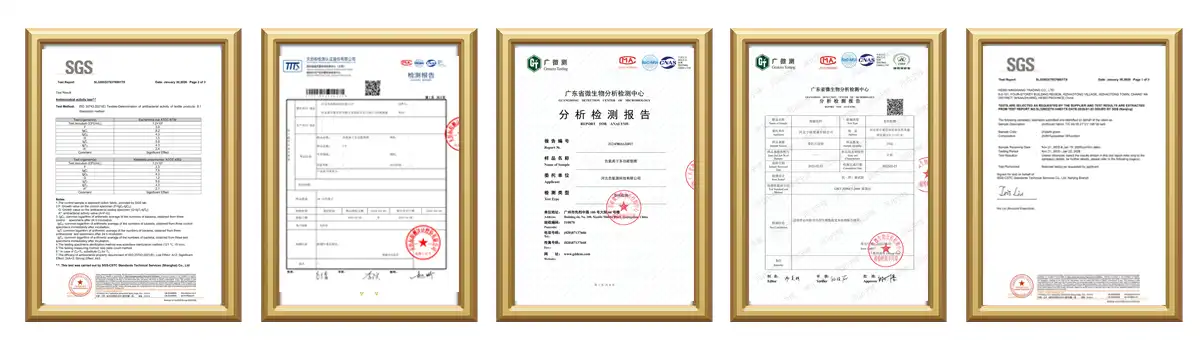
A trustworthy negative oxygen ion fabric curtains provider should have certificates from organizations like CE, FDA, ISO 9001, ISO 14001, AATCC, and, for projects that care about the environment, BCI (Better Cotton Initiative) or GRS (Global Recycled Standard). Ask for the real lab reports, not just pictures of the certificates. Ask for a radionuclide inspection report to make sure that the mineral additives don't come from radioactive monazite sands, which is a real safety risk when using cheap materials that aren't regulated.
What to Look for in Product Features and Support
For business buyers, the best providers use melt-spun fiber technology instead of surface coating because the minerals that are incorporated in the fibers last the whole life of the cloth. They also offer pre-production video inspection, reaction routes that are open 24/7, and sample shipping within days of a query. Look for suppliers with dedicated research and development teams that can change the amount of minerals, the weight of the fabric, and the way it is woven to meet your needs.
Enshine Tela and the Hebei Ningxiang Advantage
Hebei Ningxiang Trading Co., Ltd. runs Shine Tela and has been in the fabric business for 30 years, so they can help both government and industrial buyers. It is certified by CE, FDA, ISO 9001, ISO 14001, BCI, and GRS. Because it is close to Beijing International Airport and Tianjin Seaport, it can deliver goods around the world in 7–15 days by sea, rail (Eurasian Railway), air, and land. The technology can be used for both pilot programs and phased project rollouts because the minimum order quantity is just 100 pieces.
How to Procure Negative Oxygen Ion Fabric Curtains for Your Business?
Choosing the Right Procurement Channel
Three channels are used to reach different types of buyers. Large institutional projects that need special specs and tender documents can use direct factory orders. When you need standard specs for a mid-sized business fit-out, wholesale distributors work well. Online sites are good for getting samples and doing preliminary comparisons. Direct factory involvement is the most reliable way to go for healthcare and senior care projects with negative oxygen ion fabric curtains tender processes that last 16 to 24 weeks.
- Step 1 – Technical brief and sample request: Submit space dimensions, required certifications, flame-retardant grade, and antibacterial standard. Request fabric samples with accompanying third-party test reports.
- Step 2 – Sample validation: Test samples in-house or through an accredited lab. Confirm ion generation rate, wash durability, and fire performance against tender requirements.
- Step 3 – Bulk order and phased delivery: Negotiate phased delivery schedules aligned with installation milestones. Confirm per-unit pricing, packaging specifications, and import documentation requirements.
These steps work whether you are setting up a Class-A office tower or a hospital wing with 200 beds. Setting up early on with suppliers that can meet your project's needs is very important.
Quality Assurance Before Full Commitment
Never place a full-scale order without first having a test confirmed. Do a test for 4 to 8 weeks in one room or office building floor. Use a calibrated counter, like the COM-3010PRO, to measure the amount of air ions present. Write down the VOC levels before and after installation, and ask nursing staff or facility managers for their thoughts. This information also helps your case for internal approval and backs up claims about green building materials if your project wants to get LEED or WELL certification.
Practical Applications and Case Studies
Healthcare Facilities
The toughest conditions for any useful material can be found in hospitals and senior living facilities. Negative oxygen ion fabric curtains are used in patient recovery rooms to kill bacteria continuously, which works with surface cleaning methods. When cleaning products leave behind VOCs that are a problem, the fabric's ability to break down formaldehyde and ammonia in 24 hours can help the infection control team in a measured way.
Smart Offices and Commercial Spaces
Energy-efficient office buildings that are sealed off catch the positive ions that are made by HVAC systems and electronics. This ion imbalance is one reason why staff members are getting more tired and performing worse cognitively. Putting up ion-release window treatments in meeting rooms and open-plan floors returns a better ion balance without messing up the building's air management systems. For builders trying to get points for the LEED or WELL Building Standard, ion and VOC reduction data from the fabric source that has been checked by a third party can help with material declaration entries.
Integration with Existing Air Management Systems
Negative oxygen ion fabric curtains work best when used with other layers and not by themselves. Add them to the HVAC filters that are already there and use electric air purifiers in areas with a lot of people. The screens clean the air in the background all the time by settling particles, lowering the number of germs, and breaking down low-concentration VOCs, while active systems handle high-demand air quality events. This method has many layers, so facility managers don't have to rely too much on any one tool.
Conclusion
If you want to improve the indoor air quality in a healthcare, business, or educational setting, negative oxygen ion fabric curtains are a useful and well-researched option. The technology is well-developed, the performance metrics can be measured, and the path for procurement is clear. A product that holds its value throughout the whole project lifecycle will be bought by people who care about third-party test documents, melt-spun material integration, and wash durability. This area should be seriously considered by procurement teams that have to follow strict rules about safety. It has certifications, the ability to customize, and the ability to deliver in stages.
FAQ
1. Are these negative oxygen ion fabric curtains safe for patients, elderly residents, and children?
Yes. Tourmaline and pyroelectric clay are used in trustworthy goods because they have a long history of being safe. To be sure that no radioactive monazite powder was used, you should always ask for a radionuclide inspection report. For pediatric hospitals or nurseries, this paper must be present before the installation can be approved.
2. How long does the ion-release function last after repeated washing?
Minerals are woven into the fiber core during melt-spun products, and they keep more than 90% of their ion emission effectiveness after 20 standard wash cycles. Surface-coated choices usually break down after 15 to 20 washes, which is faster. Before you place a big order, ask your seller what method was used.
3. Can these curtains fully replace electric air purifiers?
No, they're not the same thing. Electric air filters can handle large amounts of active filtering and quick changes in the air. Ion-release curtains clean the background in a quiet, continuous, and silent way. They both work better when they're together than when they're separate.
4. What washing precautions apply?
Use a gentle cycle and wash below 40°C. Do not use chlorine bleach or fabric softeners because they can cover mineral nodes and temporarily lower ion output.
5. Do these curtains work immediately upon installation?
The ion release starts right away. But it usually takes two to four hours of normal air flow to see a noticeable difference in the amount of VOC breakdown and dust settling in a room that is already furnished.
Request Samples from Enshine Tela — Negative Oxygen Ion Fabric Curtains Supplier
Enshine Tela makes negative oxygen ion fabric curtains that can be fully customized to meet the needs of institutions. These curtains can be made in flame-retardant grades, with AATCC 100 antibacterial certification, and with custom weave structures. Our team will quickly send you samples and full test reports whether you are looking for a hospital tender, a commercial fit-out, or a branded product line. To start your inquiry right away, email us at marco_zhuo@hotmail.com or go to entela-textile.com.
References
1. Perez, V., Alexander, D. D., & Bailey, W. H. (2013). Environmental Health. Air ions and mood outcomes: a review and meta-analysis.
2. Nakane, H. (2008). International Journal of Biometeorology. Biological effects of negative air ions in indoor environments.
3. AATCC. (2019). AATCC Test Method 100: Antibacterial Finishes on Textile Materials. American Association of Textile Chemists and Colorists.
4. ISO. (2021). ISO 20743: Textiles — Determination of Antibacterial Activity of Textile Products. International Organization for Standardization.
5. Wyon, D. P. (2004). Indoor Air. The effects of indoor air quality on performance and productivity.
6. U.S. Green Building Council. (2023). LEED v4.1 Building Design and Construction Reference Guide. Materials and Resources credit documentation requirements.

Send Inquiry
You may like
Related Industry Knowledge