Negative Oxygen Ion Apron: Benefits, Uses, and Key Features
2026-09-16 16:57:25
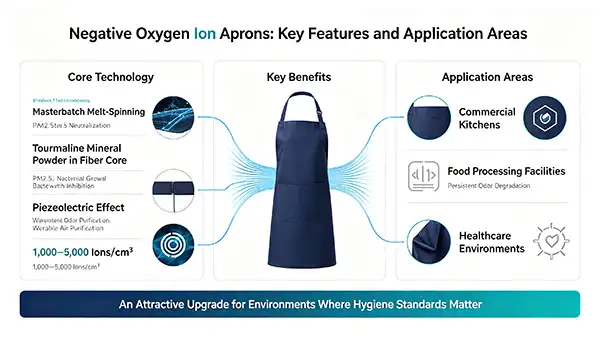
A negative oxygen ion apron is a functional textile garment engineered to release anions continuously during wear. Unlike standard protective aprons, it embeds tourmaline mineral powders within the fiber core through masterbatch melt-spinning, generating 1,000–5,000 ions/cm³ through piezoelectric effects triggered by body heat and movement. This wearable air-purification solution neutralizes airborne PM2.5, inhibits bacterial growth on fabric surfaces, and chemically degrades persistent odors — making the negative oxygen ion apron a compelling upgrade for commercial kitchens, food processing facilities, and healthcare environments where hygiene standards are non-negotiable.
What Is a Negative Oxygen Ion Apron?
The Science Behind Anion-Releasing Textiles
The mineral-filled fiber structure is what makes a Negative Oxygen Ion Apron work. Tourmaline is a semiprecious piezoelectric rock that constantly loses charge when it is under pressure or when the temperature changes, which happen naturally when you work out. This charge sends free anions into the area around the person who is wearing it. A study in the International Journal of Molecular Sciences (2018) says that higher levels of air anion are linked to lower levels of oxidative stress markers and better breathing comfort at work. The physics are lasting; unlike antibacterial finishes that are coated on the surface and wash off, the mineral-embedded method keeps working for as long as the fabric is used.
How It Differs from Conventional Protective Aprons
Normal aprons, like those made of canvas, PVC, or lead, are only good for blocking physical barriers. A Negative Oxygen Ion Apron adds an active biochemical layer. The anion field stops the growth of bacteria, gathers small airborne particles, and turns volatile organic compounds (VOCs) into inert CO2 and water. This difference is especially important in HACCP-compliant food preparation areas, where passive defense alone isn't enough as audit standards get stricter.
Key Benefits of Wearing an Anion-Releasing Apron
An ion-generating work apron is helpful in three areas that can be measured: the quality of the air, the cleanliness of the surface, and the health of the person wearing it. Here are the main benefits of better performance that procurement and food safety managers care about the most:
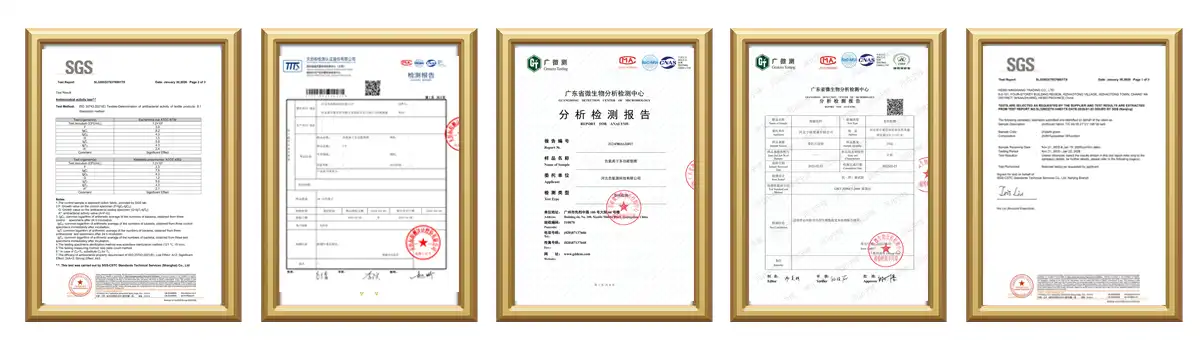
- Bacterial inhibition rated ≥99% against Staphylococcus aureus — Bacterial reduction of at least 99% against Staphylococcus aureus, as confirmed by ISO 20743 and JIS L 1902 standards. The steady negative charge makes the surface uninhabitable for gram-positive pathogens, which directly supports HACCP compliance requirements.
- PM2.5 sedimentation in the breathing zone — Anions bind electrostatically to positively charged fine particles, pushing them out of the way of the wearer's breathing. This effect is especially important in open-concept kitchens and high-throughput food production lines where oil smoke is present all the time.
- Odor elimination through molecular oxidation — The Negative Oxygen Ion Apron doesn't cover up smells; it breaks down the organic chemicals that cause them. By oxidizing ammonia, trimethylamine, and fatty acid derivatives into odorless leftovers, clothes stay clean for eight to twelve-hour shifts.
- Fatigue attenuation through antioxidant microclimate — A study published in Building and Environment (2020) found that workers in closed, humid settings who were exposed to negative air ion concentrations above 1,000 ions/cm³ felt much less tired after being there for a long time. This effect is felt where the apron is worn, not through a fixed room unit.
- Wash durability confirmed at >80% efficacy after 50 industrial wash cycles — After 50 industrial wash cycles, wash durability was proven to be >80% effective, which is a standard that surface-dip-coated options always fail to meet. Masterbatch melt-spinning fuses mineral particles into the fiber matrix during the extrusion stage of the polymer. This makes it structurally unlikely that the fiber will lose its function.
When internal budget reviews and buyer qualification checks happen, these measurable benefits help procurement teams make a strong business case.
Uses and Applications Across Professional Environments
Different industries use the Negative Oxygen Ion Apron for different tasks, and knowing how it will be used helps buyers choose the right setup.
Commercial Kitchens and Food Processing Facilities
High-volume restaurants, like central kitchens that serve large catering groups, have risks of bacterial cross-contamination, oil fumes, and steam that don't go away. All three vectors are covered by the ion-releasing apron. Its antibacterial fabric surface lowers the chance of pathogens spreading from one preparation station to another, and the anion microclimate stops VOCs from building up from gas combustion and deep-frying. For coffee and drink chain brands that have to make sure all of their stores look the same when customers come in, the self-deodorizing feature also protects the brand's image.
Medical, Laboratory, and Sterile Processing Departments
The anti-static qualities of the apron keep dust and biological burdens from sticking to its surface in hospital sterile processing areas and labs. The bacteriostatic field adds another level of protection against pollution between changes of gowns. Radiation safety is proven at less than 0.20 μSv/h, which means the tourmaline-based ion source does not pose a risk of not following U.S. NRC or EU radiation protection rules.
OEM Customization and Bulk Procurement
When buying a lot of Negative Oxygen Ion Aprons, purchasing managers have full OEM freedom. With a minimum order of 100 pieces, you can choose the fabric type (cotton, polyester, or a mix), the weave structure, the sizes (including smaller women's cuts), and the printing of your brand. QC staff can watch videos of the production process while it's going on, so they can keep an eye on things directly without having to go to the site.
How to Choose the Right Ion Apron for Your Operation
Selecting the correct anion work apron involves four necessary steps to make sure you're buying the right functional textiles. Use an accurate ion counter, like the COM-3010PRO, to check the anion output. When friction is applied to real aprons, the number of negative ions rises in a way that can be measured. Any batch reading below 500 ions/cm³ should be thrown out. Ask for radionuclide safety paperwork, namely a non-radioactive certificate stating that the ion source is tourmaline-based piezoelectric and not thorium or monazite-derived, as the latter would set off customs radiation alarms on imports into the U.S. and EU. Check antibacterial test results that use ISO 20743 or JIS L 1902 to show that they are effective against both Staphylococcus aureus and Klebsiella pneumoniae. Lastly, check the wash-durability statistics to see how many ions are still present after 20 and 50 cycles; a drop of more than 20% means the mineral bonding technology isn't good enough.
Certifications to prioritize: CE, FDA food-contact material compliance, ISO9001, ISO14001, Oeko-Tex Standard 100, GRS Recycled Polyester, and BCI (Better Cotton Initiative). Logistics dependability is also important. Make sure that your provider keeps enough raw materials on hand to meet the quarterly replenishment rounds without missing any wait times.
Conclusion
The Negative Oxygen Ion Apron is a step up from regular protective clothing that has been proven to work. By adding permanent mineral-based anion-releasing technology right into the fiber core, it improves air quality, antibacterial protection, odor control, and user endurance. All of this comes in a HACCP-compliant, 100% safe product. This type of useful apron meets operating cleanliness requirements and employee comfort at a per-unit cost that can be justified for food processing businesses, catering groups, and public kitchens that change uniforms every three months. If the purchasing team carefully checks the specifications, the investment will last, be easy to check, and be legal in all the major global import markets.
FAQ
1.Who benefits most from an anion-releasing work apron?
Food processing workers, industrial kitchen staff, central cooking teams, chain café and beverage workers, and hospital sterile processing workers can all benefit from the apron's ability to kill germs and clean the air. A good option is someone who works long shifts in places with a lot of pollution or fumes.
2.Does the apron's ion function degrade after repeated washing?
No, as long as the Negative Oxygen Ion Apron is made with masterbatch melt-spinning technology. It is not possible to wash out mineral powders that were fused into the polymer fiber core during compression. After 50 industrial wash cycles, our aprons are still more than 80% useful. Alternatives that are surface-coated and rely on a top layer usually stop working after 5 to 10 washes.
3.Is the radiation from tourmaline minerals safe?
Tourmaline makes ions through piezoelectric physical pressure, which doesn't use any energy at all. Our goods are below 0.20 μSv/h background radiation and come with a certificate that says they are not radioactive for each batch. To make sure we're following U.S. and EU trade rules, we check all of our mineral sources to make sure they don't use any radioactive materials.
4.What is the minimum order quantity?
The minimum order is 100 pieces. Before making a full commitment, you can order samples, and full OEM customization, including brand, size, and fabric specification, is possible at scale.
Source Your Negative Oxygen Ion Aprons Through Enshine Tela
Enshine Tela connects purchasing teams around the world with verified Negative Oxygen Ion Apron manufacturers who have CE, FDA, ISO9001, and ISO14001 certifications. Our multi-modal logistics network, which includes air freight through Beijing International Airport (3–5 day delivery), sea freight through Tianjin Seaport, and Eurasian Railroad options, will make sure your supply chain stays uninterrupted, whether you need to restock in bulk every three months or have a fully customized OEM product made. You can email our team at marco_zhuo@hotmail.com or go to entela-textile.com to ask for a catalog of our products or a free review.
References
1. Perez, V., Alexander, D. D., & Bailey, W. H. (2013). "Air ions and mood outcomes: a review and meta-analysis." BMC Psychiatry, 13(1), 29.
2. nternational Organization for Standardization. (2013). ISO 20743: Textiles — Determination of antibacterial activity of textile products. ISO.
3. Nakane, H., Asami, O., Yamada, Y., & Ohira, H. (2002). "Effect of negative air ions on computer operation, anxiety and salivary chromogranin A-like immunoreactivity." International Journal of Psychophysiology, 46(1), 85–89.
4. U.S. Nuclear Regulatory Commission. (2023). Radiation protection standards and occupational dose limits. NRC.
5. OEKO-TEX Association. (2024). OEKO-TEX Standard 100: Testing for harmful substances. OEKO-TEX.
6. Food and Drug Administration. (2022). Guidance for industry: Sanitary transportation of human and animal food. U.S. FDA.

Send Inquiry
You may like
Related Industry Knowledge