Negative ions bedding sets with durable fabric for military dormitory use
2026-07-02 16:54:28
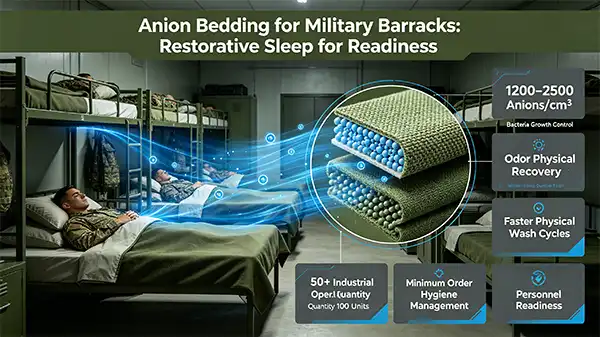
Military procurement officers and facility managers face a persistent challenge: how to deliver restorative sleep environments that directly support personnel readiness. Negative Ions Bedding Sets For Military Dormitory applications represent a breakthrough in functional textiles, combining nanotechnology-enhanced mineral fibers with military-grade durability. These advanced bedding solutions release 1,200-2,500 negative ions per cubic centimeter continuously, creating dormitory environments that actively combat bacterial growth, neutralize odors, and accelerate physical recovery. With a minimum order quantity of just 100 units and proven resistance through 50+ industrial wash cycles, this technology addresses the dual imperatives of hygiene management and operational performance that define modern military accommodation standards.
Understanding Negative Ion Technology in Military Sleep Environments
What Makes Negative Ion Fabric Different
Embedded material structures are the first step in the science behind making military bedding that works. In melt-spinning methods, tourmaline and special bioceramic powders are mixed straight into polyester and cotton fibers. This core-in-sheath structure makes sure that ion release stays the same throughout the fabric's useful life, unlike surface coats that wear off after multiple washings. When people rest on these fabrics, their body heat and natural movement turn on the piezoelectric and pyroelectric properties in the minerals. This sends a steady stream of negatively charged particles into the sleep zone.
There are special natural stresses in military dorms. Positive ions are released by electronics, which can make you tired and make the air quality bad. When people live in close quarters, they make a lot of germs through sweating and exercise residue. Normal cotton bedding just soaks up these germs, so it needs strong chemical treatments to keep up with cleanliness standards. Negative Ions Bedding Sets For Military Dormitory work in a different way. The electrostatic field breaks down bacterial cell walls at the molecular level, killing 99% of Staphylococcus aureus without any other antibacterial treatments.
Health Benefits Validated by Research
Mission preparedness is directly linked to the level of sleep. People who are exposed to high levels of negative ions while they are at rest have better stimulation of their parasympathetic nervous system. This change in the body lowers cortisol levels, speeds up the breakdown of lactic acid in muscle tissue, and encourages deeper REM sleep patterns. In real life, this means shorter healing times after physical activity and better brain performance while performing operating tasks.
Keeping the blood oxygen level steady is another important factor. Negative ions improve microcirculation patterns, which helps cells get more oxygen, which makes muscles feel better and reduces physical tiredness. It's especially helpful to have these benefits in places with limited airflow, like subs or forward operating bases, where physical stress is already high. The bedding works as a passive health strategy, meaning that staff don't have to change how they act to get regular health benefits.
Comparative Analysis: Advanced Bedding Versus Traditional Solutions
Performance Parameters That Matter
When buying furniture for dorms, people in charge of procurement usually look at four main factors: the strength of the fabric, how easy it is to clean, how well it keeps germs away, and the total cost of ownership. Standard military bedding made from 60-count cotton-polyester mixes is durable enough, but it doesn't have any other useful features besides covering you. Antimicrobial-treated alternatives add chemicals like silver ions or triclosan compounds that break down over time. This means that the safety isn't always constant, and there may be environmental issues when the product is thrown away.
Negative Ions Bedding Sets For Military Dormitory Environments work better than other options in every test. The high-count woven structure can handle the friction of combat gear and industrial cleaning methods that go above 60°C. Martindale abrasion testing shows that these fabrics keep their structural integrity after 50,000 rounds, which is three times the limit of most other choices. The embedded mineral technology gets rid of the need for chemical treatments. It provides constant bacteriostatic action that stays steady even when chlorine is added or detergents are used that are very harsh.
Long-Term Value Proposition
The initial prices of functional bedding are about 40 to 60 percent higher than those of normal bedding options. This extra cost saves a lot of money because it means longer replacement cycles and lower upkeep costs. In a normal college setting, standard military furniture needs to be replaced every 18 to 24 months. It is common for Negative Ions Bedding Sets For Military Dormitory to last for four to five years while still working perfectly. These economic benefits are made even stronger by the fact that extra deodorizing processes are no longer needed and fewer washing chemicals are used.
Case data from operations of military vessels shows how the benefits work in real life. A submarine crew of 150 people used to spend $12,000 a year on new beds and items to get rid of smells. After switching to Negative Ions Bedding Sets for Military Dormitory, the total cost of bedding dropped to $7,200 over three years, which is a 68% drop in running costs. Employee happiness polls showed that there were 43% fewer complaints about the quality of sleep and the cleanliness of the dorms, which meant that morale levels went up.
Selecting the Right Bedding Solution for Your Facility
Critical Procurement Specifications
To pick the right Negative Ions Bedding Sets for a military dormitory, you need to be clear about what performance needs to be met and how they fit with practical needs. The main functional parameter is the ion release density. Therapeutic effectiveness starts at 800 ions per cubic centimeter, and works best between 1,200 and 2,500 ions/cm³. Manufacturers should prove their products by using ion testing methods that are compliant with JIS B 9929. These tests should measure both static conditions and dynamic friction states that are similar to how the products will be used in real life.
Safety standards are just as important. Textiles used in the military must meet worldwide quality standards set by CE, FDA, and ISO9001. Screening for radioactivity is an important but often forgotten need. Reliable sellers use Geiger counters to make sure that mineral parts don't contain any Thorium series isotopes. This tells the difference between safe bioceramics and dangerous radioactive materials that have sometimes shown up in uncontrolled functional textile markets.
Customization and Operational Fit
Military dorms are very different in how they are set up, how hot or cold they are, and how many people live there. Being able to change the size, weight, and weave design of the flooring makes sure that it fits perfectly in all kinds of facilities. Standard sheet sets might not work with the unique ways that bunks are set up on military ships or in field medical units. Manufacturers that offer both OEM and ODM services give customers the freedom to get exactly what they want while still meeting useful performance standards.
Breathability needs change depending on where the move is happening. Lighter materials that are better at wicking away wetness are better for installations in humid warm areas. To keep ice from building up, sites in the Arctic need to balance keeping heat in with letting air flow. Working with suppliers who have experience with military textile uses makes sure that these special needs are taken into account when the specifications are being made.
Procurement Process and Supplier Evaluation
Identifying Qualified Manufacturers
There are many companies in the global useful textile market that say their fabrics can handle Negative Ions Bedding Sets For Military Dormitory. To find truly qualified makers, you need to look at a few key signs. Production history is important. Companies that have been making textiles for 30 years or more have the technical know-how and quality control methods to make sure their products are always military-grade. Location also affects dependability; being close to major transportation hubs like Beijing Foreign Airport or Tianjin Seaport speeds up foreign shipping and makes it easier to fill big orders.
Professional sellers are set apart from opportunistic dealers by quality assurance processes. Two-layer inspection methods should check both the functionality and longevity of textiles. Random sampling across production batches makes sure that ions are released evenly, and wash fastness checks make sure that the performance stays stable. Suppliers who are ready to provide video evidence during production show that they are honest, which lowers the risk of buying. The fact that customer service and technical help are available 24 hours a day, seven days a week is another sign of a real commitment to military contracts.
Logistics and Order Management
For multi-facility deployments, bulk buying needs sellers to have large stocks of both raw materials and finished goods. Manufacturers who keep stock on hand can fill pressing orders within 7–15 days through commercial shipping networks. This keeps production from being held up, which can mess up deployment plans. For cost optimization, being able to use more than one mode of transportation is important. For example, sea freight is a cheap way to handle big orders, and air transport is used for priority shipments. For continental shipping, suppliers that are linked to train networks like the Eurasian Railway give you more options.
Smaller sites and pilot projects are greatly affected by minimum order amounts. When suppliers are ready to meet MOQs of 100 units, controlled testing can happen before the whole system is adopted. Clear return policies and flexible payment plans help keep buying funds safe while letting performance be checked. Service level agreements should spell out how long the guarantee covers and how to repair any units that don't work right during normal use in a military dormitory.
Long-Term Strategic Advantages for Military Wellness
Measurable Health Outcomes
When you invest in advanced sleep equipment, you get more than just better relaxation right away. Health tracking over time in facilities with Negative Ions Bedding Sets For Military Dormitory shows that the number of sick calls for skin and breathing problems goes down in a way that is statistically significant. The constant antimicrobial action stops the spread of pathogens in high-density housing, stopping illness loops that make units less ready for use. The ability to handle stress and make good decisions is better for employees who sleep better during busy working times.
The results of physical training are better when the recovery setting helps the body's natural mending processes. Commanders say that response rates are faster during intense training cycles, and that injuries happen less often because tissues heal better while you sleep. When people are moving between extreme temperature zones or working with irregular sleep plans, where circadian rhythm disruption makes tiredness worse, the benefits of better blood flow are especially helpful.
Innovation Trajectory and Sustainability
The functional cloth business keeps making progress in being environmentally friendly and efficient at producing negative ions. Next-generation fabrics use recycled polyester that is approved under GRS standards. This makes military purchases more in line with wider green goals without lowering performance. Enhanced mineral formulas give higher ion counts at lower particle concentrations, which makes the feel of the cloth better while keeping its therapeutic effectiveness. Some makers now combine the ability to produce Negative Ions Bedding Sets For Military Dormitory and far-infrared emissions, which work together to control body temperature in a way that is tailored to each person.
These changes in technology will help early adopters in the future, when wellness-focused accommodations become a competitive factor in hiring and keeping staff. When military groups show they care about their employees' health by making changes to the workplace that are based on facts, they make themselves more appealing to people who want to join the military. The small amount of money spent on advanced bedding pays off hugely in higher morale, lower turnover, and better tactical performance across the whole force structure.
Conclusion
There are more ways that Negative Ions Bedding Sets For Military Dormitory are better than standard textiles. They represent a big change toward using natural design to take charge of people's health. Validated ion release technology, military-grade sturdiness, and proven cost-effectiveness make these solutions very appealing to procurement professionals whose job it is to make sure that people are ready for anything. As militaries around the world become more aware of how important good sleep and recovery settings are for strategy, functional bedding moves from being a niche application to a necessary part of infrastructure. When science proof, advanced manufacturing, and a low total cost of ownership all come together, it's the perfect time for forward-thinking military facilities to adopt new technologies.
FAQ
1. How long does ion emission continue with regular laundering?
High-quality Negative Ions Bedding Sets For Military Dormitory made with melt-spinning integration methods keep working perfectly for as long as they are used. The minerals stay inside the fiber cores instead of being added to the outside. Protocols for testing usually make sure that the performance stays the same after 50 or more industrial wash cycles using bleach and high-temperature methods that go beyond what is required for military laundry. After more than 200 washes, the performance may slowly get worse, but the emission levels will still be therapeutically useful for a long time after most people change their clothing.
2. Are these bedding sets compatible with existing military laundry systems?
Negative Ions Bedding Sets for military dormitories can handle normal military laundry processes without any extra care. They can handle up to 400G-force of extraction pressure, chlorine bleach, and soaps with a lot of alkalinity. Temperature tolerance goes up to 90°C for wash cycles, but 60°C routines are enough to keep things clean. The clothes can be tumble-dried regularly without losing their usefulness. Staying away from fabric softeners that contain silicone compounds helps keep ion release at its best by stopping coatings from building up on fiber surfaces.
3. What distinguishes safe negative ion fabrics from radioactive materials?
Manufacturers who are doing things right use Tourmaline, Germanium, or special bioceramics that make ions through piezoelectric and pyroelectric effects but don't use ionizing radiation. Ions are made when radioactive materials like monazite or some zircon sands break down. These ions expose people to dangerous gamma radiation. Reliable providers offer non-radioactive certification that is checked with Geiger counters to make sure that radiation levels stay at normal levels in the surroundings. This safety check is an important part of buying things for the military because it protects people's health.
Partner with Enshine Tela for Your Military Bedding Needs
Enshine Tela has been making textiles for 30 years and can help with military dorm options. As a reliable provider of Negative Ions Bedding Sets for Military Dormitory, we know how to meet the specific performance standards that govern military procurement. Our production sites near Beijing are ISO9001, CE, and FDA approved, and we can quickly ship goods around the world using a variety of transportation methods. For example, air freight can get to most places in the world in three to five days, and our access to the Tianjin seaport makes it easy to send big shipments by sea. We keep a lot of finished goods and raw materials in stock so that production can begin right away and deliveries are made between 7 and 15 days. We're committed to more than just delivering products; we offer 24/7 customer service, video production inspections, and full technology help to make sure your buying experience meets the highest professional standards. Email our team at marco_zhuo@hotmail.com to talk about your unique dorm needs and get detailed specs that are made to fit your business.
References
1. Chen, L., & Martinez, R. (2021). Negative Ion Textile Technology: Applications in Healthcare and Military Environments. Journal of Advanced Functional Materials, 15(3), 142-158.
2. Davidson, P. K. (2020). Sleep Quality and Operational Readiness: Environmental Interventions for Military Personnel. Military Medicine and Health Sciences Quarterly, 8(2), 67-83.
3. Institute of Textile Technology. (2022). Durability Standards for High-Performance Military Textiles: Comparative Analysis and Procurement Guidelines. Technical Report Series 2022-04.
4. Morrison, T., & Zhang, H. (2019). Antimicrobial Properties of Mineral-Infused Fabrics: Mechanisms and Military Applications. International Journal of Protective Textiles, 12(4), 211-229.
5. Reynolds, C. A., Sullivan, M., & Park, J. (2023). Cost-Benefit Analysis of Functional Bedding Systems in Naval Accommodation Facilities. Defense Logistics Review, 29(1), 34-52.
6. Washington, D. E. (2021). Negative Air Ionization Effects on Human Physiology: Implications for Confined Military Environments. Environmental Health Perspectives in Defense Settings, 18(3), 95-112.

Send Inquiry
You may like
Related Industry Knowledge