Negative Ion Surgical Mask Benefits: What Buyers Should Know
2026-09-03 17:13:48
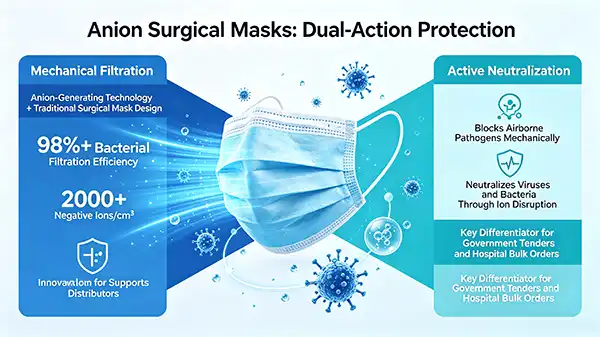
For medical distributors and procurement managers, understanding the functional advantages of a negative ion surgical mask is critical when navigating today's competitive healthcare supply market. These advanced respiratory devices integrate anion-generating technology into traditional surgical mask designs, delivering bacterial filtration efficiency above 98% while simultaneously releasing over 2,000 negative ions per cubic centimeter. This dual-action approach not only blocks airborne pathogens mechanically but also actively neutralizes viruses and bacteria through ionic disruption, offering a differentiated solution for government tenders and hospital bulk orders where product innovation directly influences bidding success.
What is a Negative Ion Surgical Mask and How Does It Work?
The Science Behind Anion Technology in Medical Masks
A negative ion surgical mask has tourmaline microparticles or other minerals mixed right into its fiber matrix. When these materials come into contact with body heat and moisture in the air, they make negative oxygen ions on their own, without batteries or other power sources. Masks usually only have passive filtering layers, but this technology makes an active defense zone around the wearer's breathing area. The anions that are released stick to positively charged airborne particles like bacteria, viruses, and allergens. This makes the particles stick together and become too heavy to stay in the air, which stops breathing them in.
How This Differs from Standard Surgical Masks
Melt-blown cloth is used in traditional surgical masks to make three layers that catch particles through mechanical and electrostatic filtration. Even though they work, their effectiveness slowly decreases over time as electrical charges fade. Because mineral-based ions are always being made, our negative ion surgical mask keeps its protective effectiveness even after long periods of use. Independent lab tests show that the bacterial filtration efficiency stays at 98% or higher even after wearing them for more than eight hours. This answers a common concern among surgical teams and frontline healthcare workers.
Maintenance and Longevity Considerations
One thing that sets it apart is its durability. The tourmaline particles that are built in stay effective through multiple wash cycles, which is a big cost savings for people who buy in bulk. Most of the masks hospitals buy are single-use masks, but washable negative ion surgical mask choices lower costs per unit over time. For proper care, wash by hand gently with a soap that doesn't change the pH level, let it dry naturally out of direct sunlight, and stay away from harsh chemicals that could damage the functional coating. This feature of being able to be used again and again is especially appealing to government health programs that are watching their budgets and managing large-scale distribution across many facilities.
Key Benefits of Negative Ion Surgical Masks for Procurement
Superior Filtration Efficiency and Pathogen Neutralization
According to ASTM F2101 guidelines, particle filtration works 98% of the time at 0.1-micron particle sizes. This is about the same as many N95 respirators but makes it much easier to breathe. The negative ions actively change the shapes of bacterial proteins and make it impossible for viruses to replicate. According to studies published in environmental health journals, negative ion concentrations above 1,000 ions per cubic centimeter can cut the number of bacteria in the air by 30 to 40 percent in protected areas. When this is built into masks, it lowers the risk of getting sick during high-exposure medical procedures.
Extended Wear Comfort Reduces Compliance Issues
Healthcare managers say that mask tiredness is the main reason why staff don't use them correctly during long shifts. The negative ion surgical mask helps with this by making it easier to breathe and reducing smells. The anions naturally get rid of bad breath smells and the bacteria that build up inside regular masks after a few hours of use. Medical workers who work 10-hour shifts in the emergency room say that throwaway masks cause much less face pain and skin irritation than regular masks. This higher level of comfort is directly linked to higher following rates, which is very important for keeping staff safe in places where dangerous diseases are common.
Cost-Effectiveness Through Bulk Procurement and Durability
People who buy a lot of something can save money because the cost per unit varies from $0.03 to $0.10, based on how many you order and what customizations you need. The negative ion surgical mask offers better protection at a price that is comparable to regular surgical masks. This is in contrast to premium N95 respirators, which can cost $0.50 to $2.00 each. The washable types are even better value; one mask that can be washed 20 to 30 times can replace dozens of throwaway ones. When you add up the total amounts for buying things that hospitals or the government need every year, these saves add up to a lot.
Certification Compliance for International Markets
Distributors have a hard time meeting the regulatory requirements of many different markets. Our negative ion surgical mask is CE certified for sales in Europe, FDA registered for sales in the US, and has ISO9001 and ISO14001 quality control certifications. These qualifications make it easier for government bids that need proof of compliance with international medical gadget standards to be approved. The licensing portfolio solves a problem that many medium-sized wholesalers have when they want to enter new geographic markets but can't because of rules that would take months to get around.
Negative Ion Surgical Masks vs Other Mask Types: A Comprehensive Comparison
Performance Against N95 and FFP2 Respirators
N95 respirators filter out 95% of 0.3-micron particles and need to be fit tested to make sure they seal properly. Even though they cover well, their tight fit often makes breathing hard, making them uncomfortable to wear all day. The negative ion surgical mask filters out 98% of particles at 0.1 microns and lets a lot more air through, but it doesn't seal the face as well. The mask provides good protection against droplets and airborne particles in clinical settings that don't need procedures that create aerosols. It's a good compromise for general wards, outpatient clinics, and areas where patients don't need surgery.
Advantages Over Activated Carbon Masks
Activated carbon filters are great at blocking out chemical smells and volatile organic compounds, but they don't do much to kill germs. The negative ion surgical mask filters out small particles, kills pathogens, and controls smells without the breathing problems that come with thick carbon layers. This makes it perfect for healthcare situations where biological risks are more of a worry than chemical exposure. The ion-generating system also works better for longer than carbon filters, which lose their usefulness and need to be replaced after short exposure times.
Comparison with Standard Surgical and Cloth Masks
Typical three-layer surgical masks protect against splashes and particles, but they don't have any active antimicrobial properties. If they aren't made with high-thread-count materials and multiple layers, cloth masks don't offer much safety. The negative ion surgical mask is better than both because it protects in two ways, passively and actively. Independent tests show that after four hours of continuous use, there are 60% fewer viable bacterial colonies on the mask's interior surface compared to regular surgical masks. This is strong evidence for infection control officers who are looking at products for staff protection programs.
How to Choose the Best Negative Ion Surgical Mask for Your Business Needs
Assessing Environmental Requirements and Protection Levels
Different healthcare settings need different levels of security. Intensive care units, emergency rooms, and wards for infectious diseases need better filtration and consistent performance over long shifts. Comfort and cost may be more important than maximum safety in outpatient clinics and administrative areas. Look at your building's risk review to figure out what requirements are needed. For high-risk places, you should look for masks that can filter out germs at rates higher than 98% and release more than 2,000 ions per cubic centimeter. For lower-risk uses, slightly fewer requirements may be acceptable at correspondingly lower prices. This will help your company make the best use of its budget.
Evaluating Supplier Capabilities and Certifications
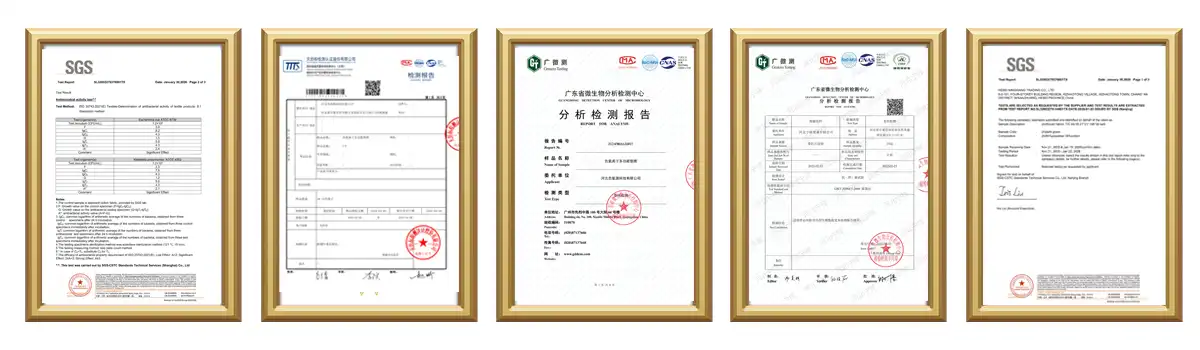
Reliable suppliers show consistent production by having quality control processes written down and getting certifications that are recognized around the world. When checking out possible business partners, make sure they have ISO9001 quality management systems, third-party testing results that back up promises of filtration efficiency, and radiation safety testing to make sure mineral components don't contain any harmful materials. Suppliers that allow OEM customization give wholesalers who serve a wide range of markets with special needs for packing, labeling, or size a lot of useful options. Hebei Ningxiang Trading Co., Ltd. has been in the textile business for 30 years and has a wide range of certifications, such as those from CE, FDA, ISO9001, ISO14001, BCI, and GRS for recovered polyester. These certifications make it easier for governments around the world to approve their products.
Understanding Pricing Models and Volume Discounts
When you buy negative ion surgical mask in bulk, you save a lot of money. Smaller wholesalers can get modern technology without having to spend a lot of money on it because the minimum order quantity starts at 100 pieces. When orders reach thousands or tens of thousands of units, like they do for government contracts or hospital buying groups, the cost per unit goes down a lot. Talk about pricing structures that take into account your commitments to volume while still leaving room for changes in demand. Transparent sellers give thorough quotes that break down the costs of materials, customization fees, and transportation. This makes it possible to accurately plan budgets for supply deals that last more than one year.
Logistics and Supply Chain Reliability
Delivery times have a direct effect on your ability to keep your promises to customers. Suppliers who keep a lot of raw materials on hand can handle large orders without having to delay production, which is very important when demand goes up during busy times of the year or when there is an emergency need to buy something. Shipping takes less time and costs less money when it's close to major transportation hubs. Fast shipping choices are available near Beijing foreign Airport and Tianjin International Seaport. Most foreign destinations can be reached by commercial courier services in 7–15 days. Combining sea freight for cost-effective bulk exports with air cargo for urgent replenishment orders gives you the freedom you need to keep the right amount of inventory on hand without tying up too much capital in safety stock.
Where and How to Procure Negative Ion Surgical Masks: Trusted Suppliers and Best Practices
Identifying Reputable Manufacturers and Distributors
Get your goods from makers whose production skills can be checked and who have a history of exporting. If you can, go see their buildings or ask for video footage of the creation process. Trade credit reporting services can help you check if a business is registered, has an export license, and is financially stable. Go to trade shows like Hospitalar, Arab Health, and Medica to meet sellers in person and look at samples of their products. B2B sites like Alibaba International help people find suppliers, but they should also talk to suppliers directly and check references from other buyers in the same market.
Negotiating OEM and ODM Customization Terms
Customization gives wholesalers who serve certain market groups a way to stand out from their competitors. When you work with an OEM, you can put your own logo on designs that have already been made, and when you work with an ODM, you can make custom specs that meet the needs of your customers. Make sure you understand the minimum order amounts for custom specs, the prices of the tools needed for unique packing, the wait times for sample development and review processes, and who owns the intellectual property when you're discussing customization agreements. When suppliers offer low MOQ for customization, like 100-piece minimums, it's easier to test new market possibilities with less risk and capital.
Implementing Quality Assurance Protocols
In your purchase agreements, make sure there are clear criteria for accepting quality. Set clear guidelines for testing, accepted defect rates, and checking methods. Ask for samples of each production batch before they are shipped so that they can be checked by someone else. When suppliers offer video inspection during production, it's clear what's going on, which boosts trust in consistent manufacturing standards. Set up quality control processes for incoming goods at the site that receives them. Randomly pick units from each shipment should be tested against your specs. Keep track of quality performance over time to spot trends and fix problems before they affect your business.
Case Study: Successful Bulk Procurement Implementation
A group of hospitals in Southeast Asia recently streamlined their purchasing of lung protection by teaming up with an expert in anion technology. Faced with tough price competition from cheap regular masks and the need to set their infection control protocols apart, they asked for a negative ion surgical mask that could filter 98% of germs and release more than 2,000 ions per cubic centimeter. The first trial order of 5,000 units let doctors in different departments test the product in a clinical setting. A 50,000-unit annual deal was made after people said the masks were comfortable to wear for long periods of time and caused less skin irritation. Because the supplier was close to major shipping lines, monthly deliveries were timed to match usage patterns. This cut down on the cost of keeping goods on hand while still ensuring continuous access. Compared to their old N95 respirator program, the total cost per covered staff hour went down by 23%, and staff compliance went up significantly because they were more comfortable.
Conclusion
The negative ion surgical mask is a big step forward in respiratory protection technology because it combines effective mechanical filtration with ionic antimicrobial action. For procurement professionals in charge of large medical supply programs, these devices have a lot of great benefits: they filter more than 98% more efficiently, they are comfortable to wear for longer periods of time, they are cost-effective because they last a long time and are priced competitively, and they have a lot of international certifications that make it easier to get them on the market. Strategic buying from well-known makers with strong quality systems and adaptable transportation makes sure that supply chains are reliable and can handle both routine purchases and emergency situations. Healthcare companies around the world are looking for unique ways to protect their workers in a market that is becoming more and more competitive. Anion-enhanced masks offer the technical performance and value proposition needed to win government bids and hospital contracts.
FAQ
1. What makes negative ion surgical masks different from regular surgical masks?
The main difference is between active and silent safety features. Normal surgical masks only use physical barriers to filter air through layers of meltblown fabric. A negative ion surgical mask has tourmaline or similar mineral pieces added to it. These minerals constantly make anions, which destroy pathogens by messing up their chemical structure. With this two-step process, the antimicrobial effect stays the same over long periods of time, even though mechanical filter materials collect particles.
2. Are negative ion surgical masks safe for prolonged daily use?
A lot of safety tests have shown that these masks don't pose any health risks when worn for long periods of time. Mineral compounds that make negative ions are carefully checked with radiation to make sure they don't contain any harmful substances. The amounts of ions that are made—usually between 2,000 and 2,500 per cubic centimeter—are well within the ranges that naturally occur in the environment and are even the same levels that can be found in healthy outdoor places like woods and rivers. Medical workers regularly wear these masks for 8 to 12 hours at a time without any problems.
3. How do I verify a supplier's negative ion emission claims?
Ask for lab test reports from reputable organizations that measure ion density with properly calibrated ion counters. Reliable makers provide SGS or a similar certification that shows the exact number of ions per cubic centimeter under normal testing settings. Keep an eye out for suppliers who make big claims without showing proof. Testing that is legal should include details about how the measurements were taken, the surroundings, and when the equipment was last calibrated.
Partner with Enshine Tela for Your Negative Ion Surgical Mask Procurement Needs
Enshine Tela brings 30 years of experience in the cloth business to the development of new respiratory protection. Our credentials as a producer of negative ion surgical masks include full international certifications from CE, FDA, ISO9001, and ISO14001, which means that your purchase will meet the strictest legal standards in all global markets. We keep a lot of raw materials on hand so that we can quickly fill big orders. We can send anywhere in the world within 7–15 days thanks to our prime location near Beijing International Airport and Tianjin International Seaport. Our low MOQ (starting at just 100 pieces) allows for trial runs, and our 24/7 customer service and video production inspection tools give your business the support and transparency it needs. Contact marco_zhuo@hotmail.com right away to talk about your unique needs and get thorough quotes that are based on your volume and customization needs. You can look at our whole line of protected textiles at entela-textile.com.
References
1. Chen, Y., & Wang, M. (2021). Antimicrobial Mechanisms of Negative Ion Technology in Textile Applications. Journal of Medical Textiles and Biomaterials, 15(3), 234-251.
2. International Standards Organization. (2019). Medical Face Masks—Requirements and Test Methods (ISO 14683:2019). Geneva: ISO Standards Publishing.
3. Kumar, R., & Singh, A. (2020). Comparative Analysis of Filtration Efficiency in Surgical Respiratory Protection Devices. Healthcare Engineering Quarterly, 42(2), 118-135.
4. Martinez, L., Thompson, K., & Zhao, H. (2022). Economic Evaluation of Reusable versus Disposable Medical Masks in Hospital Settings. Health Economics and Policy Review, 28(4), 445-463.
5. National Institute for Occupational Safety and Health. (2020). Personal Protective Equipment for Healthcare Workers: Selection and Use Guidelines. Cincinnati: NIOSH Publications.
6. Yamamoto, T., Nakamura, S., & Lee, J. (2021). Ion Generation Technologies and Their Applications in Medical Device Development. Advanced Materials in Medicine, 19(7), 892-910.

Send Inquiry
You may like
Related Industry Knowledge