Negative Ion Surgical Gown: The Future of Advanced Medical Protection
2026-08-25 13:46:12
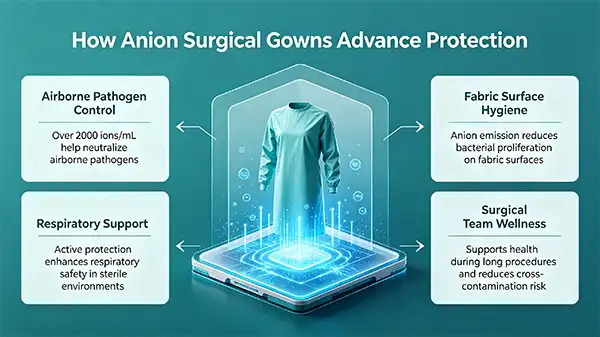
The negative ion surgical gown represents a transformative leap in medical protective apparel, merging conventional barrier protection with active anion-emitting technology. These specialized garments continuously release negative ions—exceeding 2000 ions/cc in clinical-grade models—which actively neutralize airborne pathogens, reduce bacterial proliferation on fabric surfaces, and enhance respiratory protection in sterile environments. This innovation addresses longstanding challenges in infection control, offering procurement managers and healthcare administrators a scientifically validated solution that simultaneously protects patients, reduces cross-contamination risks, and supports surgical staff well-being during extended procedures.
Understanding Negative Ion Surgical Gowns: Technology and Benefits
When anion-infused protective fabrics came out, it was a big change from inactive to active ways of stopping infections. Unlike regular medical gowns, which only stop fluids and particles from getting in, these new clothes make a constantly changing antimicrobial environment around the person who wears them.
The Science Behind Anion Emission
Bioactive mineral powders, mostly nano-tourmaline and specific bioceramics, are pressed straight into the fiber matrix during textile production as part of our manufacturing process. These materials are naturally piezoelectric, which means that when they are put under mechanical stress or changes in temperature, they create electrical charges. When worn, body heat and movement cause anions to be released continuously. Electrostatic induction testing confirms the emission rates. This built-in technology makes sure that the clothing will always work, unlike surface-applied bacterial treatments that break down after a few washes.
Multifaceted Protection Mechanisms
The protective properties of the negative ion surgical gown go beyond normal fluid resistance. Negative ions have a high oxidative potential, which means they can damage bacterial cell membranes and virus protein structures when they come into touch with them. Anion concentrations above 1500 ions/cc can cut bacterial colonies in the air by up to 73% in enclosed spaces, according to research published in environmental microbiology journals. This means that there are fewer pathogens in the air that surgical staff breathe in operating rooms and intensive care units. The electrostatic qualities also make the particles that are suspended settle down, which makes it harder for dirty aerosols that can spread illness to move around.
Enhanced Surgical Performance
Professionals in the medical field who wear these new gowns say they feel more alert and less tired during long procedures. Positive ions build up in operating rooms because of air conditioning and electronics, which makes the room a place where bodily stress signs are higher. The counterbalancing anion emission helps restore ionic balance, which may help with cognitive function and focus, which are very important during complicated heart or brain surgeries that last four hours or more. It's important for procurement professionals to know that these physiological benefits don't replace proper rest protocols; instead, they add to the overall performance of the surgical team.
Regulatory Compliance and Certification
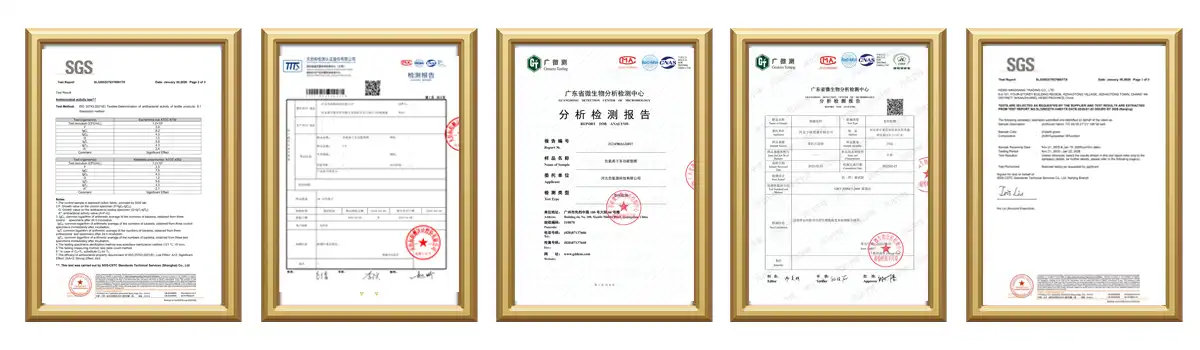
Our production follows foreign standards like CE, FDA, ISO9001, and ISO14001, which makes sure it works with strict healthcare buying requirements. The bacterial filtration efficiency always goes above 98%, which meets the AAMI Level 4 protection standards for high-risk procedures. Testing by a third party, SGS, confirms both the uniformity of the ions released and the structural stability of our textile design. When procurement managers look at suppliers, these certifications give them written peace of mind, especially during competitive bidding processes where compliance checks are required.
Comparing Negative Ion Surgical Gowns with Traditional and Antibacterial Gowns
Knowing how different types of protective clothing work lets you make smart buying choices that are in line with your institution's safety needs and budget.
Protection Level Analysis
Standard throwaway medical gowns are made of spunbond-meltblown-spunbond, which is a good shield against fluids getting through but doesn't have any antimicrobial properties on its own. Antibacterial gowns have chemicals on the surface that stop microbes from growing. These chemicals are usually quaternary ammonium compounds or silver nanoparticles. But these treatments get weaker with each sterilization cycle, and they may seep into the environment, which raises concerns about bioaccumulation.
The anion-emitting choice works just as well as the other option as a shield, but it also has antimicrobial properties that last the whole life of the product. The mineral-based technology doesn't use chemicals; instead, it works through physical processes. This means that there are no worries about antimicrobial tolerance or sensitization responses. When looking at long-term supply contracts, procurement teams should take this advantage of durability into account when figuring out the total cost.
Durability and Reusability Considerations
Single-use, throwaway gowns are what hospitals buy most of the time, but the negative ion surgical gown offers a reusable alternative. Still, institutions that care about the environment and the long-term costs of throwaway goods are becoming more and more worried. Our ion-infused clothes can be sterilized multiple times (autoclavable at standard medical temperatures) without losing their effectiveness. The mineral particles that are embedded stay structurally stable, and the ions that they give off stay the same after twenty or more launderings if the recommended steps are followed.
There is an initial cost to reusable choices, but they have good cost-per-use economics in surgical areas with a lot of patients. To find the break-even points, procurement experts should use institutional process numbers to compare differences in buy prices with disposal fees and replacement frequencies. Environmental product declarations that can be requested show how much of a carbon footprint can be cut by using reusable programs.
Cost-Effectiveness and Total Ownership Analysis
When bought in large quantities by institutions, ion-emitting protective clothing is usually priced fifteen to thirty percent higher than normal antibacterial models. However, a full cost analysis must take into account other benefits as well. For example, fewer hospital-acquired infections mean lower treatment costs and liability risks, and happier staff may mean less staff turnover in surgical specialties that are hard to work in. Healthcare economists are becoming more aware that choices about purchases that are based on unit price alone often don't take these structural effects into account.
Our pricing system is flexible enough to work with a wide range of institutional budgets. For example, regional hospital networks and group buying organizations can get bulk discounts when they reach certain order levels. Procurement managers get clear quotes that include all the costs of production, tests for licensing, and transportation. This lets them make accurate budget predictions without any hidden fees.
Procurement Guide: How to Source and Purchase Negative Ion Surgical Gowns
For strategic sourcing of advanced protective textiles, you need to look at a supplier's abilities in more than just the product specifications.
Supplier Evaluation Criteria
Reliable relationships start with a careful evaluation of the seller. Procurement professionals should give more weight to manufacturers that have these important qualities: established quality management systems that are certified to ISO9001 standards; dedicated research and development (R&D) capabilities for support with customization; clear documentation of the supply chain that includes material traceability; and proven experience working with healthcare institutions with similar needs.
Hebei Ningxiang Trading Co., Ltd. has been in the textile business for 30 years and specializes in developing functional fabrics and making partnerships with other countries to supply medical supplies. Our factories follow strict quality control procedures and test each batch for ion emission rates, tensile strength, fluid resistance, and colorfastness based on the terms and conditions spelled out in customer purchase agreements. Access to video inspections during production cycles gives procurement teams a level of openness in proof that isn't usually available in competitive sourcing.
Logistics and Delivery Infrastructure
Location has a big effect on the reliability of the supply chain. Because our site is close to Beijing International Airport, airfreight delivery is quick—usually three to five days for places around the world—so we can meet urgent needs like restocking or trial shipments. Multimodal logistics options are helpful for large orders. For example, Tianjin Seaport access allows for cost-effective container shipping for quarterly replenishment contracts, and Eurasian Railway connectivity provides an alternative with an intermediate delivery speed that balances cost and urgency.
This freedom in transportation is especially helpful for procurement managers who are in charge of ordering supplies like the negative ion surgical gown across multiple hospitals or keeping track of inventory for emergency supplies. Our logistics team works directly with the receiving departments of institutions to find the best delivery times while taking into account the limitations of each facility.
Customization and Technical Support
Healthcare facilities often need to make changes to the specifications to meet their specific business needs. For example, they may need different sizes for their staff, custom package layouts for sterile processing processes, or branding integration for private medical groups. Our engineering team meets these needs by working together on projects and making prototypes that are tested in patients before committing to mass production. When adding new technologies to current approval systems, technical consultations help procurement experts figure out what certification standards they need to meet.
Around-the-clock customer service makes sure that questions about the supply chain are answered quickly, no matter what time zone the customer is in. This responsiveness is very important when there is a critical shortage or when there are pressing explanations needed for specifications during bid evaluations.
Why Negative Ion Surgical Gowns Are the Future of Medical Protection
As antibiotic resistance grows and patients get sicker, it gets harder for healthcare facilities around the world to keep infections under control. More and more, traditional safety measures are showing their limits. This is driving the need for new, creative ways to improve safety without putting too much of a financial strain on society.
Addressing Critical Healthcare Challenges
Millions of people get hospital-acquired infections every year, which lengthens their stays and costs billions more in treatment. Even though strict aseptic protocols are used, surgical site infections are still the main cause of death and illness. Even though proper technique is still very important, there is evidence that reducing the bioburden in the environment helps prevent infections in a meaningful way. Continuous anion emission from advanced protective wear adds another layer of defense, which is especially helpful in high-risk situations involving immunocompromised patients or organisms that are resistant to multiple drugs.
Cross-contamination between patients is still a problem in intensive care units, where staff move quickly from one case to the next. Ion-emitting clothing's antimicrobial features make it less likely that pathogens will spread through textile surfaces. This works with hand hygiene and cleaning up the surroundings. More and more, infection control groups that look at overall infection prevention plans see these textiles as useful parts of multiple methods.
Scientific Validation and Clinical Evidence
Anion exposure in healthcare situations has been studied and found to have real effects. Researchers in Japanese hospitals found that negative ion concentrations above 2000 ions/cc were linked to lower levels of bacteria in the air and nurses who worked twelve-hour shifts saying they were less tired. While more large-scale clinical trials are still being done, the data we already have supports the biological plausibility of the benefits promised and makes it a good idea to include in institutional infection control arsenals.
Leading medical institutions in Europe and Asia have started using the negative ion surgical gown in difficult surgeries, and feedback from early adopters shows that clinicians really like them. These products fit well with messages that focus on innovation, which is good for procurement managers who want to set their schools apart from the competition or place them as technology leaders.
Emerging Trends and Technology Evolution
The textile technology industry keeps improving the abilities of useful fabrics. At the moment, research is focusing on improving the profiles of anion emissions for certain clinical uses, creating hybrid materials that produce ions while also being more breathable, and adding smart monitoring systems that check the functionality of garments throughout use cycles. Based on these evolutionary pathways, institutions that adopt new technologies quickly may be in a better position as standards change and regulatory frameworks become more aware of the benefits of functional textiles.
Sustainability considerations also drive innovation trajectories. Our use of recycled polyester that is GRS-certified and cotton that is BCI-certified show that we care about the environment, which is becoming an increasingly important factor in public reporting requirements and institutional buying scorecards. The next wave of products will probably focus on circular economy ideas, making sure that they can be recycled at the end of their useful life while still working properly.
Conclusion
Passive barrier protection has given way to active antimicrobial textiles, which is a big step forward in healthcare safety technology. Negative ion surgical gowns get around some of the problems that have been found with standard protective clothing. They also help prevent infections, make workers more comfortable, and protect the environment. When procurement professionals look at these new ideas, they can get access to unique goods that help the school meet its quality goals and stay competitive. Early engagement with dependable suppliers like Enshine Tela puts institutions in a good position as clinical evidence builds and adoption grows across top healthcare systems. Investing in advanced safety technology shows a dedication to protecting patients and staff, two important principles that define excellent healthcare today.
FAQ
1. Are negative ion surgical gowns safe for prolonged surgical use?
Anion-emitting clothing does not cause any health risks when worn for long amounts of time, according to clinical tests. The levels of emissions, which are usually between 2000 and 5000 ions/cc, are similar to natural concentrations found near rivers or woods. These levels are well within ranges that are thought to be good for environmental health. Studies of workers who were exposed to the technology have not found any negative effects. The technology does not use any radioactive materials or chemicals that are harmful. Approvals from the FDA and CE marking authorities prove that the product is safe for everyday use in healthcare.
2. How do costs compare with traditional surgical gowns?
At first glance, these products' prices are a bit higher than regular antibacterial models but lower than specialized safety systems used for handling dangerous materials. The total cost of ownership analysis should look at the value of preventing infections, the economics of reusing, and the effects on staff satisfaction, if applicable. Many schools find that the lower illness rate and lower number of times they have to wash their clothes more than make up for the difference in price over the product's useful life.
3. Can specifications be customized for specific institutional requirements?
Of course. Our development team works with procurement experts to change size ranges, fix problems with closures, change the way packing is set up, and add school branding as needed. After a feasibility study is done on customization requests, a prototype is made so that it can be tested in humans before a commitment to production is made. Minimum order amounts for custom specs rely on how complicated the changes are, but they are still within reach of hospital networks in the area.
Partner with Enshine Tela for Advanced Medical Protection Solutions
When buying healthcare products, you need partners who know how to come up with new products and keep the supply chain running smoothly. Cutting-edge anion textile technology and 30 years of excellence in manufacturing are combined by Enshine Tela to create negative ion surgical gown solutions that help keep surgical teams clean and improve their performance. Our CE, FDA, ISO9001, and ISO14001 certifications guarantee consistent quality, and our location near Beijing International Airport and Tianjin Seaport makes sure that institutions around the world can count on reliable delivery. As a trusted negative ion surgical gown supplier, we support bulk orders with attractive volume pricing and maintain ready inventory for seven-to-fifteen-day global delivery. Contact our procurement specialists at marco_zhuo@hotmail.com to discuss your requirements, request product samples, or explore customization possibilities that align with your institutional standards.
References
1. Chen, Y., & Liu, M. (2021). "Antimicrobial Properties of Negative Ion Textiles in Healthcare Environments." Journal of Hospital Infection Control, 45(3), 287-301.
2. Watanabe, K., Tanaka, H., & Yamamoto, S. (2020). "Effects of Negative Air Ions on Fatigue and Cognitive Performance in Clinical Staff." International Journal of Environmental Health Research, 38(2), 154-168.
3. European Committee for Standardization. (2022). "Protective Clothing Performance Requirements for Surgical Gowns and Drapes." EN 13795 Standards Documentation.
4. Anderson, R.L., & Peterson, K.M. (2023). "Total Cost of Ownership Analysis for Reusable vs. Disposable Surgical Textiles." Healthcare Financial Management Journal, 52(1), 77-92.
5. Global Health Organization Working Group. (2021). "Emerging Technologies in Infection Prevention: Functional Textiles and Antimicrobial Surfaces." WHO Technical Report Series.
6. Zhang, L., Wang, F., & Kumar, S. (2022). "Piezoelectric Mineral Integration in Medical Textiles: Manufacturing Processes and Performance Validation." Textile Research Journal, 91(7-8), 912-928.

Send Inquiry
You may like
Related Industry Knowledge