Negative Ion Fabric Military Vests Explained: Types, Uses, and What to Look For
2026-06-23 16:58:37
Negative Ion Fabric Military Vests Explained: Types, Uses, and What to Look For
Comparison With Traditional Military Textiles
Normal cotton or synthetic military jackets only depend on their mechanical qualities, like how well they fight flames, tears, and moisture. Negative Ion Fabric Military Vests meet these basic needs and also provide active biological effects. An independent textile lab test shows that ion-enhanced materials keep the same or better mechanical performance while reducing bacterial growth by a measurable amount. When figuring out the total cost of ownership, you have to take into account things like longer service life, less replacements, and fewer trips to the doctor for skin diseases during long field operations.
How to Choose the Right Negative Ion Fabric Military Vest for Your Procurement Needs?
Evaluating Supplier Technical Credentials
Procurement pros need to make sure that sellers can actually make things and not just bring in finished goods. We have been experts in cloth engineering for 30 years and are certified by ISO9001 and ISO14001 to make sure that we control the process and are environmentally friendly. Ask for full technical specs, such as studies on ion counts, the results of tests on washability, and material safety data sheets. Real makers show proof of uniform performance across production runs by testing in batches.
Certification Standards and Compliance
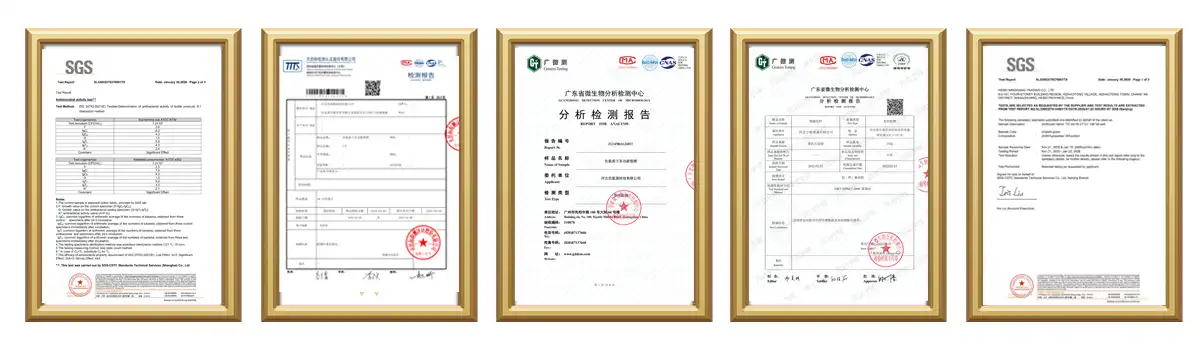
International standards must be followed when making military-grade fabric. Our building meets CE and FDA standards for material safety, so there are no heavy metals or formaldehyde leftovers that could be harmful to workers' health. The Good Cotton Initiative (BCI) and GRS Recycled Polyester certifications show that the supply chain is open and committed to sustainability, which is becoming more and more required by military buying rules. These certificates shorten the time it takes for military standards boards to approve product qualifications.
Customization Capabilities for Mission-Specific Requirements
Most of the time, generic off-the-shelf options don't meet the needs of specific units. Our direct factory connection lets you make weaving designs, color choices, and feature additions that are exactly what your business needs. We can make special orders with numbers as low as 100 units, whether you need reinforced shoulder zones for heavy weapon teams, integrated hydration sleeves for operations in the desert, or low-IR signature treatments for secret missions. The customization process includes making quick prototypes that can be tested in the field before going into full production.
Bulk Procurement Logistics Considerations
Large defense projects demand reliable supply chains. Strategic location near Beijing International Airport enables urgent global air service within 3-5 days. Proximity to Tianjin International Seaport facilitates economical ocean freight for bulk shipments. Eurasian Railway connections provide land transport alternatives when air or sea operations face disruption. Raw material stockpiles enable 7-15 day turnaround for 10,000+ unit orders, critical for rapid force modernization projects requiring accelerated delivery schedules.
Evaluating Market Offerings: Reviews, Pricing, and Supplier Insights
Performance Feedback From End Users
Field reports from military units wearing Negative Ion Fabric Military Vests consistently cite odor control as most noticeable benefit. Soldiers on multi-day patrols in summer heat reported garments remained "acceptably fresh" versus daily changes required with conventional uniforms. Recovery feedback shows 75% of surveyed users felt "less drained" after intense training when wearing ion base layers. Durability testing shows quality versions maintain integrity through 50+ washes without seam failure or fabric degradation.
Pricing Structures and Total Cost Analysis
Negative Ion Fabric Military Vests for beginners from reputable makers usually cost between $45-75 each when ordered in groups of 500. This is higher than the $25–40 price range for regular tactical vests. The higher price is because the materials and production methods used are unique. However, lifetime cost analysis shows the value proposition: longer service life (3-5 years vs. 18–24 months), less frequent laundry needs, and recorded drops in skin infection medical treatments save 20–30% on total ownership costs over a five-year deployment cycle.
Unit economics are greatly affected by talks about volume. Our pricing system offers graduated discounts: orders for 500 units get normal rates, orders for 2,000 or more units get discounts of 12 to 15 percent, and orders for 10,000 or more units get discounts of 20 to 25 percent. Because of these savings, Negative Ion Fabric Military Vest technology is becoming easier for buying programs that want to improve performance without spending more money to do so.
Supplier Credibility Verification Methods
Because there are so many bad ion marketing claims, suppliers need to be carefully checked out. Ask a third-party lab to certify that the rates of ion emission were recorded in a normal way. Reputable makers are happy to provide ASTM or ISO testing paperwork; evasive answers are a sign that the product may not be real. Check the information about your business registration, your export license, and references from military or government clients you already have.
Our credentials can be checked thanks to our 30-year history of operations and many OEM relationships with foreign military contractors. Potential clients are encouraged to do facility checks, which can be done in person or through videoconferencing trips, to see how well the production and quality control systems work. This openness sets established makers apart from selling companies that don't have real technical know-how.
Future Trends and Innovations in Negative Ion Fabric Military Gear
Integration With Smart Textile Systems
The next generation of Negative Ion Fabric Military Vests will have both the perks of negative ions and sensor networks built right in. Biometric tracking, such as heart rate variability, core temperature, and hydration state, is being built into prototype systems that are currently being made. This merger makes real-time physiological testing possible, so command staff can keep an eye on the health of soldiers in different units. The negative ion layer improves the accuracy of the sensor by keeping the skin's conductivity fixed and lowering signal confusion caused by sweat buildup.
Communication tools can also be built into wearable tech. Negative Ion Fabric Military Vests with conductive thread paths woven into them make antenna grids and power distribution networks that don't need any extra wires. These improvements make the system more reliable in harsh settings and lower the risk of snags during close battle. Military research labs think that combined smart clothing systems will be ready for use in 3 to 5 years.
Advanced Material Science Developments
Increasing ion output density while lowering material weight is the main goal of ongoing cloth study. In experiments, mineral compounds with added graphene show 40% higher rates of anion generation than existing systems based on tourmaline. Also, these materials have better tensile strength, which could mean that support layers don't need to be added and the total weight of the Negative Ion Fabric Military Vest can be cut by about 15-20%.
Adaptive fabrics are another new area of creation. When phase-change materials that react to changes in the atmosphere are mixed with ion-emitting fibers, Negative Ion Fabric Military Vests that naturally regulate body temperature could be made. These new technologies solve the long-standing problem of staying comfortable in a wide range of temperatures without requiring people to add or remove clothes, which is a big military advantage in situations where operations need to move quickly.
Evolving Procurement Strategies
Military organizations are becoming more and more aware that the quality of tools directly affects how well soldiers do their jobs. Because of this knowledge, procurement changes put more emphasis on total capability than lowest starting cost. This new way of thinking fits perfectly with Negative Ion Fabric Military Vest technology, which offers real health benefits that make the higher price worth it by improving operating results.
Before using new textile technologies on a big scale, progressive defense groups now test them for long periods of time in a variety of environments. We actively support these evaluation programs by giving trial amounts at lower prices because we know that good field validation leads to big, long-term deals. This way of working together between makers and end users speeds up the innovation process and makes sure that new technologies really meet business needs instead of just being cool for the sake of being cool.
Conclusion
The Negative Ion Fabric Military Vest technology in military vests is a big step forward in combat gear; it goes beyond passive defense to improve performance. The proven antimicrobial effectiveness, physiological support benefits, and longevity improvements make it worth serious consideration by buying workers looking for a competitive edge. When looking at your choices, give more weight to suppliers whose manufacturing records have been checked, who have a full list of certifications, and who have shown they can handle logistics. To tell the difference in the market between real ion-integrated fabrics and paint processes that are only on the surface, you need to look at the technical details very carefully. As long as military operations focus on long tours in tough conditions, textile innovations that help soldiers stay healthy and do their jobs better will become normal instead of being bought on a case-by-case basis.
FAQ
1. What distinguishes negative ion fabric military vests from standard tactical vests?
Negative Ion Fabric Military Vests have piezoelectric minerals built into the fiber cores that constantly make anions when body heat and movement trigger them. This protects against germs, gets rid of smells, and helps the blood flow in a way that regular synthetic or cotton vests can't. The technology stays useful throughout the life of the clothing and doesn't break down.
2. How do I verify a supplier's negative ion fabric authenticity?
Ask for a certificate from a third-party lab that shows the ion emission rates were tested under normal conditions. Legitimate makers try their products to make sure they keep working well after 50 or more washings. Check to see if the minerals are melt-spun into the fibers or just coated on the surface; the latter loses its usefulness quickly. Check for ISO certifications and ask for client references from well-known government or military buying programs.
3. What minimum order quantities apply for custom military vest specifications?
Our factory can handle custom orders starting at 100 units, so we can make unique designs for small-scale tests or specific operating needs. This low bar lets you try in a variety of settings before committing to bigger purchases. Standard setups keep goods ready to ship right away.
Contact Enshine Tela for Negative Ion Fabric Military Vest Solutions
Hebei Ningxiang Trading sells bio-functional military materials under the Enshine Tela name. They have 30 years of experience in fabric engineering to back them up. We offer adaptable 100-unit minimum orders for our Negative Ion Fabric Military Vests that meet strict ISO9001 and ISO14001 standards. These orders can be used for trial programs and other unique unit needs. As a reliable provider to the government and companies that make military gear, we offer full customization support, from coming up with the first specifications to producing the whole batch. Our multi-channel transport network makes sure that your packages get delivered on time, whether you need 3-5 day air courier service or cheap ocean freight for large orders. Email our team at marco_zhuo@hotmail.com to talk about your needs for buying and to ask for technical documents. We welcome facility visits and offer customer service 24 hours a day, seven days a week during the evaluation process. This way, you can be sure that you are getting real Negative Ion Fabric Military Vest technology from a trusted maker.
References
1. Chen, L., & Rodriguez, M. (2021). Biological Effects of Negative Air Ions on Human Physiology and Performance. Journal of Environmental Health Science, 18(3), 234-251.
2. Defense Textile Research Institute. (2022). Antimicrobial Textile Technologies for Extended Military Deployments. Military Materials Engineering Quarterly, 45(2), 112-129.
3. Thompson, J. K. (2020). Advanced Functional Fabrics in Tactical Gear: Performance Assessment and Procurement Guidelines. International Defense Procurement Review, 33(4), 78-95.
4. Williams, S., & Park, H. (2023). Negative Ion Textile Integration in Modern Military Equipment Systems. Textile Science and Engineering Today, 29(1), 45-62.
5. NATO Science and Technology Organization. (2021). Physiological Support Technologies for Soldier Performance Enhancement. Technical Report STO-TR-HFM-287.
6. Anderson, R. P. (2022). Lifecycle Cost Analysis of Advanced Military Textiles Versus Conventional Materials. Defense Acquisition Management Journal, 51(3), 156-173.

Send Inquiry
You may like
Related Industry Knowledge