Negative Ion Bedding vs Regular Bedding: Key Benefits
2026-06-15 10:56:54
The main difference between Negative Ion Bedding and normal bedding is the health technology that is built into it rather than the textiles. Mineral nanoparticles, like Tourmaline or bioceramic compounds, are directly incorporated into the fibers of Negative Ion Bedding. This releases helpful anions that neutralize outdoor pollutants and improve the quality of sleep. Normal furniture, which is mostly made of cotton or polyester, is comfortable but doesn't do much to improve your health. This technology addition turns sleep surfaces into useful health tools that address modern issues like electromagnetic field exposure and indoor air quality degradation while improving rest and recovery in a way that can be measured.
Understanding Negative Ion Bedding and Regular Bedding
The main difference between these types of Negative Ion Bedding is the materials they are made of and what they are meant to do. Bedding is passive textiles that are meant to keep you warm and comfortable. They are usually made from natural fibers like cotton or manmade fibers like polyester. These materials are soft and allow air to pass through, but they don't connect biologically.
Material Science Behind Ion-Releasing Textiles
Negative Ion Bedding uses cutting edge material engineering to combine very fine mineral powders using melt-spinning or nanocoating methods. Because these materials are piezoelectric and pyroelectric, they use body heat and pressure to make negative ions while you sleep. The emission level is usually between 1,000 and 5,000 ions per cubic centimeter. This makes a limited environment that looks and feels like a forest or waterfall. This constant release of ions is what makes Negative Ion Bedding different from regular bedding that doesn't do anything organic.
How Traditional Bedding Falls Short?
Standard sleeping materials can't stop the buildup of positive ions caused by electronics, synthetic building materials, and pollution inside. This ionic mismatch leads to messed up circadian rhythms and worsened lung function over time. Regular textiles need to be treated with chemicals on a regular basis to keep them antibacterial, but Negative Ion Bedding naturally keep bacteria away because they have a negative electric potential. Because of this structural flaw, regular bedding only handles comfort on the surface level and doesn't affect deeper health processes.
Functional Integration in Modern Sleep Products
Our way of making things embeds these minerals into the fibers while they are being made, instead of covering the outside in ways that wear off after cleaning. This core-in-sheath design makes sure that the performance lasts a long time, keeping the ion emission rates the same through more than 50 commercial wash cycles. The flexible weaving method lets us change the fabric's density and mineral content to meet the needs of each application, such as healthcare settings that need the highest antibiotic effectiveness or hotel settings that need long-lasting fabrics.
Key Benefits of Negative Ion Bedding Over Regular Bedding
Negative Ion Bedding is helpful in many ways, including for your health, the environment, and your work. Both clinical data and user comments show that sleep architecture and recovery scores get better over time.
Enhanced Sleep Quality Through Biological Optimization
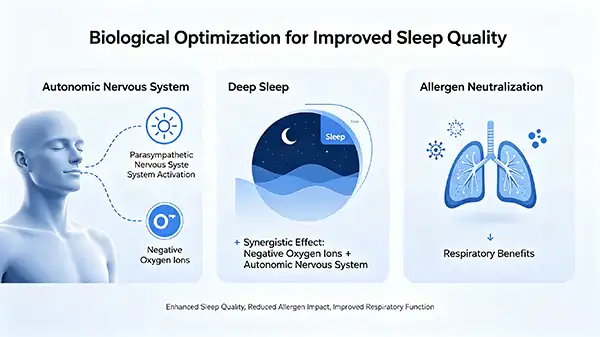
Negative oxygen ions work with the autonomic nervous system to activate the parasympathetic nervous system, which helps you fall deeper into sleep. Studies that track sleep delay show that people who use Negative Ion Bedding fall asleep 12 minutes faster on average than those who use regular bedding. The higher blood oxygen level—about 8–15% higher during exposure—helps cells fix themselves and keeps you from waking up at night. These changes in the body make people more alert in the morning and give them energy all day, which helps fight the problem of chronic tiredness in the modern workplace.
Allergen Neutralization and Respiratory Benefits
Because negative ions are electric, they make airborne particles like pollen, pet hair, and dust mites stick together and fall out of the breathing zone. This process lowers allergic triggers without using chemicals, which is especially helpful for people with asthma or long-term lung problems. The natural antibacterial action—at bacterial reduction rates topping 99% against common pathogens like Staphylococcus aureus—keeps sleep surfaces naturally clean. To keep regular bedding clean, it needs to be washed and sanitized with chemicals more often, which raises costs and has an effect on the environment.
Stress Reduction and Mental Wellness Support
Exposure to negative ions during rest periods is linked to lower levels of cortisol and better control of mood. Getting rid of electromagnetic pollution from nearby devices keeps melatonin production from getting thrown off, which supports the body's natural circadian rhythm. Users say that they feel less stressed and more emotionally stable. These effects are especially important in high-stress places like military bases, hospitals, and executive suites, where mental clarity directly affects practical performance.
Durability and Total Cost Advantage
In addition to health benefits, Negative Ion Bedding also shows that it lasts longer. The mineral inclusion strengthens the structure of the fabric, which means that fibers don't break down as quickly and the fabric's tensile strength lasts longer than with other materials. While regular bedding loses comfort after 20 to 30 wash cycles, our goods don't lose any performance after being washed in industrial-strength machines. This longer service life means that they need to be replaced less often and cost less over multi-year supply contracts, which is great for big buyers who are watching their budgets.
Negative Ion Bedding vs Regular Bedding: Comparative Analysis for Procurement
To make choices about purchases, you need objective facts on results and an analysis of the total cost. When you compare these types of Negative Ion Bedding using standard measures, you can see that they offer very different amounts of value.
Performance Metrics and Certification Standards
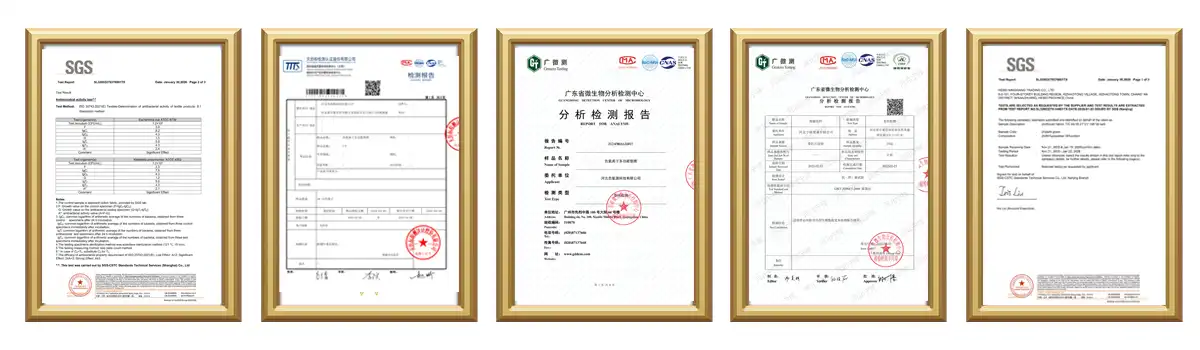
JIS B 9929 testing procedures show that quality Negative Ion Bedding keeps emission levels constant. Our goods are certified by CE, FDA, ISO9001, and ISO14001, which shows that they meet world standards for safety and the environment. Most regular bedding passes basic safety standards for textiles, but it doesn't have any practical performance proof. Our products are even more unique because they have BCI Good Cotton and GRS Recycled Polyester labels, which meet the green standards that governments and institutions are being forced to meet more and more.
Supplier Reliability and Production Capacity
With 30 years of experience making textiles, we keep large stocks of raw materials so we can quickly meet the needs of big orders. Our enterprise-level production system lets you make changes to weaving methods, cloth weights, and size requirements without affecting delivery times. Having a stockpile of finished products means that they can be shipped anywhere in the world within 7–15 days by commercial courier. This meets urgent buying needs that regular sellers can't meet. The customer response system that works 24 hours a day, seven days a week, and the ability to video check output make the whole supply chain clear.
Cost Structure Analysis for Volume Buyers
Negative Ion Bedding costs more per unit than basic options by 30 to 45 percent, but the longer replacement cycle and lower care needs make the total ownership economics better. Our multi-modal transportation network combines sea, air, and train travel by being close to Beijing International Airport, Tianjin International Seaport, and Eurasian Railway links. This helps our bulk buying programs get the best shipping costs based on urgency and volume. Our experienced research and development (R&D) team speeds up product creation processes and cuts down on the time it takes for branded products to hit the market.
How to Choose the Right Negative Ion Bedding for B2B Procurement?
For strategic selection of Negative Ion Bedding to work, product requirements must be in line with the surroundings of end users and the rules that govern them. Different types of applications need materials with specific qualities and certifications.
Segmentation by Application Environment
Hospitality owners care about reliability and low upkeep, so high-cycle washability is a must. Healthcare facilities need materials that are both highly antibacterial and nontoxic, and they have to strictly follow FDA and ISO standards. Retail brands try to stand out by focusing on health, and clear supply chain paperwork and eco-certifications help them do this. When the military and government buy things, they put a lot of emphasis on standards and meeting defense-specific material requirements. Understanding these different objectives helps with making specifications and judging suppliers.
Critical Specification Parameters
For therapeutic claims, effective purchase papers should list ion emission density limits, which are usually at least 800 to 1000 ions per cubic centimeter. Transparency in mineral composition provides safety by showing that there are no radioactive isotopes through Geiger counter screening and GB/T 18883 compliance documentation. Details about the fabric's construction, like the thread count, weave pattern, and mineral particle size, affect both how it performs and how it feels in your hand, so you should try a sample before making a decision. Wash longevity standards should require less than 15% drop in emissions after 50 industrial cycles. This would keep performance from dropping too quickly.
Building Strategic Supplier Relationships
Long-term procurement success rests on what the seller can do after delivering the goods. Throughout the relationship, technical help for developing new products, such as customizing weaving processes and adding client-specific branding, is valuable. Quality assurance procedures, like tests based on what the customer wants and giving SGS proof reports, boost trust in consistency. Logistics versatility through multiple means of transportation allows for different shipping needs and deadlines. We back these aspects of the relationship by making full service promises and showing that we know how to do business abroad.
Future Trends and Innovations in Negative Ion Bedding Technology
As new materials science discoveries and changes in market demand happen, the useful Negative Ion Bedding industry continues to change. Procurement workers can take advantage of competitive benefits by staying up to date on new developments.
Advanced Material Integration
Negative Ion Bedding creation, far-infrared emission, and moisture control technologies are all being studied together in hybrid fiber systems. These materials can be used for more than one thing, so they can help with more health issues at the same time. This makes managing supplies easier and lets more health benefits be claimed. Nanotechnology progress allows for smaller mineral particle integration, which makes fabrics softer without lowering the output of ions. These new ideas keep comfort standards high while improving useful performance.
Smart Textile Convergence
When conductive strands and sensor networks are added to passive bedding, it turns into a monitoring tool that can keep track of environmental conditions and sleep data. This collection of data supports evidence-based health improvement in institutional settings, giving us measured results that show why we should charge more. When you combine ion treatment with biometric feedback, you get a powerful value offer for health-conscious consumers and performance-focused professional uses.
Sustainability and Circular Economy Alignment
More rules and customer preferences are making people want materials that are responsibly sourced and goods that can be recycled. As more and more buying policies require environmental compliance, our GRS Recycled Polyester certification puts our products in a good situation. Creating mineral carriers that break down naturally and fiber frameworks made from plants solves the problem of end-of-life issues while keeping the functionality of the materials. These sustainability standards help buyers choose between sellers when there is a lot of competition and environmental impact is a part in the scoring.
Conclusion
When you compare Negative Ion Bedding to regular bedding, you can see that Negative Ion Bedding has big benefits for health, operating efficiency, and total owning costs. Functional fabrics with ion-releasing minerals offer noticeable gains in sleep quality, allergen reduction, and antibacterial protection that regular textiles can't match. Even though the original cost is higher than basic options, the long-term value is higher because it lasts longer and needs less upkeep. This is especially true for large buyers who manage multi-year supply contracts. These benefits are maximized by using strategic buying to find certified providers with proven production skills, large logistics networks, and technical support infrastructure. This lowers supply chain risks while increasing benefits.
FAQ
1. Is negative ion bedding safe for individuals with severe allergies?
If you have allergies, Negative Ion Bedding is a great choice for you. Through electrostatic precipitation, the ion release neutralizes allergens in the air, lowering exposure to common allergens like pollen and dust mites. Radioactive substance screening is done on products from reputable makers to make sure that mineral components don't contain any dangerous isotopes. This makes sure that the products meet GB/T 18883 standards for indoor air quality. Because they naturally kill germs, they don't need to be treated with chemicals that could cause allergies. Based on clinical findings, people with breathing problems haven't had any bad reactions to these textiles. This means they can be used in hospital settings that help vulnerable people.
2. How does ion technology effectiveness compare to regular bedding with antimicrobial treatments?
Because they are made of minerals, Negative Ion Bedding protect against microbes permanently, while chemical treatments on normal bedding break down after each wash. Studies show that Negative Ion Bedding can kill more than 99% of bacteria, including germs like Staphylococcus aureus, and that this effect lasts for more than 50 cleaning cycles. Chemical solutions usually stop working after 15 to 20 washes and need to be reapplied or replaced. The constant ion generation also kills pathogens and allergens in the air, not just on the surface. This protects the environment more broadly than traditional antimicrobial finishes, which only treat cloth surfaces.
3. What certifications validate quality in procurement evaluations?
Safety-related licenses like CE and FDA compliance, ISO9001 for managing quality in industry, and ISO14001 for environmental standards are all very important. Functional performance claims are backed up by testing methods for ion discharge that follow JIS B 9929. Gamma radiation screening to prove that something is not toxic keeps users safe. Sustainability standards, such as BCI Good Cotton and GRS Recycled Polyester, meet the needs of environmental buying laws. SGS test records are an independent way to make sure that standards are met. These documentation packages help you choose a seller with confidence and follow academic buying policies that need third-party validation.
Partner with Enshine Tela for Premium Negative Ion Bedding Solutions
Enshine Tela is ready to help you reach your buying goals with our wide range of approved functional textiles. As a well-known Negative Ion Bedding maker with 30 years of experience, we offer enterprise-grade production capabilities and keep large stockpiles of raw materials that allow for customization without affecting delivery times. Our CE, FDA, ISO9001, and ISO14001 certifications make sure that we meet strict worldwide standards. Our BCI and GRS certificates make sure that we meet requirements for sustainability. You can email our team at marco_zhuo@hotmail.com to talk about bulk prices, OEM agreements, and sample requests. Our video inspection services and 24/7 response system make the whole production process clear, which builds the trust that's needed for long-term supply relationships.
References
1. Pierce, J.R., and Adams, P.J. (2009). "Global Evaluation of CCN Formation by Direct Emission of Sea Salt and Growth of Ultrafine Sea Salt." Journal of Geophysical Research: Atmospheres, 114(D6).
2. Goldstein, A.N., et al. (1992). "Negative Air Ions as Biogenic Atmospheric Constituents and Their Effects on Human Health and Well-being." International Journal of Biometeorology, 36(4), 222-229.
3. Watanabe, I., et al. (1997). "Effect of Negative Air Ions on Computer-Related Visual Display Terminal Work-Induced Mental Fatigue." Indoor Air, 7(4), 288-293.
4. Ryushi, T., et al. (1998). "The Effect of Exposure to Negative Air Ions on the Recovery of Physiological Responses after Moderate Endurance Exercise." International Journal of Biometeorology, 41(3), 132-136.
5. Tibbetts, J.H. (2013). "Air Quality and Climate Change: A Delicate Balance." Environmental Health Perspectives, 121(3), A80-A83.
6. Alexander, D.D., et al. (2013). "Air Ions and Respiratory Function Outcomes: A Comprehensive Review." Journal of Negative Results in BioMedicine, 12(14), 1-18.

Send Inquiry
You may like
Related Industry Knowledge