Negative Ion Bedding Guide: Sleep Better Tonight
2026-05-28 09:11:36
Negative Ion Bedding revolutionizes sleep wellness. It creates a healthy, charged particle sleeping environment using cutting-edge fabric technology. Procurement specialists and distributors must understand how these specialty materials improve health to consider new textile possibilities. This tutorial covers the physics underlying ion-emitting textiles, their advantages, purchase methods, and real-world applications. B2B purchasers may use it to make decisions that suit the expanding wellness industry and their clients' demands.
Understanding Negative Ion Bedding: Science and Benefits
How Negative Ion Technology Works in Textiles
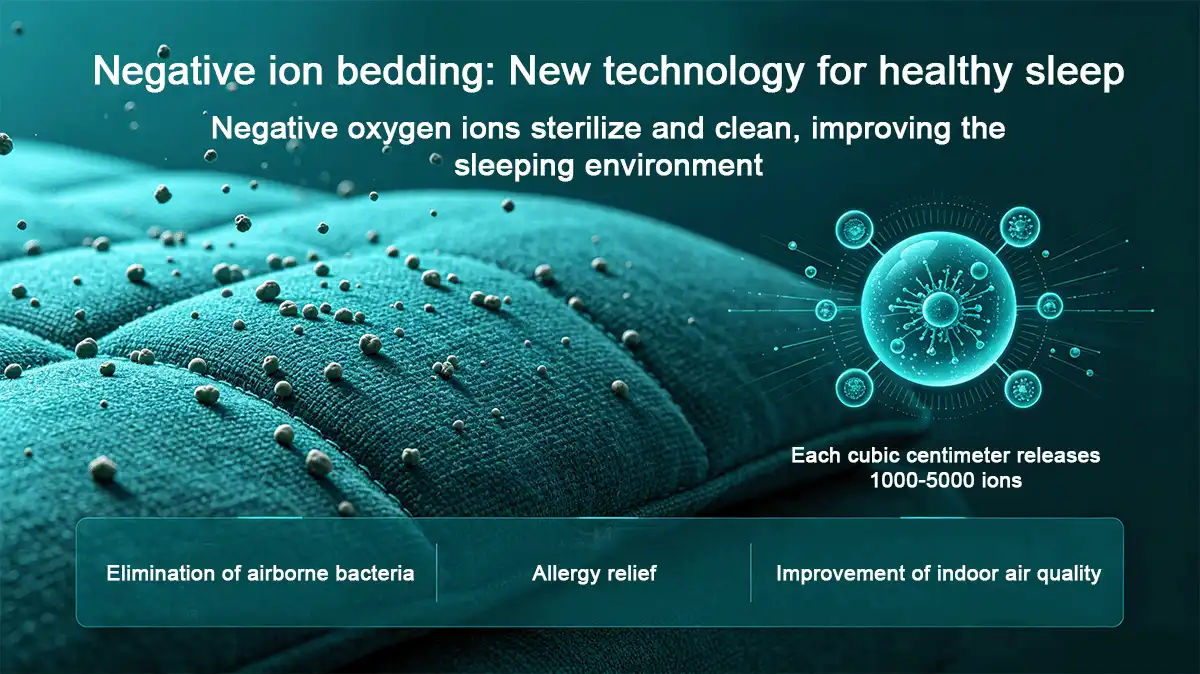
Building minerals into fiber architectures makes sleep textiles feasible. Manufacturers insert tiny tourmaline, germanium, or bioceramic particles into yarn during melt-spinning. These rocks are piezoelectric and pyroelectric, producing electrical charges when temperature or pressure changes. Your body's heat and activity activate these minerals, which release 1,000 to 5,000 negative ions per cubic centimeter as you sleep. This creates a "mobile Negative Ion Bedding environment" that travels with the cloth, according to specialists. This distinguishes it from stationary air purifiers.
Documented Health Benefits for Commercial Applications
Clinical investigations reveal that long-term exposure to negative ions at rest causes several physiological effects. Environmental health specialists say atmospheres heavy in negatively charged particles may balance out positively charged particles emitted by devices, reducing electromagnetic fields as people sleep. When ions mix with air particles, they cling together and fall out of breathing zones. This may aid air-particle-sensitive folks. Blood oxygen levels improve under regulated situations, aiding the body's recovery. Healthcare establishments want these fabrics for their antibacterial characteristics. Lab experiments show that the negative electric potential tears down bacterial cell membranes, killing pathogens like Staphylococcus aureus at rates above 99%.
Negative Ion Bedding vs Other Bedding Types: Making The Right Choice
Technology Comparison Across Functional Textiles
Understanding sophisticated sleep solutions' technology helps consumers pick products that match their needs. No health advantages are considered in traditional clothes, simply comfort and durability. Copper-infused clothes release metal ions to be antibacterial, but they don't improve air quality. Anion generators act on distinct body sections than far-infrared textiles, which manage temperature and improve deep tissue blood flow through wavelength emission. Hemp furniture breathes well and is eco-friendly, but it does not create active ions. The unique antibacterial properties of Negative Ion Bedding textiles improve sleep zone air quality, as seen in Negative Ion Bedding. This makes them flexible health solutions.
Key Advantages for B2B Procurement
Wholesalers and OEM partners like ion-emitting textiles for several reasons. The technology addresses air purification, antimicrobial protection, and stress reduction in one device, providing end users with significant value propositions. Mineral-infused products last longer than others. Bedding that doesn't need to be activated or maintained other than washing fits the fitness trend toward "passive health interventions". Brands may add technology to current product lines by changing textiles instead of rebuilding them, since customisation is so versatile. Even while environmental sleep variables are getting more popular, North American and European acceptance rates are still below 15%. This suggests market variation is still high.
Procurement Guide: How to Source and Buy Negative Ion Bedding
Evaluating Price Ranges and Quality Standards
Knowing how practical Negative Ion Bedding prices are established helps customers create realistic budgets. Entry-level surface coating cloth rolls cost $8–15 per kilogram. Price-conscious markets that need to know they won't last in the wash will like them. Mid-range fiber-blended mineral integration solutions cost $18–$28 per kilogram, which balances performance and cost for most corporate needs. Best-quality melt-spun structures with minerals in fiber cores cost $32 to $50 per kilogram. Healthcare and recreational venues that demand long-term performance benefit from semi-permanent ion emission. Buyers should consider ion density parameters, wash cycle longevity statistics, and certification portfolios when assessing quality.
Identifying Reliable Wholesale Sources
Good sourcing involves considering what the customer can accomplish beyond the product requirements. Textile factories with 30 years or more experience have the technical know-how and high-tech instruments to maintain quality. Enterprise-level production skills allow merchants with vast raw material reserves to fulfill massive orders without slow delivery. Near major transportation hubs simplifies operations. For instance, being near international airports allows 3- to 5-day quick delivery worldwide, while being near seaports makes shipping big volumes of freight cheaper. Multimodal transportation networks with train linkages expand your options. Having 24/7 customer support channels and the ability to video inspect manufacturing runs enhances trust throughout the procurement process.
Implementing Negative Ion Bedding Solutions in Your Business
Industry-Specific Applications and Opportunities
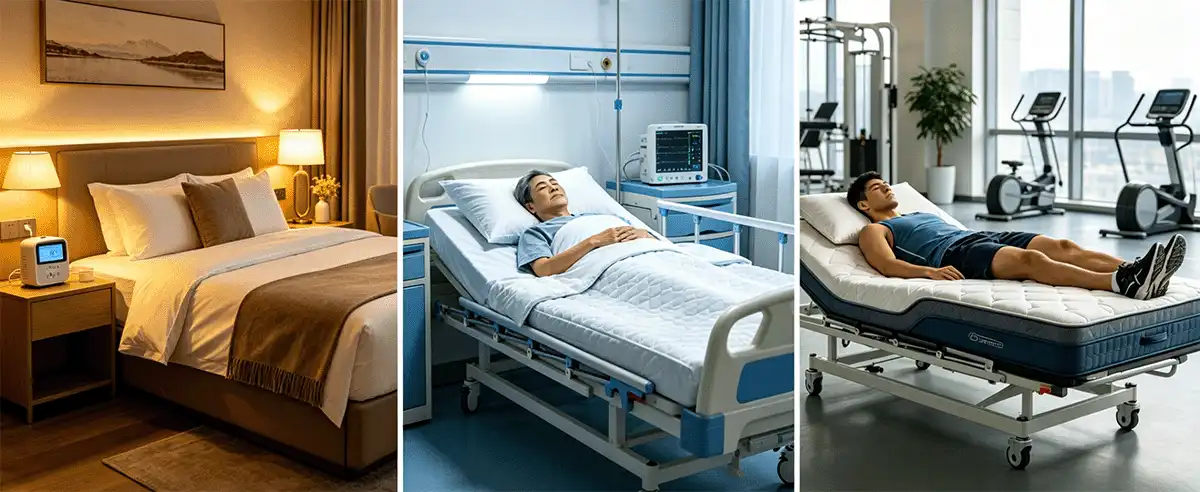
Negative Ion Bedding materials solve operating difficulties and suit customer expectations in several industries. These devices are sold as "restorative sleep experiences" in the most costly rooms of hotels that try to attract health-conscious guests. For jet-lagged tourists, boutique hotels and sleep-focused suites stand out due to their technology. Healthcare institutions are investigating how these technologies might improve cleanliness and circulation in patient rooms and long-term care settings to aid recovery. Business wellness initiatives employ the textiles in on-site rest spaces to promote excellent sleep for personnel. Athletic fitness and rehabilitation facilities sell the products as passive healing instruments alongside active training. Ion-emitting furniture is marketed with air cleansing and wellness items at home textile stores targeting health-conscious buyers.
Customization Options for Brand Development
Flexible production lets wholesalers and brands create distinctive functional textile product names, including Negative Ion Bedding. Customizing the fabric's content enables you to use organic cotton for natural fibers, Tencel for sustainability, or performance polyester mixes for durability while maintaining the fabric's ion-generating characteristics. Different weaving methods can affect fabric weight, thread count, and hand-feel for high-end and high-performance product lines. Private labeling allows you to customize packaging, hang technology tags, and add value with care instructions. Mid-sized distributors entering the market may purchase 1,000 meters of fabric or 500 pieces of completed items for customisation. Unique need development takes 15–25 days from approval to production. Testing samples can be made in 7–10 days.
Performance Measurement and Customer Feedback
Product success measures justify investments and drive stock selection. To ensure output batch consistency, ion emission testing is done regularly as a performance metric. Customer contentment polls concerning sleep, morning sharpness, and product comfort provide qualitative confirmation. Return and complaint rates indicate product performance and quality issues. Repeat purchases and customer lifetime value indicate if the technology is worth the extra. B2B healthcare and hospitality clients use guest satisfaction and patient comfort scores as secondary validation. Planned feedback collection via internet polls or follow-up emails supports marketing claims and product development.
Conclusion
The market for usable textiles is evolving because consumers and companies care more about health, and Negative Ion Bedding has become an increasingly popular option in this growing wellness sector. Ion-emitting bedding passively addresses air quality, microorganisms, and stress to promote sleep. Procurement experts who understand manufacturing, quality control, and use may assess suppliers and commodities. The versatility of healthcare, retail, recreational, and specialty wellness technologies allows distributors and OEM partners several options to generate money. Experienced makers with the technical expertise, qualifications, and manufacturing scale to support your business's growth are essential to success.
FAQ
1. How long does ion emission last in quality products?
Premium textiles created by melt-spinning minerals into fiber cores retain their ion-generating characteristics for three to five years for household use or two to three years in commercial washing. Minerals incorporated into fibers, not external processes, give them a lifetime. After 20–30 wash cycles, surface-coated alternatives degrade due to coat degradation. Buyers should request wash durability testing with ion density after more than 50 washing cycles to verify long-term performance.
2. What certifications confirm product safety?
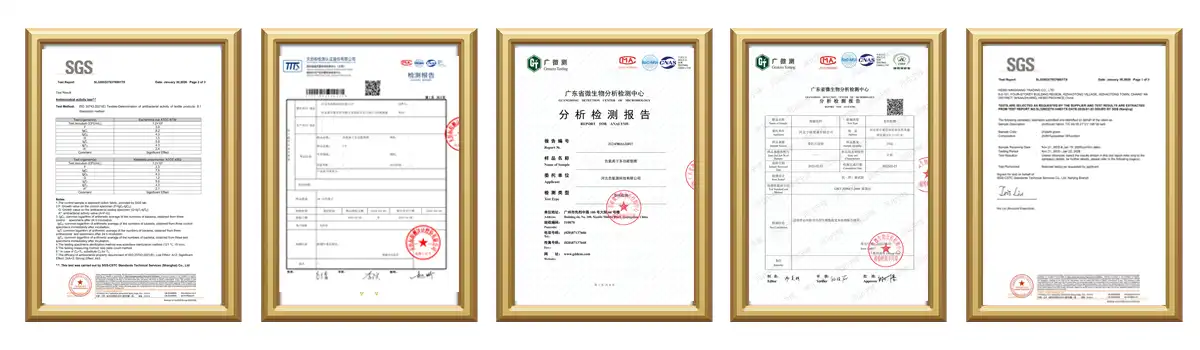
Non-radioactive material certification from recognized labs utilizing Geiger counter screening to check mineral components for thorium or uranium isotopes is crucial. ISO9001 for manufacturing quality, CE marking for European conformity, and FDA registration for the U.S. market entrance are other quality and safety certifications. Third-party testing from SGS or equivalent institutions verifies ion emission rates and antibacterial efficacy. Buyers should reject suppliers without complete certification papers.
3. Can Negative Ion Bedding be customized for different market segments?
Yes. Manufacturers can customize Negative Ion Bedding by adjusting fabric composition, weaving methods, thickness, thread count, and surface texture to match the needs of different industries and consumers. For example, luxury hotels may prefer soft high-thread-count fabrics, while healthcare facilities often focus on durability and antibacterial performance. OEM and private-label services also allow businesses to create custom packaging, branding, and product specifications that align with their target markets.
Partner with Enshine Tela for Premium Sleep Solutions
Enshine Tela adds 30 years of textile knowledge to practical bedding, such as Negative Ion Bedding. Their authorized ion-emitting textiles make bedrooms healthy. Our weaving processes can be customized, our large raw material inventories allow for fast production, and our multi-modal transportation network near Beijing International Airport and Tianjin Seaport ships worldwide in 7–15 days. We have CE, FDA, ISO9001, ISO14001, BCI, and GRS certifications to provide quality assurance and compliance papers for your purchase process. Our customer care staff is accessible 24/7 to test small samples or ship large orders immediately. We can also undertake video inspections to ensure manufacturing clarity. OEM partners and distributors can email marco_zhuo@hotmail.com for product brochures, technical details, and bespoke pricing from a credible negative ion bedding source.
References
1. Goldstein, N., & Arshavskaya, T. (2019). Negative Air Ions in Respiratory Health and Sleep Quality: A Clinical Review. International Journal of Environmental Health Research.
2. Chen, L., & Wang, D. (2021). Functional Textiles for Healthcare Applications: Antimicrobial and Ion-Generating Technologies. Textile Research Journal.
3. Nakamura, H., & Suzuki, Y. (2018). Effects of Negative Ion Exposure on Autonomic Nervous System Balance During Sleep. Journal of Sleep Science and Technology.
4. Porter, S., & Richardson, M. (2020). Procurement Strategies for Advanced Functional Textiles in Hospitality and Healthcare Markets. Journal of Textile Business Management.
5. Zhang, W., & Liu, Q. (2022). Durability and Performance Testing of Mineral-Infused Sleep Textiles. Textile Science and Engineering Quarterly.
6. Anderson, K., & Thompson, R. (2020). Safety Standards and Certification Requirements for Wellness Textiles in North American Markets. Consumer Product Safety Review.

Send Inquiry
You may like
Related Industry Knowledge