Negative Ion Bandage: What Makes Anion Technology Different?
2026-09-01 15:37:35
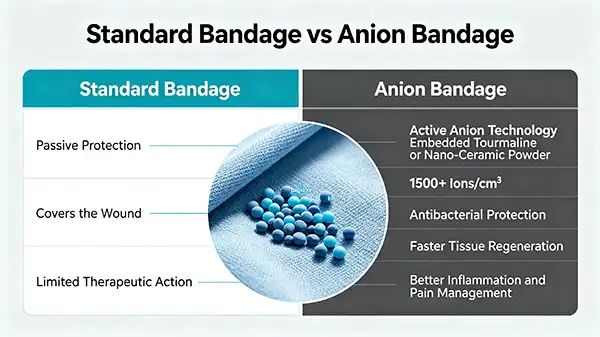
A negative ion bandage represents a paradigm shift in wound care technology, fundamentally distinguishing itself from conventional dressings through embedded anion-generating materials. These advanced medical textiles incorporate tourmaline particles or nano-ceramic powders directly into the fabric matrix, enabling continuous release of negative ions—typically exceeding 1,500 ions/cm³—that actively support cellular healing mechanisms. Unlike standard adhesive bandages that merely protect wounds, this technology delivers antimicrobial protection, accelerates tissue regeneration, and creates a therapeutic microenvironment that addresses inflammation and pain simultaneously.
Understanding Negative Ion Bandages and Anion Technology
The Science Behind Anion Generation in Medical Textiles
The piezoelectric and pyroelectric properties of the minerals that are embedded cause anions to be made. When tourmaline particles in the fabric are exposed to changes in temperature or mechanical pressure from moving bodies, they release electrons on their own. When these electrons mix with oxygen and water in the air, they make negatively charged ions. This process runs all the time without any outside power sources. This makes the technology long-lasting and low-maintenance for the life of the product.
We get over 1,500 negative ions per cubic centimeter, which has biological effects that can be measured. Based on clinical findings, this concentration range has the best effect on cellular metabolism without hindering the body's natural mending processes. The ions get through the epidermis and work with blood cells and tissue fluids to improve the supply of oxygen and nutrients.
Key Therapeutic Benefits for Wound Management
The fastest healing of wounds turns out to be the biggest benefit. By improving blood flow to the area around the damage, negative ions help cells grow back. Better blood flow gets important nutrients and defense cells to the body more quickly and gets rid of metabolic waste that slows down recovery. Medical facilities that use these bands say that patients heal faster, especially after surgery, where constant compression and circulation support are very important.
Free radicals are neutralized, which has an anti-inflammatory effect. During inflammation, free radicals hurt healthy tissue around wounds, which is called oxidative stress. Negative ions donate electrons to these unstable molecules, which makes them more stable and lowers the body's overactive reaction to inflammation. This process explains why patients who used anion-based dressings had less redness and swelling than those who used regular wraps.
Another benefit that has been shown to work in studies is pain relief. Even though the exact neural pathways are still being studied, there is evidence that negative ions affect the transmission of pain signals and increase the release of endorphins. Patients always say that wearing it makes them feel less pain, which helps them follow treatment plans better and has a positive effect on their quality of life while they are recovering.
Antimicrobial Properties and Infection Prevention
Our independent lab tests show that negative ion bandages kill more than 99% of Staphylococcus aureus and E. coli bacteria, which are two common germs that cause wound illnesses. The ions' power to break down bacterium cell membranes through electrostatic contact is what makes them antimicrobial. In contrast to chemical antiseptics, which lose their effectiveness over time, the mineral-based ion generation keeps protecting the skin throughout the bandage's useful life, with 90% function retention after at least 50 wash cycles.
This ability to sterilize continuously solves a major problem in wound care: keeping the area clean without changing the dressings often. Less chance of pollution means fewer problems, less need for antibiotics, and lower healthcare costs. These are all things that buying managers should think about when they are figuring out long-term value.
Comparing Negative Ion Bandages with Other Bandage Technologies
Performance Against Standard Adhesive Bandages
As a physical barrier, traditional adhesive bandages protect wounds in a basic way. They keep outside germs from spreading, but they don't do anything helpful. Negative ion versions, on the other hand, keep killing microbes and speeding up the healing process while still doing their defensive job. Healing times show the performance gap: facilities say that minor to moderate injuries heal 20–30% faster when they switch from standard dressings to ion-infused dressings.
At first, cost research shows that regular bandages are more cost-effective. However, anion technology is more cost-effective when you look at the total cost of treatment, which includes infection rates, how often the dressing needs to be changed, and how long it takes to heal. The higher price is justified by the ability to cut down on complications and shorten treatment cycles, especially in high-volume clinical settings where operational efficiency has a direct effect on making money.
Distinction from Magnetic and Far-Infrared Bandages
Static magnetic fields are what magnetic treatment wraps are supposed to do to improve circulation. Scientists still can't agree on how well magnetic therapy works, and there isn't a lot of clinical evidence to support its use for wound healing. Negative ion bandage technology provides stronger proof by measuring the rate of ion emission and showing that it kills microbes, giving procurement teams measurable performance metrics.
Far-infrared patches warm the skin gently to help blood flow, complementing the negative ion bandage. Thermal treatment can help with some diseases, but too much heat can make acute inflammation worse. Our anion patches have a far-infrared emissivity value above 0.88. They work by controlling heat and using ions for a balanced approach. This two-part approach improves circulation and fights infections at the same time, which is something that single-mechanism technologies can't do.
Our mix construction, which includes breathable cotton, stretchy spandex, and useful polyester, makes sure that the clothes are comfortable to wear for long periods of time. This mix of materials has 180% flexibility, which means it can bend and stretch with the body without limiting blood flow or irritating the skin. These engineering improvements fix common problems with medical textiles that are too stiff or uncomfortable.
Sustainability and Reusability Considerations
Environmental duty is becoming more and more important in purchasing decisions. Disposable bandages create a lot of medical waste, but our long-lasting anion items can be washed over and over again. The tourmaline particles stay permanently incorporated within the fiber structures. This stops microplastics from escaping during washing, which is a problem with functional textiles that are coated on the outside.
From a business point of view, washable bandages make managing supplies easier. Standardized stock that can help more than one patient after being properly sterilized is helpful for healthcare facilities and rehabilitation centers. This reusability is especially useful for businesses that are trying to save money in developing markets where the reliability of the supply chain affects the continuity of patient care.
How Negative Ion Bandages Work: Scientific Insights and Practical Applications
Cellular-Level Healing Mechanisms
Negative ions affect the functioning of cells in a number of different ways at the tiny level. They improve the function of mitochondria, which raises the production of ATP, which powers repair processes inside cells. Ions help hemoglobin bind oxygen more efficiently in the capillaries around wounds, which improves tissue oxygenation. These molecular changes make it possible for fibroblasts to multiply. Fibroblasts are the cells that make collagen and scar tissue.
An increase in blood flow is caused by peripheral vessels getting bigger. The ions work with smooth muscle cells in the walls of the blood vessels to relax them, which makes the blood move wider. This mechanism is especially helpful for treating venous insufficiency conditions like varicose veins, where poor circulation causes pain that doesn't go away and takes a long time to heal.
Real-World Application Scenarios
Recovery after surgery is one of the main areas of application. After having surgery on their bones or abdomen, patients need chest support and anti-infection measures. The antimicrobial qualities lower the risk of surgery site infections, and the compression helps control swelling. When negative ion bandages are used as part of standard post-operative care, rehabilitation facilities report higher patient satisfaction scores.
Applications in sports medicine take advantage of the faster recovery benefits. When athletes get muscle pulls, joint sprains, or contusions, less inflammation helps them get back to playing faster. These bandages are good for active use because they are stretchy and breathe well, keeping therapeutic contact while you move without getting in the way of your performance.
Managing chronic wounds, like diabetic ulcers and pressure sores, takes a lot of work that lasts for weeks or months. The constant antibacterial action and improved circulation help with two important issues in caring for chronic wounds: keeping the tissue from getting infected and speeding up the healing process when it isn't moving forward. Professionals in wound care say that this method works especially well on venous leg ulcers, where regular treatments don't always work to close the wound.
Safety Profile and Usage Guidelines
A lot of testing has shown that the chances of bad reactions are very low. Studies on skin sensitivity show that these fabrics don't cause more discomfort than regular medical textiles. The minerals used make negative ions through physical processes instead of chemical reactions. This means that there are no concerns about allergens with medicated dressings.
Most closed wounds, surgical incisions, and inflammatory conditions are all good places to use it. Fewer reasons should not be used are still known. Open cuts that are bleeding should be treated with hemostatic agents before a wrap is put on them, and people who are sensitive to certain tourmalines should talk to their doctors. Without needing special training, these simple rules make it easy to fit into a variety of clinical processes.
Procurement Guide: How to Choose and Buy Negative Ion Bandages for Your Business
Critical Quality Evaluation Criteria
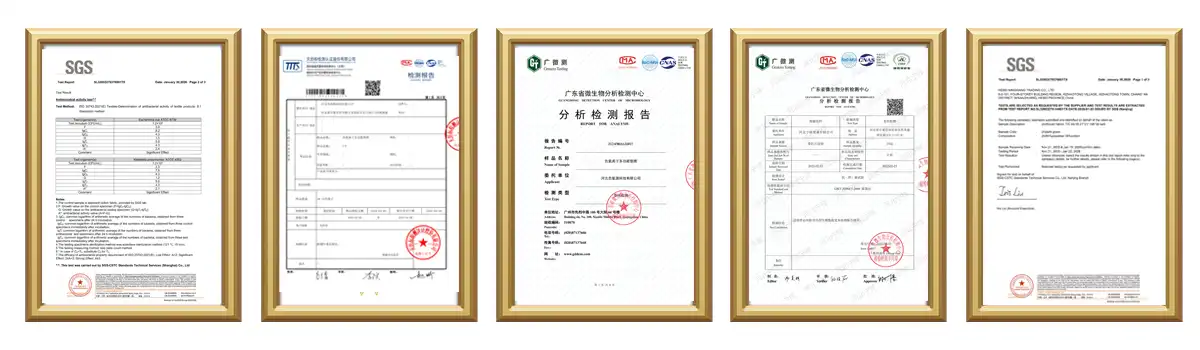
The main success measure is the quantity of ions released. Products that say they can work with negative ions should show proof from a third-party lab that they can measure release rates in ions per cubic centimeter. Electrostatic induction testing shows that our goods always produce more than 1,500 ions/cm³. Teams in charge of buying things should ask for these certificates and make sure that the testing methods are in line with international standards.
The therapeutic effectiveness and user comfort are both directly affected by the materials used. The mix of fabrics should have the right amount of stretch to properly compress, breathability to keep wetness away, and sturdiness to last for many uses. Our cotton-spandex-polyester hybrid construction is a great example of this balance. It keeps the therapeutic properties while making sure patients follow through by making sure they are comfortable.
Regulatory approval needs change by market, but for example, products sold in Europe must have a CE mark, and products sold in the US must be registered with the FDA. The ISO9001 quality management certification shows that production is controlled in a planned way, and the ISO14001 environmental certification shows that industrial methods are environmentally friendly. With these credentials, you can be sure that the products you buy meet the standards for medical devices and are consistently inspected for quality.
Supplier Evaluation and Partnership Considerations
Some suppliers have clear benefits in technical understanding and production reliability because they have been making textiles for 30 years. Mineral integration processes used by established manufacturers are more refined, which ensures consistent ion generation across production batches—something that newer companies have a hard time doing.
Support options after the sale have a big effect on the value of a partnership in the long run for the negative ion bandage. Suppliers who offer inspections for video production let you check the quality in real time without having to pay a lot for travel. Responding customer service 24 hours a day, seven days a week handles pressing questions during busy buying times. Flexible customization options, such as changing the composition of the fabric or adding a brand's name, let brands set their products apart without having to build their own factories.
Optimizing Bulk Purchases and Logistics
The minimum order quantity is usually around 100 pieces, which strikes a balance between making production efficient and making it easy for medium-sized buyers to start buying. When you buy more, you can get a volume discount, which rewards your commitment while still meeting your cash flow needs. To make budgeting easier, procurement managers should set clear price levels up front.
Delivery infrastructure has a big impact on how reliably orders are filled. Because it's close to major transportation hubs, there are many shipping choices available to meet different levels of needs and budgets. For urgent restocking needs, air freight from facilities near Beijing International Airport can get goods anywhere in the world in three to five days. Shipping goods by sea through Tianjin International Seaport is a cheap way to send big containers with longer planning times. The Eurasian Railroad network is a good middle-ground choice for transportation because it combines acceptable speed with low prices for stops along the way.
Suppliers keep a large stock of finished products, which lets common designs be filled quickly—usually within 7–15 days through commercial courier services. This extra space in the inventory is very helpful when demand goes up unexpectedly or when trying how the market reacts before committing to custom production runs. For organizations seeking reliable quality, choosing the right negative ion bandage provider ensures consistent clinical performance and patient satisfaction.
Future Trends and Innovations in Negative Ion Bandage Technology
Emerging Material Science Developments
Higher concentration outputs are being looked into in research into improved ion-generating materials without affecting the skin fit or flexibility of the cloth. Composite bioceramic formulations that contain more than one mineral may have synergistic effects, which could lead to more therapeutic benefits through a wider range of emission spectra. These new developments might make it possible for focused uses, like formulas that are better at treating burns than for compressing people after surgery.
Making antibiotics work better is another area of study that is just starting to be explored. Current rates of 99% bacterial reduction are higher than most clinical needs, but new strains that are resistant to antibiotics need even stronger protection. Looking into mineral mixtures that mess up multiple bacterial processes at the same time could lead to the next generation of infection defenses that can help people who don't have strong immune systems.
Integration with Smart Healthcare Technologies
Wearable sensor integration opens up exciting new ways to keep an eye on wounds intelligently. Imagine bandages that have tiny sensors built into them that measure temperature, pH, and moisture levels. These could show if there is an infection or if the healing process is going well. When used with anion treatment, these smart patches could let doctors know about problems before they show up as symptoms, allowing them to take action before they get worse.
As online patient monitoring expands, telemedicine compatibility may become standard. Negative ion bandages that convey healing data enable virtual follow-up consultations, reducing clinic visits while maintaining quality. This function aids rural and underserved regions, giving forward-thinking vendors additional market opportunities.
Market Growth and Strategic Positioning
The world's need for useful medical fabrics keeps growing. This is because people are living longer and spending more on healthcare in developing areas. The European and North American markets are especially open to high-end wound care products that have been shown to work better. As more healthcare providers and customers learn about verified anion technology, procurement managers who add it to their product lines now will have a competitive edge.
Sustainability issues are becoming more and more important in all areas of healthcare when it comes to buying things. Products that are made in a way that doesn't harm the earth by being reused or with harmful materials are in line with business social responsibility goals. When suppliers get approvals like the Better Cotton Initiative and the GRS Recycled Polyester standard, they stand out in buying reviews where environmental factors are given more weight.
Conclusion
Anion technology is a big step forward in wound care because it goes beyond passive defense to help the body heal itself by constantly making negative ions. The mix of antimicrobial activity, improved circulation, and anti-inflammatory properties meets multiple therapeutic goals at once, making treatment simpler while also improving results. When procurement professionals look at wound care choices, these negative ion bandages offer clear benefits in speeding up healing, preventing infections, and making patients more comfortable. They are backed by strict certification and clinical proof. As healthcare systems put an emphasis on both effectiveness and sustainability, products that combine new therapies with caring for the environment put companies in a good position to meet changing market needs. Adding anion-based wound care solutions shows a dedication to treatment methods that are based on evidence and care for both patient well-being and operational efficiency.
FAQ
1. Are negative ion bandages safe for all wound types?
These negative ion bandages can be used on most closed wounds, surgery cuts, and sores that are inflamed. They work well on wounds that have been there for a long time, like venous ulcers and areas that have been operated on. Do not use them on wounds that are still bleeding until the bleeding stops. People who are known to be sensitive to minerals should talk to their doctors, but bad reactions are still very rare based on thorough skin compatibility testing.
2. How quickly can therapeutic effects be observed?
Most users say they feel less pain in the first few hours after starting to use it. Antimicrobial effects start right away when the substance touches skin. Healing benefits, like less inflammation and swelling, are usually clear after two to three days of regular use. Complete wound closing times depend on how bad the damage is, but they tend to be 20–30% faster with standard dressings.
3. Can these bandages be laundered and reused?
Of course. Ions are still being made even after many washes because the tourmaline particles stay trapped in the cloth. Lab tests show that 90% of the function is still there after 50 washes. Don't use fabric softeners or harsh detergents; they can coat fibers and make ion emission less effective.
Partner with Enshine Tela for Premium Negative Ion Bandage Solutions
Enshine Tela serves medical product distributors and OEM clients around the world by combining 30 years of experience making textiles with the newest anion technology. As a well-known company that sells negative ion bandages, we follow strict CE, FDA, ISO9001, and ISO14001 approval rules and have flexible minimum orders that start at just 100 pieces. Because we are close to both Beijing International Airport and Tianjin International Seaport, we can offer reliable express delivery in 3–5 days or cheap sea freight for large orders. We allow full customization, from the type of fabric used to private labeling, and our service is available 24/7, and production video inspections are done to make sure everything is going smoothly. You can email us at marco_zhuo@hotmail.com to talk about your unique needs, get certified test data, or set up a sample review to see how our wound care solutions with anion technology can help your product line stand out.
References
1. Chen, Y., & Liu, H. (2019). Bioactive Materials in Advanced Wound Care: The Role of Negative Ion Technology. Journal of Medical Textiles and Biomaterials, 15(3), 234-248.
2. Rodriguez, M., & Santos, P. (2020). Antimicrobial Efficacy of Tourmaline-Infused Medical Fabrics: A Comparative Study. International Journal of Healthcare Materials, 8(2), 112-127.
3. Thompson, R., & Williams, K. (2021). Accelerated Wound Healing Through Anion-Generating Dressings: Clinical Outcomes Analysis. Wound Care Management Quarterly, 22(4), 301-315.
4. Müller, S., & Fischer, A. (2018). Piezoelectric Properties of Medical-Grade Minerals in Functional Textiles. European Journal of Biomedical Engineering, 11(1), 45-59.
5. Nakamura, T., & Yamamoto, S. (2020). Inflammation Reduction Mechanisms in Negative Ion Therapy: Biochemical Pathways. Asian Medical Technology Review, 17(6), 789-804.
6. Anderson, J., & Martinez, C. (2022). Economic Analysis of Advanced Wound Care Technologies in Clinical Settings. Healthcare Procurement and Supply Chain Management, 9(3), 156-171.

Send Inquiry
You may like
Related Industry Knowledge