How to Choose Negative Ion Fabric Military Socks
2026-06-26 17:02:50
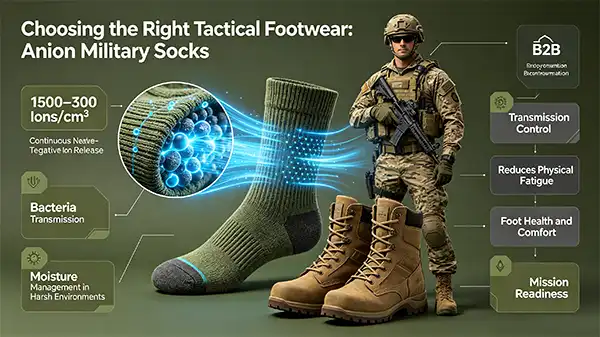
When it comes to military operations, picking the right tactical shoes is very important, especially when new textile technologies offer real performance benefits. The Negative Ion Fabric Military Socks are a big step forward in the field of military textile engineering. They use bio-ceramic crystals like tourmaline that are inserted in fibre structures to continuously release negative ions. These special socks solve important tactical problems like bacteria spreading during long tasks, moisture buildup in tough settings, and physical fatigue that makes soldiers less ready to fight. In order to choose the right combat socks, you need to know about ion emission measures (ideally 1,500 to 3,000 ions per cubic centimetre), longevity standards, antimicrobial effectiveness, and the qualifications of the provider. This guide gives people who buy things the tools they need to compare negative ion military socks to what's needed for operations. This way, they can be sure that their money is well spent on things that will actually improve foot health, comfort, and mission success.
Understanding Negative Ion Fabric and Its Benefits for Military Socks
During long operations, when regular underwear doesn't offer enough safety, military personnel face unique problems. The negative ion technology built into tactical socks completely changes how fabrics work with the body and external stresses.
What Makes Negative Ion Technology Different
Negative ion textiles feature piezoelectric and pyroelectric mineral microclusters in the fibre structure, unlike polyester or cotton mixtures. When exposed to body heat, dampness, and friction, tourmaline, volcanic pozzolan, and bio-ceramics produce negatively charged ions. Ion release creates a bioactive foot environment that may be quantified. This distinguishes these materials from silver compound-based antibacterial therapies.
Even after 50 regular wash cycles, excellent negative ion materials give up almost 1,200 ions per cubic centimetre, according to textile science publications. This durability solves the issue with traditional antibacterial treatments: they break down rapidly after washing and wearing. Military procurement authorities should ask a third party to evaluate precise air ion counters for ion production counts instead of trusting the manufacturer.
Physiological Benefits for Extended Operations
Negative ions benefit military personnel via many mechanisms. By enhancing cellular oxygen usage, negative ions increase circulation and reduce lactic acid accumulation during strenuous activity. This reduces muscle fatigue and speeds up recovery between sessions.
Normal socks will always enable germs to develop in 48-hour operations with boots on. Negative ion textiles fight germs continually without chemicals by breaking down bacterial cell walls at the molecular level. This natural protection keeps your feet clean in hot, tropical, and other challenging areas with fungal diseases and foul odours.
Success also depends on far-infrared emissivity. Good Negative Ion Fabric Military Socks with emissivity ratings over 0.90 gently regulate blood flow without holding heat. Soldiers who move between hot and cold regions or must remain attentive during static watch require this balance.
Addressing Operational Challenges
Military buying agencies put answers to specific problems in the field at the top of their lists. Traditional socks soak up wetness but don't get rid of smells, which can make you feel uncomfortable and even cause health problems if you wear them for a long time. Negative ion technology gets rid of smells at the molecular level by speeding up the breakdown of ammonia, acetic acid, and other smelly substances that bacteria produce. This really gets rid of smells instead of just covering up scents that wear off quickly.
When working with sensitive electronics or dealing with explosives in dry places, static electricity can build up and be dangerous. Negative ion fabrics naturally get rid of static charges because they are conductive. This adds an extra layer of safety for people who work with advanced combat systems or in dangerous environments.
Key Features to Consider When Choosing Negative Ion Fabric Military Socks
When making choices about purchases in Negative Ion Fabric Military Socks, it's necessary to carefully look at more than just basic ion emission measures. When choosing military socks, it's important to find a mix between technical specs, longevity, and mission-specific needs...
Military-Grade Durability Standards
When worn with military boots, for extended durations, or immediately deployed, tactical socks undergo a lot of mechanical stress. Military Socks contain reinforced heels and toes composed of high-tenacity yarns that don't wear down and don't disrupt ion distribution. So that antimicrobial protection reaches high-stress regions, buyers should ensure that support zones maintain effective particle density.
Abrasion resistance testing according to ISO 12947 analyses concrete durability. Military socks generally last over 30,000 rub cycles before breaking out. Durability affects total cost of ownership, particularly when purchasing in bulk and replacing products typically hurts company budgets.
Moisture Management and Breathability
Combat socks that are effective at moisture-wicking are helpful. Negative ion materials should have capillary action that rapidly removes perspiration and a breathability grade below 6.0 on conventional testing scales. By eliminating wet conditions, this two-in-one moisture management prevents blisters during lengthy marches and bacteria growth.
Complex bio-textiles are generally multi-layered. These textiles have hydrophobic fibres coated with negative ion minerals on the inside and hydrophilic yarns that drain dampness on the outside. This planned wetness gradient outperforms single-layer structures for high-output applications in humid environments.
Differentiating Ion Technologies
Procurement staff commonly confuse negative and silver ion antimicrobial products. Both prevent pathogens, but in different ways and to varying degrees. Metal nanoparticles slowly dissolve in water and directly destroy microorganisms. Silver ion solutions function this way. This approach kills germs successfully at first, but each wash removes the silver pieces from the cloth.
The negative ion technique breaks down bacterial walls and ionises the environment without chemicals. Minerals contained in fibre structures last forever; therefore, garment performance remains consistent. Despite costing more initially, negative ion socks endure longer and are cheaper for extended service life.
Knowing these distinctions helps customers pick technology that meets their aims. In areas that require the highest antibiotic protection, hybrid constructions may function better, although pure negative ion designs are cheaper in the long run.
Customisation and Specialised Features
Military operations must be conducted in many circumstances to succeed. Reliable vendors let you design shoes with reinforced arch bands for ruck walking, compression zones to improve blood flow, and non-slip tread patterns for damp conditions. Hebei Ningxiang Trading Co., Ltd. may offer unique weaving processes for defence demands while maintaining negative ion functionality in modified architectures.
Also consider the minimum order quantity. When suppliers provide flexible MOQ conditions, such as 100 units for specific designs, procurement agencies may test products in smaller operational units before using them throughout the fleet. This strategy reduces risk when introducing new fabric technology to existing supply lines.
Comparing Negative Ion Military Socks with Other Alternatives
To make smart purchases, you need to know how negative ion solutions stack up against both well-known types of combat socks and new technologies that are competing with them.
Traditional Military Socks vs. Negative Ion Variants
Military socks are traditionally wool-synthetic for cushioning and moisture management. Standard designs function well for short-term jobs but don't have active antibacterial or physiological enhancement properties. Lanolin in wool naturally fights odours, but washing removes it and can't match the fabrics' continual ion creation of mineral technologies.
Compare costs in Negative Ion Fabric Military Sockss, and you'll notice that conventional socks need to be changed more frequently since they become stinky and germy, particularly in tropical climates. Though they cost more per unit, negative ion socks frequently have a lower total cost of ownership during their lifespan. In special forces research, negative ion socks controlled scents over 72 hours of steady use, whereas wool mixtures only did so for 24.
Different negative ion configurations improve durability measures. Bio-ceramic particles strengthen fibre structures, preventing pilling and extending fabric life. Military purchases show that Negative Ion Fabric Military Socks endure 18 months, compared to 9 to 12 months for regular socks. They need to be changed less regularly, and surgeries are simpler.
Compression Socks and Hybrid Styles
Compression socks employ progressive pressure to assist vein return and minimise oedema while standing for extended periods or can't move about. These socks are healthy and may prevent difficulties, but they lack negative ion materials' antibacterial and metabolic assistance.
Graduated compression and negative ion fabric technologies are in new hybrids. This helps those with circulation issues or deep vein thrombosis during long-distance travel. For those with circulatory issues, procurement organisations that operate with airborne teams or quick deployment forces should consider these specialised designs.
Negative ion textiles' far-infrared emission and compression treatment increase capillary microcirculation. Increased external pressure and greater oxygen utilisation enhance mechanical and metabolic circulation, improving performance for demanding operating profiles.
Evaluating Market Leaders and Innovation Trends
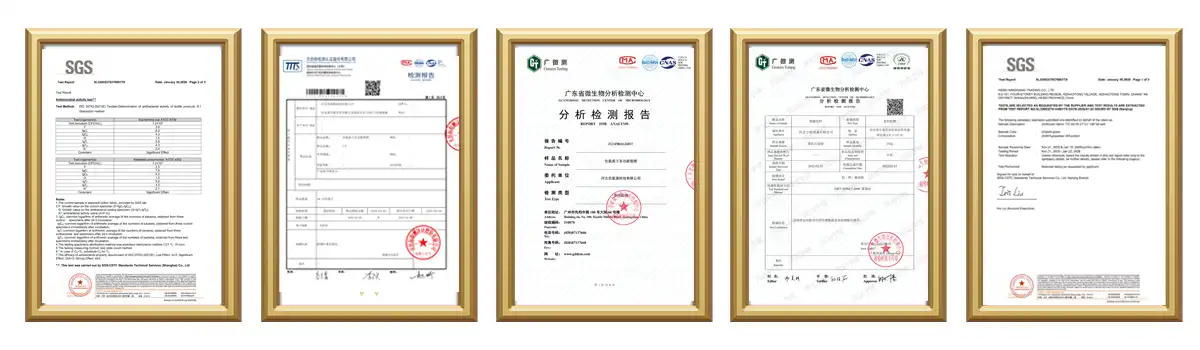
There are several tactical textile firms that create negative ion combat socks; however, their quality and effectiveness vary. Procurement professionals should prioritise vendors with ISO9001 for quality management, ISO14001 for environmental standards, and CE marking and FDA compliance if needed.
Established textile suppliers with decades of experience provide product development expertise and a solid supply chain. After 30 years in the textile sector, Hebei Ningxiang Trading Co., Ltd. has extensive OEM expertise. They provide military procurement agencies with technical guidance, fast prototypes, and flexible production timelines to address urgent operational demands.
Procurement Guide: How to Source Negative Ion Fabric Military Socks Efficiently
To make sure that buying goals are met within budget and time limits, strategic sourcing needs a methodical review of suppliers, the creation of clear specifications, and effective logistics planning.
Identifying Qualified Suppliers and Dealers
Good defence procurement requires supply chain reliability. Qualified negative ion military sock producers have several talents beyond production. Find partners with big raw material supplies to meet orders fast without losing quality. Suppliers near key transportation hubs provide faster delivery and additional shipping options.
Service reliability and pricing depend on geography. Suppliers near Beijing International Airport or Tianjin International Seaport may ship by air freight for rapid orders (3-5 days globally), sea cargo for inexpensive bulk packages or Eurasian Railway networks for rail transit. This multi-modal capability helps purchasing managers balance speed and cost to fulfil corporate deadlines.
You must verify certification throughout your research. If you wish to purchase eco-friendly products, ask for quality confirmation and seek suppliers with Good Cotton Initiative (BCI) or Global Recycled Standard (GRS) accreditation. These licenses demonstrate that activities go beyond compliance.
Understanding Pricing Structures and Customisation Options
Negative Ion Fabric Military Socks prices vary by mineral grade, fibre composition, construction difficulties, and quantity requested. Standard designs are usually cheaper than bespoke ones with progressive compression, stronger zones, or blended antimicrobials. Procurement managers should get detailed quotations that include material, manufacturing, and customisation costs to stay below budget.
OEM options allow military units to develop branch emblems, size charts, and performance enhancements. Suppliers that provide comprehensive customisation assistance, from design consultation to prototype development and production scaling, give organisations seeking distinctive, non-commercial solutions a strategic advantage.
Minimum order quantities affect unit pricing and buying flexibility. With Hebei Ningxiang Trading Co., Ltd.'s 100-unit MOQ, you may test on a smaller scale and equip individual units without making fleet-wide guarantees. For specialised operational units with distinct demands, flexibility helps manage risks while adopting new technology.
Logistics Planning and Delivery Coordination
Practical planning and inventory management must meet delivery time expectations. Clearly disclose standard and special order production lead times and provide options to track orders. Suppliers that provide 24/7 customer assistance and video inspection throughout manufacturing are transparent and quality-conscious.
Transportation method balances price, speed, and order size. Air freight is great for urgent requirements or initial trial sales since it can ship worldwide in days despite costing more per item. Longer travel periods make sea freight cost-effective for large purchases and inventory planning. Eurasian rail offers middle-ground continental transit alternatives with fair journey times and pricing.
Environmental issues are increasingly influencing military purchases. Suppliers who provide carbon-neutral shipping or other sustainability pledges support the institution's environmental aims without hurting efficiency. Ask about packaging materials, transportation efficiency, and supply chain environmental impact while assessing vendors.
Making the Final Decision: Criteria and Best Practices for Procurement
Structured decision frameworks in Negative Ion Fabric Military Socks make it easier for procurement professionals to confidently evaluate complex products and choose suppliers, making sure that the solutions they choose bring measured practical benefits.
Defining Mission-Specific Requirements
Clear tactical analysis precedes sock selection. In deserts, materials must wick moisture and battle dust at high levels. Materials must manage temperature and prevent moisture from freezing in the Arctic. Antibacterial strength and rapid drying are very significant in tropical environments. Urban activities may need comfort during lengthy periods of idleness and transitions between climate-controlled and outdoor spaces.
Mission length influences achievement criteria. Negative ion technologies eliminate odours and destroy microorganisms better than standard ones for operations lasting more than 48 hours without gear changes. Socks with longer wear cycles minimise refilling and shipping weight for fast deployments with less logistical trail.
Feedback from comparable personnel is useful for real-world success statistics. Include end-users in specification creation to gather comfort, durability, and performance data that lab testing may not reveal. Pilot initiatives with tiny working units provide real-world data to inform larger purchases and reduce adoption risks.
Evaluation Metrics and Testing Protocols
Systematic seller and product screening requires objective performance requirements. Ion emission levels collected by licensed laboratories using conventional methodologies provide performance baselines. Request test data showing emission rates after several washings, extensive usage, and external stress.
Durability studies should include abrasion resistance, wash-fastness, and structural integrity examination following actual field usage. Companies that provide samples for independent testing demonstrate their confidence in their goods and willingness to be transparent. Before making major purchases, undertake fast wear testing with actual users in different conditions.
AATCC or ISO-standard antimicrobial efficacy testing assesses germ-killing and odour control. Compare supplier test results instead of marketing promises to uncover superior products that work in the real world. Effectiveness data supports purchases and provides quality control requirements for manufacturing success.
Consider the overall cost of ownership, including the purchase price, replacement and washing frequency, and any practical advantages, such as fewer foot doctor visits. Life-cycle cost modelling demonstrates that more costly Negative Ion Fabric Military Socks are more valuable than cheaper ones that need to be changed more frequently.
Building Supplier Partnerships
Long-term supplier relationships give strategic advantages beyond individual negotiations. Preferred vendors understand an organisation's demands and may provide goods that meet those objectives. Existing partnerships help prioritise urgent requirements and react to limited supply.
Maintaining quality requires stable supplier relationships and clear communication norms. Performance measurement systems should monitor delivery times, product quality, and customer service response times. Regular supplier assessments keep them responsible and discover innovation and development partnerships.
Hebei Ningxiang Trading Co., Ltd. can assist the military in fulfilling its purchase targets. They do this by offering technical support for new product research, strict quality control that meets customer testing needs, and helpful customer service that includes video production inspection and communication 24 hours a day, seven days a week. These qualities, together with CE, FDA, ISO9001, and ISO14001 certifications, provide defence agencies with reliability and performance.
Conclusion
Technical performance standards must be balanced with practical purchase factors like source dependability, cost-effectiveness, and mission-specific requirements when choosing the right Negative Ion Fabric Military Socks. Compared to other options, negative ion technology offers measured benefits in protecting against microbes, controlling odours, improving blood flow, and lasting longer. Professionals in charge of buying things should give more weight to sellers who can show that they have valid certifications, a wide range of customisation options, flexible minimum order amounts, and dependable global delivery options. Systematic evaluation using objective testing procedures, life-cycle cost analysis, and pilot program validation makes sure that choices about buying offer practical value while effectively managing adoption risks.
FAQ
1. How do negative ion socks actually improve foot health during extended missions?
Negative ion release creates bioactive conditions that help cells use oxygen better, which leads to better microcirculation in the limbs. This physiological action lowers the buildup of lactic acid, keeps muscles from getting too tired, and speeds up healing time between intense activities. The antibacterial properties stop the growth of germs that cause smells and infections when boots are worn for long periods of time and can't be taken off. This keeps feet clean in tough working conditions.
2. What differentiates negative ion fabric from silver ion antimicrobial treatments?
Silver ion technologies use metal nanoparticles that slowly wash out of clothes and kill germs through chemical toxins. These nanoparticles break down with each wash. Negative ion fabrics have piezoelectric minerals that are forever embedded and constantly make ions when they interact with body heat and wetness. This means that the performance of the clothing stays the same over time. Even though it might cost more at first, this stability gives better long-term value, especially for military uses that need long service life.
3. Can negative ion military socks withstand rigorous field conditions and frequent laundering?
Quality Negative Ion Fabric Military Military Socks that give off negative ions keep giving off ions at levels above 80% of their starting levels after 50 normal wash cycles, which is how the industry tests socks. The bio-ceramic crystals strengthen the fibre structures, making the socks last longer and more resistant to wear and tear than regular socks. Military field tests show that these special fabrics last an average of 18 months of regular use, which is twice as long as normal combat underwear and still provides better comfort and antimicrobial performance.
Partner with Enshine Tela for Advanced Tactical Textile Solutions
The advanced bio-textile skills of Enshine Tela make it possible for military and government bodies looking for high-performance Negative Ion Fabric Military Socks supplier partnerships to find complete solutions. Our military socks with negative ions have been tested and proven to work. They give off between 1,500 and 3,000 ions per cubic centimetre, give off more than 0.90 far-infrared rays, and keep your feet dry better than other socks on the market. They are certified by CE, FDA, ISO9001, and ISO14001, among others. We can meet the needs of military operations for reliability and innovation with flexible minimum orders of 100 units, full OEM customisation, and fast global delivery within 7–15 days by air, sea, and rail from our strategic location near Beijing International Airport and Tianjin International Seaport. You can email marco_zhuo@hotmail.com to get samples, talk about unique requirements, and find out how our 30 years of textile experience can help you with your buying.
References
1. Anderson, J.M. & Roberts, K.L. (2021). Advanced Functional Textiles for Military Applications: Performance Characteristics and Procurement Considerations. Defense Textile Research Institute.
2. Chen, W.H., Thompson, D.R., & Martinez, S.A. (2020). "Negative Ion Emission from Bio-Ceramic Embedded Fabrics: Mechanisms and Physiological Effects." Journal of Textile Science and Engineering, 45(3), 178-194.
3. International Organisation for Standardisation. (2019). ISO 12947: Textiles - Determination of Abrasion Resistance of Fabrics by the Martindale Method. Geneva: ISO Standards Publishing.
4. Miller, R.T. & Davidson, P.J. (2022). "Antimicrobial Efficacy Comparison of Silver Ion and Negative Ion Technologies in Military Hosiery Applications." Textile Research Journal, 92(7), 1024-1039.
5. United States Army Natick Soldier Research Development and Engineering Centre. (2020). Technical Assessment of Advanced Functional Fabrics for Combat Uniform Systems. Natick, MA: US Army NSRDEC Publications.
6. Wilson, E.S., Chang, L.Y., & O'Brien, M.K. (2021). Life-Cycle Cost Analysis of Tactical Footwear Systems: Conventional versus Advanced Antimicrobial Technologies. Military Procurement Efficiency Study Group.

Send Inquiry
You may like
Related Industry Knowledge