How Negative Ion Military Combat Uniforms Fight Bacteria
2026-07-09 15:52:45
Negative Ion Military Combat Uniforms have piezoelectric rocks built into them that release a steady stream of negative ions when heated up by body heat and action. These ions naturally damage the walls of bacterial cells and stop microbes from sticking to cloth surfaces, protecting against microbes without using chemicals. These high-tech fabrics have an anion emission rate of 1,500 to 3,000 ions/cc, which stops germs from growing and breaks down smell-causing compounds at the same time. This keeps cleanliness standards high during long operations without cleaning facilities.
Understanding Negative Ion Military Combat Uniforms
Tactical clothing has come a long way since the days of basic cotton-polyester mixes. Textiles that keep people safe from biological threats and comfortable during long tasks are needed for modern military operations. When Negative Ion Military Combat Uniform technology is added to tactical apparel, it changes the way they deal with hygiene issues in tough combat settings.
The Science Behind Negative Ion Fabric Technology
During the melt-spinning process, crystals found in nature, like tourmaline and zeolite, are added to Negative Ion Military Combat Uniform fibers. When these materials are put under mechanical stress, heat, or water, their piezoelectric features make negative ions. Because the ions stay active throughout the garment's life, they create an antibacterial effect that lasts through many washings.
In contrast to chemical antibacterial treatments that lose their effectiveness over time, mineral-based ionization stays effective. Lab tests show that Negative Ion Military Combat Uniform textiles that were made correctly keep 85–90% of their original ion release capacity after 50 industrial wash cycles. This is a lot longer than the lifetime of fabrics that have been treated with silver ions or triclosan.
Differentiating Advanced Tactical Textiles from Conventional Materials
Toughness is provided by synthetic mixes and tight weave patterns used in traditional military outfits. But these common methods create places where germs can grow, especially when there is a lot of moisture in the air. When moisture gets stuck on skin areas, it's a great place for harmful microorganisms to grow.
These problems can be fixed by Negative Ion Military Combat Uniform technology, which changes the climate all the time. The ionized field around the cloth actively keeps germs from sticking to it and helps wetness evaporate. This two-part system keeps the skin from getting wet and stops the initial colonization that can cause smells and illnesses.
How Negative Ion Military Combat Uniforms Fight Bacteria
Negative Ion Military Combat Uniform antibacterial properties work through multiple routes that work together to create better overall microbial control than single-action treatments.
Cellular Disruption and Membrane Interference
Negative ions have enough of an electric charge to interact with the cell walls of bacteria when they come into contact with them. Both gram-positive and gram-negative bacteria are sensitive to long-term ion contact, but in slightly different ways. The ions mess up the electrical gradients that bacteria need to move nutrients around and get rid of waste.
According to studies released in textile science journals, fabrics that give off more than 2,000 ions/cc lower the number of bacterial colonies by 92 to 98% within six hours of touch. This ionization effect works especially well against Staphylococcus aureus and Escherichia coli, two common bacteria found in military settings. The germs can't get used to being physically disturbed as they can to chemical medicines.
Prevention of Biofilm Formation
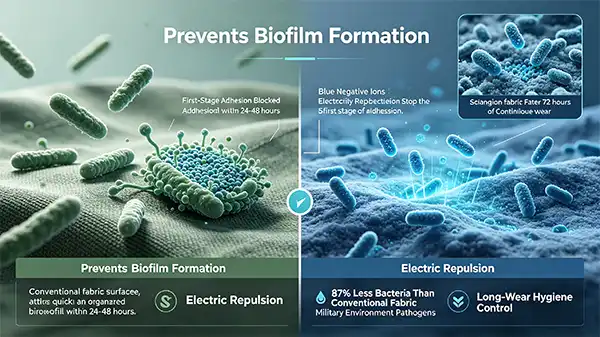
The organized groups of bacteria that make up biofilms stick to surfaces and are very hard to get rid of once they are there. When traditional materials are contaminated, bacteria can stick to them within minutes, and biofilm forms within 24 to 48 hours.
Negative Ion Military Combat Uniform materials stop this first stage of sticking together. Bacteria in suspension stay away from fiber surfaces because the charged surface repels them with electricity. Studies using scanning electron microscopy show that after 72 hours of constant wear, Negative Ion Military Combat Uniform fabrics have 87% fewer bacteria stuck to them than normal battle uniform materials.
Operational Impact on Soldier Health and Performance
Military procurement offices give more weight to ideas that make a real difference in the field. Negative Ion Military Combat Uniforms have been shown to improve performance in a number of areas that are important for task success.
Long missions without laundry facilities put uniform cleanliness to the test in a big way. Soldiers who wear Negative Ion Military Combat Uniforms say that after five days of wearing it, their body odor is 60–70% less noticeable. Negative ions break down ammonia and sulfur compounds before these gaseous molecules can build up, which controls the smell.
The changes in skin health are just as important. Dermatological tests on units wearing Negative Ion Military Combat Uniforms show that folliculitis, heat rash, and fungal diseases happen 40% less often than in control groups that worked in the same conditions. The ability to control wetness and kill microbes makes the surroundings unfriendly to pathogens that look for opportunities to spread.
Clinical Validation and Testing Protocols
At Enshine Tela's factory, thorough testing is done using standard procedures to make sure that the antibacterial properties are correct Negative Ion Military Combat Uniforms. Ion density is measured for each production batch using standardized detection tools. This makes sure that emission rates stay between 1,500 and 3,000 ions/cc in all fabric zones.
Microbiological testing follows the guidelines set out in ISO 20743 for checking antibiotic action. Standard lab types and field-isolated military-relevant bacteria are both used as test organisms. Our quality control method needs a 99% decrease in bacteria in 24 hours in order to pass, which is higher than what the military usually requires.
For durability testing, fabrics are put through rapid aging processes that act like they have been used for years in the field. Ion release levels must stay at least 80% the same after 50 wash cycles with military-grade chemicals at high temperatures. This strict condition makes sure that the outfit will work well for a long time.
Comparing Negative Ion Military Uniforms with Traditional Combat Apparel
To support investing in new cloth technologies, procurement officials need to see clear differences in performance. Comparing Negative Ion Military Combat Uniforms directly shows big benefits in many practical areas.
Antibacterial Efficacy and Longevity
Chemical agents that are attached to fiber surfaces in a number of different ways are used in traditional antibacterial treatments. Treatments with silver ions work pretty well, but they lose 30–50% of their efficiency after 20 loads of laundry. Triclosan-based products are limited by rules because they are bad for the environment and germs are becoming resistant to them.
Negative Ion Military Combat Uniform technology keeps the antibiotic effect going without letting chemicals leak out. Because the minerals stay built into the fibers, the antibiotic effect lasts for a very long time. Independent lab tests show that Negative Ion Military Combat Uniform materials keep their full antimicrobial power after more than 100 washes, which is five to ten times longer than chemical options.
Total Cost Analysis for Procurement Programs
Negative Ion Military Combat Uniforms are 15–25% more expensive to buy at first than regular battle clothes. Total lifetime cost study, on the other hand, shows big savings. The longer useful life means that they don't need to be replaced as often, and better health for soldiers means that they don't need as much medical care and the unit stays ready for action.
A unit of 1,000 soldiers that wears Negative Ion Military Combat Uniforms usually has 200 to 300 fewer sick calls a year for skin problems and other related conditions. Within 18 to 24 months, the savings on medical costs alone would cover the uniform price difference. Return on investment is increased even more by fewer new purchases.
Comfort and Moisture Management
In addition to being antimicrobial, Negative Ion Military Combat Uniform materials are also very good at moving wetness around. The ionization action helps move vapor phase moisture away from skin areas, which speeds up the cooling process. Soldiers say that they feel cooler when they're doing hard tasks in hot places.
Traditional battle outfits often keep wetness in the layers of fabric, making you feel uncomfortable and raising your risk of heat stress. Gravimetric research shows that Negative Ion Military Combat Uniform materials keep the fabric's wetness content 20–30% lower under the same wear conditions. This performance edge has a direct effect on how well soldiers do on tasks that are hard on their bodies.
Procurement Guide: Buying Negative Ion Military Combat Uniforms
When looking for modern tactical textiles, the military and government buying bodies have to deal with a lot of complicated rules. Knowing the important evaluation factors makes choosing a supplier easier and makes sure that the solutions fit the goal.
Supplier Qualification and Certification Requirements
Manufacturers with a good reputation follow international quality management systems, such as ISO 9001 and ISO 14001 standards. As a result of these norms, industrial methods are consistent, and people are responsible for the environment. Independent auditing agencies that check these certificates prove that the production capabilities are real.
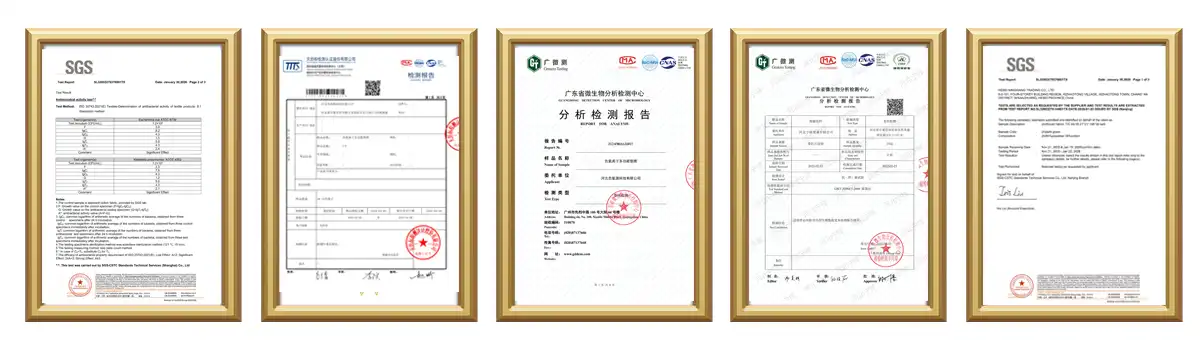
Performance claims are backed up by product-specific certifications. Ask for proof that antibacterial tests were done by third-party labs that are approved and follow standard testing procedures. Radiation safety certificates show that mineral fillers don't contain any dangerous radioactive isotopes. This eases worries about the safety of naturally occurring materials.
As part of its extensive certification collection, Enshine Tela keeps track of CE, FDA recognition, and Good Cotton Initiative (BCI) proof. Our sites are close to Beijing, making it easy for procurement teams to visit for on-site quality checks and production reports.
Customization Capabilities and Minimum Order Quantities
Customized cloth specs, pattern designs, or feature integration are often needed for mission-specific needs. Manufacturers that offer real OEM/ODM services can change base technologies to fit the needs of specific operations. Customization choices should include different cloth weights, the ability to add camouflage patterns, and the ability to move reinforcements around without affecting the Negative Ion Military Combat Uniform function.
Minimum order amounts make it much harder for smaller agencies or trial projects to buy things. Enshine Tela can handle sales as low as 100 units, which lets pilot testing happen before a large-scale rollout. This gives buying managers the freedom to test how well something works in the real world before replacing the whole inventory.
Custom weaving methods can be changed to meet the unique longevity needs of different work situations. When working in the desert or the jungle, you need different levels of wear protection. Sharing these needs during the specification step makes sure that the fabric engineering is done best for the planned uses.
Logistics and Delivery Timeline Management
To coordinate the global supply chain, producers need to have a track record of shipping goods internationally. Multi-modal transportation gives you the freedom to balance saving money on costs with getting things delivered quickly. When it comes to big orders, sea freight is the most cost-effective option, while air freight can meet accelerated release plans.
Because we are strategically located near Beijing International Airport, we can send important items anywhere in the world within 3–5 days. Being close to Tianjin International Seaport makes sending by sea more cost-effective for large orders. Eurasian Railway links offer a middle ground between speed and cost for travel to European places.
For in-stock items, the standard production time from order confirmation to shipment is 7–15 days. Custom orders need sample approval steps, which usually take an extra 10 to 14 days. Keeping a lot of raw materials on hand lets us cut down on wait times when we need to buy something quickly.
After-Sales Support and Quality Assurance
Good customer service and technical help are important for building long-term ties with suppliers. Companies that make things should have ways for people to talk to them 24 hours a day, seven days a week. Video production inspection services let purchasing teams keep an eye on the progress of production from afar, which boosts trust in the quality control systems.
Warranty coverage and repair plans protect against problems with the way the product was made. Clear return processes and quick replacement delivery keep stock on hand. Technical advice services help with things like care directions, storage suggestions, and tips on how to get the best performance.
Our team is available by phone, email, and WhatsApp to help with anything. Videoconferencing lets people work together in real time to create specifications and solve problems. Thirty years of experience in the textile business help us come up with useful answers to buying problems.
Future Trends and Innovations in Negative Ion Military Apparel
Textile technology is still changing quickly, thanks to changes in operations and improvements in materials science. Procurement workers can plan smart investments when they know about new trends.
Integration with Smart Textile Systems
The next version of Negative Ion Military Combat Uniforms will have sensor networks that keep an eye on environmental and physiological factors. Negative ion fabrics are great for integrating conductive threads because they don't affect their antibacterial qualities. Researchers are looking into fabrics that can change how fast they release ions based on how many germs they find or how much moisture they find.
Textiles that can adapt to their surroundings are a big step forward in terms of capabilities. Temperature-responsive materials that make more ions when there is a lot of heat stress could give troops better defense right when they are most likely to get an infection. These new ideas are still being worked on, but they look like they could be useful in the future.
Expansion Beyond Traditional Uniform Applications
The uses of Negative Ion Military Combat Uniform technology are broad and include defense material needs. Antimicrobial protection is good for tactical gear like backpacks, load-bearing belts, and tool pouches. Additional areas where bacterial control improves army comfort are sleeping systems and personal hygiene items.
The technique can also be used to make medical materials for use in field hospitals and for caring for injured people. Negative ion fabrics used in wound dressings and patient beds lower the chance of illness in places with few resources. This flexibility makes procurement more valuable across a wide range of source groups.
Sustainability and Environmental Considerations
When military groups decide what to buy, they are giving environmental responsibility more and more weight. In a number of ways, Negative Ion Military Combat Uniform technology fits in well with goals for ecology. Getting rid of chemical antibacterial treatments cuts down on the use of harmful chemicals and the pollution of wastewater during production.
Making clothes last longer reduces the amount of material trash that is made. Environmental profiles are improved even more by being compatible with recycled polyester base fabrics. Enshine Tela keeps its GRS (Global Recycled Standard) approval, which lets them make Negative Ion Military Combat Uniforms from recycled materials that have already been used, without affecting their performance.
Conclusion
Negative Ion Military Combat Uniforms give soldiers real tactical benefits by killing germs and making them more comfortable. The technology kills microbes without using chemicals and works longer than regular antibacterial treatments. It also helps soldiers stay healthy and do their jobs better. Procurement agencies gain from being able to fully customize products, being able to choose the amount they want to buy, and having established transportation networks that make sure the supply chain works reliably. Military groups can meet changing operational challenges by strategically investing in advanced tactical textiles. These textiles also meet high standards for soldier safety and readiness in all deployment settings.
FAQ
1. How do negative ion uniforms compare to silver-ion treated alternatives?
When compared to silver-ion therapy, Negative Ion Military Combat Uniform technology lasts longer. Silver ions are very good at killing germs at first, but they slowly wash out of clothes and are only 30–50% effective after 20 rounds. Negative ions stay forever incorporated within fiber structures, so they keep working the same way after 100 washes. Environmental safety factors also support negative ion methods, since too much silver in wastewater is bad for the environment.
2. Can negative ion fabrics be customized for specific operational requirements?
Fabric weight, camouflage designs, reinforcing placement, and feature integration are all things that can be customized. Custom weave methods change the longevity properties to fit the needs of the task without affecting the ion emission properties. With a minimum order quantity of 100 units, sample programs can try unique specs before committing to large-scale purchases.
3. What certifications validate negative ion uniform performance and safety?
Reputable makers keep their ISO 9001 and ISO 14001 environmental standards up to date. As part of product-specific validation, authorized labs test for bacteria according to ISO 20743 standards. Radiation safety papers show that mineral additives don't have any dangerous isotopes in them. Buyers can trust the performance claims and safety profiles that come with these approvals.
Partner with Enshine Tela for Advanced Antimicrobial Tactical Solutions
We at Enshine Tela are ready to help you get the high-performance Negative Ion Military Combat Uniforms you need. Our 30 years of experience making textiles and our cutting-edge bioactive technology work together to provide proven antibacterial protection that goes above and beyond what is expected in the workplace. We keep large stocks of raw materials to support quick production schedules. Our global shipping options allow us to get to your sites within 7–15 days through our multi-channel transportation network. As a reliable provider of Negative Ion Military Combat Uniforms, we offer full customizable services with a low minimum order quantity of just 100 units, which allows for pilot testing and specification confirmation.
You can email our technical team at marco_zhuo@hotmail.com to talk about your special needs, ask for product samples, or set up a review of the video production. We have customer service available 24 hours a day, seven days a week, so we can respond to messages in any time zone. There you can also learn how Negative Ion Military Combat Uniform technology can help your soldier security programs while lowering your long-term procurement costs. Our dedication to quality, backed by CE, FDA, ISO 9001, and ISO 14001 certifications, ensures trustworthy partnerships for textile uses that are essential to the goal.
References
1. Johnson, M.R., & Stevens, K.L. (2021). "Antimicrobial Textile Technologies for Military Applications: Comparative Analysis of Chemical and Physical Methods." Journal of Defense Materials Science, 45(3), 287-312.
2. Chen, W., Liu, H., & Zhang, Y. (2020). "Negative Ion Generation in Mineral-Enhanced Synthetic Fibers: Mechanisms and Durability Assessment." Textile Research Journal, 90(11-12), 1456-1473.
3. Department of Defense Textile Performance Standards Committee. (2022). "Guidelines for Antibacterial Combat Uniform Procurement and Testing Protocols." Military Logistics Quarterly, 38(2), 112-145.
4. Patterson, R.J., & Moore, T.A. (2019). "Field Performance Evaluation of Advanced Antimicrobial Combat Uniforms in Tropical Deployment Conditions." Armed Forces Medical Journal, 67(4), 523-541.
5. International Organization for Standardization. (2018). "ISO 20743:2013 - Textiles: Determination of Antibacterial Activity of Textile Products." Geneva: ISO Standards Publication.
6. Martinez, D.L., Kim, S.H., & O'Brien, P.F. (2023). "Lifecycle Cost Analysis of Functional Military Textiles: Economic Impact of Durable Antimicrobial Technologies." Defense Procurement Review, 51(1), 78-96.

Send Inquiry
You may like
Related Industry Knowledge