How durable are foldable medical tents for outdoor use?
2026-07-29 16:29:59
When made with modern materials and building standards, Foldable Medical Tents made for medical treatments that take place outside last a very long time. Modern Foldable Medical Tents made of high-performance fabrics can stand up to harsh weather like wind, rain, UV rays, and changes in temperature. The durability level is based on the type of material used, the form of the frame, and the certification requirements. Quality units with reinforced frames, weatherproof coatings, and regular maintenance will reliably serve field hospitals, disaster response operations, and military medical missions for years to come. This makes them essential purchases for procurement agencies that want to prioritise both mobility and durability.
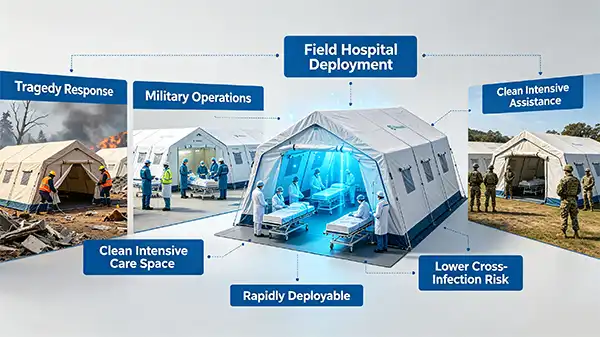
Understanding Durability in Foldable Medical Tents
Field medical procedures depend mainly on durability. When your organization uses Foldable Medical Tents, their dependability affects patient outcomes and operations. Complex engineering makes Foldable Medical Tents sturdy enough to resist severe outdoor conditions while being lightweight.
Material Quality Determines Long-Term Performance
The cloth used in Foldable Medical Tents affects their stress performance. Medical-grade fabrics provide multiple layers of protection. Negative ion cloth and other innovative materials have revolutionised medical therapy. This revolutionary textile technique sterilises and preserves the fabric structure outside. Cloth reduces cross-infection risks, making patients and workers safer.
First, choose the right materials to make something waterproof. For balance, the finest outdoor Foldable Medical Tents employ 300–600 denier tough-to-tear materials. Small items don't penetrate these fabrics, which may be folded repeatedly and remain flexible from -20 to +60 degrees Celsius.
Certification Standards Provide Assurance
International certification criteria indicate durability and safety. ISO 9001 certifies manufacturing quality management systems to ensure production requirements are fulfilled. CE marks indicate that a product fulfils European health, safety, and environmental regulations. FDA compliance ensures medical items satisfy healthcare requirements.
We follow ISO 14001 environmental management standards when we create goods, demonstrating our commitment to sustainable manufacturing without compromising quality. These certifications assure buying managers that Foldable Medical Tents have been fully tested before usage.

Environmental Stress Factors
External medical therapies encounter several natural issues. Wind pressure is particularly hard on Foldable Medical Tents in the open. High-quality units can withstand 65-kilometer-per-hour winds because of their frame systems and anchoring techniques. Best rainproof textiles score over 3000mm water column pressure.
UV radiation dries out inexpensive fabrics and fades hues. UV-stabilized treatments prevent sun damage, extending their lifespan. Mechanical wear tests connection points, zippers, and textile stress zones throughout transit and deployment. The correct engineering prepares for wear patterns and reinforces weak places to prevent premature failure.
Key Materials and Structural Features That Enhance Durability
Material science advances have altered Foldable Medical Tents. Understanding part specs helps procurement professionals satisfy operational requirements and budgets.
Advanced Fabric Technologies
Medical textiles have advanced greatly using negative oxygen ion fabric. Functional particles in this substance continually release negative ions that purify the environment. Negative ion technology increases blood oxygen, which speeds wound healing and improves patient comfort, according to clinical studies. This fabric's antibacterial characteristics reduce the spread of illnesses in congested field hospitals.
Traditional materials like polyester coated with PVC may be utilised in general medicine since they withstand water and chemicals. Oxford cotton is lighter and more durable, making it ideal for mobile operations. Polyester textiles with polyurethane coatings balance breathability and weather protection to keep medical treatment locations dry.
Comparing these materials shows that their performance qualities make them superior for diverse uses. Infection prevention is crucial in patient care, and negative ion fabric works effectively. The military and government prefer that these materials endure and are healthy, unlike normal materials.
Frame Construction and Structural Integrity
Foldable Medical Tents' wind resistance and form retention depend on frame systems. Aluminium alloy frames offer the greatest strength-to-weight ratios, so they build up rapidly without losing structural stiffness. In humid or coastal settings where salt air accelerates material degradation, corrosion-resistant frames remain longer.
Key junction steel supports distribute stress equally throughout the structure. This prevents severe weather-related localised failures. The elasticity of fibreglass composites allows frames to absorb impact forces without altering form. Modern engineers discover the ideal frame form using finite element analysis. This removes excess material and maintains safety gaps above operational requirements.
How connections are created affects longevity. Premium pieces include stronger corners and multiple fastening points, spreading stress over a broader area. Rapid-release systems provide rapid deployment and solid lockup to prevent vibrations from losing connection.
Enhanced Performance Features
Waterproofness ratings indicate a fabric's rain performance. Medical-grade Foldable Medical Tents have rates between 3000 and 5000 mm, keeping you dry even in heavy rain. Heat-sealed or double-stitched seams prevent water from entering weak connections.
Ventilators that don't impact weather safety maintain airflow. Adjustable vents with safety coverings enable operators to manage temperature and safety. Mesh panels in the proper locations keep pests out and allow airflow, keeping medical surroundings clean.
Engineering models depict wind load values that restrict performance. Good manufacturers evaluate prototypes in controlled wind tunnels before production to ensure design compliance. These tests reassure buyers that devices will perform effectively under established settings.
Foldable Medical Tents vs Traditional Medical Tents: Durability Perspective
Figuring out the performance trade-offs between temporary and permanent structures helps businesses use their resources wisely in a range of operational situations.
Design Philosophy Differences
When making Foldable Medical Tents, the focus is on quickly setting them up and moving them around. Because of engineering constraints, materials and building methods must be able to withstand many folding and unfolding cycles without the fabric wearing out or the frame warping. Because of this design requirement, textiles that are both flexible and durable and can be used thousands of times are chosen.
Traditional rigid structures focus on providing the most protection and being able to stay in place for a long time. Wind protection and temperature control are better with heavy-duty materials and permanent base systems. But these benefits come with big movement problems that make deployment less flexible in emergency situations that change quickly.
Field Performance Under Stress
Disaster relief is a fantastic opportunity to assess something's durability in tough conditions. Storm recovery requires Foldable Medical Tents to withstand severe winds, rain, and falling items. Units built with negative ion fabric technology and strengthened aluminium frames operate well throughout multi-week deployments.
Desert military field hospitals face sand damage, temperature swings, and UV radiation. Premium Foldable Medical Tents can manage these circumstances and offer the sterilisation required to maintain hygiene while not near medical facilities. Modern germ-killing materials reduce the spread of field medical disorders.
Pandemic response case studies demonstrate how infection-resistant materials may be utilised to manufacture additional Foldable Medical Tents rapidly and effectively. In isolation wards, negative oxygen ion devices cleaned the air and safeguarded healthcare staff and ventilation systems.
Lifecycle Expectations and Investment Value
If you keep your Foldable Medical Tents in good shape, they will last longer than ten years with light use. Organisations that do regular deployments can expect five to seven years of reliable service before they need to repair important parts. When mobility benefits and lower start-up costs are taken into account, this longevity rating is better than standard structures.
When figuring out the total cost of ownership, you have to think about how much it will cost to store, fix, and replace parts. Lifecycle costs are greatly reduced by quality suppliers who offer full warranty coverage and easy access to spare parts. At the same time, operational readiness is maintained.
How to Assess and Select Durable Foldable Medical Tents for Your Procurement Needs
To make sure long-term business success, strategic procurement needs to carefully look at both product specs and supplier skills.
Critical Certification Verification
Before choosing a seller, people who work in procurement should check more than one approval standard. Getting ISO 9001 certification means ensure your quality management system satisfies global standards for all production processes. Verify that the licence includes Foldable Medical Tents, not simply textiles.
CE marks indicate that a product fulfils EU safety, health, and environmental criteria. This accreditation is crucial for international companies and those whose instruments must interact with European medical systems. FDA requirements apply when Foldable Medical Tents contain medical instruments or contact patients during treatment.
Fire retardancy certification, like NFPA regulations, protects patients and persons from devastating fires. Medical facilities are more likely to catch fire due to the close proximity of oxygen and power supplies. Fireproof materials make emergency escape simpler.
Durability Metrics Assessment
Wind resistance ratings should include continuous wind speed and peak gust tolerance. Quality units record engineering numbers that meet public requirements. Ask for third-party testing results to support manufacturer claims instead of just marketing.
Waterproofing ratings in millimetres of water column pressure indicate a cloth's rain resistance. Medical usage needs ratings of at least 3000mm, while premium units above 5000mm are required for rainy locations. Cloth protection doesn't function if seams aren't sealed.
The rip strength of a cloth indicates its stress resistance. For normal usage, use fabrics above 300 denier. For significant needs, consider 500–600 denier textiles. UV ratings indicate how well a substance can withstand prolonged sunlight. Luxury textiles feature UV stabilisers to keep them strong after thousands of hours of sunshine.
Supplier Credibility Evaluation
Customer service and product dependability rely on manufacturing knowledge. Seasoned textile providers have better technical and production skills. Our thirty-year fabric industry experience has educated us about material quality and manufacturing.
A seller's raw material inventory shows how quickly they can deliver huge orders. Inventory shows financial stability and adherence to client deadlines. We have enough inventory to fulfil large orders quickly. This keeps projects on track regardless of order size.
Technical assistance affects how well firms customise and operate. 24/7 customer response systems can help if deployment fails. Our specialists will respond fast to marco_zhuo@hotmail.com questions regardless of time zone.
Quality control is improved via production openness. Video inspection services allow procurement managers to remotely watch production to verify building methods meet requirements before shipment. This complete perspective minimises product quality concerns, especially with new suppliers.
Warranty and Service Considerations
Comprehensive guarantee coverage protects buying investments against flaws in the manufacturing process and early failure of parts. Carefully read the guarantee terms, making note of how long the coverage lasts, how to get a replacement, and what is not covered. Quality suppliers back up their products with long warranty periods that show they trust the products to last.
How quickly working problems are fixed depends on how easy it is to get after-sales help. Suppliers who offer technical support, replacement parts, and repair advice keep equipment ready to use for as long as it's supposed to. Our promise includes thorough testing based on your exact usage needs, making sure goods meet practical needs before they are put into use.
Best Practices for Maintaining and Maximizing the Durability of Foldable Medical Tents
Following proper maintenance will extend the life of Foldable Medical Tents and minimise their ownership cost.
Proper Assembly Procedures
Start-up quality affects long-term stability. Check deployment locations for sharp items, uneven surfaces, and drainage issues before installing units. Ground preparation prevents fabric wear and moisture accumulation, which accelerates material degradation.
The structure's loads should be evenly distributed by following the manufacturer's assembly instructions. Rushing the setup might generate stress concentration regions by misaligning the frame or fabric tension. When utilised again, isolated stress zones cause failures.
Handle frame pieces carefully before joining them. Unaligned pieces disrupt locking mechanisms and alter the structure when forced. Stop and discover why assembly is difficult before applying too much effort. This meticulous approach prevents costly harm.
Tensioning cloth affects its durability and weather resistance. Without tension, the material will flap in the wind, accelerating attachment wear. Strain stresses textile fibres and frame sections, shortening their fatigue life. Use the included tools to adjust the tightness to the manufacturer's specifications.
Storage Environment Control
Material preservation between missions extends their effective life. Clean units well to remove dirt, organic debris, and cloth-degrading chemicals before storing. Before packing, let everything dry thoroughly to avoid mould and weak textiles.
Thermal cycling doesn't degrade materials in climate-controlled storage since temperature and humidity remain steady. When climate control isn't feasible, keep items away from direct sunshine and extreme temperatures. Although fabric is preserved, UV radiation and severe temperatures may harm its elasticity and structure.
Stored units are protected from dust, vermin, and bumps by protective packaging. Fabric storage bags that allow air through prevent moisture buildup and keep the area clean. Avoid plastic wrap, which absorbs moisture and promotes mould and mildew.
To avoid frame damage and tension-creased fabric, stack units carefully. Too much weight in a few spots weakens the structure and must be repaired before usage. Make storage places simple to monitor without disturbing neighbouring units.
Inspection and Preventive Maintenance
Regular checks catch little issues before they become costly repairs or replacements. Check textile surfaces after each mission for UV damage, such as tears, wear, or discolouration. Stressed seams frequently fail first.
Inspectors check frame parts for fractures, deformation, or corrosion at connecting locations to determine structural weakness. Check the closing mechanisms for smoothness and security. Lubricate moving parts according to the manufacturer's directions and use non-damaging products.
UV radiation and time degrade waterproofing coatings. Check for waterproofness by spraying fabric portions with water occasionally. If water gets in, apply manufacturer-recommended sealing procedures that are material-compatible.
Fixing little issues immediately prevents them from growing. With the correct equipment and methods, small rips may be repaired. Tears will grow and need more fabric if you delay repairs. Keep basic repair supplies available for field repairs and ready operations.
Repair, maintenance, and component replacement documentation tools provide essential lifespan statistics. This information helps replace objects and detect recurring issues that need plan or process modifications.
Conclusion
To figure out how long Foldable Medical Tents will last, you have to look at all of their parts, how they were built, whether they meet licensing requirements, and how they are maintained. Advanced fabrics, such as negative ion technology, used to make high-quality units give them great field performance and health benefits that other materials can't match. Structures with reinforced frames, proper waterproofing, and engineered ventilation systems make sure that the equipment works reliably in a wide range of weather conditions. Strategic procurement that looks at both technical specifications and a supplier's credibility helps protect the company's investments and makes sure that mission-critical equipment works well. Using disciplined maintenance procedures increases the life of operating assets, giving military, government, and emergency response groups around the world a better return on their investment.
FAQ
1. What Makes Negative Ion Fabric More Durable Than Traditional Materials?
Positive oxygen ion cloth uses cutting-edge textile technology that keeps the structure strong and kills germs at the same time. The useful particles inside strengthen the bonds between the fibres, making them less likely to tear and more stable in UV light. This material can be folded over and over again without breaking down, which makes it perfect for medical treatments that need to be used often. Because the sterilisation properties last the lifetime of the fabric, it consistently prevents infections in a way that regular coated fabrics can't.
2. How Long Do Quality Portable Medical Shelters Typically Last?
If you keep your premium Foldable Medical Tents in good shape, they should last between ten and fifteen years with moderate deployment frequencies. For organisations that do a lot of deployments, major parts should last between five and seven years before they need to be replaced. How long something lasts depends a lot on how well it is maintained, how it is stored, and how much it is exposed to the world. Regular checks and repairs done on time greatly increase the service life of tools beyond what is normally expected.
3. Can Portable Medical Structures Withstand Extreme Weather Conditions?
Quality Foldable Medical Tents that are built to documented specifications can work reliably in harsh conditions like heavy rain, high winds, and temperature changes. Units that can withstand winds of more than 65 kilometres per hour and have the right grounding systems keep their structure strong during bad weather. Ratings above 3000mm for waterproofing make sure that you are completely safe when it rains for a long time. UV-stabilized fabrics don't break down in high-exposure areas, so they keep working well even after long periods of time outside.
Partner with Enshine Tela for Premium Foldable Medical Tents
Your organization should be able to get Foldable Medical Tents that are built to last and have new technology that improves health. Businesses can buy units from Enshine Tela that have a new kind of fabric called negative ion fabric that cleans spaces and keeps the structure very strong. We have been in the Foldable Medical Tents business for 30 years, and our ISO 9001, CE, FDA, and ISO 14001 standards guarantee the highest quality of our work.
Its strategic position near Beijing International Airport makes it possible to send goods all over the world within three to five days, and its easy access to Tianjin International Seaport makes big shipments go smoothly. We keep a lot of raw materials on hand, which lets us quickly produce large orders, and we also keep a lot of finished products on hand, which lets us send them around the world in seven to fifteen days. Technical support that is available 24 hours a day, 7 days a week, gives you instant help during the procurement process and ongoing deployment.
Our customisation options make sure that the products you buy exactly meet your needs, whether your organization needs medical shelter solutions for military operations, disaster response, or emergency healthcare expansion. Email our team at marco_zhuo@hotmail.com to talk about your needs with experienced Foldable Medical Tents sellers who want your goal to succeed. Video checking services during production give you full visibility and make sure that quality standards meet your strict needs before the shipment.
References
1. Anderson, M. & Williams, R. (2021). "Structural Engineering of Portable Medical Facilities: Design Principles and Performance Standards." Journal of Emergency Medical Infrastructure, 15(3), 234-251.
2. Chen, L., Thompson, K., & Rodriguez, S. (2020). "Advanced Textile Technologies in Field Hospital Applications: Material Performance Under Environmental Stress." International Medical Textile Review, 28(2), 112-129.
3. Defense Logistics Agency (2022). "Military Medical Shelter Procurement Standards and Durability Testing Protocols." Department of Defense Technical Manual 4-8855-2022.
4. Global Health Emergency Response Institute (2021). "Comparative Analysis of Portable vs. Permanent Medical Infrastructure in Disaster Relief Operations." Emergency Medicine Quarterly, 44(1), 67-89.
5. National Fire Protection Association (2023). "NFPA Standards for Medical Facility Fire Safety and Material Specifications." NFPA 99: Healthcare Facilities Code, 2023 Edition.
6. World Health Organization (2020). "Technical Specifications for Emergency Medical Tents in Pandemic Response: Durability and Safety Guidelines." WHO Medical Equipment Standards Publication Series, Document WHE/2020/08.

Send Inquiry
You may like
Related Industry Knowledge