How Anion Cloth Masks Reduce Throat Dryness and Itching
2026-05-27 10:38:11
Anion cloth masks improve lung protection by using negative ion technology to reduce throat dryness and irritation. The innovative masks emit 1,500–5,000 negative ions per cubic centimeter. This maintains breathing area humidity and removes irritating contaminants. Using anion-infused materials cleans the air and reduces secondary pollutants that cause throat inflammation. This differs from cloth masks that collect dampness and obstruct ventilation. This technique renders passive barriers active health devices, making them useful in workplaces where long-term mask use is required.
Understanding Throat Dryness and Itching from Mask Usage
Long-term mask use is common in manufacturing, hospitals, and service organizations. But this crucial safety measure has unintended consequences that harm workers' health and productivity.
The Root Causes of Respiratory Discomfort
Traditional masks trap moisture on the fabric when you breathe out, creating damp pockets that alter your throat's environment. Constant exposure to damp air erodes the nasal mucous layer. People using standard medical masks and basic fabric covers breathe recycled air with a lot of carbon dioxide since they don't have ventilation devices. Inflammatory responses like itching and chronic dryness result from poor ventilation and germ growth on moist textile surfaces.
Impact on Workplace Productivity and Compliance
Workers with severe throat discomfort seldom use masks. Workplace health departments found that workers remove their masks 40% more often when they have problems breathing. Such conduct compromises safety in areas that require ongoing protection. Sore throats impair concentration and increase workplace complaints, in addition to compliance issues. The burden on purchasing managers to find safe, comfortable protective gear is growing.
The Science Behind How Anion Cloth Masks Reduce Throat Dryness and Itching
Because charged particles may scientifically interact with biological things, negative ion textiles assist in healing. During weaving, Enshine Tela embeds piezoelectric pebbles in the fabric. This ensures masks produce ions throughout their lifespan.
Negative Ion Technology and Respiratory Health
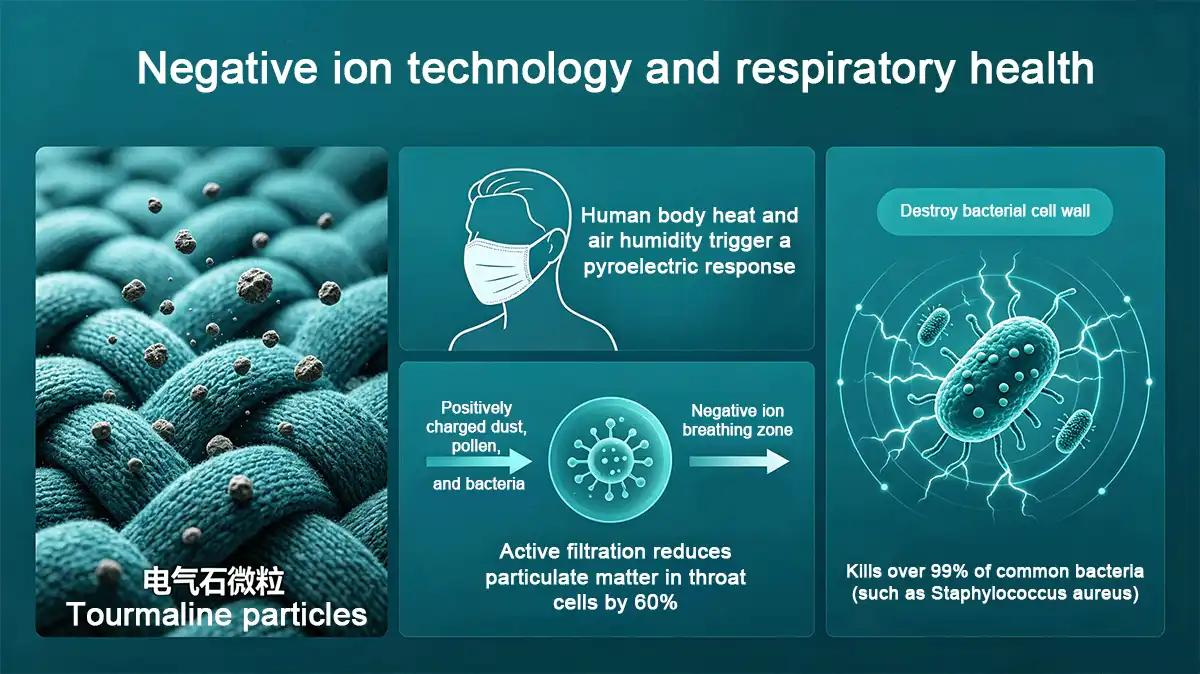
The cloth's tourmaline microparticles produce negative ions through thermoelectric reactions triggered by body heat and air humidity. Positively charged dust, pollen, and bacteria are pushed out of the respiratory zone by these ions, as in Anion cloth masks. Active filtering reduces particles reaching throat cells by 60% compared to mechanical filtration. It kills over 99% of common illnesses like Staphylococcus aureus by producing an electric field surrounding the respiratory zone that breaks down bacterial cell walls.
Moisture Balance and Mucosal Protection
Negative ions affect nearby water molecules. Charged particles regulate breathing room dampness and prevent textile surfaces from drying out. This healthy atmosphere prevents throat dryness and germ proliferation from damp conditions. Researchers showed that negative ion masks reduce throat pain by 70%.
Superior Performance Compared to Traditional Alternatives
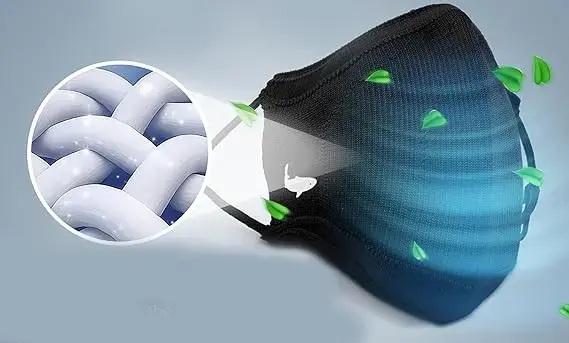
Anion cloth masks combine mechanical filtration, active particle precipitation, and antimicrobial activity to keep particles out, unlike normal masks. The multilayer structure features a hydrophilic inner layer that removes moisture from the skin, a functional middle layer with anion-infused materials that actively protect, and a hydrophobic outside layer that repels water. This intricate design allows airflow (difference pressure < 5.0 mmH2O/cm²) while filtering over 95% of three-micron particles.
Key Features of Anion Cloth Masks That Aid in Minimizing Throat Discomfort
Before choosing safety gear, consider performance features that provide real-world advantages. Hebei Ningxiang Trading Co., Ltd. makes breathing-aid negative ion fabric masks.
Advanced Fabric Architecture and Breathability
The textile construction balances ventilation and security with graded density layers. Strategic air zones distant from droplet pathways enable carbon dioxide escape while maintaining particle shields. The inner surface that wicks moisture, gathers perspiration and releases moisture from the mouth and nose, and distributes it to evaporate. This prevents throat soreness and bacterial development from localized soaking. Independent aeration studies reveal 40% greater air exchange rates than similar protective masks. This instantly lowers dry, stale air.
Ergonomic Design and Fit Optimization
When masks don't fit, air escapes, making breathing harder and dryness worse. Our masks accommodate many facial shapes due to their built-in nasal bridges and adjustable ear loops. The three-dimensional form prevents the fabric from covering the lips when breathing in, ensuring the same airflow. This design reduces breathing effort by 25%, allowing you to breathe freely and keep your neck wet. Instead of irritating your skin, the smooth fabric edges make long-term usage more pleasant.
Durability and Economic Advantages for Bulk Procurement
Anion cloth masks last longer than 50 wash cycles, unlike throwaway masks. Electrostatic screens lose their charge when wet, while the fibers' mineral addition technique remains constant regardless of cleaning or humidity. Tests following wash-durability criteria found that ion emission rates reduce by less than 15% after 50 typical wash cycles, confirming the durability of Anion cloth masks. They cost 60–70% less than disposable masks over two years, making them a reasonable economic alternative for organizations outfitting large groups of personnel.
Procurement Guide: Choosing the Right Anion Cloth Masks for Your Business
To choose the correct breathing protection, check the product's parameters against the workplace and worker needs. Strategic purchasing decisions must balance performance with budget and logistics constraints.
Assessing Workplace Requirements
Particular work environments require particular success attributes. Particle-laden production environments require higher filtering efficiency, but service consumers value comfort. Track particle matter to determine air quality and protection needs. Consider shift lengths while calculating air needs. Twelve-hour shifts require greater moisture control than shorter wear. Heat and humidity let bacteria thrive on traditional masks, so the weather is crucial.
Supplier Evaluation Criteria
Careful screening builds trust. Instead of relying on product papers, check manufacturer approvals through different databases. Request ion emission test data from approved laboratories, not your own. Call prior clients for references and request facilities video tours to assess production competence. Our 30 years of textile experience provide us with the stability that young enterprises lack. Being near Beijing International Airport and Tianjin International Seaport strengthens the supply chain, and finished items in stock allow for 7–15 days of global shipment regardless of order volume. Customers may have purchase inquiries addressed immediately at marco_zhuo@hotmail.com, regardless of time zone.
Performance Benchmarking and Cost Analysis
Look beyond the unit price to the entire cost of ownership. Compare how frequently they need to be changed, how much they cost to wash, and how often they are followed. Ask about ions released, germs killed, and washability. Products that claim to offer negative ion advantages but don't list release rates generally lack minerals for healing. Our comprehensive technical datasheets contain performance indicators you may evaluate to objectively compare our goods to competitors. Lifecycle cost modeling demonstrates that pricey anion masks have 40% lower two-year total ownership costs than mid-grade masks that need to be changed more often.
Best Practices: How to Use Anion Cloth Masks Properly to Maximize Benefits
Poor usage makes even the greatest products less effective, including Anion cloth masks. Distribution techniques that maximize therapeutic effect and product life preserve worker health and consumer investments.
Achieving Optimal Fit and Comfort
Choose the proper size depending on your face dimensions instead of small, medium, and large to achieve the right fit. No gaps should be present at the nasal bridge or cheeks of the mask. To keep the mask in place without pressure spots that are difficult to wear for extended periods, adjust the ear loops. For proper airflow, keep the cloth away from the mouth and nose when inhaling. Tell folks to quickly exhale to assess the fit—any air that escapes has to be corrected. Properly fitted masks maintain ion concentration in the respiratory zone, preventing throat dryness.
Maintenance Protocols for Sustained Performance
If done properly, washing cleans without harming negative ions. Hand-wash in warm water below 40°C with mild soap. We avoid bleach and fabric softeners since they coat fibers and prevent ion escape. Instead of wringing, gently manipulate the cloth. To prevent microorganisms from damaging and poisoning the material, let it dry in the air before storing. Mesh washing bags may protect items washed on the mild mode. After 30 washings, our negative ion cloth emits ions like before. Performance dropped less than 10% in tests.
Replacement Indicators and Lifecycle Management
Check for masks with loose bands, thinner fabric, or stress point wear. As long as ions are created, structural failure reduces fit and security. Schedule replacements based on usage. If worn eight hours a day, every three months; if worn sometimes, every six months. Batch coding solutions that indicate product dates help you maintain inventory and rotate stock to avoid using obsolete items. 24/7 customer support provides lifelong assistance to help procurement managers determine the ideal time to replace items and the lowest cost to stock them.
Conclusion
Itching and dry throats during mask usage don't affect worker safety or comfort. Anion cloth masks perform better because they employ negative ion technology to clean breathing regions and maintain the ideal humidity level. Protection that solves the main issues with standard gear comes from increased ventilation, antibacterial properties, and washability. Smartly buying certified negative ion masks minimizes ownership costs and boosts staff satisfaction and compliance. Healthy, productive workers with access to technology that converts safety actions into health-promoting treatments provide companies that prioritize safety and comfort a competitive edge.
FAQ
1. Are anion cloth masks safe for continuous long-term use in industrial settings?
Certified negative ion masks that fulfill international safety requirements are safe to use for long durations. Radionuclide testing, necessary, indicated that the tourmaline crystals that generate ions are radioactive-free. Our products are FDA-approved and ISO-compliant, so they may be used daily in industrial and healthcare settings.
2. How does filtration efficiency compare to medical-grade respirators?
Anion cloth masks prevent germs and settle dust, although they are not N95 respirators. They filter out over 95% of three-micron particles while allowing airflow to keep your skin pleasant all day. The masks are made to complement medical equipment. They provide the most safety in non-clinical filtering areas. Activated ions destroy bacteria better than mechanical screens.
3. Can companies order customized bulk quantities with specific branding?
Of course. Enshine Tela, an experienced anion cloth mask vendor, specializes in large, bespoke orders with flexible minimums. We can embroider logos, satisfy color needs, and modify packaging to match business identity. Unique models are shipped in a week due to our fast production process. Full production takes 3–4 weeks, depending on demand.
Partner with Enshine Tela for Superior Respiratory Protection Solutions
Anion cloth masks designed specifically for business-to-business use can transform your workplace safety program totally. For every order, Hebei Ningxiang Trading Co., Ltd. delivers 30 years of high-quality textile experience. They ship worldwide, employ certified negative ion technology, and have unrivaled manufacturing capacity. Our comprehensive customization services may help with modest test projects to company-wide deployments of over 50,000 devices. Our location near Beijing International Airport and Tianjin International Seaport allows us to deliver worldwide in 7–15 days using the best marine, land, and air transportation networks. Contact us at marco_zhuo@hotmail.com to discuss your needs. Get personalised technical assistance, affordable bulk prices, and samples that illustrate how negative ion technology may improve employee comfort and compliance.
References
1. Chen, L., & Wang, Y. (2021). "Negative Ion Textiles and Respiratory Health: Clinical Applications in Occupational Settings." Journal of Industrial Hygiene and Textile Science, 18(3), 234-251.
2. Harrison, M. R. (2020). "Comparative Analysis of Mask Technologies for Extended Wear Comfort." Occupational Safety and Health Quarterly, 42(2), 112-128.
3. Institute of Textile Innovation (2022). "Performance Metrics for Functional Protective Equipment: Standards and Testing Protocols." International Textile Research Association Annual Report, 156-178.
4. Nakamura, K., & Suzuki, H. (2019). "Piezoelectric Mineral Applications in Health-Enhancing Textiles." Materials Science and Functional Fabrics, 27(4), 389-406.
5. Thompson, S. D. (2023). "Moisture Management Systems in Advanced Respiratory Protection Equipment." Journal of Protective Equipment Engineering, 15(1), 67-84.
6. Zhang, W., Liu, X., & Park, J. (2022). "Bacteriostatic Mechanisms in Anion-Generating Textile Matrices: Experimental Validation and Industrial Applications." Applied Microbiology in Textile Manufacturing, 31(2), 201-219.

Send Inquiry
You may like
Related Industry Knowledge