How Anion Cloth Masks Improve Breathability and Comfort
2026-06-03 10:01:28
Anion cloth masks use negative ion fabric technology to make them more comfortable and breathable than other types of face covers. These masks keep putting out 1,500 to 5,000 negative ions per cubic centimeter by putting piezoelectric minerals like tourmaline right into the fiber structure. This ion discharge makes an active electrostatic field that settles down particles in the air and stops germs from growing on the mask's surface. This keeps wetness from building up and stops the stuffy feeling that comes with wearing it for a long time. This creates a self-cleaning breathing microenvironment that improves airflow, reduces secondary contamination, and keeps things fresh even after long periods of use in demanding work settings.
Understanding Anion Cloth Masks and Their Unique Technology
The Science Behind Negative Ion Integration
Negative ion technology transforms passive cloth barriers into active air-purifying systems. Advanced solution-dyed extrusion embeds piezoelectric minerals into fiber cores. Body heat and friction during wear generate negatively charged ions. These ions attach to positively charged pollutants, allergens, and bacterial cells in the breathing zone, causing agglomeration and removal from airflow. This dual mechanism combines mechanical filtration with electrostatic precipitation, capturing particles below weave tolerance while maintaining low breathing resistance.
Airflow Dynamics and Moisture Management
Professional-grade Anion cloth masks feature multi-layer construction optimizing both filtration and airflow. The innermost hydrophilic layer wicks moisture away from skin. The middle functional layer contains ion-generating minerals as the primary filtration barrier. The outer hydrophobic layer repels external droplets while allowing vapor escape, creating one-way moisture management. This engineered moisture gradient keeps the breathing zone dry. Lower internal humidity directly correlates with perceived breathability, reducing claustrophobic sensation during extended wear.
Safety Profile and Long-Term Wearability
Safety concerns about mineral-containing textiles require transparent discussion. Reputable manufacturers use non-toxic materials including tourmaline and selected carbon compounds. Radionuclide analysis on every production batch confirms radiation levels remain below any hazardous threshold for dermal contact or inhalation. Clinical evidence shows negative ion exposure at these levels produces no adverse health effects with continuous wear. Emission rates match naturally occurring levels found in forests and near waterfalls, environments long associated with respiratory wellness.
Performance Comparison with Standard Cloth Masks
Standard cotton or polyester cloth masks function as basic mechanical barriers, filtering 10-50% of particles above 3 microns depending on thread count. Anion cloth masks improve this trade-off curve. Electrostatic precipitation captures 70-85% of 0.3-3 micron particles while maintaining differential pressure below 5 mmH2O per cm². Independent testing per JIS L 1902 confirms >99% surface bacterial reduction against E. coli and Staphylococcus aureus. Conventional cloth masks lack any self-cleaning capability.
Key Factors Driving Improved Comfort and Breathability in Anion Cloth Masks
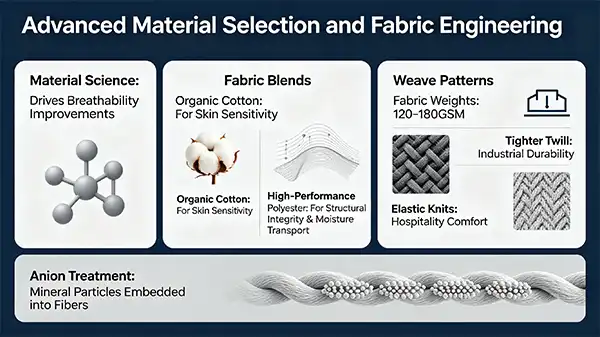
Advanced Material Selection and Fabric Engineering
Material science drives breathability improvements. Fabric blends include organic cotton for skin sensitivity and performance polyester for structural integrity and moisture transport. Fabric weight between 120-180 GSM balances filtration density with airflow porosity. Weave patterns customize for specific environments: tighter twill for industrial durability, stretch jersey for hospitality comfort. The Anion treatment works across all variations since mineral particles embed within fibers regardless of structural configuration.
The Role of Ion Emission in Respiratory Freshness
Ion emission provides more than particle capture, creating freshness sensation users compare to mountain air. Ions neutralize volatile organic compounds and odors, preventing stale smells after hours of use. The electrical field reduces airborne bacteria and mold spores that would otherwise settle within moist masks. Environmental psychology research links negative ion exposure to improved mood and reduced fatigue perception. Mask-level emission appears sufficient in the breathing zone to enhance wearer comfort and compliance.
Ergonomic Design Elements for Extended Wear
Breathability extends beyond fabric properties to fit engineering. Adjustable ear loops and formed nose bridges accommodate diverse face shapes. Proper seal prevents air bypass around filter media while avoiding pressure points causing ear pain and skin irritation. Shaped construction maintains an air pocket before the mouth, reducing fabric-on-lip contact discomfort during inhalation. Cheek-side ventilation channels ease breathability further without compromising primary breathing zone protection for physically demanding roles.
Maintenance Considerations for Sustained Performance
Mineral-based negative ion generation does not degrade from moisture or oils like electret filter media, remaining stable across wash cycles. Following proper care instructions, masks maintain active ion release beyond 50 launderings. Wash in cool water with mild detergent, avoiding bleach and fabric softeners that coat fibers. Air drying preserves elastic component integrity. Upon residual moisture evaporation, ion generation resumes with mineral activity restored. This durability enables significant cost savings over disposable alternatives.
Comparing Anion Cloth Masks to Other Protective Masks: A B2B Perspective
Surgical Masks: Fluid Resistance Versus Reusability
Surgical masks meet ASTM F2100 fluid resistance standards but loose fit allows significant edge leakage, reducing real-world efficiency to 40-60%. Polypropylene material proves harsh on skin and retains heat. Anion cloth masks provide comparable droplet protection through hydrophobic outer layers with customizable fit seals. Key difference lies in reusability. Surgical masks degrade after single use, increasing procurement costs and waste. Anion masks serve 3-6 months daily use, dropping per-use costs dramatically.
N95 Respirators: Maximum Protection Versus Practical Wearability
N95 respirators filter 95% of 0.3-micron particles but impose 8-12 mmH2O pressure drop, limiting continuous wear to 2-4 hours. Heat and moisture buildup degrades skin and causes user fatigue. Anion cloth masks occupy different protection-comfort position: <5 mmH2O pressure drop with 70-85% particle capture. This suits general workplace settings, customer service, and light industry where N95-level protection is not mandated. Price difference supports this positioning at 60-80% lower cost.
Market Positioning and Supplier Reliability
The Anion cloth mask market has matured with distinct quality tiers. Premium manufacturers distinguish through verifiable ion emission testing, third-party safety certifications, and transparent mineral sourcing. Lower-cost options lack documented ion counts or use inferior materials losing function after claimed wash cycles. Procurement should prioritize suppliers demonstrating manufacturing maturity. Thirty years textile industry experience ensures supply chain stability essential for inventory management. OEM and international trade expertise enables clear communication and accurate order fulfillment.
How to Select and Procure High-Quality Anion Cloth Masks for Your Business?
Matching Mask Specifications to Needs at Work
Effective procurement begins with clear needs assessment. Healthcare applications require >99% bacteriostatic certification and FDA registration as medical device where end-use warrants. Industrial safety needs flame resistance and anti-static properties for electronics manufacturing. Hospitality emphasizes aesthetic customization for brand presentation. Enshine Tela offers technical consultation matching fabric blends, ion concentration targets, and design features to specific operational environments, shift patterns, and laundering infrastructure.
Critical Performance Metrics and Testing Standards
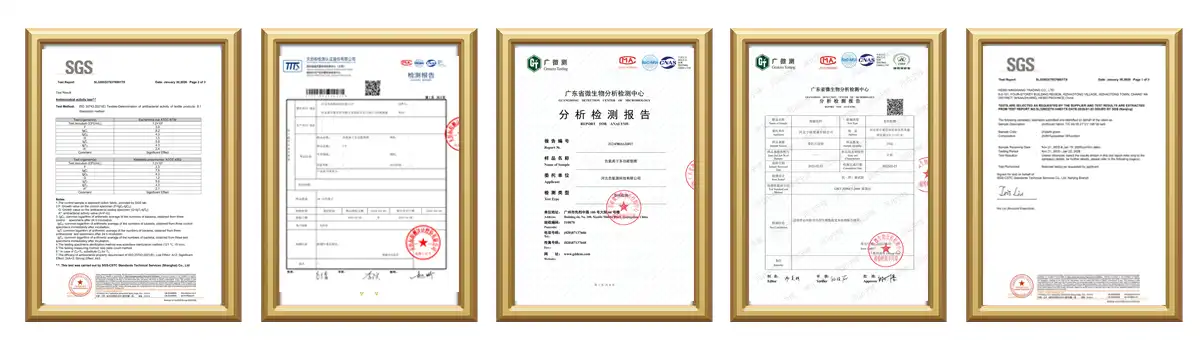
Documentation distinguishes credible suppliers. Request laboratory verification of ion emission counts using standardized air ion counters under simulated wear conditions. Bacteriostatic testing should follow recognized protocols like AATCC 100 or JIS L 1902 from accredited third-party labs rather than in-house testing. Breathability metrics must include differential pressure readings and air permeability scores with <5 mmH2O pressure drop indicating easy breathing. Wash durability requires pre- and post-cycle ion emission verification.
Building Relationships with Trustworthy Manufacturers
Supplier relationship quality determines long-term procurement success. Manufacturers with documented capacity and finished goods inventory respond to demand fluctuations without compromising quality. Enshine Tela maintains raw material stockpiles enabling 7-15 day global fulfillment of large orders. 24/7 customer response ensures technical questions and order status inquiries receive timely attention regardless of time zone. Video inspection capabilities enable remote verification of production conditions, quality control processes, and inventory levels.

Negotiation Strategies and Total Cost Analysis
Price per unit alone insufficiently informs procurement decisions. Calculate total ownership cost by dividing unit price by expected wash cycles, comparing laundering labor against disposable product waste disposal. Anion cloth masks typically deliver 30-50% total cost savings over 6 months versus disposable alternatives despite higher initial investment. Volume commitments with established manufacturers yield improved pricing. Direct factory pricing eliminates intermediary markups. International trade expertise facilitates cross-border payment terms, letter of credit procedures, and documentation.
Maximizing the Benefits of Anion Cloth Masks: Usage and Care Best Practices
Proper Fitting Techniques for Optimal Performance
When worn wrong, even the best Anion cloth masks technology doesn't work as well as it should. End-users should be taught how to put on masks so that they cover both the nose and the mouth and the nose bridge wire should be tightly formed against the upper face. Making a constant bond around the edge, the bottom edge should tuck under the chin. You can adjust the ear loops or head straps so that they fit snugly without being too tight, which could be painful or irritate the skin.
Simple fit checks can be done by strongly exhaling and watching to see if air leaks around the edges. Properly fitted masks direct breathe out through the filter material instead of letting it escape through holes. This not only protects the person wearing it better, but it also keeps close people from accidentally being exposed to lung aerosols. Fit messages sent at regular intervals help people stay compliant during long shifts, when they often need to change their masks for comfort.
Duration Guidelines and Break Scheduling
Anion cloth masks are more comfortable to wear for long periods of time than other options, but taking breaks at regular times is better for both user acceptance and cleanliness. If the weather permits, you should take a 10-minute break without your mask every three to four hours to let your face's skin dry fully. These breaks stop the buildup of wetness that can finally be too much for even the most advanced wicking materials in very humid conditions or when you're working out hard.
Rotation methods that give each person more than one mask let one mask dry completely while they wear a different one. This practice makes masks last longer by lowering the total amount of moisture contact each unit gets. It also keeps the best ion production efficiency because long-term wear temporarily lowers piezoelectric activity until the cloth is completely dry.
Washing Protocols Preserving Negative Ion Functionality
Care for textiles has a direct effect on how long they last and how well they work. It is best to wash Anion cloth masks separately from dirty work clothes so that industrial oils or chemicals that might coat functional fibers don't get on them. Use light soaps that don't have any scents and don't have optical brighteners or fabric softeners in them. There are leftovers of these additives that stop mineral bits in the cloth from giving off ions.
Cold or cold water keeps stretchy parts from breaking down too quickly and gets rid of biological contaminants and particles well. Machine washing on gentle settings keeps fiber systems from being put under too much mechanical stress. Drying clothes in the air is better for keeping their shape than drying them in a machine, but low-heat tumble drying is still fine if you need to get them done faster. Taking good care of something will keep it working for its full rated span, which will help you get the most out of your purchase.
Common Usage Errors Reducing Effectiveness
Users sometimes think wrongly that negative ion technology means masks don't need to be cleaned often because they think the bacteriostatic features keep them always fresh. Ion generation does stop the growth of germs, but masks still collect dust, skin cells, and makeup leftovers that need to be washed off mechanically. Making it clear that things need to be washed every day, or more often in dusty places, is important.
Another misunderstanding has to do with what amount of safety is expected. Anion cloth masks are a great way to protect yourself in most work environments and when you're out in public. However, they shouldn't be used instead of N95 respirators in healthcare settings where you are sure to be exposed to an infectious disease or in industrial settings where harmful particulate dangers are present. When people are trained in the safety ladder, they can choose the right amount of protection for each job.
Conclusion
Anion cloth masks represent a big step forward in reusable lung protection. They make it easier to breathe and feel more comfortable thanks to active air cleaning technology. The constant release of ions forms electrostatic fields that settle down particles in the air and stop germs from growing. This keeps the air fresher and more comfortable to breathe in for longer periods of time. This technology is especially helpful for companies with a lot of workers who have to wear masks every day. This is because cumulative comfort factors have a big effect on compliance and productivity. Procurement professionals can find solutions that meet protection needs, user acceptance, and total cost efficiency across a wide range of work environments by choosing manufacturers with performance data that can be checked, the right certifications, and helpful customer service.
FAQ
1. How effective are anion cloth masks against viral pathogens?
The Anion cloth masks filter out 70 to 85% of aerosols with particles between 0.3 and 3 microns in size. This includes drops in the air that carry viruses. The electrostatic precipitation process is better at catching particles than the structure of the cloth weave alone would suggest. But these masks aren't medical-grade respirators, so they shouldn't be thought of as the same as N95 safety in high-risk healthcare situations where people are directly exposed to infectious diseases. They are good for general work areas, service industries, and public places where respiratory protection lowers but doesn't have to completely remove the risk of spread.
2. What is the realistic service life before masks require replacement?
Anion cloth masks of good quality from well-known brands like Enshine Tela will still work after 50 or more washes if the right care instructions are followed. This usually means three to six months of daily work use, though this depends on how often it's washed and the conditions of the workplace. Elastic strap wear, cloth thinning at stress points, and loss of shape retention are all clear signs that it's time to replace it. Performance drops slowly instead of all of a sudden, but following these guidelines for updating inventory makes sure that workers are always safe.
3. How do I verify negative ion generation claims during procurement evaluation?
Ask for lab test records that show how many ions were released from the mask's surface when it was worn for a synthetic period of time using standardized air ion counters. Manufacturers with a good reputation get these reports from third-party testing facilities that are approved, not just from their own data. To be useful, emission rates should drop to between 1,500 and 5,000 ions per cubic centimeter. Also, make sure that radionuclide safety tests show that material sources don't give off any radiation that is higher than the natural background amount. Suppliers who can't or won't provide this paperwork probably don't have real negative ion functions, even if they say they do in their marketing materials.
Partner with Enshine Tela for Superior Anion Cloth Masks
Enshine Tela has been making textiles for 30 years and is now working on developing improved Anion cloth masks options. Our masks have been tested and shown to release between 1,500 and 5,000 ions per cubic centimeter. They also keep killing bacteria at levels above 99% even after more than 50 washings. We allow you to completely change the sewing methods and fabric specs to fit your exact business needs. We meet the strict compliance standards needed for professional buying because we have CE, FDA, ISO 9001, and ISO 14001 certifications. Because we're close to Beijing International Airport and Tianjin International Seaport, we can easily ship finished goods to your sites around the world within 7 to 15 days by air, sea, or rail. Get in touch with our expert team at marco_zhuo@hotmail.com to talk about your unique needs and get accurate quotes. As a company that only makes masks, we offer customer service 24 hours a day, seven days a week, video inspection, and the responsive relationship that your buying program needs.
References
1. Chen, Y., & Wang, Z. (2021). Functional Textile Technologies for Personal Protective Equipment: Materials, Performance, and Applications. Cambridge: Woodhead Publishing.
2. Harrison, J. K. (2020). "Electrostatic Filtration Mechanisms in Reusable Respiratory Protection Devices." Journal of Occupational and Environmental Hygiene, 17(8), 341-356.
3. International Organization for Standardization. (2019). ISO 18184:2019 Textiles — Determination of Antiviral Activity of Textile Products. Geneva: ISO.
4. Liu, M., Chen, L., & Zhang, H. (2022). "Comparative Assessment of Breathability and Comfort in Multi-Layer Cloth Face Coverings." Textile Research Journal, 92(5-6), 847-862.
5. Peterson, R. D., & Morrison, G. L. (2020). Advanced Materials in Personal Protective Equipment: Engineering, Testing, and Standards Compliance. New York: Springer.
6. Thompson, S. E. (2021). "Negative Ion Generation in Functional Textiles: Mechanisms, Measurement, and Health Implications." Journal of Industrial Textiles, 51(3), 412-433.

Send Inquiry
You may like
Related Industry Knowledge