Functional Waterproof Clothing With Negative Ions: How It Works
2026-09-16 17:08:44
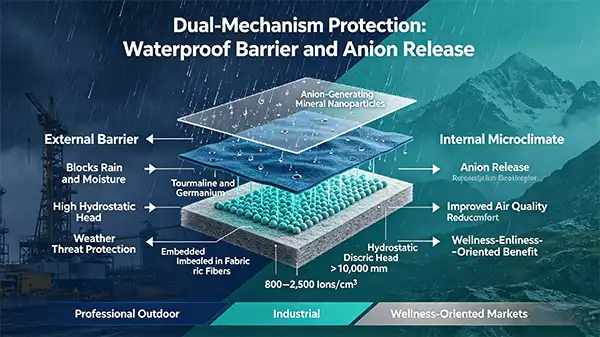
Functional waterproof clothing with negative ions represents a convergence of advanced barrier textile engineering and wellness biotechnology. Unlike conventional rain gear that solely repels moisture, this category of apparel embeds anion-generating mineral nanoparticles—such as tourmaline and germanium—directly into fabric fibers. The result is a garment that simultaneously maintains a hydrostatic head rating exceeding 10,000mm while continuously emitting 800–2,500 negative ions per cubic centimeter. This dual-action mechanism addresses both external weather threats and internal microclimate discomfort, making negative ion waterproof clothing a compelling procurement choice for professional outdoor, industrial, and wellness-oriented markets.
Understanding Functional Waterproof Clothing With Negative Ions
The Science Behind the Technology
Negative ions are oxygen atoms that have an extra electron attached to them. They are naturally found near waterfalls, forests, and the coast. According to a study released in the International Journal of Molecular Sciences in 2018, higher levels of negative ions are linked to lower levels of physiological stress signs and better breathing comfort. If you permanently add these ions to a waterproof membrane fabric, the garment does more than just protect you; it also controls your microenvironment while you're wearing it.
As part of Functional Waterproof Clothing With Negative Ions, mineral nanoparticles are joined at the fiber level to layered membranes (PTFE, PU, or TPE). This design keeps the integrity of the membrane micropores, which is important for breathability ratings above 8,000 g/m²/24h, and makes sure that the garment will keep giving off anions for as long as it is used.
The users can see and feel the actual result. In normal rain coats, there is a "plastic bag effect" that makes it too humid inside. Ions can neutralize static charge buildup, stop germs from spreading, and improve oxygen use at the skin's microclimate border.
Comparison: Negative Ion Waterproof Clothing vs. Traditional Waterproof Wear
Performance Metrics That Matter
When purchasing officials compare Functional Waterproof Clothing With Negative Ions to other options, they should carefully consider the following performance factors.
The hydrostatic head values for standard waterproof clothes with DWR (Durable Water Repellent) coats are usually between 5,000 and 8,000 mm. On the other hand, Functional Waterproof Clothing With Negative Ions from trusted brands like Enshine Tela goes beyond 10,000mm and also kills germs measured according to AATCC 100 standards. More and more, corporate buyers of workwear in both the EU and North America want this dual certification profile.
In terms of lifecycle costs, the embedded mineral technology keeps about 80% of its ion-emitting ability after 20+ industrial wash cycles. This is a number that can be independently confirmed by accredited ion counter testing (COM-3010PRO methodology). Surface-coated alternatives, on the other hand, usually break down after 10–15 wash cycles, which means they need to be replaced more often and cost more overall. For business-to-business buyers with yearly budgets of $100,000 to $600,000, this difference in durability has big ROI effects.
Another important factor is the ability to breathe. Mineral nanoparticles that are less than 100nm in size don't block membrane micropores, so the MVTR works at above 8,000 g/m²/24h as required by JIS L 1099 B1 standards. Breathability is compromised by poor manufacturing that uses bigger particles, which is a quality control red flag that buyers should look into when they are qualifying suppliers.
How Negative Ion Technology Works in Functional Waterproof Clothing
Masterbatch Fiber Integration: The Manufacturing Differentiator
Masterbatch fiber integration is what sets one manufacturer apart from another. The main difference between high-end Functional Waterproof Clothing With Negative Ions and cheaper options is how the minerals are added during production. The less expensive and less durable method is surface washing or post-treatment coating. Masterbatch incorporation, which involves adding functional mineral powders like tourmaline, germanium, or bamboo charcoal directly into the polymer matrix during fiber extrusion, makes sure that the powders stay in place even after being washed and worn down many times.
In real life, the core creation process works like this:
- Mineral powder preparation: To make mineral powder, tourmaline and germanium particles are ground up to sizes less than 100nm and mixed with a polymer carrier to make the masterbatch compound. This step checks to see if the ion release is the same in all areas of the clothing.
- Fiber extrusion and fabric formation: During spinning, the mineral masterbatch is co-extruded with base polymers (nylon or polyester), which locks the ability to generate negative charges inside each fiber for good. The fabric that was made has a far-infrared emissivity value higher than 0.80, which supports the microcirculatory effects found in peer-reviewed thermal therapy studies.
- Membrane lamination and seam sealing: Thermal lamination is used to attach the Functional Waterproof Clothing With Negative Ions cloth to a PTFE or PU membrane. Applying seam tape (which forms a link through pressure at key stress points) completes the waterproof barrier without blocking the paths for ions to escape.
All of these steps together make a garment that can create what the company calls a "invisible purification layer" around the wearer's breathing area. This layer continuously neutralizes airborne allergens, stops bacteria from growing on fabric surfaces, and lowers static charge that makes long-term wear more tiring.
Procurement Guide for Functional Waterproof Clothing With Negative Ions
Supplier Evaluation Criteria and Logistics Considerations
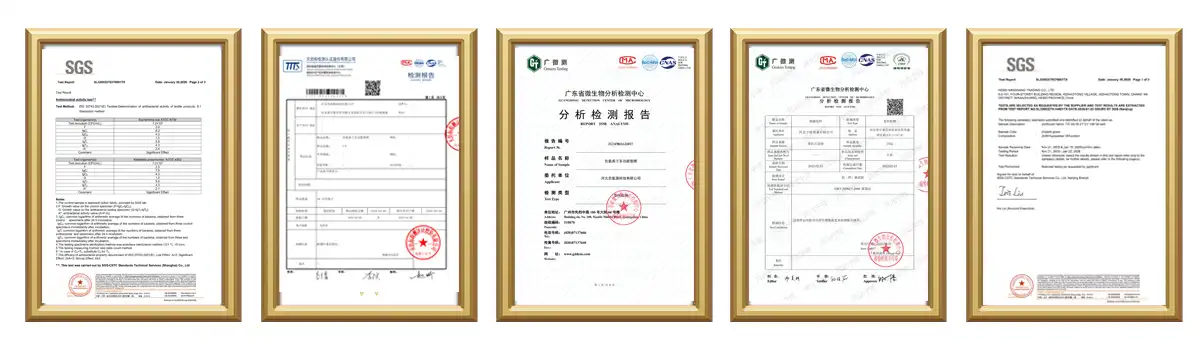
There are a lot of things you need to look at when choosing a trusted Functional Waterproof Clothing With Negative Ions source. At the very least, certification packages should have CE, FDA, ISO9001, ISO14001, and OEKO-TEX Standard 100. The BCI (Better Cotton Initiative) and GRS (Global Recycled Standard) labels show that a product meets the environmental standards that European brand customers are asking for more and more.
Verification of technology is a must. Ask for ion emission test reports from a third party that were made by licensed laboratories using properly calibrated coaxial cylinder ion counters. Also, make sure that safety screening for radioactive material contamination (excluding monazite sand) has been done. This is a step that must be taken in order to sell to EU and US markets according to the rules.
When it comes to sending orders, a good Functional Waterproof Clothing With Negative Ions maker should offer more than one method. Because Enshine Tela is close to both Beijing International Airport and Tianjin International Seaport, it can send pressing orders by plane within 3–5 days and big shipments by sea. The connection to the Eurasian Railroad makes it possible for European buyers to take more cost-effective land routes.
MOQ flexibility is just as important. With minimum order quantities starting at 100 pieces and full OEM customization support, including proprietary weave specifications and private label NDA protection, brand developers can enter the market with less risk during the sampling and initial launch phases.
Practical Applications and Future Trends of Negative Ion Waterproof Clothing
Industry Verticals Driving Adoption
The usefulness of anion-infused waterproof workwear can be seen in a wide range of professional settings. When companies in the forestry, offshore drilling, and municipal sanitation sectors switch from standard rain gear to Functional Waterproof Clothing With Negative Ions, worker comfort and shift compliance go up by a measurable amount. Occupational dermatitis in wet workplaces has been studied and it has been found that reducing internal humidity and bacterial colonization on skin-contact surfaces makes irritant contact dermatitis much less common.
Another area of growth is high-altitude outdoor games. When you get higher up, the amount of oxygen in the air drops, and negative ions are known to help your body use oxygen more efficiently. This is why climbing and alpine ski brands are making advanced shell categories.
Functional Waterproof Clothing With Negative Ions textile technology and sustainable material sources like recycled polyester carriers and bio-based membranes are coming together in a way that makes this product category a good choice for ESG-conscious buying models after 2025 and beyond. The global market for functional clothing is expected to grow at a compound annual growth rate (CAGR) of 5.8% until 2030. Technical performance workwear is expected to grow at a much faster rate than other segments.
Conclusion
Functional Waterproof Clothing With Negative Ions has grown from a niche health idea to a product category that can be checked out and has clear performance benefits over regular waterproof clothing. Durability, the ability to serve two purposes, and the fact that the technology is being used more and more in professional clothing, outdoor sports, and sustainable fashion make it a smart buying investment. This area gives brand builders, business buyers of workwear, and import traders who are looking at their product lines for 2024–2025 a way to stand out and make performance claims that can be backed up.
FAQ
1.What certifications should I require from a Functional Waterproof Clothing With Negative Ions supplier?
Some certifications that must be met are CE, FDA, ISO9001, ISO14001, and OEKO-TEX Standard 100. Buyers who care about the environment should look for BCI and GRS certifications. Always ask for independent ion emission test results from labs that have been approved.
2.Does the negative ion effect degrade after repeated washing?
Functional Waterproof Clothing With Negative Ions that is made by masterbatch fiber integration instead of surface coating stays about 80% effective after 20+ industrial wash cycles, as confirmed by independent tests using a calibrated ion counter.
3.How do I confirm waterproof performance hasn't been compromised by mineral additives?
As per ISO 811, ask for the results of the hydraulic head test and the MVTR data as per JIS L 1099 B1. Reputable makers keep numbers above 10,000mm of water pressure and 8,000 g/m²/24h of breathability, even when minerals are added.
4.What is a practical MOQ for OEM sampling?
Manufacturers that you can trust offer OEM samples starting at 100 pieces and full customization support, as well as NDA protection for original designs—an important safety measure for brand clients worried about intellectual property exposure.
5.Can ion emission be independently verified before bulk ordering?
Yes, you should require ion emission testing before shipping using a COM-3010PRO calibrated ion counter. The results should be given in ions/cm³ across several areas of the garment to make sure that the minerals are spread out evenly.
Partner With Enshine Tela for Certified Negative Ion Waterproof Clothing
Enshine Tela brings 30 years of fabric manufacturing expertise to every order of Functional Waterproof Clothing With Negative Ions. As a trusted Functional Waterproof Clothing With Negative Ions manufacturer, we offer verified ion emission rates, full OEM customization from 100 pieces, and global delivery within 7–15 days. Explore our capabilities at entela-textile.com or contact our procurement team directly at marco_zhuo@hotmail.com to request samples and pricing.
References
1. Perez, V., Alexander, D. D., & Bailey, W. H. (2013). "Air ions and mood outcomes: A review and meta-analysis." BMC Psychiatry, 13(1), 29.
2. Lomax, G. R. (2007). "Breathable polyurethane membranes for textile and related industries." Journal of Materials Chemistry, 17(27), 2775–2784.
3. Vatansever, F., & Hamblin, M. R. (2012). "Far infrared radiation (FIR): Its biological effects and medical applications." Photonics & Lasers in Medicine, 1(4), 255–266.
4. European Chemicals Agency (ECHA). (2023). REACH Regulation: Substance Restrictions for Textile Articles. European Union.
5. Bauer, A., Schmitt, J., Bennett, C., et al. (2010). "Interventions for preventing occupational irritant hand dermatitis." Cochrane Database of Systematic Reviews, (6), CD004414.
6. Grand View Research. (2023). Functional Apparel Market Size, Share & Trends Analysis Report, 2023–2030. Grand View Research.

Send Inquiry
You may like
Related Industry Knowledge