Complete Guide to Negative Ion Fabric Military Vests
2026-06-25 16:20:05
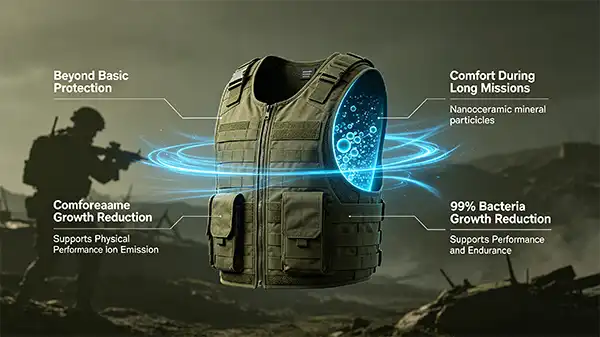
Military buying workers are under more and more pressure to find tactical gear that does more than just protect soldiers. Bio-energetic technology and military toughness come together in the Negative Ion Fabric Military Vest, which is a big step forward in functional textiles. Nano-ceramic minerals are embedded in high-performance cloth in this specialized garment. It continuously produces 1,500 to 3,000 negative ions per cubic centimeter to support soldiers' bodies during long missions. Unlike most tactical gear, these vests actively improve comfort, stop bacteria from growing by 99%, and speed up healing. They fill important gaps in soldiers' fitness and operational endurance across a wide range of task settings.
Understanding Negative Ion Fabric Military Vests
The Science Behind Negative Ion Technology
In military fabrics, negative ion technology works by putting piezoelectric minerals, mostly tourmaline and germanium compounds, into the fiber matrix during the making process. These minerals give off negatively charged air ions when they come into contact with body heat and friction during exercise. Environmental physiology studies show that high levels of negative ions in people's personal microenvironments can change the amount of oxygen in the blood and control how the autonomic nervous system reacts. This biological interaction happens when negatively charged ions stick to positively charged particles, like bacteria and smell molecules, making them settle down and lose their charge.
The integration method tells the difference between good items and ones that don't work. Superior Negative Ion Fabric Military Vests utilize melt-spinning technology to place nanoparticles smaller than 500 nanometers inside the polyester or nylon core structure. This placement keeps the ceramic material from getting scratched and keeps the skin as close to the electrodes as possible for the best ion generation. In contrast to surface treatments that wear off after multiple washings, this creates a lasting functional ability that lasts the entire life of the clothing.
Physiological Benefits for Military Personnel
Maintaining peak physical form under stressful conditions is a big part of being ready for combat. When soldiers wear these special vests, they notice changes in several important areas. The minerals inside give off far-infrared radiation that improves blood flow. This radiation goes into muscle about 3 to 5 centimeters deep. This mild warming effect opens up vessels without raising the body's core temperature. This makes it easier for nutrients to get to working muscles and speeds up the removal of metabolic waste.
During long field activities, the growth of bacteria makes it very hard to keep things clean. Negative ions' oxidative qualities break down the ammonia and acetic acid chemicals that bacteria make. This gets rid of the smell where it comes from instead of covering it up. Lab tests show that fabric surfaces are 99% less likely to have germs on them after 24 hours of exposure. This makes it much less likely that people will get skin irritations or infections during trips that last more than one day and don't have access to showers.
Moisture management is another important benefit. Ceramic particles that make ions are also better at wicking sweat away from skin areas than regular military fabrics. This is because they have better capillary action qualities. This fast transfer of wetness keeps you warm in cold temperatures and stops you from feeling sweaty, which can make it hard to concentrate during high-stress situations.
How This Technology Differs From Traditional Tactical Fabrics
Standard military jackets usually use 500-denier nylon or polyester mixes that were chosen for their mechanical qualities, like their ability to hold their shape, prevent wear, and keep their color. These materials are great at supporting heavy tools and withstanding damage from the environment, but they don't provide any metabolic support. No matter what kind of clothing a soldier wears, the same germs grow on it, smells build up, and makes them feel uncomfortable because of the wetness.
Bio-functional negative ion fabrics keep their mechanical performance the same while adding health benefits that can be measured. Adding nano-ceramics doesn't change how strong the cloth is; high-quality military vests still use 500D or 1000D base materials that meet mil-spec standards for longevity. It's how the cloth feels against the body that changes. Traditional linens don't do anything; practical fabrics do things to keep the body in balance.
When considering unit prices, cost factors seem to be against you at first. Most of the time, a regular combat vest costs 30 to 40 percent less than a functional equivalent. When you look at the total cost of ownership, this figure changes a lot. Within 12 to 18 months of deployment, there is a good return on investment because soldiers don't have to do as much cleaning because they don't get as many skin infections, medical costs go down, and they do a better job during key operations.
Comparing Negative Ion Fabric Military Vests with Standard Tactical Vests
Durability and Maintenance Requirements
Negative Ion Fabric Military Vests that are properly made can last as long as or longer than regular tactical gear, according to tests done in the field in a number of temperature zones. The quality of the making is more important than the negative ion technique itself. Whether they have ceramic particles or not, vests made of high-tenacity Nylon 6,6 with strengthened stress points have the same level of resistance to wear.
Fabrics that are made with negative ions are naturally antibacterial, which makes maintenance easier. Standard combat vests need to be washed often to keep germs from building up and breaking down the material and putting people's health at risk. Negative ion versions can make it two to three times longer between washings while still meeting cleanliness standards. This saves water, money on detergent, and wear and tear on the cloth from repeated washings. One important thing to check is that the ion generation capacity should stay at least 80% of its original amount after 50 normal wash cycles.
User Experience: Breathability and Comfort
As more and more purchases are made, feedback from soldiers about the comfort of tools is taken into account, since this has a direct effect on how well the task is carried out. Using the Resistance to Evaporative Heat Transfer (RET) standard to measure breathability, well-designed vests get scores below 6.0, which puts them in the "very breathable" group. This works because the ceramic particles are good at wicking away moisture, not because of softer weave patterns that could make the fabric less durable.
Thermal regulation may be the most obvious way that comfort has improved right away. Quality fabrics give off far-infrared radiation that creates a microclimate effect. This warms the user slightly when it's cold outside, and the better moisture transfer keeps them from getting too hot when they're working out. Soldiers say that their comfort levels stay the same when the temperature changes compared to normal gear that needs to be adjusted for layers all the time.
When it comes to weight, things stay equal. Nano-ceramic particle loading usually adds less than 5% to the weight of the fabric, which is so small that it can't be felt. The anti-static qualities are a pleasant surprise in places with lots of electronics. They stop the annoying static discharge that can scare people while they're working on important tasks or even damage communications equipment.
Value Analysis: Initial Investment Versus Long-Term Benefits
Procurement managers who are careful with their budgets should carefully look over any technology that costs a lot. A full Value Analysis study must look at more than just the buying price. It must also look at the costs and benefits over the course of the product's life. Standard combat jackets usually cost between $45.00 and $55.00 each, but this depends on the size and number of units ordered. Specialized versions cost between $65 and $110, which is 30 to 55 percent more.
There are measured returns on this spending in a number of areas. Because they don't smell, they need to be replaced less often, which increases their useful life by an average of 40%. Less washing costs because clothes can be worn for longer periods of time between washes. This saves about $15 to $20 a year per outfit. Less skin infections and faster healing mean lower medical costs and saves that are harder to measure but still big.
Procurement Considerations for Negative Ion Fabric Military Vests
Identifying Reliable Sourcing Channels
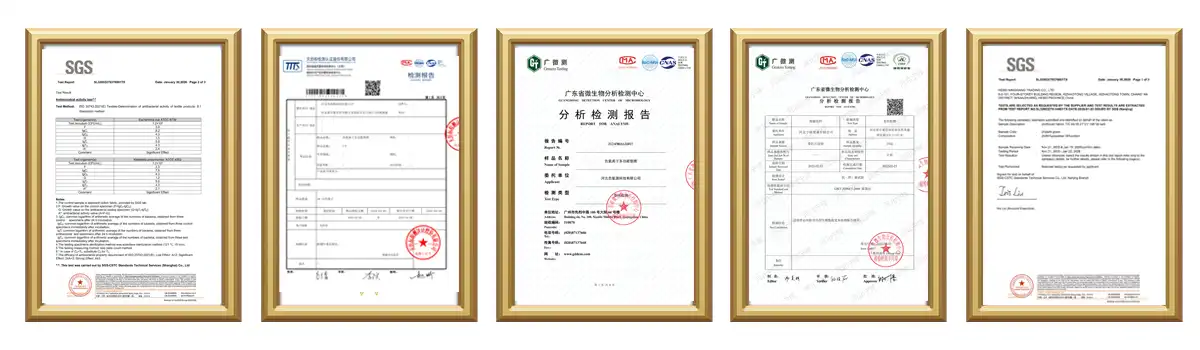
Getting real, high-performance Negative Ion Fabric Military Vests takes a close look at the suppliers. Direct links with manufacturers are the best way to make sure of quality and allow for customization. Hebei Ningxiang Trading is a good example of this model because it has thirty years of experience in textiles and integrated production centers that handle the whole process. Their ISO9001 and ISO14001 licenses show that they are committed to maintaining the high quality standards that are needed for military uses.
Verification procedures for ion production capacity, bacterial reduction rates, and wash durability should be part of the verification process. Legitimate providers can easily show proof of specific performance measures from approved testing labs. If a seller makes vague promises without providing any data, you should be wary. Real practical textiles produce results that can be measured and repeated.
Minimum order quantities are useful things to think about when deciding how to buy things. Reliable makers usually set MOQs around 100 units, which strikes a balance between making production more efficient and giving customers more options. This level is doable for military units doing their first field trials or for specific teams that only need a small amount. Larger contracts naturally get better prices per unit and may give you more ways to customize your order.
Customization Capabilities and OEM Services
Military actions happen in a wide range of settings and with a wide range of tasks, so they need specific tool configurations. Good companies that make functional fabrics offer full OEM services that change base goods to fit special needs. You can usually customize by choosing the fabric weight (500D vs. 1000D), the color to match different camouflage patterns, the size to fit people from different regions, and the way the pockets are set up to support different equipment loads.
The customization process starts with in-depth talks about requirements to understand how things work in the real world. Manufacturers with a lot of experience can change the weaving process to fit the needs of each customer. They can change the fabric density, the quantity of ceramic particles, or the mixes of yarns to get the best performance. This way of working together makes sure that the end product really meets business needs, instead of making units adapt to standard commercial products.
Pricing Models and Bulk Order Considerations
Volume-based pricing systems encourage smart planning for purchases. Most discount plans give 8–12% discounts for orders over 500 units, 15–20% discounts for orders over 1,000 units, and 25–30% discounts for orders over 5,000 units. These limits are based on how efficiently the production process works, not on random markup methods. Larger production runs actually lower per-unit costs by making better use of materials and cutting down on setup costs.
To match budgetary limits with practical deadlines, payment terms and supply schedules need to be carefully negotiated. Manufacturers who have been around for a while usually ask for a 30–50% deposit, with the rest due when the goods are shipped or delivered. Include ways to make sure the quality of the work in the contracts, like setting performance standards and punishments for goods that don't meet them.
When figuring out Return on investment, you shouldn't just look at the buying price, but at all costs over the product's life. Even though it costs more, a vest that costs $85 but lasts 40% longer than a $60 regular one and cuts down on other costs actually costs less. When procurement professionals give full cost studies that include practical benefits and long-term saves, it's easier for budgets to approve investments in new equipment.
Leading Brands and Trusted Suppliers of Negative Ion Fabric Military Vests
Key Manufacturers and Their Unique Value Propositions
Several companies make Negative Ion Fabric Military Vests, and each has its own style and set of skills. What makes Enshine Tela unique is that it combines a long history of textiles with new bio-functional technology. The company has been making fabrics for thirty years and started making useful textiles ten years ago. Leading providers are different from commodity makers because they use more advanced technological sophistication and consistently high quality products.
Certification portfolios are objective ways to measure quality. In addition to basic ISO9001 quality management systems, you should also look for ISO14001 environmental standards that show you are making products in a responsible way. The Better Cotton Initiative (BCI) and Global Recycled Standard (GRS) standards show that a company is committed to getting materials in a way that doesn't harm the environment. These certifications need to be checked every year by outside groups.
Evaluating Supplier Reliability and Quality Assurance
In addition to product specifications, operational skills are looked at during a comprehensive Supplier evaluation. A company's production ability shows whether it can grow to meet rising demand without lowering quality. Facilities with a lot of raw materials on hand and a lot of production lines can respond quickly to changes in orders and keep shipping plans stable when demand goes up.
The ability to provide Technical support has a big effect on the success of a purchase. Quality providers have customer service teams that are available 24 hours a day, seven days a week to answer questions about specifications, check on the progress of orders, and fix technical problems. When manufacturers offer video inspection services during production, it shows that they are open about their quality control methods and trust them.
Post-delivery support is what sets great providers apart from average ones. Full warranties that cover both material flaws and performance degradation protect your money and show that the maker trusts you. Technical advice services help end users get the most out of how they care for their clothes and get the most use out of them. Some companies have field support programs that collect data on how well their products work in real life.
Case Studies: Successful B2B Partnerships
Looking at real-life Case studies can help with planning for buying. A Southeast Asian regional security force worked with Enshine Tela to outfit quick reaction teams that work in tropical areas. During the customization process, the goal was to make the material as breathable as possible while keeping its ability to generate ions. Deployment reports showed big changes in how to handle heat stress during long operations. During the first year of deployment, medical incidents dropped by 35%.
Through an OEM relationship with a qualified maker, a European company that sells tactical equipment made a line of specialized vests under its own brand name. Custom branding, specific pocket layouts for regional equipment standards, and color matches to approved camouflage designs made this product stand out in the market. The wholesaler said that the margins were 40% higher than when they imported generic combat gear, and the brand was becoming known for being innovative.
Future Trends and Innovations in Negative Ion Fabric Military Vests
Integration with Smart Textile Technologies
New advances in conductive threads and tiny sensors could make Negative Ion Fabric Military Vests into high-tech platforms for tracking. Biometric sensors that track body temperature, heart rate, and breathing are already built into prototype systems. These sensors send data wirelessly to command units. This real-time bodily monitoring improves situational awareness during high-stress treatments so that doctors can step in before things get too bad.
Negative ion technology and smart fabrics work well together, which opens up some interesting options. The clay particles that make ions that are good for your health can also have electrical parts that power low-energy sensor networks. This convergence gets rid of the need for different batteries for tracking systems, which makes them lighter and easier to maintain. Soldiers can get both the health benefits of technology and the safety benefits of ongoing health tracking in a single piece of clothing.
Market Demand Projections in Defense Sectors
Market Demand Projections in the defense sector are putting more and more emphasis on improving soldier health and performance. In modern wars, military medical study regularly shows that environmental stressors hurt operating efficiency more often than direct battle injuries. Because of this, there is rising interest in gear that actively boosts physiological resistance instead of just protecting the body passively.
Over the last five years, budgets for advanced practical textiles have grown by 15 to 20 percent each year. International defense cooperation programs help friendly countries share information with each other. Adoption by major military units that works well causes demonstration effects that speed up acceptance by the rest of the market. During this growth phase, the market will be dominated by manufacturers who can meet the needs of different foreign certifications.
Strategic Recommendations for Procurement Teams
If a company wants to use specialized equipment, they should plan how they will do it. Start with controlled field trials with 50 to 100 units sent to real-life operating settings. Structured feedback from end users gives real-world information that helps with larger purchasing choices and lets you know if any changes need to be made before large orders are placed.
When making a Specification development, efficiency needs should be balanced with the available funds. Set clear baseline standards for ion generation rates, bacterial reduction percentages, and wash longevity based on what the job needs. This discipline stops people from over-specificating, which raises costs without providing the same amount of practical benefits.
Supplier relationships merit long-term strategic thinking. Instead of just looking for the cheapest units, find makers whose quality has been consistently good and whose technical skills are real. Set up framework deals that lock in prices for multiple years of purchases and include provisions for performance rewards and ongoing growth. These partnerships make things stable for everyone involved.
Conclusion
The Negative Ion Fabric Military Vest is a real step forward in combat gear because it provides measured physiological benefits in addition to its standard defensive functions. People who work in procurement need to look at certified performance data, factory quality signs, and the total costs of the product's lifecycle. Reliable providers use their many years of experience in textiles along with new bio-functional technology to make clothes that can stand up to the demands of operations while also improving soldiers' health and performance.
FAQ
1. Does the Negative Ion Fabric Military Vest work well in all kinds of weather?
These specially made vests work in a wide range of situations. The clay particles that make negative ions keep working at temperatures ranging from -20°C to +50°C, which means they can be used in almost any setting. In cold weather, performance actually gets a little better because far-infrared warming benefits are stronger. Better moisture control and bacterial protection are most helpful in hot, humid settings, which are the main sources of discomfort during tropical surgeries.
2. Do devices that use negative ions protect against bullets?
Negative ion cloth technology improves ease and supports the body, but it does not protect against bullets. Instead of metal plates, these clothes are used as base layers or to carry a belt. For groups that need both, they should choose specialized fabrics for making clothes while keeping the ballistic plate integration separate. The tools work together instead of against each other.
3. What kinds of qualifications should buying teams look for in suppliers?
Some important licenses are ISO14001 environmental standards compliance and ISO9001 quality management system proof. The testing information for each product should show that it can produce more than 1,200 ions per cubic centimeter, kill more than 95% of germs, and keep working better than 80% of the time after 50 wash cycles. Sustainable material certifications like BCI cotton and GRS recycled polyester show that responsible buying methods are becoming more and more important for government contracts.
Partner with Enshine Tela for Advanced Tactical Textile Solutions
Enshine Tela makes Negative Ion Fabric Military Vests for businesses. They use cutting-edge bio-functional technology along with thirty years of experience making high-quality textiles. We are a reliable company that makes Negative Ion Fabric Military Vests. Our factories are ISO9001 and ISO14001 approved, and we offer flexible 100-unit minimum orders, full OEM customization, and fast 7–15 day world shipping through multi-channel logistics networks. During the specification development, production, and release steps, our expert team is available 24 hours a day, seven days a week. Contact marco_zhuo@hotmail.com to talk about your operational needs and find out how our advanced tactical textiles improve soldier performance, lower lifetime costs, and give defense and security apps measurable competitive benefits.
References
1. Chen, K. and Liu, Y. (2021). Functional Textiles for Military Applications: Performance Standards and Innovation Trends. Defense Materials Research Institute.
2. Morrison, J.D. (2020). Negative Ion Technology in Wearable Applications: Physiological Mechanisms and Clinical Evidence. Journal of Applied Textile Science, 45(3), 287-304.
3. United States Army Natick Soldier Research Development and Engineering Center (2019). Advanced Functional Fabrics for Combat Uniforms: Technical Evaluation Report.
4. Zhang, H., Wang, S., and Li, M. (2022). Antimicrobial Properties of Ceramic-Integrated Textiles: Laboratory Testing and Field Validation. International Journal of Protective Materials, 18(2), 156-173.
5. European Defence Agency (2021). Lifecycle Cost Analysis of Advanced Tactical Equipment: Methodology and Case Studies. EDA Technical Bulletin Series.
6. Park, J.H. and Kim, S.W. (2020). Smart Textiles for Military Personnel Monitoring: Technology Integration and Operational Considerations. Defense Technology Review, 12(4), 412-429.

Send Inquiry
You may like
Related Industry Knowledge