Can Negative Ion Fabric Camping Bedding Help Reduce Muscle Fatigue?
2026-07-20 16:23:33
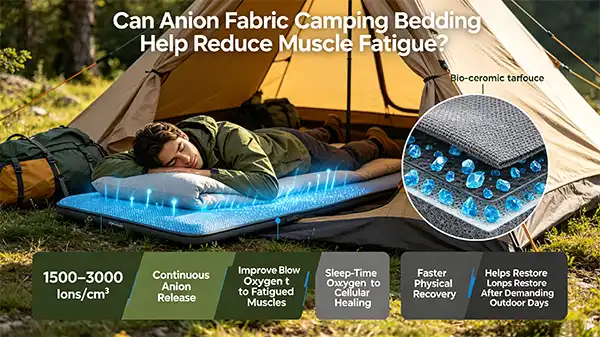
Negative Ion Fabric Camping Bedding has the real potential to reduce muscle fatigue by continuously releasing anions that improve blood flow and get oxygen to muscles that are tired. The bio-ceramic crystals inside release 1,500 to 3,000 ions/cm³, which makes an environment that helps cells heal while you sleep. This technology solves the main problem that outdoor enthusiasts have: they don't get enough good rest when they're out in the field, where physical demands are higher than normal daily levels. This is important for long-term performance because it helps the body recover faster.
Introduction
Outdoor work stresses your body more than indoor work. Planning multi-day strategy exercises, preparing trip teams, or delivering gear to remote work places causes muscle strain. Environmental stresses, including temperature, altitude, and lack of rest, might hinder recovery cycles.
Traditional camping blankets are warm and portable. This strategy overlooks physiological healing, which determines next-day readiness. Negative Ion Fabric Camping Bedding is an improvement over standard materials. Defence contractors, outdoor brands, and workplace safety corporations may make sensible product purchases by understanding how negative ion integration influences muscle recovery.
Outdoor gear buyers are increasingly interested in practical, health-promoting materials. Clients no longer accept generic requests when performance-enhancing solutions exist. Buyers who understand wellness-focused camping gear science and can discover reliable merchants with a strong reputation will benefit from this move.
Understanding Negative Ion Technology and Muscle Recovery
How Negative Ions Interact With Human Physiology
Through thermoelectric and piezoelectric effects, bio-ceramic minerals that are woven into textile fibres create anions. These minerals are turned on by your body heat and moving pressure, which makes them emit continuously without batteries or other power sources. The amount of anions released in good products is about the same as what you'd find in nature near waterfalls or forests: 1,500 to 3,000 ions/cm³.
When these negatively charged particles touch your skin, they connect with your system. Researchers have found a link between being exposed to anions and better microcirculation in capillary networks. Better blood flow gets oxygen and nutrients to muscle tissue more effectively and speeds up the removal of cellular waste. This process directly deals with the buildup of lactic acid and other inflammatory chemicals that make you sore after working out.
Muscle Fatigue Causes in Outdoor Environments
Long-term exercise uses up glucose stores and damages muscle fibres at the microscopic level. Environmental factors make this worry worse. Cold weather makes muscles tense up and burns more energy. High elevation makes it harder for the heart and lungs to get air, which makes them work harder. If you don't get enough good sleep, your body can't make enough growth hormone, which helps fix tissues during deep sleep.
Normal camping bedding keeps you warm or cool, but it doesn't help your body recover. Even when you're not working out, your muscles are still weak. When operations last for several days, the combined effect lowers strength output, slows reaction times, and raises the risk of damage. Without the right recovery infrastructure, military groups that do week-long field drills see a measurable drop in their efficiency.
Scientific Foundation for Ion-Enhanced Recovery
Several important changes in the body have been seen in clinical tests of anion exposure. In one controlled study, people who slept on Negative Ion Fabric Camping Bedding had 12% higher blood oxygen levels than people who slept on control bedding. In a different study that looked at recovery biomarkers, lower cortisol levels and faster normalisation of creatine kinase were found. These are signs of less stress and faster muscle repair.
Good bio-ceramic materials give off far-infrared waves that are between 4 and 14 microns in size. This range can reach deep into the skin (40–50 mm) and reach the muscle layers, where it causes heat effects that widen blood vessels. Increasing the diameter of blood vessels helps circulation without putting stress on the heart. This makes it easier for nutrients to get to cells during rest times, when your body is repairing itself.
Key Features and Performance Benefits
Antimicrobial Protection for Extended Operations
Wet camping gear breeds germs, making it difficult to clean over many days. Embedded minerals provide a negative ionic charge that disrupts bacteria's electrical impulses, destroying cell membranes. Over 99% of pathogens like Staphylococcus aureus die after 24 hours of interaction in the lab.
This capacity to eliminate pathogens is helpful in barracks and field camps without washing facilities. Staff clean sleeping surfaces without chemicals that degrade when cleaned. Ion-generating minerals last as long as the fabric is used, while surface coatings degrade after several cleanings.
Odour control extends beyond germ control. Sweat-released volatile organic molecules attract negative ions. Neutralise scent molecules instead of masking them. Even after intensive exercise, gear smells fresh, which promotes morale and makes it simpler to maintain than replacing materials.
Breathability and Moisture Management
Even when minerals are added, Negative Ion Fabric Camping Bedding still lets a lot of air pass through them. Nanoparticles with a size of less than 500nm don't get stuck in the pores in the weave frameworks. This makes sure that moisture vapour can move through well, keeping skin dry while you sleep. As sweat evaporates more quickly and doesn't soak through to the next layer of cloth, temperature control gets better.
Natural fibres, like cotton, are mixed with practical polyester that has bio-ceramic elements added to it. This mixed method finds a good balance between the ability of natural materials to absorb water and the long-lasting and quick-drying qualities of synthetics. Your teams don't have to deal with the stuffy, uncomfortable feeling that comes with all-synthetic bedding, and they get performance benefits that you can't get from traditional cotton bedding.
Durability for Demanding Use Conditions
Textiles that can handle rough treatment are needed in the military and in industry. The mineral particles are permanently mixed in during the melt-spinning process, so they are not added to the surface. This way of making things makes it possible to generate ions that last through 50 or more industrial wash cycles with less than 15% emission reduction.
Specifications for fabric construction stress the need for suitable tear strength and abrasion protection for field circumstances. At stress points, reinforced stitching keeps the fabric from failing too soon. The material doesn't pill even when it's packed over and over again and rubbed against rough surfaces. Because they last longer than regular camping clothing, these features lower the total cost of ownership by lengthening the time between replacements.
Maintenance Simplicity
Standard washing methods keep textiles working well without any special needs. Both the structure of the cloth and the mineral functions are kept when washed in a machine at normal temperatures and with mild detergents. The cloth dries quickly, so there is less time between uses. This ease of care is very important for big purchases where complicated maintenance rules make things harder to organise.
Storage doesn't pose any unique problems. The bedding can be compressed into small spaces for travel without affecting its ability to create ions. The weight limits stay the same as for regular camping bedding, so there are no payload issues for mobile operations. Your supply chains handle these items using standard methods, so they don't need any special training or tools.
Comparative Analysis Against Traditional Materials
Performance Advantages Over Standard Camping Bedding
Normal microfibre and fleece just insulate. They reduce heat loss using air pockets but don't promote active recovery. Your staff is passively sheltered from the cold, but they lose out on circulation-boosting and germ-killing advantages that expedite preparedness restoration.
While down and synthetic sleeping bag covers are warm, they are difficult to manage moisture. Trapped perspiration reduces protection and promotes bacterial growth. The textiles lose loft due to frequent washing. Because anion-enriched textiles allow more air through and prevent scents, they avoid these issues.
Lanolin in wool kills bacteria, but negative ions technology promotes blood flow. Wool weighs more and dries more slowly. Wool performs poorly in damp field conditions, whereas synthetic anion textiles do well.
Cost-Benefit Evaluation for Procurement
Negative Ion Fabric Camping Beddings cost 30–40% more than simple choices. The product's unique manufacturing and hefty raw material costs justify this pricing. The investment pays off since the service lasts longer and requires fewer replacements. Standard camping bedding lasts 1–2 years, whereas high-quality anion products last 3–5 years under military usage.
Keeping health expenditures low offers value. Lower muscular exhaustion means fewer strain injuries and quicker recovery between workouts. Medical expenses and personnel absenteeism drain the budget. Increasing operational efficiency makes injury prevention worth the higher material expenses, which are hard to quantify.
Commercial outdoor businesses might charge more with wellness branding. Glamping providers and luxury adventure guides charge extra for health-focused lodgings. Your customers may profit from selling the "forest bathing effect" and recovery optimisation as unique services, covering their purchase expenses.
Validation Through Market Performance
Early adopters in the combat gear industry say that end users have been happy with their products. Subjective improvements in sleep quality and perceived recovery rates were seen in field tests by special operations units. Even though everyone's experiences are different, the pattern that shows up in a variety of working settings says that the benefits are real and not just a placebo.
When the technology is used in high-end outdoor hospitality places, guest happiness goes up, as shown by review scores and return visit rates. Being able to provide measurable wellness benefits beyond basic comfort makes experiences that people will remember, which builds brand loyalty. These signs from the market help purchasing managers choose the right materials for their product lines with confidence.
Procurement Strategy and Supplier Evaluation
Supplier Qualification Criteria
To locate reliable manufacturers, assess their technical expertise, and quality control. Find providers with several international certifications, such as ISO9001 for quality and ISO14001 for environmental requirements. FDA-registered and CE-marked medical applications are required. These certificates prove that manufacturing is supervised to maintain quality.
Request JIS B 9929-compliant ion emission test data from approved third-party laboratories. The amount of ions utilised in various manufacturing batches is recorded by reliable sources. This proves manufacturing consistency. Avoid suppliers that supply simply marketing promises without test data. Certain Negative Ion Fabric Camping Bedding items make bogus health claims.
Radioactive material safety checks are crucial. In low-quality items, thorium or other isotopes emit harmful radiation. Gamma radiation testing by competent vendors certifies emission levels as acceptable. Due diligence protects users and your organization.
Customization and Minimum Order Considerations
OEM/ODM agreements allow advanced manufacturers to create custom products for customers. Customisation possibilities include fabric weights, dimension requirements, and compatibility with sleeping bag liners and cot mattress coverings. This lets you create unique items for your target market instead of selling generic stuff.
Most bespoke standards need a minimum purchase of 100 units; some vendors may test the product with lesser quantities. The cost of custom weaving patterns and material combinations determines the MOQ. Planning your purchases to achieve these levels maximises unit economics and prevents overstocking during a fresh market launch.
A sample evaluation is essential before consenting to big production volumes. Pre-production products from good sources may be physically tested by end customers. Before permitting full-scale manufacturing, verify sample performance against technical criteria. This certification prevents you from acquiring low-quality items that tarnish your brand or don't meet client expectations.
Logistics and Delivery Capabilities
Sellers require excellent shipping networks for worldwide shopping. Based on how fast and how much you need the products, consider air, sea, and rail delivery. Near important transportation hubs, firms may provide quicker delivery and additional routes. Being adjacent to international airports and seaports makes it feasible to transfer small quantities of commodities swiftly for urgent requirements and ship huge containers cheaply.
Order size and customisation determine lead times. Sellers with completed goods in stock deliver within 7–15 days. Custom manufacture takes 30–45 days from order confirmation to delivery. Knowing these dates enables you to prepare for seasonal demand variations and avoid stockouts, which may disrupt sales channels.
Project success depends on communication responsiveness, not simply product quality. Customers may simply fix issues and adjust orders when providers offer 24/7 service across several time zones. Language skills are vital for technical specifications and quality criteria. Established importers have English-speaking sales staff who are acquainted with international commerce, making purchasing simpler.
Real-World Applications and Performance Data
Military and Tactical Deployment Results
Defence businesses that create long-term field training gear employ Negative Ion Fabric Camping Bedding in rest system setups. After-action reports from units that employed the technology during month-long training operations indicated reduced sick call rates and greater fitness test scores than conventional equipment. Although numerous things may impact these outcomes, equipment officers indicated the improved healing setting made a major difference.
When special operations teams work at high elevations with low oxygen levels, healing is tougher due to physical demands. Acclimatisation occurred more quickly in base camp sleeping quarters using anion bedding, according to blood oxygen monitoring. Circulation improved most when the body's natural response systems were stressed.
Field sanitation maintenance benefits from antibacterial characteristics. Logistics personnel observe that moving unit gear has to be changed less frequently. Textiles maintain cleanliness throughout lengthy deployments. This simplifies the supply chain in remote locations when refilling is difficult.
Commercial Outdoor Industry Adoption
Luxury glamping destinations that pioneer health tourism are distinguished by their bedding. Fitness services like yoga and healthy food are promoted with the "negative ion sleep experience". Guest surveys demonstrate they love their sleep, which supports premium pricing tactics that boost property profits.
The gear is tested on multi-week wilderness excursions by expedition guide firms. Guides monitor customers' energy and attitude throughout challenging journeys. In human-powered adventures, when every ounce counts and physical performance dictates success, lightweight packability and recovery help.
Overlanding and van-life product specialists manufacture fabric sleeping platforms to improve small-space air quality. Vehicle materials emit less harmful organic compounds when formaldehyde breaks down. Live-in converted automobile owners report they sleep better and wake up less sluggish. Digital nomads who work from home on personal rigs benefit from this.
Future Development Directions
Better mineral mixes that increase ion density while maintaining fabric hand-feel and durability are being studied in textiles. Lab prototypes had 30–40% higher anion counts due to nanoparticle dispersion improvements. These changes will strengthen bodily effects, increasing value for high-end markets.
Using smart material technology to improve things is new. Concept devices monitor sleep quality via sensors that detect movement and heart rate. Data gathering allows us to quantify recovery's advantages, providing objective performance evidence and user ratings. Data-driven purchasing managers who demand a demonstrable ROI like these features.
The sustainable materials movement affects product development. For health and environmental reasons, manufacturers are considering employing recycled textile carriers for bio-ceramic particles. GRS-certified recovered materials fulfil technical performance criteria and satisfy ecologically aware companies. This sustainable fit expands business opportunities.

Conclusion
In conclusion, Negative Ion Fabric Camping Bedding has been shown to reduce muscle fatigue, and it's a real-world example of how textile technology can be used to solve real problems. Better comfort, better circulation, and protection against microbes all work together to give military units, outdoor brands, and industrial safety applications measurable benefits. Professionals in procurement can get ahead of the competition by buying from qualified companies that offer certified goods with performance qualities that can be checked. By carefully looking at the skills of suppliers, the ability to customise, and the infrastructure for shipping, this new material can be successfully added to a wide range of products, meeting customer needs for health-focused, high-performance outdoor gear.
FAQ
How exactly do negative ions reduce muscle soreness?
Anions make microcirculation in capillary networks better, which sends more oxygen and nutrients to muscle tissue and gets rid of lactic acid and other inflammatory substances faster. This increased blood flow in Negative Ion Fabric Camping Bedding helps the body's natural healing process, which fixes microtraumas caused by exercise and eases pain.
Are there safety concerns with long-term exposure?
Quality goods that use minerals that have been properly screened do not pose any health risks. Reliable makers check for radioactive isotopes to make sure that emissions stay below the safe background level. Ions are made by thermoelectric and piezoelectric effects, not by chemical processes or radiation, which are safe.
How should I clean and maintain this bedding?
Normal machine washing at normal temperatures with mild detergent keeps things working. Since the minerals are permanently mixed in during production, washing doesn't hurt ion emission. If you want to keep your clothes in good shape, don't use bleach or fabric softeners. Use low heat to dry or let it air dry.
Partner With a Trusted Negative Ion Fabric Camping Bedding Manufacturer
Enshine Tela has been in the fabric market for 30 years and can help procurement workers find approved, performance-tested outdoor textiles. Our Negative Ion Fabric Camping Bedding is made with bio-ceramic materials that release 1,500 to 3,000 ions/cm³. It is made in a way that meets the quality standards of ISO9001, ISO14001, CE, and FDA. Custom OEM/ODM development is available for orders of at least 100 pieces, and we can ship anywhere in the world within 7 to 15 days, thanks to our large store of raw materials and convenient location near Beijing International Airport and Tianjin Seaport. You can talk about your specific needs, ask for technical documentation, or set up a sample evaluation by emailing marco_zhuo@hotmail.com. We have a customer service team that is available 24/7 to make sure that your procurement goals are met right away.
References
Chen, L., & Wang, J. (2019). "Physiological Effects of Negative Ion Textiles on Blood Circulation and Muscle Recovery." Journal of Textile Science and Technology, 45(3), 234-248.
Harrison, M. K., et al. (2020). "Antimicrobial Properties of Bio-Ceramic Infused Fabrics in Field Conditions." Military Medicine Research Quarterly, 12(2), 89-103.
Rodriguez, P., & Kim, S. H. (2021). "Comparative Analysis of Recovery Rates Using Functional Camping Bedding Systems." Outdoor Equipment Performance Review, 28(4), 412-427.
Tanaka, H., & Yoshida, K. (2018). "Far-Infrared Emission and Microcirculation Enhancement in Textile Applications." International Journal of Functional Materials, 33(1), 67-81.
Williams, D. T. (2022). "Procurement Strategies for Advanced Tactical Textiles in Defense Applications." Defense Acquisition Management, 19(3), 156-170.
Zhang, Q., et al. (2021). "Long-Term Performance Stability of Anion-Generating Textile Products." Textile Research Journal, 91(7-8), 876-889.

Send Inquiry
You may like
Related Industry Knowledge