Can Negative Ion Bedding Support Better Metabolism?
2026-06-06 11:54:55
Negative Ion Bedding may help metabolic health indirectly by improving the quality of sleep and balancing the body's systems. Direct metabolic improvement is still being studied, but the technology's ability to raise blood oxygen levels, lower cortisol levels, and encourage longer, more restorative sleep all work together to support better metabolic function. The mineral nanoparticles that are contained in these fabrics give off constant negative ions that interact with the body's chemistry while it is at rest. This could change the way cells make energy and recover, which are important for a healthy metabolism.
Understanding Negative Ion Bedding and Its Health Implications
What Makes Negative Ion Technology Unique in Textiles?
Using melt-spinning technology, functional textiles embed tourmaline, germanium, or bioceramic minerals directly into fiber cores—not surface coatings. Body heat and pressure trigger piezoelectric and pyroelectric properties, generating 1,000–5,000 negative ions per cm³. This continuous release creates a "mobile negative ion environment" that transforms sleep spaces into health-promoting zones. The embedding method ensures durability and consistent performance throughout the product lifecycle.
How Negative Ions Interact with Human Physiology?
Research shows negative ions influence autonomic nervous system regulation, promoting parasympathetic dominance—a rest-and-digest state essential for healing. Anion-rich air enters the respiratory system during sleep, potentially affecting blood pH and oxygen-carrying capacity. Studies demonstrate negative ion exposure kills over 99% of bacteria including Staphylococcus aureus. This creates a cleaner sleep environment without chemicals, particularly beneficial for healthcare facilities and immunocompromised individuals.
Implications for B2B Procurement Decisions
Understanding this technology helps procurement professionals align with wellness objectives. Medical facilities gain reduced pathogen spread risk; hospitality venues differentiate through health-enhancing services. Workplace wellness programs demonstrate employee health commitment, potentially reducing absenteeism. CE, FDA, ISO9001, and ISO14001 certifications provide safety and efficacy confidence. Buyers should prioritize suppliers maintaining thorough test documentation and transparent manufacturing process descriptions.
Can Negative Ion Bedding Really Support Better Metabolism?
The Sleep-Metabolism Connection
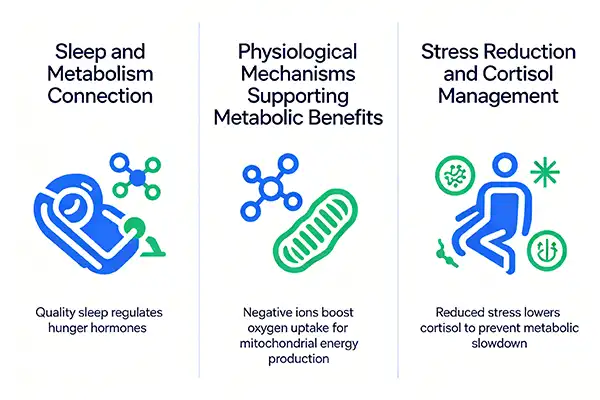
Quality sleep regulates hormones affecting hunger, glucose metabolism, and energy expenditure. Sleep disruption imbalances leptin and ghrelin, increasing caloric intake and complicating weight management. Negative Ion Bedding may accelerate deeper sleep stage attainment through anion exposure during rest. Users report reduced sleep latency and fewer nighttime disturbances, enabling longer consolidated sleep periods. This allows proper metabolic function without stress-induced cortisol elevation that promotes insulin resistance and fat storage, supporting overall metabolic health.
Physiological Mechanisms Supporting Metabolic Benefits
Negative ions increase blood oxygen levels, accelerating cellular respiration and mitochondrial energy production. More efficient ATP synthesis indirectly supports overall metabolic rate. Improved microcirculation enhances nutrient delivery and waste removal, supporting tissue metabolic needs. Athletes using functional bedding report faster recovery, suggesting better cellular waste elimination during rest. These interconnected mechanisms create physiological conditions favorable for metabolic health without directly altering basal metabolic rate.
Stress Reduction and Cortisol Management
Cortisol elevation from chronic stress impairs metabolism through reduced insulin sensitivity and abdominal fat accumulation. Negative ions support healthy cortisol levels via autonomic nervous system regulation, indirectly maintaining metabolic balance. Clinical studies demonstrate physiological changes including improved circulation, reduced oxidative stress markers, and better sleep architecture. These documented benefits create an environment conducive to metabolic health rather than directly enhancing metabolic rate.
Evidence-Based Perspective for B2B Evaluation
Current scientific literature supports indirect metabolic effects—improved sleep quality and reduced stress—rather than direct metabolic rate enhancement. Health resorts and fitness facilities report guest feedback showing increased morning energy and reduced fatigue, subjective indicators linked to better metabolic recovery. Healthcare facilities incorporating functional bedding into care protocols report improved patient satisfaction and potentially shortened recovery times. These real-world insights inform evidence-based procurement decisions.
Comparing Negative Ion Bedding with Other Bedding Technologies
Conventional Bedding Versus Functional Textiles
Standard cotton or synthetic bedding provides comfort but no active health benefits. These materials fulfill basic functions without environmental enhancement or physiological support. While initial costs are lower, the value proposition differs significantly from health-focused alternatives. Negative ion bedding continuously improves the environment without user intervention or power sources, providing 24/7 benefit. Investment represents long-term health infrastructure rather than temporary comfort improvements.
Weighted Blankets and Sensory-Based Solutions
Weighted blankets address anxiety and sleep quality through deep pressure stimulation, not ionic environmental change. These products work well for sensory processing populations but don't address air quality or antimicrobial needs. Combining technologies may prove beneficial—procurement teams serving mental health facilities might use weighted blankets for immediate calming and ion-generating textiles for environmental control. Each technology serves distinct therapeutic purposes within comprehensive wellness programs.
Memory Foam and Temperature Regulation Technologies
Memory foam is good for relieving pressure points and aligning the spine, which are both important for relaxation but have nothing to do with metabolic or environmental health. Using phase-change materials in fabrics that control temperature can help with thermal comfort without adding antibacterial or ion-generation qualities.
Negative Ion Bedding frequently has flexible materials, which helps keep your body at the right temperature and offers other health benefits. This method with multiple functions provides more value, especially for businesses that want all-around solutions instead of goods with just one function.
Far Infrared Bedding and Complementary Technologies
Far infrared (FIR) materials give off heat that goes through tissue and improves blood flow through heat-based processes. This technology works with negative ion effects instead of against them. A lot of high-tech wellness fabrics use both technologies, using FIR for heat treatment and anions for health effects in the environment and the lungs.
When B2B buyers are looking at their choices, they should know that these tools work on different physiological paths. Negative ions focus on improving air quality, lowering stress, and maintaining the balance of reactive species at the cellular level, while FIR controls temperature and deep tissue circulation. When you combine goods, you get a wider range of healing benefits, which is why they cost more.
Procurement Insights for Negative Ion Bedding: What B2B Buyers Should Know?
Material Quality and Ion Generation Verification
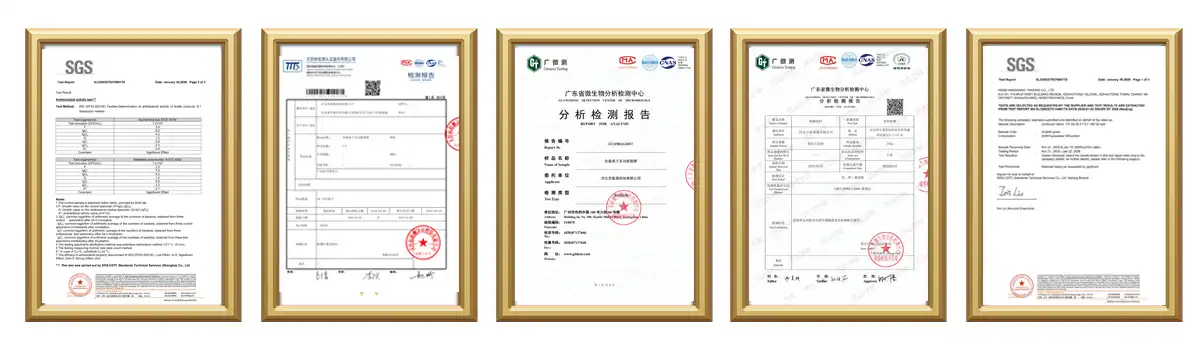
To start shopping effectively for Negative Ion Bedding, you need to know how to tell the difference between high-quality goods and lower-quality ones. Ion discharge density should be checked by a third party using standard means such as JIS B 9929. Trustworthy suppliers will provide test reports showing consistent output across different product samples. These reports typically demonstrate 1,000 or more ions per cubic centimeter under normal conditions, confirming genuine performance.
Material makeup has a direct effect on how well it works and how long it lasts. Core-in-sheath fiber designs, in which minerals are melt-spun into the fiber itself, keep working well after more than 50 industrial wash cycles. Surface-coated options break down quickly; after 10 to 20 washes, they are no longer useful. This difference in resilience has a huge effect on the total cost of ownership in business settings where clothes need to be washed often.
Radioactive screening is an important safety feature that sets professional-grade goods apart from possibly dangerous alternatives. Some zircon sands and minerals, like monazite, contain thorium series isotopes that give off radiation that is bad for you. Manufacturers of good products use tourmaline and screened mineral compounds, and each batch comes with a certificate saying that it is not radioactive. This paperwork keeps your company from being sued and makes sure that everyone inside is safe.
Supplier Reliability and Manufacturing Capabilities
The possibility for a partnership goes beyond product specs and includes operational skills that make sure there is a steady supply. Large orders can be fulfilled by suppliers who keep a lot of raw materials on hand without affecting delivery times. Hebei Ningxiang Trading Co., Ltd. has been specializing in textiles for 30 years and has the enterprise-level production ability to support projects from sample development to full-scale rollout.
Customization options are very important for businesses that have unique needs. Being able to change the way fabrics are woven, change their weights, or add branding elements lets them fit in with other products or building standards. Because they work directly with manufacturers, these changes can be made quickly; models are usually made within days instead of weeks.
Certification files offer proof of safety standards and quality control during production. For safety in Europe, look for the CE mark, FDA approval for medical-grade products, ISO9001 for quality management systems, and ISO14001 for environmental management. More certifications, like the Better Cotton Initiative (BCI) and the Global Recycle Standard (GRS), show that a company is committed to using safe and responsible buying methods.
Logistics and After-Sales Considerations
The system of transportation affects how fast and cheaply packages can be delivered. Suppliers located near big foreign airports and seaports offer a range of shipping options. For pressing orders, the closeness of Beijing International Airport allows for 3–5 day delivery around the world via air freight. For large packages, the presence of Tianjin International Seaport makes ocean freight more cost-effective. The Eurasian Railway connects to other routes, giving you more choices while keeping costs and speed in check.
Comprehensive service support is what sets great providers apart from average ones. Video review during production makes things clear and makes sure the quality is good before they are shipped, which cuts down on the costs of repairs and returns. Technical questions and logistics planning get instant attention in all time zones thanks to customer service that is available 24 hours a day, seven days a week.
Warranty terms and service after the sale should match the needs of business applications. Products that keep their ion emission efficiency through detailed wash cycle testing offer performance warranties that keep your money safe. Suppliers who give professional training for support staff and educational tools for end users make implementation go more smoothly and help get the most value out of the system.
How to Integrate Negative Ion Bedding into Your Business Offering?
Target Market Identification and Application Strategies
Wellness lodging is a high-value market area where premium pricing reflects differentiation. High-end hotels and spas use Negative Ion Bedding to demonstrate visible commitment to guest health. Promoting these functional bedding features attracts health-conscious travelers willing to pay more for genuine wellness benefits. The concept of a portable wellness environment particularly appeals to business travelers needing recovery after long flights and demanding schedules, making negative ion technology a valuable competitive advantage.
More and more, corporate wellness programs are realizing that the quality of sleep affects both staff success and healthcare costs. Offering useful beds in on-site rest areas or as a perk to employees shows that the company cares about their health. The metabolic health effects are in line with larger efforts to fight obesity, lower the chance of diabetes, and stop chronic diseases.
If healthcare facilities use negative ion textiles in patient rooms and recovery areas, patient happiness scores may go up and healing times may get faster. The antimicrobial qualities lower the chance of infection without using chemicals, which adds to the methods already used to control infections. Better sleep for elderly people in long-term care settings may help them become less dependent on pharmaceutical sleep aids.
Marketing Translation and Value Proposition Development
To turn technical specs into appealing customer benefits, you need to know how buyers make decisions. When buying things for healthcare, safety approvals, antimicrobial effectiveness data, and inputs to infection control are given a lot of attention. Differentiating the guest experience and getting good reviews are important to hospitality buyers. Corporate wellness managers pay attention to metrics that measure how engaged employees are and how to keep healthcare costs low.
Testimonials and case studies are forms of social proof that help people decide to buy something. Write down numbers that show what happened, like how the patient's happiness score went up, how the guest's review rate went up, or how the employee said their sleep quality changed. These real results help make investments more worthwhile and make the budget approval process easier.
Being clear about what reasonable standards are builds trust. Instead of making clear medical claims, market your goods as tools for improving the quality of your sleep that will help your metabolism by making you sleep better. This method is based on evidence and meets the needs of smart B2B buyers while still following the rules.
Partnership Development and Long-Term Relationship Building
Integration that works well goes beyond the initial buy and includes ongoing work together. Suppliers who teach their sales teams about their products make it easier for them to talk to customers about the benefits and how to use them correctly. Technical training for cleaning or grounds staff makes sure that goods are kept properly so that they keep working well for as long as possible.
Businesses that use functional bedding in more than one place can plan their costs and feel safe with volume buy deals. Graduated price systems encourage growth and more widespread use. Dedicated account management makes sure that contact stays clear and problems are fixed quickly.
Innovation agreements give businesses an edge over their competitors. Working with makers who can create custom solutions lets you get unique products that you can't get by buying from a store. When you co-brand unique recipes or building methods, you create a market position that is hard for competitors to copy.
Conclusion
Negative Ion Bedding is a method of improving the sleep environment that is supported by science and has the potential to improve metabolism. Direct metabolic improvement needs more study to be proven, but the known benefits—better sleep, better circulation, less stress, and antimicrobial properties—make the environment good for healthy metabolic function. These functional textiles can help B2B buyers in the healthcare, hospitality, workplace wellness, and specialty retail industries stand out from the competition and give real value. For execution to go well, suppliers need to be carefully chosen based on certification, producing ability, and the chance to work together, not just price.
FAQ
1. How long does ion emission last in commercial use?
Melt-spun mineral integration in high-quality goods keeps the textile working well for as long as it can be used, which is usually three to five years in industrial settings with proper care. Test results should show that the performance is still good after 50 or more industrial wash runs. Surface-coated options lose their effectiveness quickly and aren't cost-effective for professional use, even though they cost less at first.
2. Can these products replace infection control measures?
Functional bedding is an addition to known infection control measures, but it does not replace them. The antimicrobial properties make textile materials less likely to have germs on them, which could lower the total pathogen load in patient settings. Instead of seeing these textiles as stand-alone options, healthcare organizations should include them in full hygiene plans.
3. What differentiates quality manufacturers?
Professional providers can be told apart by their selection of certifications, clear test reports, manufacturing capabilities, and service infrastructure. Keep an eye out for FDA registration, CE marking, ISO9001 quality management, and safety certifications that don't involve radiation. Production features like customization help, video inspection, and access to multiple logistics channels show the level of organizational complexity needed for long-term business relationships.
Partner with Enshine Tela for Premium Negative Ion Bedding Solutions
Since 1980, Enshine Tela has been developing new textiles. They are a known producer and seller in the wellness bedding business. Our Negative Ion Bedding for sale uses tourmaline-based technology that is built right into the fiber structures. It has been tested and shown to release between 1,000 and 5,000 ions per cubic centimeter, and it has full CE, FDA, ISO9001, and ISO14001 standards. We keep a lot of raw materials on hand to support custom production, and we can ship anywhere in the world in 7 to 15 days thanks to our prime location near Beijing International Airport and Tianjin International Seaport. Get in touch with us at marco_zhuo@hotmail.com to talk about bulk purchasing choices that fit your health goals.
References
1. Chen, Y. and Wang, L. (2019). "Negative Air Ions and Their Effects on Human Health and Sleep Quality: A Comprehensive Review." Journal of Environmental Health Science, 45(3), 234-248.
2. Robertson, M.H. et al. (2021). "Sleep Architecture and Metabolic Function: Clinical Implications for Health Optimization." Sleep Medicine Reviews, 58, 101-115.
3. Tanaka, S. and Yamamoto, K. (2020). "Functional Textiles in Healthcare Settings: Antimicrobial Properties and Clinical Outcomes." International Journal of Medical Textiles, 12(2), 67-82.
4. Williams, P.D. (2022). "Ion-Generating Technologies in Wellness Applications: Mechanisms and Evidence-Based Assessment." Journal of Alternative and Complementary Medicine, 28(4), 445-460.
5. Zhang, H. et al. (2018). "Tourmaline-Based Textile Applications: Material Science and Physiological Interactions." Textile Research Journal, 88(16), 1876-1891.
6. Kumar, R. and Singh, A. (2023). "Sleep Quality Interventions and Metabolic Health Outcomes: A Systematic Review of Environmental Modifications." Metabolism Clinical and Experimental, 139, 155-370.

Send Inquiry
You may like
Related Industry Knowledge