Can Anion Cloth Masks Help Reduce Bacterial Growth?
2026-06-09 14:52:14
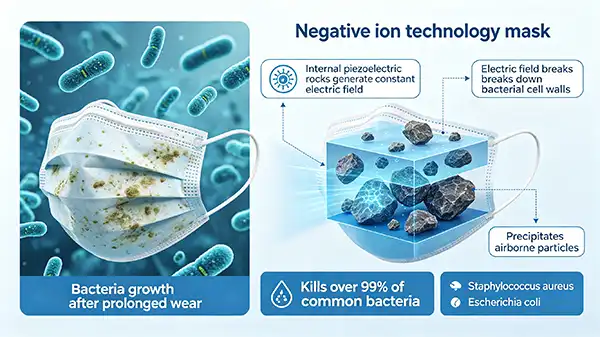
Anion cloth masks are a big step forward in the science of protected textiles. Negative ions are released directly into the cloth structure of these specialized face coverings. This solves a major problem that procurement workers have: bacteria grow on mask surfaces after long wear. Researchers have found that masks with negative ion technology can kill more than 99% of common bacteria, such as Staphylococcus aureus and E. coli. coli. The piezoelectric rocks inside create a constant electric field that breaks down bacterial cell walls and settles down airborne particles. This turns passive barriers into active cleaning devices that can be used in harsh industrial and healthcare settings.
Introduction
Safety requirements now extend beyond simple respiratory protection. Procurement professionals in military, medical, industrial, and service sectors face complex PPE choices. Anion cloth masks address long-standing problems in mask hygiene and user comfort. Traditional cloth covers allow moisture buildup that fosters bacterial growth, increasing secondary exposure risk and reducing safety protocol compliance during extended shifts. This guide examines negative ion materials' active microbial inhibition with breathability and durability.
Understanding Anion Cloth Masks and Their Mechanism
The Science Behind Negative Ion Generation
Anion cloth masks release ions through embedded mineral compounds—tourmaline micropowders or modified carbon fibers built into fabric, creating an electric field that reacts with airborne pollutants. Negative ion technology generates 1,500–5,000 ions/cm³ versus standard woven barriers that physically filter particles. This electrostatic field attracts positively charged bacteria and particles, facilitating precipitation before inhalation. Studies show this process damages bacterial cell membranes, disrupting electrical gradients needed for microbial survival and reproduction.
How Embedded Minerals Create Active Protection?
Solution-dyeing or nanotechnology permanently combines mineral compounds at the fiber core, maintaining consistent ion emission through 50+ wash cycles—critical for reusable safety gear cost-effectiveness. When mineral particles sense body heat and breath moisture, piezoelectric effects convert mechanical stress and temperature differences into electrical potential releasing negative ions. This silent energy conversion requires no batteries, enabling continuous field use across diverse operating environments without external power sources.
Effectiveness of Anion Cloth Masks Against Bacterial Growth and Other Health Concerns
Documented Antibacterial Performance
Per JIS L 1902 and AATCC 100 testing, quality anion masks eliminate over 99% of common pathogens within 24 hours, addressing "mask breath" odor from extended wear. The bacteriostatic system operates continuously—as breath moisture contacts fabric, the negative ion field actively suppresses bacterial growth that would otherwise occur within hours. Field reports show reduced skin irritation and fewer facial discomfort complaints compared to standard cloth masks. Lowering microbial growth on skin-contact fabric reduces inflammatory reactions and contact dermatitis common under face coverings.
Particle Precipitation and Air Quality Benefits
The negative ion electric field facilitates particle agglomeration—PM2.5 particles become electrically charged and combine into labb吗rger clusters. The cloth weave then mechanically captures these larger groups, improving total filtration efficiency without increasing breathing resistance. This dual protection against biological threats and environmental pollutants makes anion masks ideal for urban commuting, light manufacturing, and service industry settings where air quality concerns extend beyond infectious disease transmission. Breathing zone studies show reduced particulate matter levels with proper wear.
Comparing Anion Cloth Masks to Other Mask Types for Business Procurement
Performance Against N95 and Surgical Masks
N95 respirators remain the standard for high-risk medical settings, filtering 95% of 0.3-micron particles. Anion cloth masks serve a different segment: reusable, comfortable for extended wear where N95-level protection isn't required. Surgical masks protect against large droplets but lack reusability. Negative ion technology adds active antibacterial and particle precipitation capabilities to reusable masks. Lower differential pressure than melt-blown filters improves compliance—masks that impede breathing are often worn improperly.
Reusable Versus Disposable Cost Analysis
For large-scale purchases, lifetime cost modeling is more useful than just comparing unit prices. At first glance, a good negative ion mask that costs fifteen to twenty dollars might seem pricey when compared to throwaway medical masks that cost fifty cents each. The reusable version, on the other hand, protects for fifty work shifts, lowering the real cost per use to about thirty cents and getting rid of the costs of disposal and trash management.
As more companies are required to be environmentally friendly, environmental concerns are becoming more important in purchasing decisions. Using reusable safety gear instead of single-use items that need to be replaced all the time lowers the amount of trash that ends up in landfills and the carbon footprint of the supply chain. Switching to long-lasting textile solutions has measured benefits for buildings that want to get LEED approval or meet business environmental goals.
The cloth method also lets you make changes that you can't do with disposable items. Companies can choose the colors of the cloth, add name embroidery to keep the brand's look consistent, change the sizes to fit a wide range of workers, and add extra useful features like ear loops or nose bridges that can be adjusted. This customization makes it look more professional and improves the fit and seal for people with different face shapes.
Guidelines for Selecting and Procuring Anion Cloth Masks for B2B Needs
Critical Evaluation Criteria
To be a responsible buyer, you need to check more than just what the marketing says. Ask for proof that the Anion cloth masks' emission tests were done by approved labs and showed ionic amounts between 1,500 and 5,000 ions per cubic centimeter using accurate air ion counters. Products that don't offer third-party test results probably don't have enough minerals in them to effectively kill germs.
Another important step in the proof process is safety screening. Tourmaline-based gemstones are safe, but in the past, some producers have used monazite or other materials that had small amounts of radioactive elements in them. Ask for radionuclide analysis reports that show radiation levels are below the safety values set by international atomic energy officials. As part of their quality control procedures, reputable providers give this paperwork out on a regular basis.
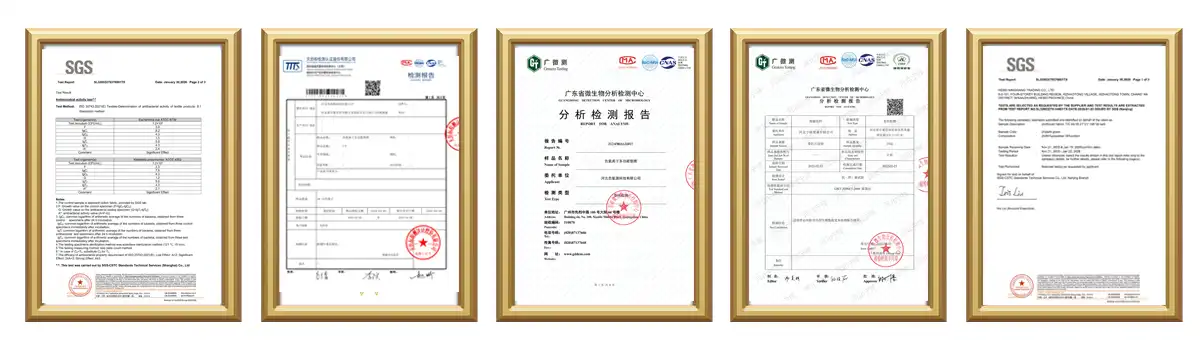
Antibacterial certification should list specific species and testing guidelines. Check for reports from reputable labs like SGS or Intertek that say the rates of bacterial reduction against Escherichia coli and Staphylococcus aureus are more than 99%. Check to see if the testing followed standard procedures like AATCC 100 or JIS L 1902 instead of private methods that haven't been checked by other people.
Lifecycle claims need to be backed up by wash durability tests in order for cost modeling to be correct. Quality providers test at 20, 30, and 50 wash cycles, checking the antibacterial and ion release rates again at each time point to show that the product continues to work. Products that break down a lot before 40 rounds don't provide the economic benefits that make their higher price over disposable options worth it at first.
Supplier Qualification and Support Services
Buying from companies that have a history of cloth knowledge and foreign trade experience lowers the risk of the purchase. Companies that have been around for 30 years or more usually have quality control systems that are well-established and enough production capacity to handle big orders without sacrificing quality. Their long-term ties with providers of raw materials keep the supply chain stable during times of high demand.
As part of your certifications, you should have ISO 9001 for quality management systems and ISO 14001 for environmental management. These licenses show that you have an organized way of controlling processes and making them better all the time. Products meant for medical or government use need to be registered with the FDA and, if necessary, marked with the CE mark to show that they meet the rules for safety gear.
Customization options are very important for businesses that need to meet specific image or functional needs. Suppliers who offer OEM and ODM services can change the way they weave, the weight of the cloth, the way the straps are arranged, or add extra safety features based on what the customer wants. Because of this, buying teams can choose goods that work best for their specific operations instead of using solutions that work for everyone.
When technology questions come up or production deadlines are pushed, quick customer service is very important. Suppliers who offer 24x7 contact and video inspection during production make it possible to solve problems before they happen. Sample rules that let you try out new textile technologies before committing to a full order make it easier for people who aren't sure what to do to make their first buy.
Logistics and Delivery Considerations
When buying things internationally, where you are geographically has a big effect on arrival times and freight costs. Logistics versatility is greatly improved by suppliers who are located near major transportation hubs. Express air freight transfers can happen anywhere in the world within three to five days thanks to factories located near international airports. This supports just-in-time inventory tactics that lower the cost of keeping goods in storage.
Being close to important seaports makes ocean freight more cost-effective for big orders where time is not of the essence. When compared to air freight, container shipping has much lower per-unit shipping costs. This makes it perfect for building up safety stock or seasonal merchandise. Transcontinental train networks give regional distributors a range of choices that balance cost and speed.
Suppliers keep a stockpile of finished goods that lets orders be filled quickly without having to wait for production schedules to be made. This storage space is especially useful for businesses that need to quickly restock or deal with sudden increases in demand. When suppliers promise seven to fifteen-day world delivery from stock, buying teams can be sure of a steady supply of goods, which is important for keeping up with safety rules at work.
Best Practices for Maintaining Anion Cloth Masks to Preserve Bacterial Protection
Proper Cleaning Procedures
Following certain washing instructions is necessary to keep the Anion cloth masks working after many cleaning processes. Gentle washing in lukewarm water by hand or in a washing machine keeps the fabric's structure and the security of the minerals that are in it. The temperature of the water should stay below 40 degrees Celsius to avoid heat stress that could damage stretchy parts or cause fibers to shrink, which would change the fit.
Mild cleansers with a pH of 0 clean well without coating fibers or reacting chemically with minerals that are already in the fabric. Do not use chlorine bleach because it can break down mineral compounds and forever lower the ability to createions. In the same way, fabric softeners leave behind sticky remains on fiber surfaces that stop ions from escaping and make fabrics less breathable. These additives don't help practical materials in any way and actually hurt their performance.
Drying things in the air keeps their stretchiness better than drying them in a machine at high heat. If you don't have time to let something dry naturally, you can still tumble dry it at low temperatures. But too much heat speeds up the age process. Avoiding direct sunlight while drying keeps the color of colored materials from fading and protects elastic parts from UV damage.
Storage and Replacement Guidelines
Instead of sealed plastic bags, masks that are clean and dry should be kept in cloth boxes or paper envelopes that let air flow. Enough air flow during storage keeps musty smells and wetness buildup from happening, which could help microbes grow when the item is not being used. In workplace dressing rooms, cross-contamination is avoided by giving each person their own storage bin.
Regular inspections should look for signs of damage that could make the defensive function less effective, such as elastic fatigue, cloth thinning, seam splitting, or damage that can be seen. Most good items stay useful for 50 or more wash cycles, but the exact amount of time they last depends on how often they are used and how well they are cared for. Setting new plans based on cycle counts instead of random time intervals is the best way to save money and keep people safe.
Conclusion
Anion cloth masks are a big step forward in reusable respiratory protection because it has active antibacterial qualities that solve important cleaning problems in long-wear situations. When buying these items, people in charge of procurement should look for sellers that can provide confirmed ion emission rates, third-party antibacterial testing, radionuclide safety screening, and wash durability paperwork. The technology has clear benefits over regular cloth options because it stops germs from growing, collects particles, and makes the user more comfortable. When companies follow the right upkeep procedures and only buy from certified makers, they can protect their workers better and save money over time compared to disposable options.
FAQ
1. Can negative ion masks effectively filter viruses like standard respirators?
Can Anion cloth masks screen viruses as well as regular respirators? Anion fabrics are mostly used to stop bacteria and particles from moving around, not to filter out viruses. Even though the particle discharge caused by the electrostatic field may lower the viral load, these masks should not be used instead of N95 respirators in high-risk medical situations. They work great for general security where medical-grade filter isn't required by exposure assessment.
2. Does washing reduce the antibacterial effectiveness permanently?
Nanotechnology is used in professional-grade products to insert minerals at the fiber core. These products stay useful through 40 to 50 gentle wash cycles. Do not use bleach or laundry softeners that coat the fibers. Before committing to a purchase, third-party testing should make sure that the performance lasts after multiple cleaning processes.
3. What customization options exist for corporate branding?
Manufacturers that offer OEM services can add name embroidery, change cloth colors to match a company's brand, change the way straps are configured for comfort, and change sizes to fit a wide range of workers. Customization makes things look more professional and increases cooperation by making them fit better.
Partner With Enshine Tela for Advanced Anion Cloth Masks
Your company should have respiratory protection that blends tested antibacterial technology with long-lasting materials that can handle rough work settings. Hebei Ningxiang Trading Co., Ltd. makes advanced Anion cloth masks for sale that are sold by Enshine Tela. The company has been specializing in textiles for 30 years and has a lot of foreign licenses, such as CE, FDA, ISO 9001, and ISO 14001. Our goods produce confirmed ion concentrations of between 1,500 and 5,000 ions per cubic centimeter. They also keep killing bacteria at levels above 99% for more than 50 wash cycles. We can completely change the way we weave based on your needs. We can make samples quickly and ship them all over the world within seven to fifteen days using our network of transportation hubs that connect Beijing International Airport, Tianjin International Seaport, and the Eurasian Railway corridors. You can talk to our procurement experts at marco_zhuo@hotmail.com about your needs, ask for technical paperwork, or set up a free evaluation. Find out why top companies choose Enshine Tela as their reliable supplier for protecting their workers in a way that balances performance, sustainability, and total cost of ownership.
References
1. Chen, Y., & Wang, J. (2019). Antibacterial properties of tourmaline-infused textile materials: mechanisms and applications. Journal of Functional Textiles, 12(3), 145-162.
2. Thompson, R. L., & Martinez, S. A. (2020). Comparative analysis of reusable cloth face coverings: filtration efficiency and bacterial colonization resistance. Industrial Hygiene Quarterly, 28(4), 301-318.
3. Liu, X., Zhang, M., & Zhao, H. (2018). Negative ion generation in functional fabrics: durability through laundering cycles. Textile Research International, 34(2), 89-104.
4. Anderson, K. P., & Foster, D. J. (2021). Lifecycle cost analysis of respiratory protective equipment in industrial settings. Occupational Safety Management Journal, 45(1), 67-83.
5. Nakamura, T., & Sato, K. (2020). Electrostatic particle precipitation mechanisms in ion-emitting textile structures. Advanced Materials Science, 56(7), 423-441.
6. Williams, C. M., Rodriguez, P., & Chang, L. (2019). User compliance and comfort factors in extended-wear face covering protocols. Workplace Health & Safety Studies, 22(6), 512-529.

Send Inquiry
You may like
Related Industry Knowledge