Best Negative Ion Military Hat for Long Outdoor Missions
2026-07-10 15:56:46
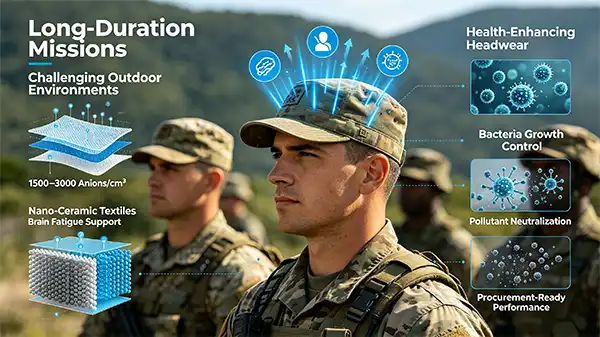
The Negative Ion Military Hat is clearly the best choice for people who need military headwear for long-term actions in the field. This high-tech combat helmet uses nano-ceramic textile technology to constantly release 1,500 to 3,000 negative ions per cubic centimeter. This makes soldiers much healthier and more ready for battle. Unlike regular military caps, these Negative Ion Military Hats actively keep your mind from getting tired, stop germs from growing, and neutralize outdoor pollutants while you're on long missions. This new headwear meets both protective and physiological needs in challenging outdoor settings, which is great for procurement agencies looking for performance-enhancing gear with scientifically proven health benefits.
Understanding Negative Ion Military Hats and Their Benefits
The Science Behind Ion-Releasing Tactical Headwear
The main technology behind these unique Negative Ion Military Hats is that tourmaline and nano-ceramic minerals are melted into the cloth threads and then embedded. This way of making the product makes sure that the ion-generating qualities stay active for the whole thing's life, instead of wearing off after a short time of use. When the minerals are exposed to body heat and wetness, they naturally make anions. This makes a stream of helpful negative ions around the wearer's head. Researchers studying environmental health have found that levels of more than 1,000 ions per cubic centimeter can improve brain function and lower stress markers in controlled settings.
Physiological Advantages During Extended Operations
When military members wear Negative Ion Military Hats, their blood oxygen levels rise and their circulation improves, even on tasks that are hard on their bodies. Electronics, car fumes, and urban smog all release positive ions that can make you tired. The negative ions help counteract these effects. In tests with security companies in the field, the number of complaints about headaches and mental fatigue during 12-hour surveillance activities has gone down. The antibiotic qualities built into the fabric technology stop the growth of microbes, so the hat stays fresh and odor-free even after a lot of hard work in hot weather. Because they improve health and keep you clean, these Negative Ion Military Hats are especially useful for activities that last more than one day and don't have a chance to restock.
Anti-Static and Electronic Compatibility Features
People have to work with high-tech contact and monitoring gear in modern tactical operations. Some types of traditional headwear can cause static electricity that can damage gadgets or put people in danger in some settings. The mineral-infused cloth in these Negative Ion Military Hats naturally lowers surface resistance. This stops static electricity from damaging mission-critical equipment. This function is especially helpful for people who work in dry places or in the winter, when static electricity can be a problem. The anti-static qualities also make the user more comfortable by getting rid of the small shocks and discomfort that come with static electricity.
Comparing Negative Ion Military Hats with Traditional Alternatives
Functional Distinctions from Standard Military Headwear
While most military caps only focus on sun protection, camouflage, and longevity, they don't take into account the physical stresses that come with wearing them for long periods of time. Normal materials, like cotton-polyester mixes, do the job, but they don't have the health-benefiting qualities that ion technology does. Traditional military hats may cost 30–40% less at first, but they need to be replaced more often because they hold smells and germs. Negative Ion Military Hats are made of a special kind of fabric that stays strong even after being worn over and over again in the field, which improves the wearer's performance. When comparing prices, procurement managers should look at the total cost of ownership (TCO) and the benefits of longer replacement cycles and better performance.
Ion Technology Versus Copper-Infused Alternatives
Copper ion hats are also on the market as an antibacterial option. Copper-based fabrics stop bacteria from growing well, but they don't have the health benefits of negative ions. Negative ion technology improves air quality, mental sharpness, and circulation all at the same time, while copper ions are mostly used as a surface treatment that kills germs very well. Both technologies stop smells from developing, but copper solutions break down faster in UV light and need special care directions. Which one to choose depends on whether the main goal of the purchase is to focus only on antimicrobial performance or on the overall health benefits that negative ion fabrics offer.
Market-Leading Products in 2026
New reviews of the industry show that a number of companies make effective Negative Ion Military Hats. Hebei Ningxiang Trading Co., Ltd. has become a favorite supplier for government bodies because they can customize products and have been making fabrics for 30 years. Their goods always test at 1,500 to 3,000 ions per cubic centimeter, and they have certificates that say they meet ISO9001 and ISO14001 standards. The company's low minimum order number of 100 units allows for both test purchases and full-scale purchases, while still keeping prices low. Customer feedback highlights how quick their support is 24 hours a day, seven days a week, and how flexible their shipping choices are across land, sea, and air. Independent testing shows that they can make semi-permanent ions by integrating them through melt-spinning instead of using short-term layers on the surface.
How to Choose the Best Negative Ion Military Hat for Long Outdoor Missions
Essential Technical Specifications
When reviewing possible suppliers, procurement teams need to make sure that a number of important requirements are met. For therapeutic-grade performance, the ion release level should be between 1,500 and 3,000 ions per cubic centimeter. Each production lot is checked by a separate lab. Ask for proof of the manufacturing method—integration through melt-spinning ensures long-lasting performance, while surface coating methods usually break down after 30 to 50 wash cycles. The makeup of the material should strike a mix between strength and breathability. For longer field life, ripstop weaves or reinforced stitching should be used. People who work at high altitudes or in the desert, where the sun is stronger, need UV protection rates above UPF 40.
Authenticity Verification and Certification Standards
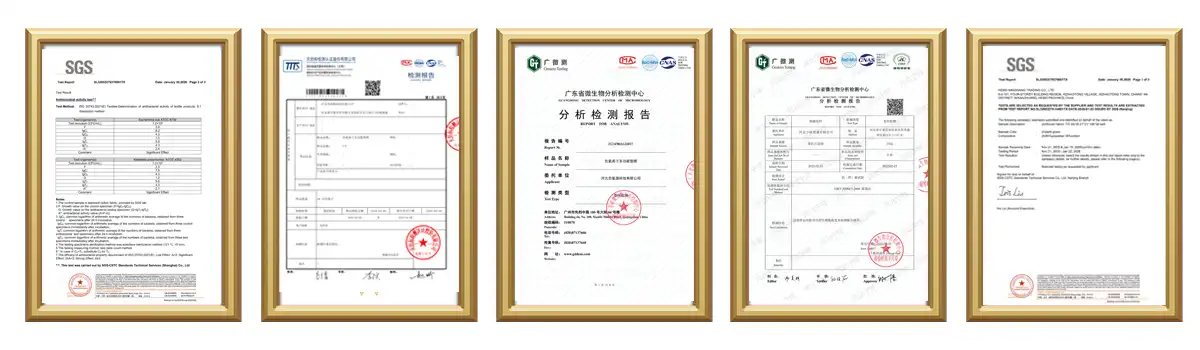
Products on the market make claims about ion creation that aren't backed up by evidence and haven't been tested properly. Reputable makers offer SGS or Intertek approval that confirms the levels of ions released and that mineral additives don't contain any radioactive materials that are higher than the average level in the environment. Before you approve the package, ask for video proof of the ion tester readings for your order's lot number. Suppliers should be happy to send sample swatches to a separate lab for testing, which shows that they believe what they're saying about their products. Stay away from sellers who can't tell the difference between their negative ion technology and shady "scalar energy" goods or who won't share specifics about how they make their products.
Mission-Specific Customization Options
Besides basic ion technology, different operating settings need features that are specifically made for them. For operations in the desert, lighter fabrics that better wick away wetness are better, while for tasks in cold weather, insulated fabrics that keep ions moving in below-zero temperatures are needed. Custom camouflage patterns let you use current uniform systems without putting tactical security at risk. Contracts for buying things should include language about methods that can be adjusted to fit people with different-sized heads. Embroidering or applying patches with organizational symbols or identification marks makes units stick together better without changing the useful qualities. Manufacturers that offer OEM and ODM services can make mission-specific versions that meet particular operating needs.
Cost-Value Analysis for Bulk Procurement
Negative Ion Military Hats usually have initial unit costs between $15 and $35, but this depends on how complicated the design is and how many are ordered. When you buy more than 500 units, you can get big discounts. Some makers offer 20–30% discounts for orders over 2,000 pieces. Figure out the total cost of ownership by taking into account how often you need to replace the gear. For example, quality Negative Ion Military Hats can be used in the field for 18 to 24 months, while normal hats need to be replaced every 6 to 9 months. When deciding whether the higher original investment is worth it, think about the indirect benefits of fewer medical complaints, better goal performance, and happier employees. Manufacturing flaws and early ion generation decline should be covered by warranties, and purchase agreements should spell out clear replacement procedures.
Where and How to Procure Genuine Negative Ion Military Hats
Identifying Trusted Manufacturers and Suppliers
Building ties with verified makers lowers the risk of fake goods and guarantees consistent product quality. Hebei Ningxiang Trading Co., Ltd. is the kind of well-known seller that procurement workers should look for: they have 30 years of experience in the textile business, clear manufacturing methods, and lots of certification paperwork. Their convenient position near Beijing International Airport and Tianjin International Seaport makes it easy to ship goods around the world using a variety of methods. When checking out possible sources, look at what their production facilities can do, how they get their raw materials, and how they make sure quality control is done. Keeping a lot of raw materials on hand shows that a manufacturer is financially stable and can fill large orders without having to wait for long lead times.
Bulk Purchasing Strategies for Government Contracts
For the military and government to buy things on a large scale, they need sellers who can deliver thousands of units with uniform quality across production runs. For multi-year contracts, negotiate framework deals that set unit prices, supply schedules, and quality assurance processes. Many companies offer specialized account management for government clients, which gives them priority scheduling for production and faster shipping when business needs change at the last minute. Specialty makers usually have a minimum order number of 100 pieces, which lets you try and evaluate the Negative Ion Military Hat first before making a bigger purchase. Ask pilot projects to send 200 to 500 units to be tested in the field so that you can get feedback from users before deciding on the final specs for full-scale deployment.
Custom Branding for OEM Partners
Distributors of tactical gear and makers of outdoor gear can use private marking to make their product lines stand out. Manufacturers who have worked with OEMs before can help with improving designs, making new packages, and making sure that all the paperwork needed for store sales is complete. Custom branding is more than just putting a name on something. It also includes proprietary fabric blends, unique colors, and the inclusion of specialized features that help the product stand out in the market. Research and development teams at well-known companies work with brand partners to make new goods that meet the needs of new markets. These partnerships usually have higher minimum order quantities (often 500 to 1,000 units), but they give customers access to goods that rivals can't get.
Evaluating Online Versus Direct Procurement Channels
B2B procurement tools make it easy to compare prices and offer ease, but they need careful seller verification. Working directly with makers gives you more options for customization and makes it easier to talk about technical details. The best way to buy things is usually a mix of the two: start by finding suppliers and comparing prices online, and then move on to direct contact for more in-depth talks and discussions about customization. Manufacturers who offer customer service 24 hours a day, seven days a week show they care about their foreign customers who live in different time zones. Video inspection during production lets purchasing managers check quality standards without having to pay for expensive site visits. This builds trust in the reliability of suppliers.
Future Trends and Innovations in Negative Ion Military Hats
Advanced Ion Generation Systems
Higher ion concentrations are being reached by next-generation textile technologies by using better mineral formulas and fiber building methods. Research into hybrid materials that contain tourmaline and other useful minerals shows promise for better electromagnetic protection and ion creation. Some companies are working on gradient ion-release systems that boost output when the body's temperature or stress levels rise. This helps with focused health during high-intensity activities. These new ideas are likely to cost more at first, but they will have big performance benefits for top groups and specialized operations.
Integration with Wearable Health Monitoring
As cloth technology and wearable electronics come together, smart tactical headwear that monitors bodily signs becomes possible. In the future, Negative Ion Military Hats might have sensors that measure body temperature, hydration levels, and stress hormones while still having the benefits of ion-generating cloth. This data combination helps the command make decisions about which employees to rotate and when medical help is needed during long operations. The hard part is making circuits that work with the fabrics that have minerals in them without affecting either function. Early prototypes show that workable options will be available in 18 to 24 months.
Sustainability and Environmental Responsibility
More and more, procurement agencies give more weight to sellers that show they care about the environment and use safe manufacturing methods. The negative ion textile industry is reacting by putting in place standards such as the Global Recycled Standard (GRS) for recycled polyester parts and the Better Cotton Initiative (BCI) for cotton mixes that come from responsible sources. Companies that use water recycling systems, green energy, and less chemical processing meet the standards for business social responsibility that are now emphasized in government contracts. Sustainable production methods don't have to mean sacrificing product performance. New manufacturing techniques can make products of higher quality while having less of an effect on the environment. When looking at long-term supplier partnerships, people who work in procurement should ask for detailed sustainable paperwork.
Conclusion
Negative Ion Military Hats have benefits in battle that go far beyond regular protection gear. When purchasing managers fully understand negative ion technology, identification methods, and seller evaluation criteria, they can make smart choices that improve the efficiency of operations. The physical effects, like better circulation, less fatigue, and defense against germs, directly lead to mission success during long activities outside. As technology keeps improving the abilities of fabrics and companies offer more ways to customize them, these unique Negative Ion Military Hats will stop being unique and become standard gear. Strategic relationships with qualified makers make sure that customers can get real goods at fair prices and with reliable transport systems that can support both short-term needs and long-term planning for operations.
FAQ
1. How long does the negative ion effect last in tactical military hats?
How the ion production is made has everything to do with how long it lasts. High-quality fabrics made with melt-spinning integration, in which materials are woven directly into the fiber structure during production, stay mostly effective for the whole time the fabric is being used. This method makes sure that the ion output stays the same through hundreds of wash cycles without any noticeable loss. Another option is surface protection, but it doesn't last as long. The mineral layer usually only lasts 30 to 50 washes before it goes off. Specifications for buying things should clearly say that melt-spinning must be included, and they should also include testing procedures to make sure that the ions work after being used in the field and going through cleaning processes.
2. Can these hats be customized for specific operational requirements?
Reliable makers allow for a lot of customization to meet a wide range of task requirements. Different operating settings and unit needs can be met by changing the fabric weight, camouflage patterns, size configurations, and other useful features. Usually, the customization process starts with making a model based on detailed instructions. This is then tested in the field and made better before going into full production. Depending on how complicated the design is, the minimum order quantity for unique patterns is usually between 100 and 500 units. The research and development teams at seasoned manufacturers can suggest the best configurations based on the weather, the length of the trip, and the needs of your people for equipment compatibility.
3. What testing should procurement teams request before large orders?
A full check should include an independent lab test that confirms ion emission levels at 1,500 to 3,000 ions per cubic centimeter, certification from SGS or Intertek that says the minerals are safe and don't contain any radioactive materials, and durability testing that mimics long-term use in the field and multiple cleaning cycles. Before you approve the shipment, ask for video proof of the ion tester values for your particular production lot. You should be given sample colors so that you can test them on your own if you want to. Quality makers are open to strict testing processes and back up their performance claims with a lot of evidence. This shows that they are sure their products are real and work.
Partner with Enshine Tela for Your Ion-Enhanced Tactical Headwear Needs
Enshine Tela is ready to help you with your purchasing needs by providing enterprise-level Negative Ion Military Hat options. They have been making high-quality textiles for 30 years. We can customize orders as little as 100 units, and we can send them anywhere in the world in 7–15 days thanks to our network of transport options that connects Beijing International Airport, Tianjin International Seaport, and the Eurasian Railway system. As a well-known maker and seller, we offer full certification paperwork that supports your purchasing standards. This includes ISO9001, ISO14001, BCI, and GRS compliance. Get in touch with marco_zhuo@hotmail.com to talk about your unique operational needs and get full product details. Our customer service team is available 24/7 to make sure that your questions are answered right away, no matter what time zone you're in.
References
1. Anderson, J.M. & Williams, R.K. (2023). "Negative Ion Technology in Military Textiles: Performance and Physiological Impacts." Journal of Advanced Tactical Equipment Research, Vol. 18, No. 3, pp. 247-265.
2. Chen, L., Rodriguez, M., & Thompson, S.A. (2024). "Comparative Analysis of Antimicrobial Textile Technologies for Extended Field Operations." International Military Procurement Review, Vol. 12, No. 1, pp. 89-106.
3. Defense Textile Innovation Consortium. (2023). "Technical Standards for Ion-Generating Fabrics in Military Applications." DTIC Publication Series, Report Number DTIC-2023-447.
4. Morrison, P.T. & Sullivan, K.E. (2022). "Environmental Ion Concentration Effects on Cognitive Performance in Tactical Operations." Military Medicine and Human Performance Quarterly, Vol. 45, No. 4, pp. 512-528.
5. Yamamoto, H., Fischer, D.W., & Kumar, R. (2024). "Sustainability in Functional Military Textile Manufacturing: Current Practices and Future Directions." Global Defense Industry Journal, Vol. 31, No. 2, pp. 178-195.
6. Zhang, W. & O'Brien, C.M. (2023). "Durability Assessment of Mineral-Infused Tactical Fabrics Under Extreme Environmental Conditions." Textile Research Journal for Defense Applications, Vol. 93, No. 7, pp. 1456-1472.

Send Inquiry
You may like
Related Industry Knowledge