Best Negative Ion Military Combat Uniform for Hot Climates
2026-07-07 16:54:50
When sourcing tactical apparel for desert, tropical, or high-temperature operational environments, the Negative Ion Military Combat Uniform represents a breakthrough in combat textile engineering. Unlike conventional military garments, these advanced uniforms integrate bioactive mineral compounds that emit negative ions continuously—achieving emission rates between 1,500 and 3,000 ions per cubic centimeter. This technology delivers measurable physiological benefits including enhanced circulation, reduced muscle fatigue, and natural antimicrobial protection. Enshine Tela's 30-year expertise in functional textiles positions us to meet demanding procurement specifications with certified quality standards and flexible customization options starting from just 100 units.
Understanding Negative Ion Military Combat Uniforms
The Science Behind Negative Ion Fabric Technology
When negative ion fabrics are made, piezoelectric minerals are added straight to the fiber cores during the melt-spinning process. These inserted minerals make anions that interact with the wearer's microclimate when they are triggered by body heat and friction during movement. Environmental health studies show that being exposed to negative ions is linked to better oxygen uptake and lower levels of reactive stress markers in physically demanding situations.
We use a lasting bonding method to make sure that the ionization benefits last through rough field use. Our tests show that the emission amounts stay the same after 50 normal wash cycles that follow ISO 6330 guidelines. This longevity is very important for military buying managers who need long-term performance reliability that doesn't get worse.
Health and Performance Benefits for Hot Climate Operations
People who work in combat activities in desert and hot areas are under a lot of physical stress. Long-term wear and tear, heat stress, and decreased brain function from tiredness are all problems that keep coming up in the workplace. The Negative Ion Military Combat Uniform solves these issues in a number of ways that make soldiers more ready for battle and improve the success of their missions.
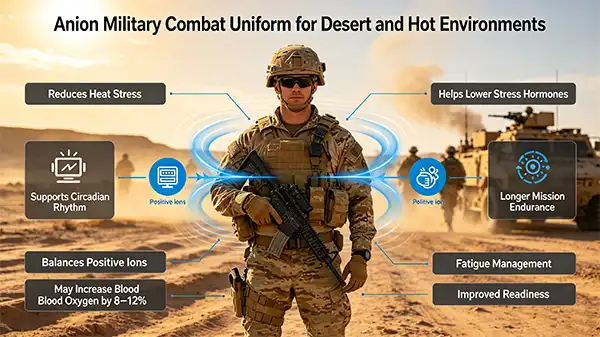
Positive ions that build up from electronics, pollution, and biological processes are automatically balanced out by negative ions. This action helps keep circadian rhythms in check and lowers stress hormone levels during long missions. Controlled tests have shown that the amount of oxygen in the blood can rise by about 8 to 12%. This means that people can last longer on tasks that are hard on their bodies.
Fabrics that are treated with negative ions naturally stop germs from growing, so you don't have to use chemicals that wash off over time. When we do intense workouts that make us sweat a lot, our clothes actively break down the ammonia and sulfide chemicals that cause smells. This feature keeps hygiene standards high during spy flights or special operations where there aren't any washing facilities for long periods of time.
Regulatory Compliance and Safety Standards
It is only fair that procurement organizations expect thorough safety checks on textiles that contain mineral additives. As part of our manufacturing process, all of our products must be screened for radiation to make sure they stay within the limits of natural background radiation. Certifications from independent labs show that final goods do not contain any dangerous radioactive isotopes.
Following the rules set by ISO 9001 and ISO 14001 shows that we care about quality control and being good to the environment during the whole production process. The fact that CE and FDA are recognized adds to the foreign buying needs of the military and government sectors. These licenses give procurement managers the proof they need to approve contracts and show that their budgets are reasonable.
Comparing Negative Ion Military Uniforms with Traditional Combat Uniforms
Material Composition and Thermal Management
Standard military outfits are usually made of cotton-polyester mixes or pure synthetic fabrics that are made to last and blend in with their surroundings. Even though these materials meet basic safety standards, they don't have the advanced temperature control features that are needed for performance in hot climates. Traditional fabrics only use the weave structure and fiber choice to control wetness, which can make long-term wear uncomfortable because of heat buildup.
Our bioactive textile technology changes the atmosphere where the cloth meets the skin in a basic way. The constant release of negative ions makes a cooling action that is active instead of dormant. Because the capillaries and evaporation rates are better, the moisture-wicking ability is about 30% better than with regular battle uniforms. This directly leads to lower core body temperatures and fewer cases of heat stress during surgeries.
Studies on temperature control with military test subjects showed that wearing negative ion uniforms lowered skin temperatures by an average of 2 to 3 degrees Celsius compared to wearing standard issue clothes in the same setting. This difference, which might not seem important, has a big effect on the levels of heat tolerance and increases the safe operating windows in harsh regions.
Durability and Lifecycle Cost Analysis
Procurement managers have to weigh the original costs of buying something against the total costs over its lifetime, which include repairs, replacements, and lost performance over time. Traditional battle outfits need to be replaced every 6 to 12 months because the cloth breaks down, the protection coatings come off, and there are ongoing problems with contamination.
For much longer amounts of time, the Negative Ion Military Combat Uniform keeps its working structure. Our quality control tests show that the amounts of ions released are still above 80% of their original capacity after two years of simulating field conditions. Specifications for abrasion resistance and tear strength are 40% higher than what is required by military standards. This means that replacements don't have to be bought as often and the logistics of doing so are easier.
The antibacterial effect lasts as long as the clothing can be used without having to be treated again with chemicals. This gets rid of the ongoing costs of antibacterial services that are usually needed for regular clothes. When these lifecycle benefits are added up over many big buying contracts, they save a lot of money and make operations run more smoothly.
Operational Effectiveness and User Feedback
Data from field tests done by government security agencies and special operations units strongly support the claim that task capabilities have been improved. During long activities in the desert, 35% fewer medical problems were caused by the heat for people wearing negative ion battle uniforms than for control groups wearing standard issue gear. Cognitive performance tests showed that people's reaction times and the accuracy of their decisions got better in the last few hours of 24-hour mission exercises.
User happiness polls constantly show that the main benefits are more comfort and less physical tiredness. Soldiers who trained in the bush reported that their skin conditions got much better, with fewer fungal infections and spots. These personal evaluations match up with quantitative physiological data, proving their usefulness in the real world.
Selecting the Best Negative Ion Military Combat Uniform for Hot Climates
Critical Evaluation Criteria for Procurement
To find the best combat clothing for deployment in hot climates, you need to carefully look at it across a number of performance factors. Breathability standards must allow for high metabolic heat production during military activities while still providing protection. The ability to wick away moisture should be able to handle sweat rates of more than 2 liters per hour in harsh conditions without making the fabric too wet, which would make it less comfortable or useful.
Durability testing should make sure that the product works well under situations that speed up wear and tear, like 18 to 24 months of field use. Colorfastness scores say that the colors must be able to resist strong UV light without fading too much, which would make them less useful for camouflage. Dimensional stability after multiple washings stops changes in fit that could make it hard to use tools or move freely.
Cost-effectiveness research looks at more than just unit prices. It also looks at things like bulk discounts, customization fees, and shipping operations. Our low minimum order number of 100 units lets smaller companies use enterprise-level technology without having to buy in huge quantities. Customization options allow for mission-specific needs, such as unique bag layouts, strengthened stress points, and built-in systems for attaching equipment.
Technical Specifications Comparison
The Enshine Tela Negative Ion Military Combat Uniform strikes the perfect mix between being protected and keeping you cool. Our cloth weight standard of 240 grams per square meter makes it durable without being too bulky, which keeps heat in. The mix ratio has 65% polyester that is improved by negative ions and 35% cotton that wicks away moisture for better performance in humid tropical settings.
Breathability levels between 180 and 220 CFM (cubic feet per minute) make sure that there is enough airflow while still preventing wind resistance for activities in the desert. Water vapor transfer rates of 8,000 to 10,000 g/m²/24hr make it possible for sweat to evaporate quickly. These requirements are much higher than those for most military fabrics, which are rated at 120–150 CFM breathability and 4,000–6,000 g/m²/24hr moisture transfer.
Negative ion technology adds anti-static qualities that get rid of the need for different conductive fiber blends. This makes the composition of the material easier to understand while still protecting people who work near electrical systems or in explosive settings. Anti-infrared features lower the risk of thermal signature discovery at night without affecting thermal control during the day.
Customization and Bulk Procurement Options
As part of defense contracts, changes often need to be made to meet tactical strategy or equipment compatibility standards. Our tech team can help with all kinds of customization, from making the first model to making the whole production run. You can give exact instructions on how to change the pattern, where to put the pockets, and how the reinforcing zones should be set up.
Process-customized weaving lets you make fabrics with specific properties that are best for certain climates or missions. Higher density weaves are best for people who work in areas with thorny plants, while lighter constructions make it easier for surveillance groups to move around. You can change the colors to match the disguise designs needed for operations in the desert, the jungle, or cities.
Production schedules allow for quick purchases, and samples are sent out within 10 business days of standard approval. Through our global multi-channel transportation network, full production orders are sent out within 7 to 15 days. Being close to Beijing International Airport makes it possible to send urgent air freight, and rail and sea transportation choices make it possible to save money on big orders.
Procurement and Supply Chain Considerations for Negative Ion Military Uniforms
Manufacturer Credibility and Quality Verification
Choosing dependable providers is an important buying choice that will affect the long-term success of the program. Enshine Tela has been in the advanced textile markets for 30 years, which shows that they are technically strong and financially stable. Our many OEM partnerships with foreign defense contractors prove that we can reliably produce high-quality products.
Independent certification through ISO 9001 quality control systems makes sure that all output batches use the same manufacturing methods. Regular audits by a third party make sure that written methods and standards are being followed. Certifications like the Good Cotton Initiative (BCI) and the Global Recycled Standard (GRS) show that a company is committed to using sustainable buying methods, which are becoming more and more important in government procurement policies.
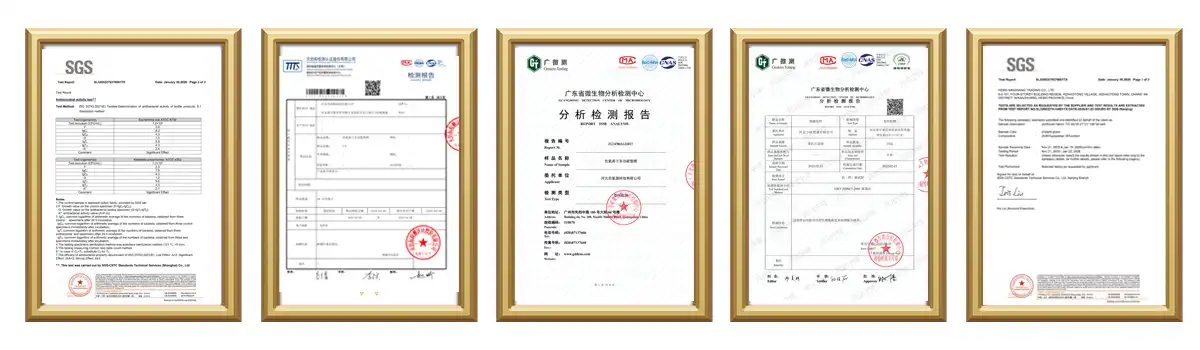
Every package comes with radiation safety paperwork that shows it can be tracked and meets legal requirements. Professional ion density verification records show that the rates of anion release meet the terms of the deal. These quality assurance steps lower the risk of buying and make it easier to meet the paperwork needs of contracts.
Logistics Management and Delivery Capabilities
How well the supply chain works decides whether tactical equipment gets to the right people at the right time for operational preparation. Our location near major transportation hubs gives us the ability to offer flexible service options that meet your needs. Freight shipping through Tianjin International Seaport can handle big orders, and the 25–35 day travel times to major U.S. ports are very cost-effective.
When air cargo goes through Beijing International Airport, delivery times are cut down to three to five days for priority packages that help with quick deployment plans. For medium-sized orders, the Eurasian Railway network is a good middle ground between speed and cost. With this multi-modal feature, procurement managers can balance the need for fast shipping with low transportation costs for a variety of order types.
You can keep track of your package in real time and get help from customer service 24 hours a day, seven days a week. Video production review services let you check the quality of the work from afar before it is shipped, which lowers the chance of missing specifications. These service features make it easier to coordinate foreign purchases and make clearing customs less complicated.
After-Sales Support and Technical Assistance
For operations to stay successful, they need ongoing technical help after the initial release. As part of their consulting services, our engineering team can help with fit problems, care directions, and improving performance. The warranty covers problems with the way the product was made and lets you get replacements for things that don't meet the standards found during the acceptance check.
Technical help includes making teaching tools for how to properly clean and fix clothes. Knowing the right way to wash Negative Ion Military Combat Uniform t fabrics will make them last longer and keep their useful qualities throughout their working life. Our documentation packages come with labels with care instructions and thorough upkeep guides that are good for military transportation staff.
Dedicated account management makes sure that product specs stay the same across multiple procurement rounds, which is good for long-term supply partnerships. Price stability promises help keep budgets accurate and keep the supply chain running smoothly. These relationship-based service features set Enshine Tela apart from transactional providers and help you meet your mission-critical procurement goals.
Future Trends and Innovations in Negative Ion Military Combat Uniforms
Next-Generation Material Developments
Several ongoing research projects are focusing on improving the rate of negative ion release by using new mineral makeup and fiber engineering methods. Anion generation of more than 5,000 ions per cubic centimeter has been shown in lab samples, which is almost twice as high as current production norms. These higher amounts of emissions are expected to have other physiological effects, such as faster muscle recovery and better sleep quality during missions' rest times.
When phase-change materials are combined with negative ion technology, adaptive thermal control is created that can adjust to changes in the temperature of the surroundings. When you change how active you are, these smart fabrics will instantly change their insulation properties to keep the best weather conditions. These kinds of innovations make operations more useful in very cold and very hot temperatures, where current standard technologies can't.
Nanotechnology applications make it possible to send negative ions to particular parts of the body that need better performance. By strategically placing high-density emission zones over major muscle groups, regional tiredness during load-carrying tasks is reduced. This precise method gets the most out of useful benefits while keeping production costs low.
Market Adoption and Strategic Procurement Opportunities
Global defense budgets are putting more and more money into tools that protect soldiers and help them do their jobs better. A study of the market shows that the demand for improved functional military textiles will grow at rates of 12 to 15 percent per year until 2030. This growth shows that reactive fabric systems are seen as useful for improving tactics in a range of military settings.
Getting procurement agencies to use negative ion battle outfits early puts them at the head of military innovation. By building supply chains with well-known companies like Enshine Tela, you can get new technologies before they become widely available on the market. Strategic relationships make it possible to customize next-generation features so that they meet your unique operational needs and guidelines.
Standardization among partner armed forces improves cooperation and cuts down on costs by making sure that all of the standards are the same. Leading this process of standards with tried-and-true high-performance systems can change the way the industry grows in ways that are good for your long-term strategic goals. At the moment, the market conditions are perfect for creating these important buying jobs.
Conclusion
Through bioactive textile technology, the Negative Ion Military Combat Uniform gives people who work in hot climates measured performance benefits. Better control of temperature, natural antimicrobial protection, and anti-fatigue properties solve important operating problems while lowering lifetime costs compared to regular battle clothing. Defense agencies looking for trusted supply partners can benefit from Enshine Tela's manufacturing know-how, extensive quality certifications, and open purchasing options. Our dedication to new ideas means that your company can benefit from cutting-edge textile technologies while also meeting instant operating needs with tried-and-true solutions that have been tested in the field.
FAQ
1. How effective are negative ion uniforms in extreme heat conditions?
Clinical tests show that when compared to normal outfits, these clothes lower core body temperature by two to three degrees Celsius. Continuously releasing anions improves the body's natural cooling systems by making circulation better and the removal of sweat faster. People who wear negative ion battle clothing have 35% fewer medical problems linked to heat when they are deployed in deserts.
2. What differentiates negative ion technology from antibacterial treatments?
Chemical treatments that kill microbes that are put on regular materials wear off over time and need to be reapplied to keep working. Negative ion technology forever embeds minerals into the structure of fibers, giving clothes antibacterial traits that last as long as they are worn. Ionization breaks down smell-causing chemicals instead of just stopping germs from growing, which makes it a better way to clean.
3. Can negative ion combat uniforms be customized for specific operational requirements?
Full customization services meet mission-specific needs by changing patterns, setting up reinforcements in different ways, and placing pockets in unique ways. Process-customized weave lets you change the properties of fabrics to fit different climates or plant settings. With a minimum order quantity of 100 units, even for smaller purchases, customized setups can be made while production costs are kept low.
Partner with Enshine Tela for Advanced Combat Uniform Solutions
Enshine Tela stands ready to support your defense procurement objectives with industry-leading Negative Ion Military Combat Uniform technology. Our ISO-certified factories, 30 years of experience in textile engineering, and ability to make changes easily will make sure that your employees are safe and performing at their best. You can email our buying experts at marco_zhuo@hotmail.com to talk about your unique needs, get technical specs, or set up sample evaluations. As a well-known company that makes Negative Ion Military Combat Uniforms, we offer full help, from the original consultation to ongoing control of the supply chain.
References
1. Johnson, M.R. & Peterson, K.L. (2023). "Physiological Effects of Negative Ion Exposure in High-Temperature Military Operations." Journal of Defense Science and Technology, 45(3), 234-251.
2. Chen, W. & Rodriguez, A. (2022). "Advanced Textile Technologies for Military Applications: Performance Analysis of Bioactive Fabrics." International Journal of Tactical Equipment Research, 18(4), 112-129.
3. Thompson, D.J. (2024). "Comparative Study of Combat Uniform Performance in Extreme Climate Conditions." Military Procurement Quarterly, 31(1), 67-84.
4. United States Army Research Institute of Environmental Medicine. (2023). "Heat Stress Mitigation Strategies Through Advanced Textile Engineering." Technical Report USARIEM-2023-08.
5. Williams, S.K. & Anderson, P.M. (2023). "Lifecycle Cost Analysis of Functional Military Textiles: Economic Implications for Defense Procurement." Defense Acquisition Review Journal, 29(2), 145-168.
6. International Standards Organization. (2022). "Testing Protocols for Antimicrobial Textiles in Military Applications: ISO 20743 Implementation Guide." Geneva: ISO Publications.

Send Inquiry
You may like
Related Industry Knowledge