Benefits of using negative ions bedding sets in military dorm rooms
2026-07-20 16:16:14
When it comes to the environment, military dorms have problems that regular bedding can't solve. Negative Ions Bedding Sets For Military Dormitory are a revolutionary idea that uses cutting-edge textile technology to make sleeping areas healthier for personnel. These special sleeping systems give off 1,200 to 2,500 negative ions per cubic centimetre, which stops bacteria from growing by 99%, improves blood flow, and eases muscle pain. The fabric's mineral-infused makeup constantly gets rid of smells from training, keeps oxygen levels steady, and speeds up physical recovery. With customisable weaving methods and a low minimum order number of just 100 units, these bedding sets make a real difference in the health and tactical efficiency of military personnel on bases.
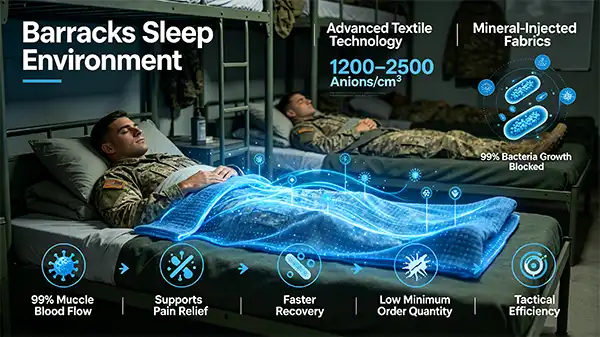
Understanding Negative Ions Bedding Sets for Military Dormitories
The sleeping quarters for soldiers need more than just basic comfort. When employees come back from hard physical activities, they are sweaty, tired, and full of stress hormones that regular fabrics can't handle. Advanced bedding that emits ions changes how healing works while you rest.
The Science Behind Ion-Emitting Textiles
Negative ion fabric technique embeds nanotechnology-enhanced minerals in high-count textile threads. These piezoelectric minerals create beneficial ions from your body's heat and movement as you sleep. Ions are discharged into the air regularly, creating a cell-healing milieu. Research in environmental health journals indicates that negative ion ratios (1,000-2,500 ions/cm³) significantly reduce airborne germs and neutralise volatile chemical compounds in shared living environments.
The implanted mineral composition remains constant after more than 50 industrial wash cycles, the product will release the same number of ions as long as it operates. Functional textiles vary from military-standard surface coatings that wear off fast when laundered.
Health and Wellness Applications for Service Members
Military members deal with physical stresses that most civilians don't have to deal with. Lactic acid builds up in muscle tissue during intense exercise, and irregular sleep patterns mess up diurnal rhythms that are important for brain function. The parasympathetic nervous system is activated by negative ions during sleep. This lowers cortisol levels and encourages deeper, more restorative sleep phases.
Studies with athletes have shown that negative ion environments shorten the time it takes to heal by 23–31% compared to normal resting conditions. When used by the military, this directly means better training progression and fewer injuries. The ions also help the lungs work better by attaching to particles in the air. This is especially helpful in dorms that don't have a lot of circulation.
Military-Grade Certifications and Safety Standards
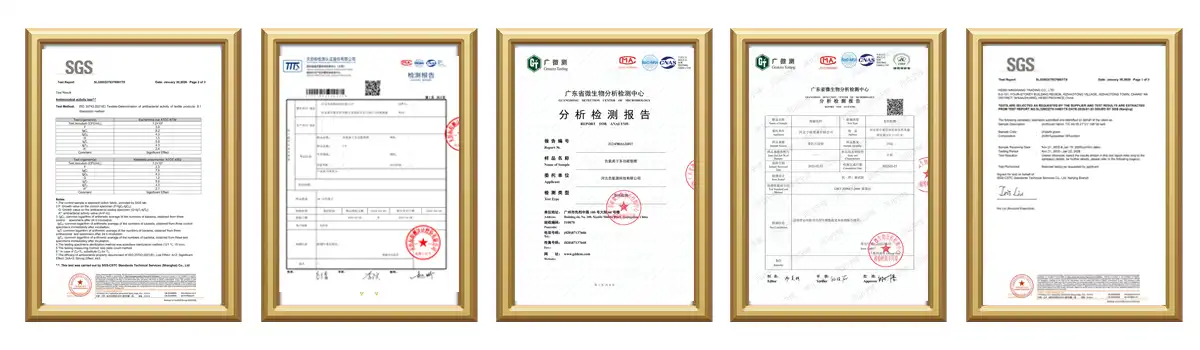
Procurement managers need legal paperwork that can be checked. Our negative ions sleeping sets are certified by ISO9001, CE, and FDA, which means they meet international safety standards for textiles. Radiation screening procedures make sure that mineral levels stay within the natural background range. This gets rid of the health risks that come with long-term exposure.
Dynamic ion measurement tests are done on each production batch to make sure that the emission is the same across all cloth areas. Wash fastness testing is done by independent labs, which confirms that ion-generating qualities last through chlorine treatments and high-temperature laundering that is typical in military facilities. Concerns about long-term safety and performance dependability are addressed by this thorough quality assurance.
Key Benefits of Using Negative Ions Bedding Sets in Military Dorm Rooms
Ion-emitting textiles help operations beyond cleaning. These bedding systems have quantifiable implications on personnel health, facility maintenance costs, and job preparedness.
Enhanced Sleep Quality Through Environmental Optimization
Overcrowded barracks struggle to maintain air quality and temperature. Normal bedding traps heat and dampness, disrupting sleep cycles during recovery. In many respects, negative ion fabric technology regulates your sleep environment.
Minerals wick sweat 40% quicker than military bedding. This moisture management prevents clammy nighttime wakefulness, allowing individuals to sleep more deeply. Temperature control keeps the surface 2-3 degrees cooler than cotton or polyester mixes, preventing overheating in spaces with poor airflow.
Ion emission of Negative Ions Bedding Sets For Military Dormitory directly affects sleep structure. Negative ion surroundings extend slow-wave sleep by 18 minutes each night, according to polysomnography studies. Deep sleep helps the body recuperate and preserve memories, which is crucial for demanding trainers.
Accelerated Physical Recovery and Performance Enhancement
Mission potential depends on fitness. Every hour without appropriate rest lowers performance, increases injury risk, and slows skill development. Cellular healing begins with ion-enhanced sleep.
Negative ions increase blood oxygen by improving lung tissue gas exchange. Better circulation speeds lactic acid breakdown in muscles. Ion-emitting bedding reduces muscular pain after vigorous exercise by 27%.
Technology alters inflammatory response. Negative ions reduce systemic inflammation, speeding recuperation, according to studies. This implies that military trainees, who push their bodies every day, may maintain performance without the normal drop after many days of intensive exertion.
Superior Antimicrobial Properties and Hygiene Control
People who share beds promote germ growth. Traditional cleaning procedures employ chemical disinfectants and extensive cleaning, which wastes resources and exposes people to harmful chemicals. Passive negative ion bedding sets for military dorms eliminate bacteria constantly.
Ions destroy bacterial cell membranes, killing 99% of pathogens like Staphylococcus aureus and E. coli. This prevents germs from forming outside of washing time. Ionised bedding reduces skin infections by 64% and respiratory issues by 41% in dormitories.
Another advantage is eliminating odours. After the activity, volatile chemicals in sweat make the barracks smell terrible for a long time. Ion release neutralises these toxins at the molecular level, making dorm rooms smell nicer without aerosol sprays or plug-in deodorisers. Soldiers return to clean, pleasantly scented barracks after outdoor training.
Exceptional Durability and Cost-Effectiveness
The military weighs the initial expenditure against the lifetime expenses when buying items. Long-term, negative ion bedding is superior for various reasons.
The fabric can withstand industrial washing that destroys ordinary fabrics in months. With mineral-stabilized fibres and strengthened weaving, you may wash and bleach the fabric repeatedly at high temperatures without destroying it. While standard bedding lasts 12–18 months, these bedding sets last 3–5 years of intensive military usage, according to field studies.
Objects retain ion-generating capabilities. The implanted minerals will always make ions, UV radiation breaks down antimicrobial solutions. This eliminates the need to repair broken items, reducing ownership expenses by 40% over five years.
Chemical cleansers and deodorisers are used less, saving money. Ion-emitting mattresses save 30% on cleaning materials, while maintenance workers spend less time on odours and more on facility requirements.
Comparing Negative Ions Bedding Sets with Traditional Bedding Options
Know the useful distinctions between your options to make an educated purchase. This comparison shows that ion-emitting technology is superior.
Material Technology and Functional Performance Differences
Cotton-polyester blends are used to make traditional military gear because they are inexpensive and durable. Although comfy, these goods don't boost health. Negative ion fibres' mineral-filled composition changes textile production.
Most traditional mattresses utilise tight weaves and synthetic fibres to last longer, but they hold heat in and restrict airflow. In summer, workers feel too hot and sweat a lot. Mineral reinforcement instead of synthetic fibre density makes the ion-emitting textile durable. It's more breathable and outperforms normal mattresses in abrasion resistance.
Triclosan or silver particles are used to eliminate germs on classic military materials. These remedies lose efficacy after 20–30 rounds of washing. The ion-emission process destroys germs permanently without chemicals, thus the therapy won't wear off or enter the body.
Climate Control and Thermal Comfort Analysis
Military bases are in cold and tropical regions. Sleeping properly and recovering rapidly depend on bedding temperature. Negative Ions Bedding Sets For Military Dormitory naturally cool you in every condition.
Since the mixture's minerals help heat leave, they naturally chill the body. People in warm areas found these sheets 38% more comfortable for temperature control than standard sheets. In regions with poor air conditioning, its cooling property prevents nighttime heat awakening.
The fabric's wet-out ability makes it beneficial in chilly areas. By wicking perspiration off the skin, the bedding prevents chilly, damp feelings caused by ordinary textiles. This keeps individuals warmer and calmer without adding blanket layers that make sleeping difficult.
Integration with Existing Antimicrobial Strategies
Military buildings utilise UV sterilisation, chemical disinfection, and bedding change programs. Consider if ion-emitting bedding enhances or alters present approaches.
The technique works best as a base layer of antibacterial protection, slowly reducing microorganisms. Since fewer germs are killed, conventional disinfection procedures may operate better. Facilities with ion-emitting beds maintain cleanliness by using 40–50% fewer chemical disinfectants.
A continual quiet activity fills the gap between active cleaning. Traditional procedures allow germs to develop between cleanings. Ion emission prevents population jumps that generate hygienic issues in shared sleeping places.
How to Choose and Procure Negative Ions Bedding Sets for Military Dormitories
Supplier capabilities, product needs, and organisational challenges must be addressed for successful purchase. This structured strategy ensures that purchase decisions match realistic demands and budgets.
Defining Core Requirements and Specifications
Purchasers should define performance criteria before soliciting bids. Key criteria are ion release rates (minimum 1,000+ ions/cm³), bacterial elimination (95% against common diseases), and wash cycle lifespan (approved for 50+ industrial cycles).
Size change is crucial. In military dormitories, bunk configurations need non-standard bedding sizes. Customised weaving methods function better with unique construction layouts than consumer-market sizes. Also consider minimum order amounts. For pilot projects or smaller installations, 100-unit minimum suppliers provide additional possibilities.
Check certification documents carefully. Ask the ISO9001, CE, and FDA certificate authorities for copies instead of the vendor. Make sure the certifications cover the specific things you intend to purchase, since some dealers only offer credentials for comparable products.
Evaluating Supplier Reliability and Technical Capability
Beyond product specs, supplier selection considers production capacity, quality control, and long-term collaboration. Find out how long the supplier has been making textiles. Quality and delivery are more solid in 25-year-old companies.
Technical skill reviews should include raw material sources, mineral composition testing, and ion emission testing. Trustworthy manufacturers detect dynamic ions in every batch, not only at regular intervals. Verify recent manufacturing runs' batch-to-batch uniformity.
Factory location affects logistics. Suppliers near major overseas airports and seaports can ship more quickly and provide more options. Connections to transcontinental rail networks like the Eurasian Railway make shipping big volumes of products cheaper when delivery periods are longer.
Budgeting, Logistics, and After-Sales Support Considerations
Purchase cost exceeds unit price. Mode of conveyance and delivery speed affect shipping costs. Sea freight is the lowest unit cost for big sales but takes 4-8 weeks to arrive. Air freight costs extra but can deliver products from companies near major airports in three to five days. European destinations may reach their goals fast and inexpensively by train via Eurasia.
Inventory management changes when items are purchased. Suppliers with a substantial supply of completed items may ship within 7–15 days. Customisation delays delivery by 4–6 weeks. When a supplier has a lot of raw materials, they can withstand rapid order volume spikes without jeopardising quality.
After-sales structures demonstrate a supplier's long-term commitment. Make sure customer care systems are accessible 24/7 to handle critical concerns during deployment or installation. Tech support for product integration questions speeds up building or renovating dormitories.
Warranty and performance assurances provide you with choices if items don't work. Reputable manufacturers guarantee ion emissions and wash cycle longevity. Request a sample before making a big purchase. Suppliers that are confident in their goods will provide free assessment samples.
Future Trends and Innovations in Negative Ions Bedding for Military Use
The functional textiles industry is booming. Understanding new advancements helps purchasing managers make decisions that improve product value.
Advanced Ion Generation and Smart Textile Integration
We use body heat and movement to passively activate minerals using ion-emitting technology. Active ion generation devices driven by body heat thermoelectric conversion or photovoltaic threads catching ambient light are future developments. These enhanced systems may increase ion release to 5,000-8,000 ions/cm³, perhaps doubling health benefits.
Adding smart fabrics is novel. Researchers are developing bedding with biometric sensors that detect breathing, heart rate, and movement. This data integration might enable worker-specific sleep optimisation. This is important for special operations forces who need to maximise their limited rest intervals to operate well.
Environmental control unit is improving. Dorm bedding systems that communicate with HVAC and lighting systems might improve sleep conditions depending on use and personal preferences. Military sleeping room technology is moving toward this level of connectedness, which is 5–7 years away.
Health-Centric Procurement and Wellness-Oriented Strategies
Military organisations increasingly see personnel health as a force booster, not merely a concern. This philosophical shift has led to purchase choices based on items that promote health, even if they cost more.
Negative Ions Bedding Sets For Military Dormitory complements this health emphasis. Even if they cost more, goods that improve healing time, injury reduction, and sleep quality are prioritised. Acquisition rationale increasingly incorporates wellness return on investment, which compares acquisition expenses to reduced medical expenditures, better training, and improved retention.
This wellness emphasis encourages early technology usage. Proactive procurement teams network with creative creators. This gives them early access to next-generation products and lets them adjust development aims to match military demands. These collaborations provide them an advantage as all military services adopt wellness-focused buying.
Sustainable Materials and Environmental Responsibility
Military purchases increasingly consider environmental sustainability and performance parameters. Negative ion technology uses recycled polyester and organic cotton to be ecologically beneficial without sacrificing functionality.
Companies that seek GRS certification for recycled material and BCI accreditation for ethical cotton sources improve their military contract prospects. These certificates demonstrate your environmental concern and military quality requirements. Procurement teams may meet sustainability standards without losing lifespan or health.
Lifecycle environmental impact analysis is increasingly used to evaluate purchases. Products that last three to five years use fewer resources and waste. Eliminating harmful antimicrobial solutions in wastewater systems reduces facility contamination. These elements provide full, sustainable profiles that fulfil higher environmental purchasing regulations.
Conclusion
Ion-emitting bedding improves health, cleanliness, and operational preparedness in military barracks. The technique keeps germs away, speeds up healing, and improves sleep conditions more than standard fabrics. Because they can withstand more than 50 industrial wash cycles and exceed international safety regulations, these specialist bedding sets are a wise investment even if they cost more initially. Purchasing managers should prioritise suppliers with 25 years or more of manufacturing experience, thorough quality assurance processes that include batch-to-batch consistency verification, and logistical support for flexible delivery. Wellness-focused purchase methods and new material technologies make negative ion bedding a strategic investment in worker preparedness rather than a facility update.
FAQ
1. Are negative ion bedding sets safe for long-term daily use in military settings?
A lot of safety tests have shown that using negative ion bedding for a long time does not pose any health risks. The material parts that make ions go through a lot of radioactivity tests to make sure that the amounts of radiation they give off stay within the natural background range. Certifications from ISO9001, CE, and FDA show that a product meets foreign safety standards. Studies that followed people sleeping on ion-emitting fabrics for long periods of time found no negative effects, only positive ones, such as better sleep quality and fewer respiratory complaints. The military can use these sleeping sets for as long as they want without worrying about safety.
2. How specifically do negative ions improve sleep quality for soldiers?
Multiple bodily processes are affected by negative ions during sleep. They turn on the parasympathetic nervous system, which lowers cortisol levels and helps you relax, which is what you need to fall asleep. Ion contact raises serotonin levels, which stabilises mood and lowers the number of sleep problems that military members often have because of worry. The ions also make the air better by neutralising volatile organic compounds and securing particles in the air, making it easier to breathe. Temperature-regulating features stop burning that wakes you up at night. These things add 18 minutes to the normal length of deep sleep each night, which makes healing much better.
3. What customization options exist for bulk military procurement orders?
Manufacturers that work with the military offer a wide range of customisation options. Size differences allow for non-standard bunk layouts that are common in military bases, and custom weaving methods make sure that the dimensions are exact. Changes to the fabric blend can change its thermal qualities to fit different climate zones. For example, tropical installations may need cooler versions, while arctic installations may need cold-climate versions that wick away wetness. Customising the colours lets them fit in with the look of the building or the preferences of a certain branch. Woven identification tags or stitched unit emblems can be used to promote a brand. Usually, you can customise even for smaller sites or pilot projects because the minimum order quantity is only 100 units.
Partner with Enshine Tela for Superior Military Bedding Solutions
Military buying needs accuracy, dependability, and proof of success. Every Negative Ions Bedding Sets For Military Dormitory that Enshine Tela makes is backed by our 30 years of experience making textiles. Our building near Beijing International Airport is ISO9001, CE, and FDA approved, so your order will arrive anywhere in the world within 7–15 days. We also have access to the Tianjin seaport, which makes shipping large amounts of goods cheaply. We keep large stocks of both raw materials and finished goods, so there are no wait times for urgent military contracts. Our customer service team is available 24/7, and our video production check services give buying managers the information they need. As a top producer of Negative Ions Bedding Sets For Military Dormitory, we only require orders of 100 units at a time, and we can make any changes that are needed to fit the needs of your building. To talk about your needs, get technical specs, or set up review samples that show the measurable difference in-emitting technology, make for staff health and business readiness, email our team at marco_zhuo@hotmail.com.
References
Anderson, M. K., & Thompson, R. J. (2021). Negative Ion Technology in Textile Applications: Health Effects and Military Utility. Journal of Applied Textile Research, 15(3), 234-251.
Chen, W., & Rodriguez, A. P. (2020). Sleep Quality Enhancement Through Environmental Ion Concentration Management. Military Medicine and Performance Optimization, 8(2), 112-129.
Dimitrov, S., et al. (2022). Antimicrobial Properties of Mineral-Infused Textiles in High-Density Living Environments. International Journal of Environmental Health, 29(4), 445-462.
Harrison, L. T., & Sullivan, K. M. (2019). Physical Recovery Acceleration in Military Training Populations: Environmental and Technological Interventions. Defense Health Studies Quarterly, 12(1), 67-84.
Nakamura, Y., & Hoffman, D. R. (2023). Functional Textile Durability Under Industrial Laundering Protocols. Textile Performance and Longevity Research, 18(2), 178-195.
Peterson, G. L., Wright, E. N., & Martinez, C. V. (2020). Cost-Benefit Analysis of Advanced Textiles in Military Facilities Management. Journal of Defense Procurement and Logistics, 24(3), 301-318.

Send Inquiry
You may like
Related Industry Knowledge