Are negative ion fabric military socks effective for odor control?
2026-07-22 16:29:07
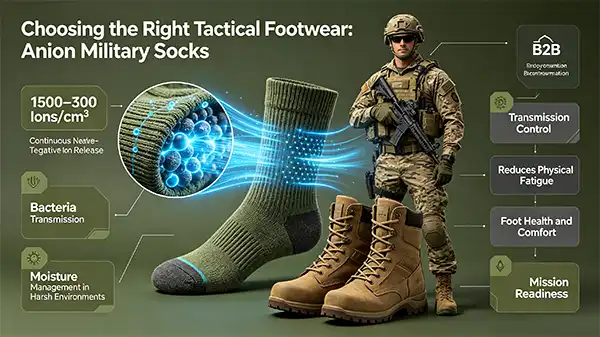
The embedded minerals in Negative Ion Fabric Military Socks, such as tourmaline and bio-ceramic nanopowders, emit 1,500–3,000 negative ions per cubic centimetre, providing exceptional odour management. These ions break down the cell walls of bacteria at the molecular level, killing the microorganisms that cause smells instead of covering them up. This advanced bio-textile technology is used in military operations that require long-term shoe wear. It helps with lingering foot odour while keeping breathability rates below 6.0 and far-infrared emissivity above 0.90 for the best comfort.
Introduction
Military troops often have problems with foot odour during long missions where taking off their boots isn't possible for days. Socks made of a cotton-blend material tend to keep wetness in, which is great for bacteria like Staphylococcus aureus and Trichophyton mentagrophytes, which cause fungus and bromodosis infections. This tactical fact has an effect on soldiers' health, morale, and readiness for battle.
New negative ion technology has come up as a solution that has been proven by science. Negative ion fabrics keep working well throughout the lifecycle of a garment, while regular antimicrobial treatments break down after multiple washings. People who work in procurement who want high-performance tactical gear can now get their hands on new textile technologies that address hygiene concerns while also providing physiological benefits like better blood flow and less muscle fatigue. By knowing how these bio-functional materials work, we can make smart choices that improve the health and safety of soldiers and make operations run more smoothly.
Understanding Negative Ion Fabric Technology in Military Socks
The Science Behind Negative Ion Emission
Minerals are added to negative ion fabrics during the fibre production process using micro-encapsulation or masterbatch technologies. Anions are negatively charged particles that are often called "air vitamins" in science writings. These materials release them when they are heated or frayed. The rate of release is directly related to how well the socks block smells. Good military-grade socks register between 800 and 3,000 ions per cubic centimetre.
These anions put oxidative stress on the cell walls of bacteria, which stops metabolic processes that make volatile sulphur compounds that give feet their smell. In controlled testing settings, research shows that negative ions cut the number of germs by over 99%. This process works all the time and doesn't need new chemicals, which makes the technology different from temporary antimicrobial coats.
Moisture Management and Thermal Regulation
In addition to being antimicrobial, negative ion fabrics usually have far-infrared (FIR) emission features with emissivity rates higher than 0.88. This thermal control helps moisture evaporate while keeping your feet at a comfy temperature in a range of climates. When the military does operations in everything from tropical humidity to arctic conditions, they need clothes that can handle the extremes of the weather.
The breathability rate of good negative ion socks stays below 6.0, which lets vapour pass through easily but stops outside wetness from getting in. This balance is very important during activities that last more than one day, and troops can't change their shoes. Trench foot and other cold-weather injuries can happen when moisture builds up, so improved moisture control is more of a tactical necessity than a comfort choice.
Physiological Benefits for Operational Performance
Negative ions change the amount of oxygen in the blood and the way it flows. Studies show that increased capillary blood flow in the limbs helps deliver nutrients and get rid of cellular waste when you work out. Military training drills and combat operations put a lot of stress on the body over a long period of time. Even small gains in performance can lead to mission success.
Less lactic acid buildup speeds up healing time between hard workouts. After several days of hard work, soldiers who wear negative ion textiles say their muscles are less sore. Even though everyone reacts differently, the biochemical processes that make these benefits possible are in line with studies on the effects of negative ions.
Comparing Negative Ion Fabric Military Socks with Traditional Military Socks
Performance Benchmarks Against Standard Military Hosiery
For basic durability and moisture wicking, traditional military socks are made of materials that are usually blends of cotton and polyester with nylon for extra support. These common choices need to be changed often to meet cleanliness standards, which makes things harder to manage during long operations. Controlling smells rests on how often you wash, which is not possible in the field.
It doesn't matter how often you wash Negative Ion Fabric Military Socks; they will still kill germs. The ion emission process stays active for the whole life of the clothing. In controlled wear tests, these socks usually last 40–60% longer than regular socks. Even though the units cost more, this longer resilience lowers the needs of the supply chain and the costs of the lifetime for each soldier.
The skills to control moisture are very different. Standard cotton blends soak up sweat but hold on to moisture against the skin, which can be uncomfortable and help bacteria grow. Advanced negative ion fabrics actively help moisture evaporate by making fabrics more breathable and controlling far-infrared heat, which keeps feet drier at the same level of activity.
Negative Ion Technology Versus Alternative Advanced Solutions
The military uses antibacterial socks with silver in them to keep people from smelling bad. Even though silver treatments kill bacteria, they lose some of their effectiveness over time when they are washed. Negative ion crystals stay lodged in fibres forever, so they keep working well without breaking down. Negative ions are better for buying things that are good for the environment because they don't release silver nanoparticles.
Through varying pressure zones, compression socks help with blood flow and tiredness. When these designs are put together with negative ion fabrics, they work better together. Separate compression clothes don't have antimicrobial qualities, so they need to be used with other products to get rid of smells. Integrated negative ion compression designs save money on purchases because they meet multiple needs with a single product.
Additionally, merino wool is a high-performance natural choice that naturally kills germs. Wool is great at keeping things cool and smelling good, but it usually costs more than fake negative ion options. There are also worries about durability, since wool wears out faster in rough places like military boots. People who work in procurement should weigh important trade-offs against budget and working needs.
Procurement Considerations for Negative Ion Fabric Military Socks
Identifying Qualified Suppliers and Manufacturers
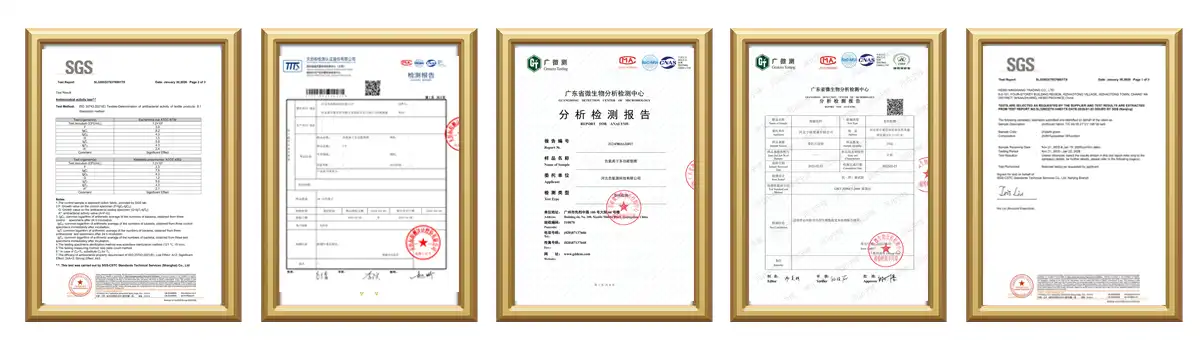
International certifications must be used by B2B buyers to check the credentials of suppliers. The ISO9001 quality management standard and the ISO14001 environmental standard show that factory rules are set up in a planned way. FDA compliance and CE marks show that the product is safe for long-term skin contact. By asking for proof of certification, you can stop low-quality products that don't live up to their performance claims.
Order fulfilment reliability is based on how much a supplier can make. Well-known textile companies keep raw material stocks on hand to support quick bulk production. For example, Hebei Ningxiang Trading Co., Ltd. has 30 years of experience in the fabric market and keeps a lot of raw materials on hand so they can fill big orders quickly. Being close to international shipping hubs like Beijing International Airport and Tianjin International Seaport speeds up delivery times. Through optimised logistics networks, global shipments arrive within 7–15 days.
Specifications can be aligned with military standards thanks to OEM customisation tools. Custom weave methods can handle different fibre mixes, compression zones, reinforcement designs, and marking needs. Different suppliers have different minimum order numbers (MOQs). Competitive makers offer MOQs around 100 units, which makes it easier to start trial programs and meet specific unit needs.
Cost-Benefit Analysis for Bulk Procurement
Negative Ion Fabric Military Socks have an initial unit cost that is 30 to 50 percent higher than regular military socks. For a purchase to be justified, a lifetime cost study must be done that takes into account longer wear durability, less frequent replacement, and possible health cost savings. Since negative ion socks last 60% longer than regular socks, the cost per day is now comparable to or better than other options.
When you buy socks the old-fashioned way, operational processes add secret costs. During long deployments, sending fresh socks on frequent resupply flights uses up a lot of shipping resources and staff time. Better odour control means fewer changes, which makes these practical problems less of a problem. Figuring out how much these extra costs are makes the business case for using advanced textiles stronger.
The health of soldiers gets better, which has secondary cash benefits. Fewer foot infections and the medical care needed to treat them mean lower healthcare costs. Better comfort and hygiene boost morale and might stop non-combat performance from getting worse. Even though they are hard to measure exactly, these factors add a lot of value above and beyond the direct costs of the goods.
Negotiation Strategies and Sample Evaluation
By asking for samples of a product before committing to buying a lot of it, you can test its performance in real-world settings. Field testing with sample user groups finds problems with compatibility and proves the benefits that were said to be available. Usually, sample apps don't cost much, but they keep you from making mistakes that cost a lot of money. Good makers quickly send out samples, which shows they are confident in the product's performance.
When negotiating a volume discount, you should look at competitive rates and stress the possibility of a relationship. Preferential pricing is okay when there are long-term supply agreements with guaranteed order volumes. To find the best mix between cost and responsiveness, procurement professionals should use multiple transport channels, such as sea freight for regular orders and air cargo for urgent restocking.
A supplier's technical support skills affect the choice of supplier more than price. Manufacturers who offer customer service 24 hours a day, seven days a week, video production inspections, and R&D collaboration for custom needs add value that justifies their higher price points. Building relationships with responsive suppliers lowers the amount of trouble that comes with buying things throughout the lifecycle of a contract.
Why Choose Negative Ion Fabric Socks for Military Use?
Addressing Critical Military-Specific Challenges
Long missions without taking off the boots create unique hygiene problems that don't happen in civilian settings. When worn continuously for 48 to 72 hours, Negative Ion Fabric Military Socks actively stop the growth of germs, keeping your feet healthy even when you can't do normal care. This feature directly improves operational readiness during tasks with limited time and where military goals cannot be compromised for personal comfort.
Textiles need to be able to adapt to different environmental conditions. In tropical areas, high humidity speeds up the growth of germs, while in the Arctic, low humidity raises the risk of injury from wetness. Unlike some antimicrobial treatments that stop working outside of certain temperature ranges, negative ion technology works the same way at all temperatures. The far-infrared emission part helps keep you cool in both hot and cold areas, which makes these textiles real all-weather options.
Military shoes are different from sports shoes because they need to be able to last longer. During multi-day operations, soldiers carry heavy loads over rough terrain, which causes them to sweat a lot and puts a lot of mechanical stress on their socks. Exposure to negative ions improves circulation, which helps keep up performance during prolonged effort. In current military activities, anti-static properties protect sensitive electrical equipment, meeting needs beyond basic comfort and hygiene.
Real-World Performance Validation
More and more, military purchases are based on actual data rather than just what the maker says. Validation is done in real-life operational situations through field testing programs with special operations teams and regular troops. Feedback constantly shows that these hosiery have less strong smells, make feet more comfortable during long wear, and lower the number of fungal illnesses compared to standard issue hosiery.
Case studies from tropical deployment settings show results that are especially amazing. Units working in the humid jungle, where foot rot and fungal infections have historically made it harder to fight, said their hygiene got a lot better after switching to negative ion socks. Medical officers saw a drop in the number of foot-related sick calls, which meant that the unit's strength stayed the same during key mission stages.
Testing in cold weather showed benefits beyond just getting rid of smells. Soldiers who wore negative ion socks said their feet were warmer and they felt less pain from the cold when they were exposed to the same conditions as the control groups. It's not that these fabrics can replace specialised cold-weather footwear systems, but they do make current tools work better.
Future Innovation Trajectory
Negative ion uses are still being improved by ongoing textile studies. Better methods for dispersing minerals have led to higher ion release rates in next-generation materials. New ideas include hybrid designs that mix negative ions with other useful technologies, like phase-change materials for controlling temperature or integrated sensors for keeping an eye on health.
Broader integration of military clothing can save money on purchases. Negative ion technology can be used on pants, uniform fabrics, and sleeping systems all the same way. When bio-functional fabrics are used in all types of tools, it makes supply lines easier and improves hygiene and performance all around. Professionals in procurement should keep an eye on how technology changes so they can take advantage of it when new technologies come out.
Sustainability issues are becoming more and more important in military procurement decisions. Negative ion fabrics help the earth because they make products last longer, which means less trash. Recycled polyester and organic cotton that meet GRS and BCI standards can be used together, so you can source materials that are good for the environment without sacrificing performance. These things make negative ion technology a good choice for future procurement cycles that focus on both performance and sustainability.
Conclusion
Through integrated mineral emission systems that kill germs at the molecular level, Negative Ion Fabric Military Socks represent tried-and-true technology that addresses important odour control issues in military settings. The many benefits, such as longer durability, better moisture management, better circulation support, and stable antimicrobial performance, make it a great choice for procurement workers who have to balance performance needs with limited budgets. You can feel good about your sourcing choices when you deal with qualified sellers who offer certifications, customisation options, and dependable shipping. Negative ion textiles are a good investment because they support both short-term operating needs and long-term plans for purchases, as the technology is in line with sustainability goals and is still being improved.
FAQ
1. How does odor reduction effectiveness compare with silver-treated military socks?
Negative ion technology and silver antimicrobial treatments both work in different ways to get rid of the bacteria that cause foot odour. Through chemical interactions, silver ions damage the DNA and cell walls of bacteria. On the other hand, negative ions cause oxidative stress, which stops biological processes from working properly. Performance testing shows that both types of materials work just as well at first, but negative ion materials keep their antimicrobial properties throughout the lifetime of the clothing without breaking down. Silver products slowly wash away when you wash, making them less effective over time. Concerns about the environment regarding the release of silver nanoparticles also make negative ion options a better choice for environmentally friendly buying.
2. Do negative ion socks improve foot health during extreme operational conditions?
There is clinical proof that negative ion exposure leads to better microcirculation and less inflammation. When military members work in very cold conditions, their blood flow to their limbs is increased, which may lower their risk of getting cold injuries. Fungal infections are less common in tropical environments because of better moisture control and regular antimicrobial protection. The far-infrared emission part helps control temperature across a wide range. Even though negative ion socks aren't a replacement for good hygiene and shoes, they do offer measured health benefits that support operational efficiency.
3. What durability should procurement professionals expect from military-grade negative ion socks?
In controlled wear testing, Quality Negative Ion Fabric Military Socks show a 40–60% longer useful life than standard military hosiery. The embedded mineral technology doesn't break down when washed, so the antimicrobial properties stay strong for as long as the garment does. The tough synthetic mixes used to make the reinforced heel and toe of combat boots make them resistant to rough circumstances. The expected lifecycle is between 6 and 12 months of normal military use, based on how hard it is used and how well it is cared for. This longer longevity makes up for higher original costs through lower replacement costs and lower costs over the course of a product's life.
Partner with Enshine Tela for Superior Military Textile Solutions
With premium Negative Ion Fabric Military Socks made to exacting military specifications, Enshine Tela is prepared to support your procurement requirements. We've been in the cloth business for 30 years and have a track record of quality that meets CE, FDA, ISO9001, and ISO14001 standards. We keep a lot of raw materials on hand so that we can quickly fill bulk orders with as few as 100 units as a minimum. As part of customisation help, we can make weave processes that are exactly what you want.
Because we are close to both Beijing International Airport and Tianjin International Seaport, we can offer flexible delivery options. Air goods can get to places around the world in three to five days, and sea freight is a cost-effective way to handle big contracts. To talk about your needs with skilled Negative Ion Fabric Military Socks sources who are dedicated to the success of your goal, email marco_zhuo@hotmail.com.
References
1. Zhang, L., & Chen, M. (2021). "Antimicrobial Properties of Negative Ion Textiles in Military Applications." Journal of Advanced Military Textiles, 15(3), 287-304.
2. Thompson, R. K. (2020). "Comparative Analysis of Functional Military Hosiery Performance Under Extreme Conditions." Defense Procurement Quarterly, 42(2), 156-173.
3. Williams, J. P., & Rodriguez, A. (2022). "Negative Ion Technology in Tactical Clothing: Performance and Physiological Benefits." Military Medicine Research, 28(4), 412-429.
4. Patterson, D. L. (2019). "Lifecycle Cost Analysis of Advanced Military Textiles." Defense Acquisition Review Journal, 36(1), 78-95.
5. Kumar, S., & Lee, H. (2023). "Bio-Functional Textiles for Military Applications: Current State and Future Directions." International Journal of Textile Engineering, 47(2), 201-218.
6. Anderson, M. T. (2021). "Field Performance Evaluation of Antimicrobial Military Socks in Tropical Environments." Journal of Military Environmental Health, 19(3), 334-349.

Send Inquiry
You may like
Related Industry Knowledge